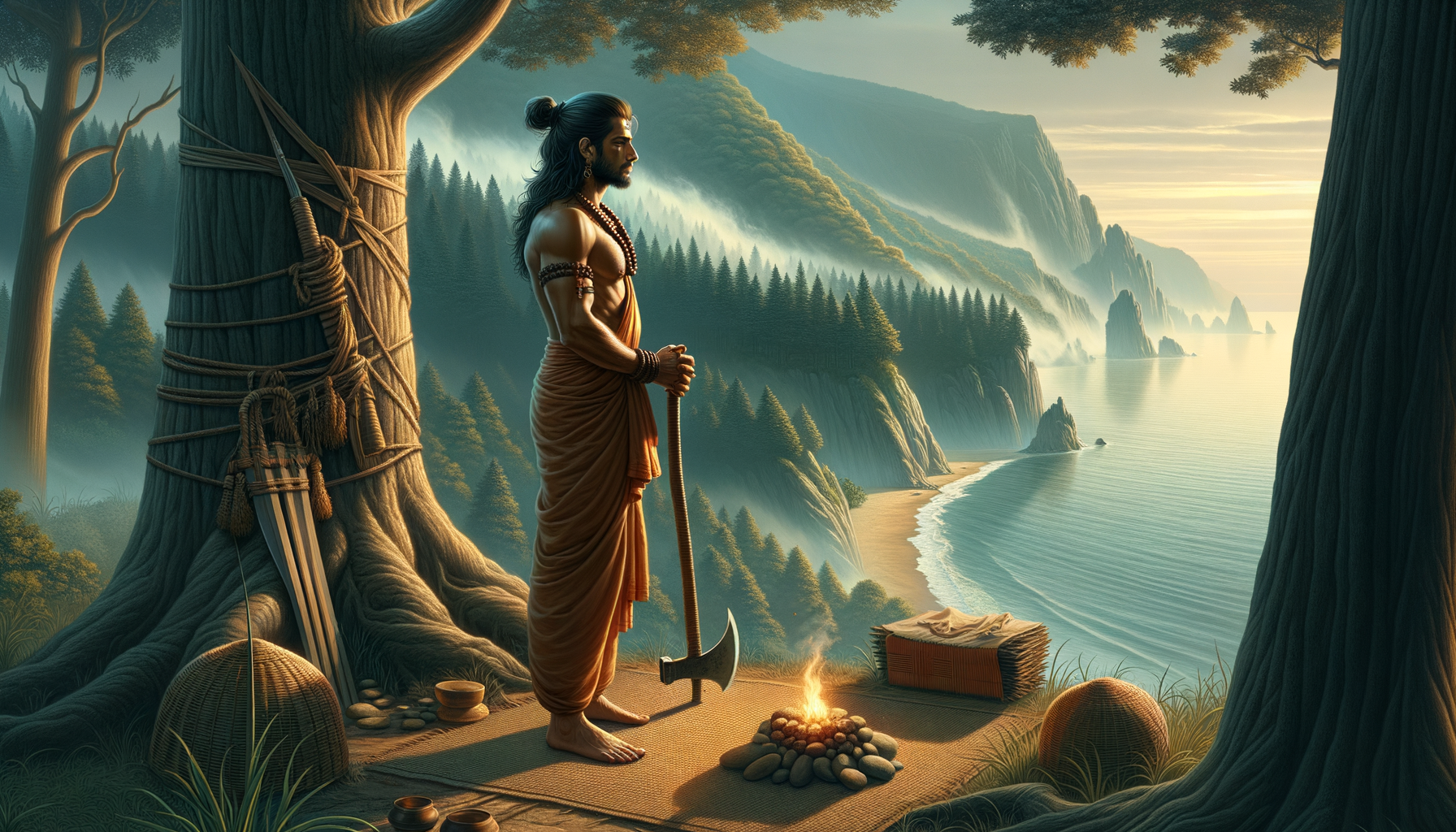
Parashurama occupies a distinctive place in the Dashavatara of Vishnu: unlike Rama with Sita or Krishna with Radha and the gopis, traditions consistently portray him without a divine consort. This feature is not a theological omission but part of a coherent pattern within Hindu scriptures, where each avatar embodies a role-specific manifestation of dharma. Texts such as the Mahabharata and the Puranas depict Parashurama (Bhargava Rama) as a brahmana-ksatriya reformer whose mission demanded uncompromising austerity, mobility, and disciplined detachment.
Within Vaishnava theology, the presence of shakti (often personified as Sri/Lakshmi) is integral to Vishnu’s work. Yet the mode of that presence varies across incarnations. For Parashurama, shakti appears not as a worldly consort but as qualitiestapas, resolve, and moral clarityneeded to correct adharma among abusive rulers. The avatar’s purpose thus prioritized renunciate strength over householder exemplarity.
Scriptural narratives underscore Parashurama’s ascetic orientation. He undertakes severe vows, conducts campaigns to restore social equilibrium, gifts reclaimed land to Kashyapa, and withdraws to hermitages such as Mahendra. This arc aligns more naturally with brahmacharya and tapas than with domestic life. While early texts do not mention a spouse, later retellings, temple traditions, and regional lore consistently treat him as celibate, reinforcing a long-standing interpretive consensus.
Avatar diversity is central to Hindu thought. Rama models the ideals of grihastha-dharma, while Krishna embodies relational and social complexity. By contrast, Parashurama represents the raudra (austere, corrective) aspect of restoration. The presence or absence of a consort is therefore not a ranking of spiritual worth but a reflection of function. Each avatar completes a different pedagogical thread in the tapestry of dharma.
Parashurama’s identity as a chiranjivi further illuminates this function. As a long-lived rishi-warrior and teacher of martial sciencerevered in later epics for instructing figures such as Bhishma, Drona, and Karnahis life is defined by instruction, penance, and guardianship of kshatra. A peripatetic, vow-centered existence focused on training and correction naturally sits apart from the responsibilities and stabilizing rhythm of household life.
This framework harmonizes with the wider dharmic ethos shared across Hinduism, Buddhism, Jainism, and Sikhism, where non-attachment, ethical courage, self-discipline, and compassionate restraint are honored. Grihastha and sannyasa are both valid paths; traditions affirm that duty can be fulfilled either through dedicated family life or through principled renunciation. Parashurama’s path exemplifies the latter, complementing other avatars who illuminate the former.
For many devotees, the “solitary warrior” motif invites introspection: difficult duties often require inner solitude, measured anger transformed into justice, and vows sustained by tapas. In contemporary life, where moral complexity can blur boundaries, Parashurama’s example encourages disciplined action without personal aggrandizement, and strength without attachmentvalues celebrated across dharmic traditions.
In sum, the absence of a divine consort in Parashurama’s narrative is not an anomaly but a meaningful theological signal. It highlights role-specific embodiment: when the restoration of kshatra-dharma called for relentless austerity and mobility, the avatar manifested without an earthly consort. Together with Rama’s household ideal and Krishna’s relational dharma, Parashurama completes a balanced pedagogyaffirming that dharma flourishes through diverse, complementary paths that serve the common good.
Inspired by this post on Hindu Blog.