-
Overcoming Egoism and Lethargy in Kali-Yuga: Bhagavad Gita Guidance for Humility and Seva

Egoism and lethargy are two subtle forces that derail spiritual progress in Kali-Yuga. Drawing on Bhagavad Gita teachings and parallel insights from Buddhism, Jainism, and Sikhism, this article explains how false ego (ahankara) reframes practice around I and mine, while tamasic inertia fosters delay and neglect. It then offers an integrated, practical program that combines…
-
Mastering Bhakti Yoga: How Loving Krishna Transforms Stress into Unshakable Peace

Bhakti yoga reframes modern stress by transforming daily work into purposeful seva anchored in Bhagavad Gita teachings. Regulated living in eating, sleep, speech, and activity cultivates sattva and aligns with contemporary research on circadian health. Japa and kirtan enhance attentional control and calm the nervous system, supporting wiser choices in work and relationships. A practical…
-
Does Time Flow or Does Space Evolve? A Profound Reconciliation of Relativity and Dharmic Wisdom

This comprehensive analysis reconciles a popular paradox: modern physics is said to claim that time changes while space is constant, whereas ancient dharmic texts appear to say the opposite. Clarifying the science, general relativity treats spacetime as dynamic, with evolving spatial geometry and observer-dependent time. Clarifying the traditions, Hindu, Buddhist, Jain, and Sikh sources distinguish…
-
Work Without Motive: Sri Sri Ravi Shankar on Intuition, Nishkama Karma, and Flow States

This article unpacks the axiom “the best work comes out when you work without any motive” through Sri Sri Ravi Shankar’s description of intuition as a “sudden sprout of thought,” the Bhagavad Gita’s Nishkama Karma, and insights from modern psychology. It distinguishes non-attachment from aimlessness, showing how purpose can remain strong while egoic craving for…
-
Agneyas among the Gandharvas: Timeless Insights into Kubera’s Celestial Musicians

This article examines the Agneyas as a Gandharva collective in Hinduism, drawing on Puranic and allied textual traditions to clarify their identity as celestial musicians and attendants in divine courts. It explains how several narratives place the Agneyas in the orbit of Kubera (Vaiśravaṇa), the god of wealth and guardian of the northern direction, where…
-
Seeing the Divine Clearly: Krishna’s Form, Shastra, and Unity Across Dharmic Paths

A precise, sastra-grounded portrait of the Divine emerges in the Krishna-bhakti tradition without negating other dharmic pathways. Drawing on descriptions such as Syamasundara Krishna as Muralidhara—venum kvanantam, with lotus eyes and Barhavatamsa—the article explains how iconography encodes theology and cultivates transformative devotion. It outlines the epistemic triad of sastra, reason, and realized experience, and shows…
-
Krishna’s Personal Descent on Earth: Scriptural Evidence, Bhakti Practice, and Dharmic Unity

This in-depth exploration examines the Vaishnava conviction that Lord Krishna personally descended to Earth, situating the claim within scriptural sources (Bhagavad Gita, Bhagavata Purana, Brahma-samhita) and the technical doctrine of avatara-tattva. It shows how Gaudiya concepts like achintya-bheda-abheda map divine unity and plurality, while the yuga-dharma of nama-sankirtana translates theology into transformative practice. Using the…
-
Bhai Kanhaiya Ji: Sevapanthi Saint Who Healed Friend and Foe, Inspiring Interfaith Unity

Bhai Kanhaiya Ji (1648–1718) is revered in Sikh history for serving water and aid to all the wounded—friend and foe—during the battles around Anandpur Sahib, earning explicit endorsement from Guru Gobind Singh. His example seeded the Sevapanthi tradition, which institutionalized non-sectarian seva through hospices, piyaus, and relief networks. This essay situates his life within the…
-
Beyond Temples: The Timeless Power of Sanatana Dharma in Daily Life and Dharmic Unity

Hinduism, or Sanatana Dharma, functions as a civilizational way of life that extends well beyond temples into daily routines, ethical choices, and inner cultivation. Drawing on classical frameworks such as the purusharthas and ashrama dharma, it harmonizes worldly aims with spiritual freedom. Practices like puja, japa, pranayama, and meditation form a versatile toolkit for diverse…
-
Truth Is Multi-Dimensional: Anekantavada, Vedanta, and Practical Ways to See Clearly

Many hear the phrase “truth is multi-dimensional” without a clear explanation. This article clarifies the concept using dharmic frameworks—Jain Anekantavada, the Buddhist two truths, Vedanta’s three levels of reality, and Sikh insights on Ik Onkar and satnam. It distinguishes objective, subjective, and intersubjective truth and shows how Indian pramanas (perception, inference, testimony, and more) rightly…
-
Srila Prabhupada Festival, Los Angeles: 35 Years of Simple Living, High Thinking

The Srila Prabhupada Festival in Los Angeles marks thirty-five years of gratitude at New Dwarka Temple, uniting the community around the guiding principle “Simple Living, High Thinking.” Anchored in the Bhagavad Gita and Gaudiya Vaishnava teachings, the event integrates devotional arts, kirtan, textual study, and service as a coherent pathway for inner growth and social…
-
Sadhu Sanga 2026 Day 3: Immersive Kirtan, Dharmic Unity, and Practical Sadhana Framework

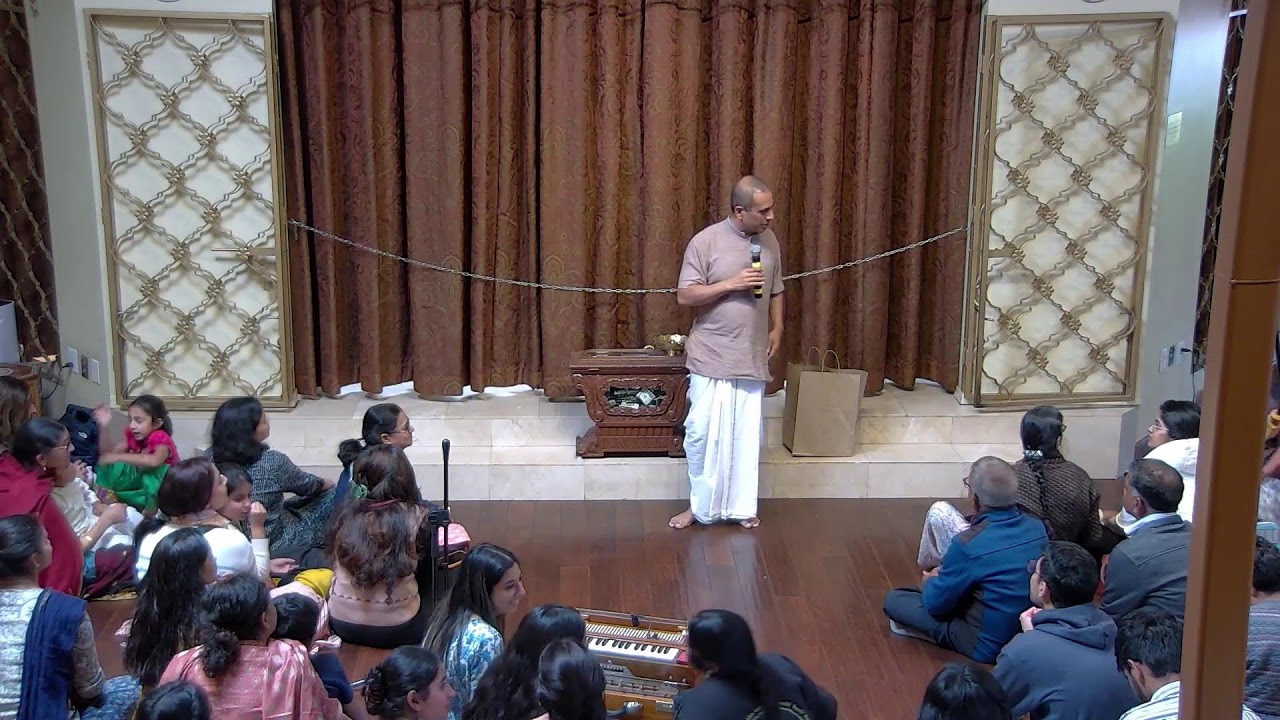
Day 3 of Sadhu Sanga 2026 distilled multi-day practice into a clear, actionable sadhana framework rooted in kirtan, nama-japa, scripture, and seva. It clarified how sadhu-sanga in the Bhakti Tradition intersects meaningfully with Buddhist Sangha, Jain samayik, and Sikh sangat, strengthening unity in spiritual diversity. The analysis explains the musical and acoustic architecture of kirtan…
-
Beyond Appearance: How Karma and Dharma, not Looks, Define True Greatness across Dharmic Paths

Societies often confuse status and surface with substance. Dharmic traditions counter that true greatness rests on karma and dharma—ethical action aligned with sustaining principles—rather than on appearance. Drawing on the Bhagavad Gita and parallel insights from Buddhism, Jainism, and Sikhism, this analysis defines karma with its causal layers and presents dharma as a context-sensitive compass…
-
Chosen People or People Who Choose? A Dharmic Analysis of Free Will, Karma, and Grace

This long-form, comparative analysis reframes the classic debate over predestination and free will by drawing on Hindu, Buddhist, Jain, and Sikh philosophies. It explains how dharmic traditions balance karma (conditioning causes), meaningful choice (puruṣārtha), disciplined practice (dharma, śīla, simran, seva), and grace (kṛpā/nādar) where affirmed. Rather than privileging an exclusive elect, these frameworks uphold universal…
-
From Fear to Devotion: A Practical, Dharmic Guide to Bhakti, Satsanga, and Inner Peace

A once fiercely independent seeker confronted fear, relinquished familiar habits, and adopted a measured bhakti practice that produced real inner peace without chasing mystical fireworks. His progress—punctuated by honest setbacks—illustrates a practical application of the Bhagavad Gita’s abhyāsa and vairāgya, where consistency and compassionate self-correction matter more than intensity. Community proved pivotal: devotees offered strength,…
-
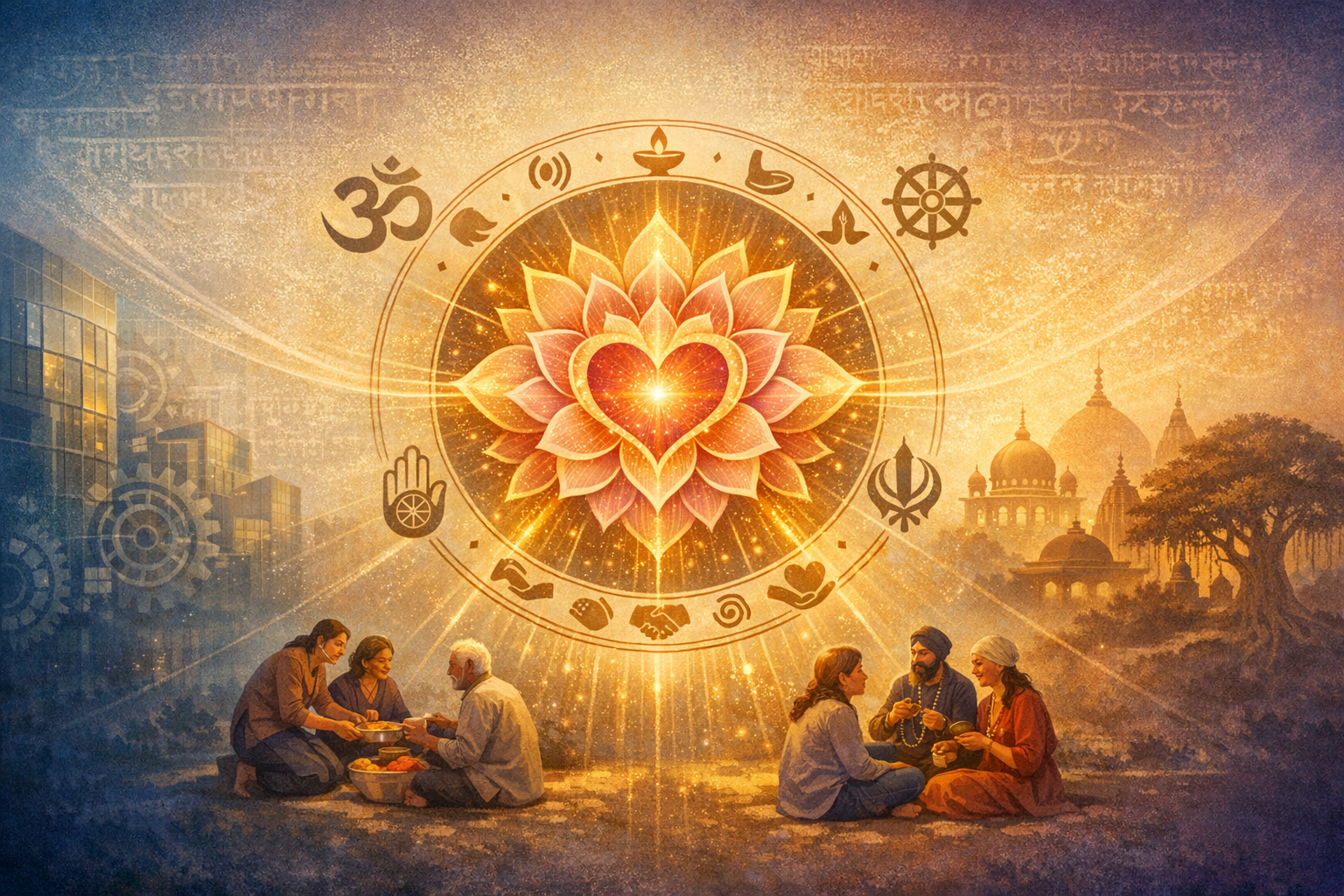
Unconditional Love as Social Dharma: A Dharmic Path to Harmony, Justice, and Peace

This article examines unconditional love as a rigorous social ethic in Hinduism and its sister dharmic traditions, showing how it functions as metaphysical insight, moral psychology, and institutional practice. Drawing on the Upanishads, the Bhagavad Gita, Bhakti literature, and parallel teachings in Buddhism, Jainism, and Sikhism, it articulates an integrated framework for societal harmony. The…
-
2026 Sadhu Sanga Day 1: Transformative Kirtan, Deep Bhakti, and Dharmic Unity Insights

2026 Sadhu Sanga – Day 1 establishes a clear, practice-centered foundation for the retreat by combining immersive kirtan, structured japa, and scriptural framing from Bhagavad-gita and Śrīmad-Bhāgavatam. The opening day focuses on sādhu-saṅga—uplifting association—as a catalyst for devotion and ethical conduct. Participants benefit from accessible orientation, inclusive spaces, and community norms that translate humility and…
-
Decoding Srimad Bhagavatam 3.26.9: Sankhya, Consciousness, and a Roadmap to Dharmic Unity

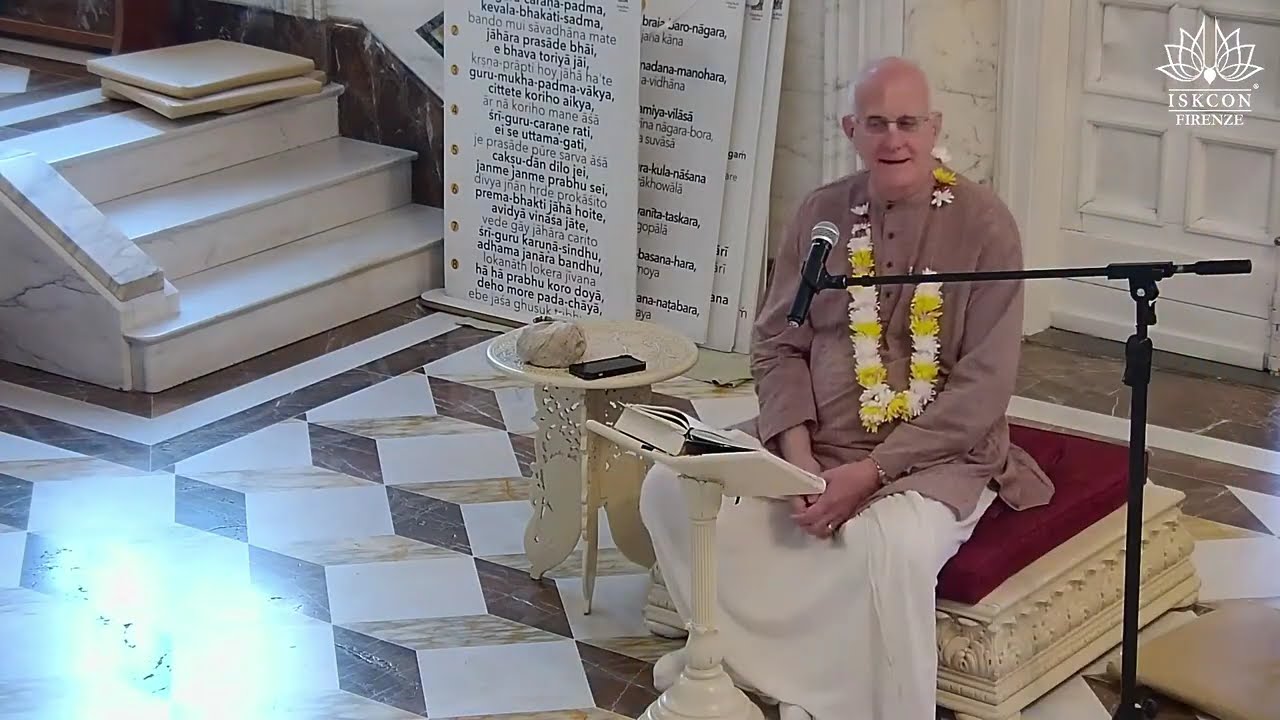
This in-depth exploration of Srimad Bhagavatam 3.26.9, inspired by H.H Subhag Swami Maharaj’s discourse at ISKCON Mayapur, unpacks Kapila’s Sankhya as a precise map of consciousness, causality, and liberation. It clarifies how purusha, prakriti, time, and the three gunas co-operate to shape experience, and why that structure makes ethical effort and devotion both meaningful and…
-
Gurmat Sangeet Certification: Master Raags, Shabad Kirtan, and Timeless Sikh Devotional Heritage

Gurmat Sangeet is the living Sikh tradition of sacred music, where Shabad is sung within the grammar of raag and taal to cultivate contemplation and ethical action. A well-designed certification program grounds training in the Guru Granth Sahib’s raag-based structure, emphasizing accurate pronunciation (santhiya), faithful use of ਰਹਾਉ (rahāo), and historically aware performance. Learners progress…