-
Betal’s Astonishing Origin: From Divine Curse to Immortal Guardian in the Kalika Purana

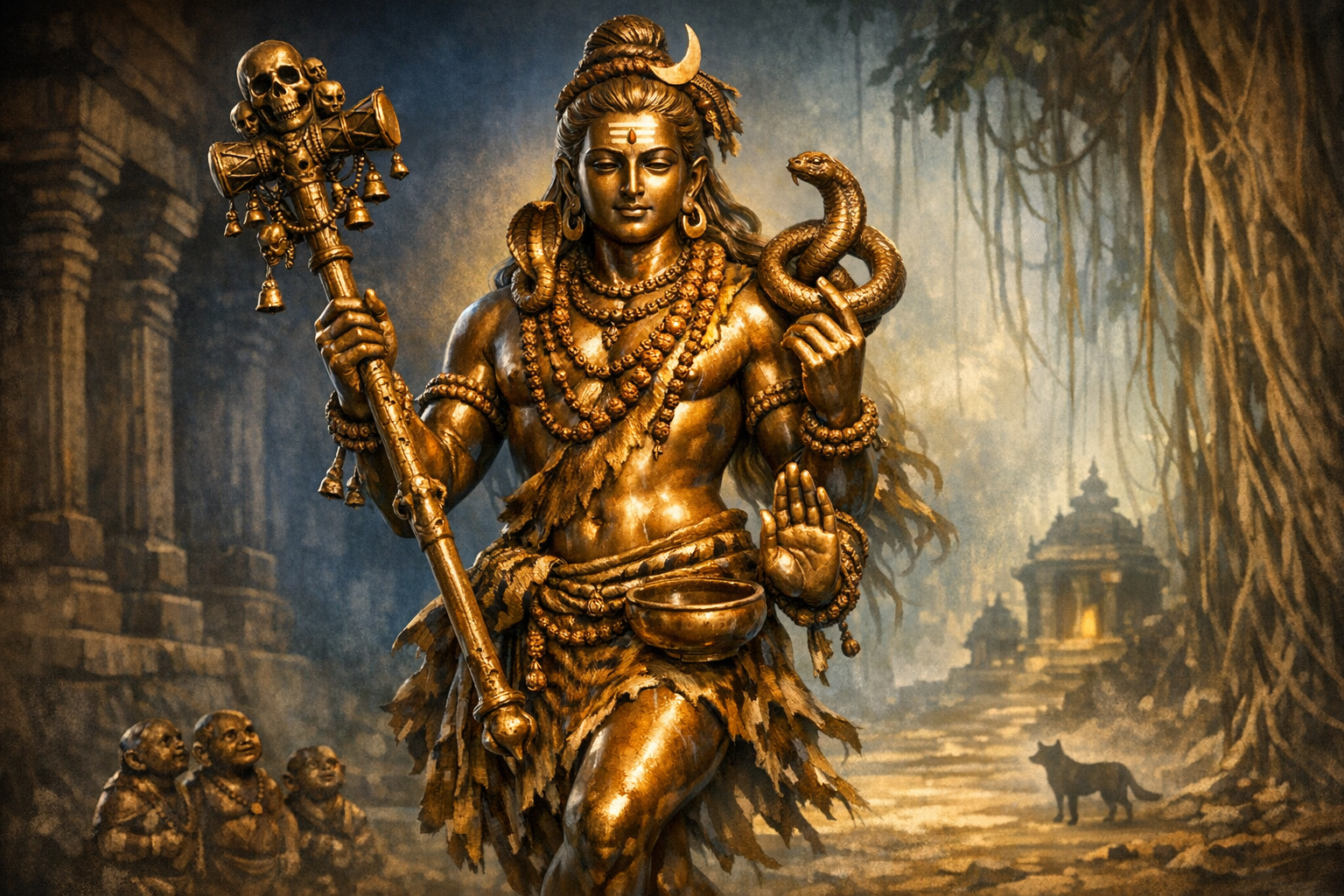
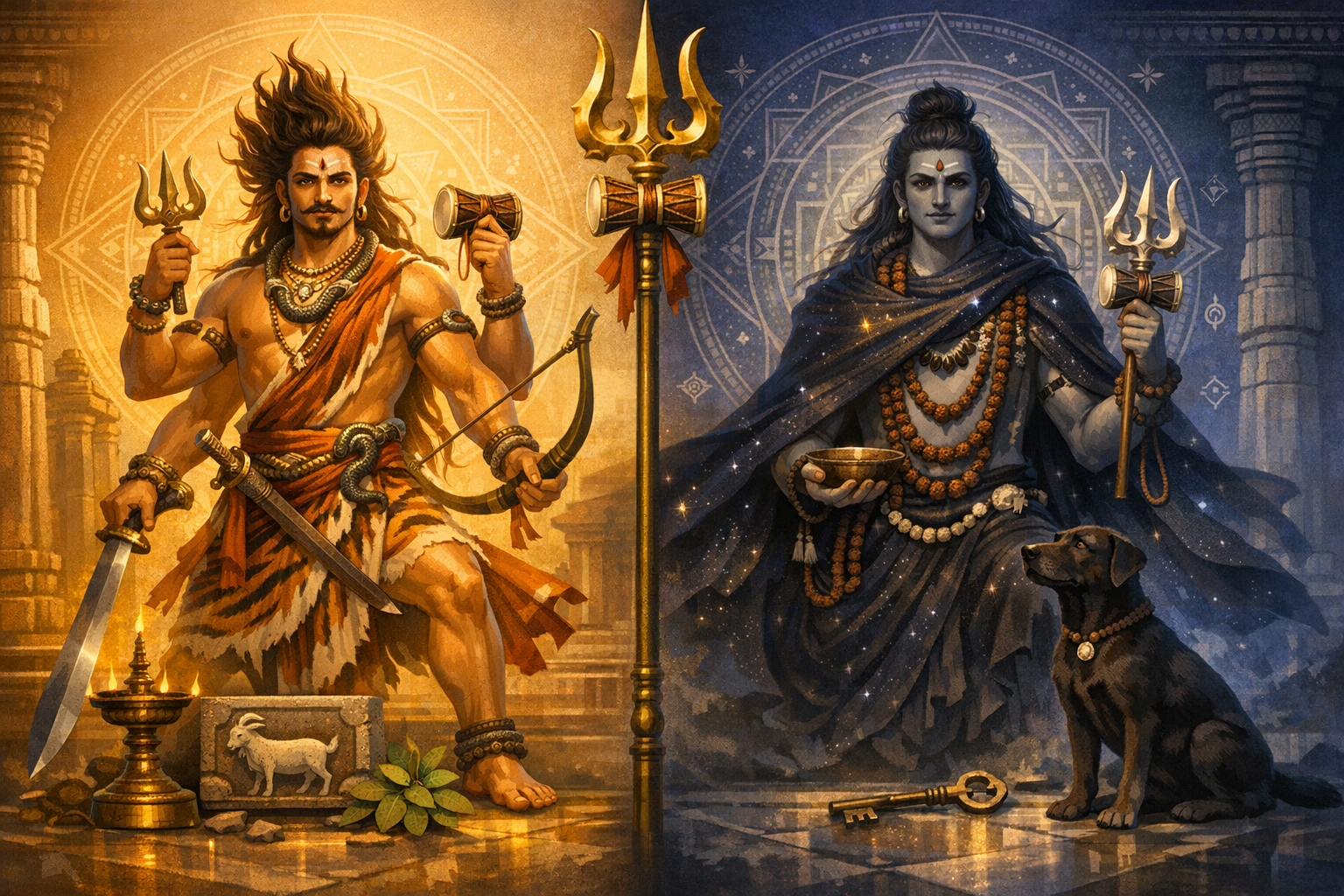
The Kalika Purana preserves a remarkable account of Betal, or Vetala, as far more than the frightening spirit familiar from popular folklore. It identifies him as the mortal form of Bhringi, a son of Shiva’s power and a companion of Bhairava. After a curse forces the pair into human birth with simian faces, fear and…
-
Rudra’s Astonishing Birth in the Vishnu Purana: Tears, Eight Names, Cosmic Fire

The Vishnu Purana presents Rudra’s birth as both a fiery cosmic event and an intimate story about a crying child seeking a name. This study distinguishes the elevenfold manifestation described in Book One, Chapter 7 from the eight named forms of Chapter 8. It explains the meanings of Rudra, Bhava, Śarva, Īśāna, Paśupati, Bhīma, Ugra,…
-
The Lost Nandi Purana Revealed: Its Contents, History, and Enduring Importance

This study reconstructs the lost Nandi Purana, also known as the Nanda Purana, from verses preserved in medieval Sanskrit compilations. It explains why the text’s classification as an Upapurana does not make it historically or spiritually insignificant. The discussion examines its possible Shakta origins, strong Shaiva material, and surviving Vaishnava elements without forcing them into…
-
Varahi Devi Katha: Powerful Story, Symbolism, and Scriptural Wisdom of Varahi Mata

Varahi Devi, also known as Varahi Mata, is one of the Sapta Matrikas and a powerful form of Devi Shakti associated with Varaha. Her katha appears in traditions connected with the Devi Mahatmya, Markandeya Purana, Varaha Purana, and Matsya Purana. The story presents her as a fierce maternal protector who helps defeat forces such as…
-
Vasuki as Dikpala: Powerful Naga Guardian of the Sacred Depths

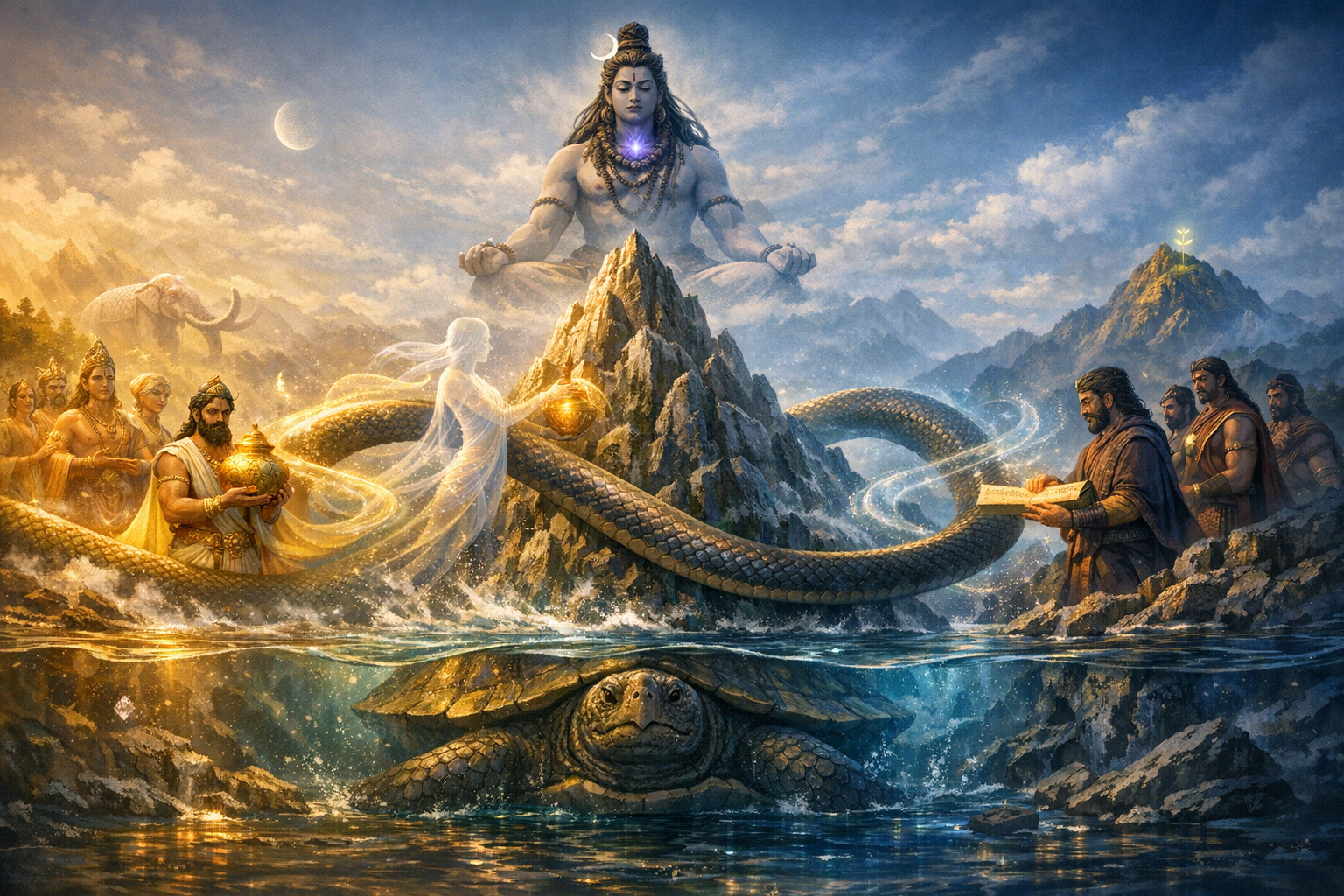
Vasuki, the Naga king, holds a powerful place in Hindu sacred tradition as a guardian associated with the downward direction and the hidden depths of existence. This expanded study explains the Dikpala system, the symbolism of adho-dik, and Vasuki’s role in Purāṇic cosmology. It explores his connection with the Samudra Manthan, Lord Shiva, Naga worship,…
-
Shiva as the Cosmic Archer: Powerful Symbolism Behind the Destruction of Tripura

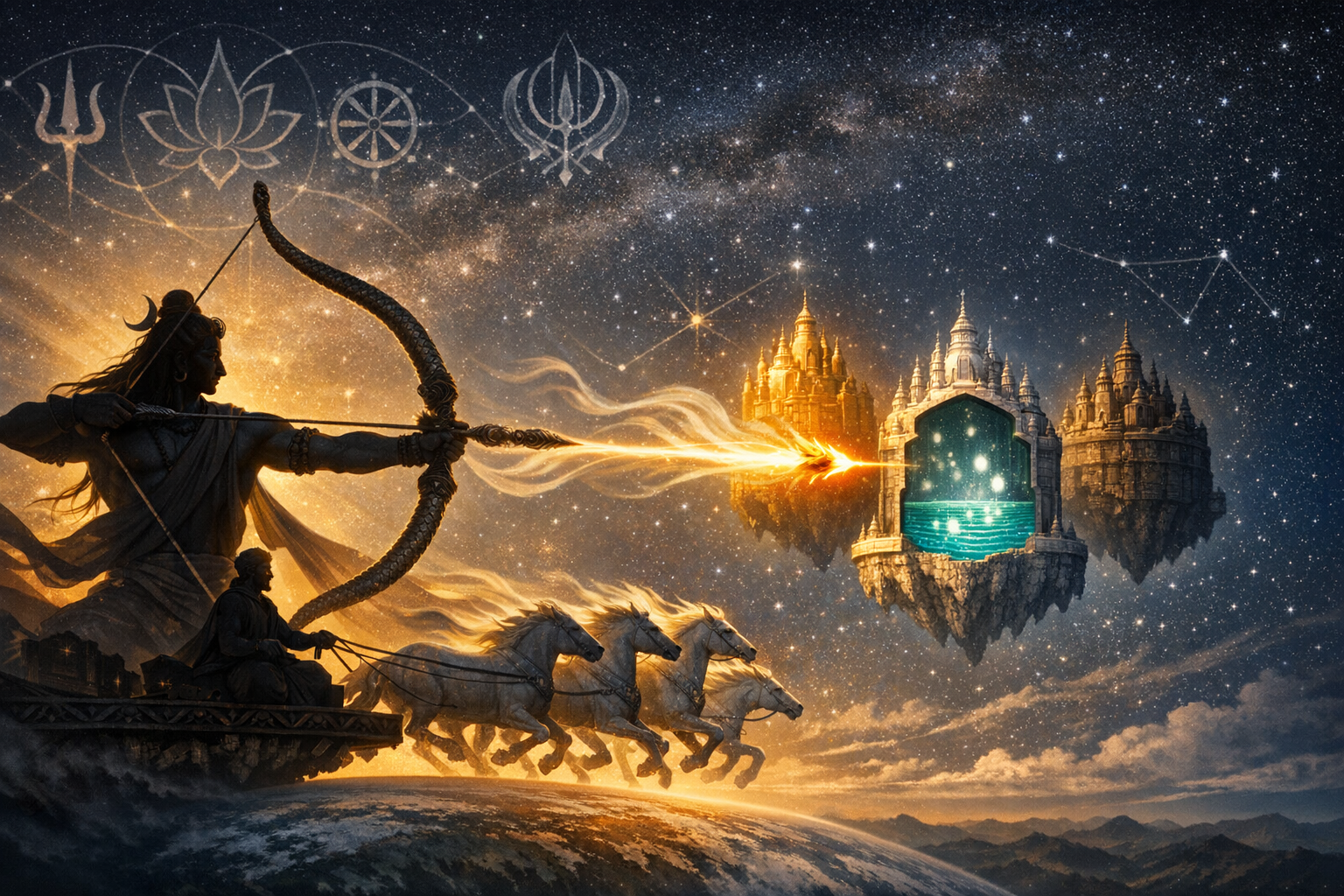
The story of Shiva destroying Tripura is far more than a dramatic Puranic battle. It presents Shiva as Tripurantaka, the cosmic archer whose bow, chariot, arrow, and timing symbolize the disciplined destruction of ego, ignorance, and adharma. The three cities of gold, silver, and iron can be read as the body, mind, and causal bondage,…
-
Sacred Fury After Sati: The Ganas’ Sacrifice and Shiva’s Terrible Grace

This long-form analysis explores the self-sacrifice of Shiva’s ganas after Sati’s death in the Daksha yajna narrative, especially as remembered through the Skanda Purana’s Kedara Khanda tradition. It explains why the episode should be read symbolically rather than as a literal ethical model, highlighting its themes of devotion, grief, sacred fury, and cosmic disorder. The…
-
Rudra’s Fierce Birth: Powerful Lessons from Ekadasa Rudras and Sanat Kumaras

This article explores the sacred Puranic story of Rudra’s birth from Brahma’s wrath and its connection with the four Sanat Kumaras. It explains how Sanaka, Sanandana, Sanatana, and Sanatkumara represent renunciation, wisdom, and the inward path of liberation. The discussion presents the Ekadasa Rudras as both cosmic deities and symbolic forces within the human being.…
-
Nava Chiranjeevis: Powerful Lessons from Hinduism’s Immortal Witnesses

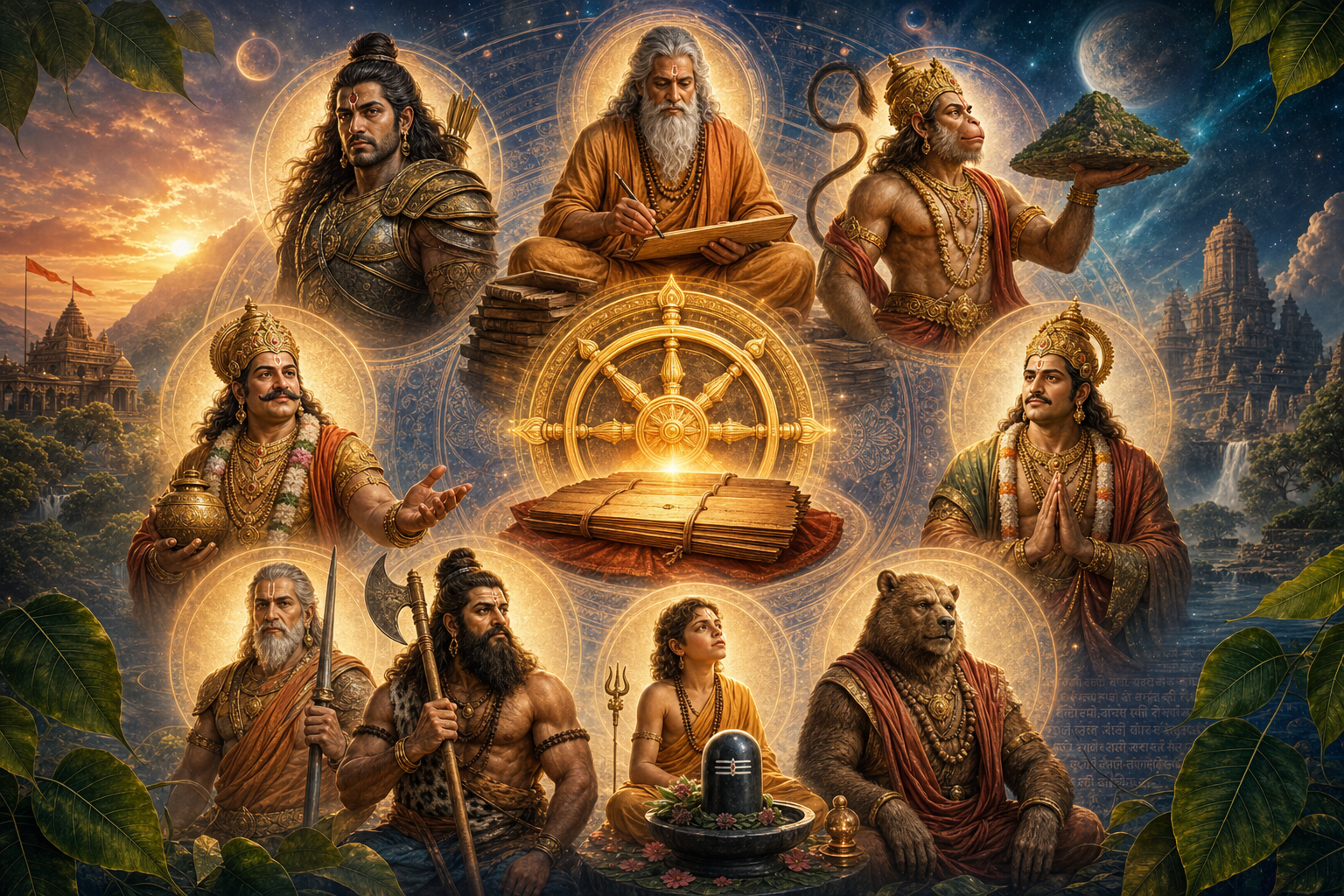
The Nava Chiranjeevis, or Nava Sanjivis, are the nine enduring witnesses of Hindu Puranic and Itihasa tradition. Their stories show that immortality in Hinduism is not merely endless life, but a deeper responsibility shaped by dharma, memory, devotion, knowledge, and consequence. Ashwatthama, Mahabali, Veda Vyasa, Hanuman, Vibhishana, Kripacharya, Parashurama, Markandeya, and Jambavan each preserve a…
-
Dhwaja Vrata: A Powerful Four-Month Vishnu Vow of Discipline and Liberation

Dhwaja Vrata is a disciplined four-month Vaishnava observance rooted in the Vishnudharmottara Purana and connected with the worship of Lord Vishnu through sacred flag emblems. Also known as Chaturmurti Vrata, it honors Vasudeva, Sankarshana, Pradyumna, and Aniruddha across Chaitra, Vaishakha, Jyeshtha, and Ashadha. Each month has a specific dhwaja symbol, color, and devotional focus, making…
-
Madurai Meenakshi Temple Sthala Puranam: Powerful Legends, History and Grace

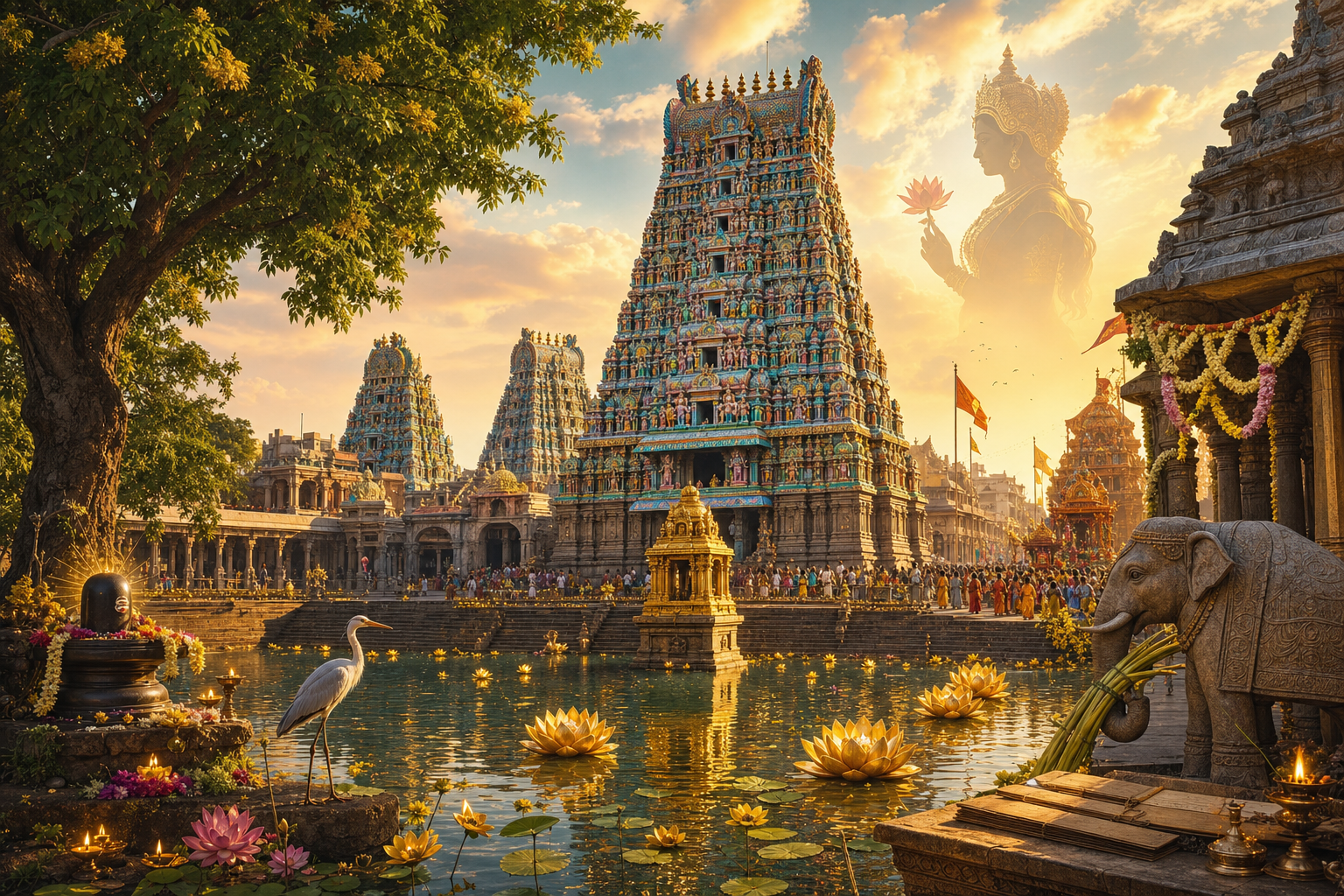
The Madurai Meenakshi Temple Sthala Puranam explains how Kadambavanam became one of Tamil Nadu’s most sacred temple cities. It traces the legends of Indra’s purification, the birth of Meenakshi as Thadaathagai, her encounter with Shiva, and the celestial wedding with Sundareswarar. The article also explores the Chithirai Thiruvizha, the 64 Thiruvilaiyaadal legends, and the spiritual…
-
Kubja of Mathura: Krishna’s Powerful Lesson on Grace, Dignity, and Inner Beauty

Kubja of Mathura is a deeply moving figure in Krishna bhakti literature, remembered for her encounter with Sri Krishna in the streets of Mathura. Though often associated in popular titles with the Mahabharata tradition, her story is primarily narrated in the Bhagavata Purana, Brahma Vaivarta Purana, and devotional retellings such as the Sur Sagar. As…
-
SB 4.29.84 Decoded: Narada’s Allegory, Karma’s Limits, and the Liberating Power of Bhakti

Srimad-Bhagavatam 4.29.84 concludes Nārada’s profound instruction to King Prācīnabarhi by elevating devotion (bhakti) above ritualism’s limits and prescribing śravaṇa–kīrtana as the decisive remedy for bondage. Framed by the allegory of Purañjanathe nine-gated city, buddhi as queen, prāṇa as serpent, and Time’s relentless siegethe verse turns symbolism into a clear practice blueprint. Readers learn how to…
-
Panchabrahma & Panchakritya: Unveiling Shiva’s Five Faces and the Universe’s Five Acts

Shaiva philosophy teaches that the universe is not separate from Shiva but is Shiva in five continuous actscreation, preservation, dissolution, concealment, and grace. This article decodes Panchakritya and Panchabrahma, showing how the five acts and the five faces (Sadyojata, Vamadeva, Aghora, Tatpurusha, Ishana) structure both cosmic process and inner transformation. Drawing on Vedic, Upanishadic, Agamic,…
-
Preeti Vrata in Chaturmasya: A Disciplined Path to Universal Love, Seva, and Inner Clarity

Preeti Vrata in Chaturmasya is a structured vow observed from Devshayani Ekadashi to Prabodhini Ekadashi, aligning personal discipline with bhakti, ahimsa, and seva while Lord Vishnu is in Yoga Nidra. Grounded in Puranic tradition and guided by the Panchang, it combines sankalpa, daily puja, mantra-japa, scriptural study, and a clearly defined sattvic diet. Monthly guidelines…
-
Mahattam Vrata on Bhadrapada Shukla Pratipada: Exact Muhurta, Authentic Vidhi, Lasting Benefits

Mahattam Vrata is a rigorously defined Dharmashastra-sanctioned vow observed on Bhadrapada Shukla Pratipada, focused on atma-shuddhi and ethical renewal. Rooted in Puranic calendars and clarified in works such as Anantadeva’s Smriti Kaustubha, it is anchored to the tithi prevailing at local sunrise. The vidhi emphasizes upavasa according to capacity, panchopachara or shodashopachara puja, sustained japa,…