-
USCIRF, Diaspora Campaigns and Hindutva: How Overseas Targeting Imperils Dharmic Unity

Uttarakhand BJP leader Mahendra Bhatt’s description of perceived overseas targeting of Hindutva voices via USCIRF highlights a wider challenge: how global advocacy, media narratives, and diaspora life intersect. This analysis explains USCIRF’s mandate, clarifies the distinction between Hinduism and Hindutva, and shows how labels can migrate from policy briefs to classrooms and workplaces. It grounds…
-
Savarkar Jayanti in Kolkata: Debating ‘Hinduize the Politics and Militarize the Hindudom’

Held on 28 May 2026, the Hindu Samaj Kalyan Samiti’s Savarkar Jayanti in Kolkata revisited the maxim ‘Hinduize the Politics and Militarize the Hindudom’ through a constitutional, dharmic lens. The analysis situates V D Savarkar’s thought historically and reframes the slogan as a call for ethics-driven public life and lawful, nonviolent resilience. It underscores pathways…
-
Temple Lands at Risk? Why Maharashtra’s 2026 Devasthan Inams Draft Act Alarms Dharmic Bodies

Maharashtra’s proposed Devasthan Inams Abolition Draft Act, 2026 has raised alarms among temple trusts and dharmic institutions that rely on endowment-backed revenues for worship, welfare, and heritage conservation. This analysis clarifies what devasthan inams are, why they matter to community life across Hindu, Buddhist, Jain, and Sikh traditions, and how constitutional safeguards under Articles 25,…
-
Maharashtra Temple Trusts Slam ‘Devasthan Inam Abolition Act 2026’, Seek Equal, Transparent Rules

A statewide conclave of trustees and community voices in Maharashtra has opposed the proposed ‘Devasthan Inam Abolition Act 2026,’ asking why Devasthan temple lands appear targeted while other religious endowments are treated differently. The discussion clarifies what Devasthan inam lands are, why they matter to worship, welfare, and heritage, and how constitutional safeguards under Articles…
-
Maharashtra’s Devasthan Inam Abolition Draft Act 2026: Why Temple Lands Must Be Protected Now

Maharashtra’s Devasthan Inam Abolition Draft Act 2026 seeks to alter how temple and other dharmic institutions sustain religious and charitable work by targeting endowed lands. Devasthan inams historically funded daily worship, festivals, and social services; abolishing them risks fragmenting sacred endowments and destabilizing predictable income. The constitutional framework—particularly Article 26—protects denominational autonomy to own and…
-
FCRA Flashpoint: Why Rep. Chris Smith Pressed Rubio on India—and the Stakes for Civil Society

Representative Chris Smith’s call for Senator Marco Rubio to raise India’s FCRA in high-level talks has revived a sensitive debate: how to balance India’s sovereign right to regulate foreign funding with the need to protect legitimate civil-society and faith-based work. This analysis clarifies what the FCRA is, how it evolved (1976, 2010, 2020), and why…
-
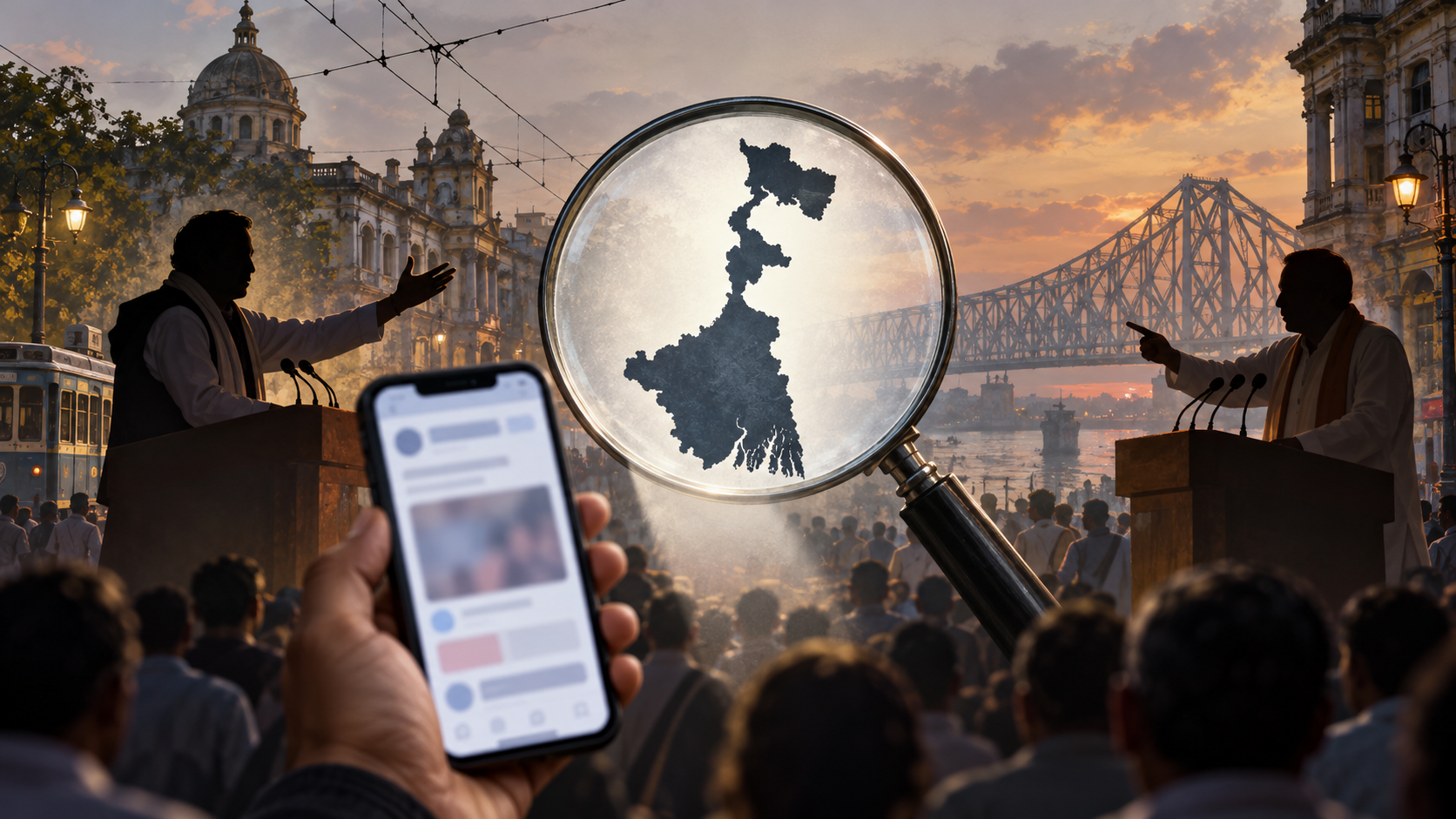
West Bengal Flashpoint: Police Complaint Over Mamata Banerjee’s Alleged Anti-Hindu Remarks

A police complaint against Mamata Banerjee over alleged anti-Hindu remarks has ignited a West Bengal flashpoint where constitutional rights, statutory limits on hate speech, and communal harmony meet. This analysis explains the relevant IPC provisions (295A, 153A, 505), the Supreme Court’s tests for intent and harm, and the procedural safeguards including Section 65B electronic evidence…
-
West Bengal Restores Pre‑2010 OBC List; 7% Quota Reset Prioritizes Lawful, Data‑Driven Equity

West Bengal has restored its pre‑2010 OBC list and reset the OBC quota to 7%, presenting the change as a law‑aligned, interim framework pending a fresh, data‑driven review. The move foregrounds constitutional compliance under Articles 15(4) and 16(4), adherence to Indra Sawhney benchmarks, and the need for quantifiable evidence of social and educational backwardness. By…
-
High-Stakes Calcutta HC Row on Bakri Eid Slaughter: TMC Petition, Cow Laws, and a Path to Harmony

A reported petition by TMC leaders Mahua Moitra and Adv Akhruzzaman over West Bengal’s cattle slaughter notification ahead of Bakri Eid has spotlighted how constitutional rights, animal welfare, and public order must be balanced. This analysis explains the state’s statutory framework (notably the WB Animal Slaughter Control Act 1950), national overlays such as the Prevention…
-
Inside BJP’s Power Shift: Hardline Hindutva, Regional Titans, and 2026 Governance

BJP’s leadership strategy now privileges regionally rooted figures aligned with a more assertive Hindutva program. This analysis explains the organizational logic behind that shift, the policy agenda it advances—UCC, anti-conversion statutes, law-and-order emphasis, and cultural heritage stewardship—and how delivery-oriented governance underpins the model. It assesses state-level prototypes in Uttar Pradesh, Assam, Gujarat, and Maharashtra while…
-
Trailblazing at 23: Tushar Kumar Becomes UK’s Youngest Indian‑Origin Mayor

At just 23, Tushar Kumar has become the youngest-ever Indian-origin mayor in the UK, taking on the civic chair of Elstree and Borehamwood Town Council. This milestone blends representation with delivery, aligning youth engagement, digital accessibility, and inclusive cultural initiatives. The post explains how the mayoral role in England’s town councils operates and why Kumar’s…
-
Mirzapur crackdown: UP invokes Gangster Act against 10 to safeguard safety, rule of law, harmony

Uttar Pradesh has invoked the Gangster Act against ten individuals in Mirzapur after police inquiries into an alleged organized network linked to a local gym. Media references to a “Gym Jihad” episode highlight public anxiety, but the state’s operative frame is organized criminality and public order, not communal identity. The article explains how the UP…
-
West Bengal Ends Religion-Based Aid: Imam–Muezzin–Purohit Stipends Reviewed for Neutral Welfare

West Bengal has announced the sunset of religion-based aid schemes and a comprehensive review of imam, muezzin, and purohit stipends, signaling a transition toward religion-neutral welfare. The move is framed within Articles 14, 15, 25–27 of the Constitution and long-standing jurisprudence that safeguards religious freedom while prohibiting the promotion of any particular denomination using tax…
-
Hard Realities of the Bengali Bhadralok: From British Raj Brokers to Mamata Banerjee’s West Bengal

This long-form analysis offers a rigorous, non-polemical history of the Bengali Bhadralok from the late colonial period to the Trinamool era. It defines the Bhadralok as an intermediary elite shaped by British institutions yet rooted in a rich civilizational matrix, and explains why Marxist ideas resonated in Bengal’s post-famine and post-Partition moral economy. Readers gain…
-
Jharkhand Governor to Brief PM and CM on Alleged Corporate Bias, Safeguarding Social Cohesion

A delegation from Hindu Janajagruti Samiti (HJS) met the Governor of Jharkhand to flag concerns about alleged corporate bias, a claim described by the delegation as “corporate jihad.” The Governor reportedly assured that the matter would be conveyed to the Prime Minister and the Chief Minister through constitutional channels. This analysis situates the development within…
-
Unpacking the ‘Visa Temple’ Controversy: H‑1B Facts, Faith Traditions, and Senator Schmitt’s Claims

A U.S. senator’s remarks about a “Visa Cartel” and Hyderabad’s “Visa Temple” have intensified debate about H‑1B visas, cultural practices, and Indian professionals in America. This analysis separates devotional symbolism from immigration law, explaining how H‑1B really works—caps, LCAs, wages, audits, and recent beneficiary‑centric lottery reforms. It shows why Indian nationals make up a large…
-
Jharkhand Governor to raise ‘corporate jihad’ grievances with PM, seeking a transparent probe

A memorandum submitted in Jharkhand alleging coordinated corporate misconduct—described by petitioners as “corporate jihad”—will be conveyed by the Governor to the Prime Minister for appropriate consideration. The constitutional pathway emphasized here prioritizes due process, evidence, and regulatory competence over rhetoric. A rigorous inquiry, if initiated, would likely engage the MCA, SEBI, and the CCI to…
-
Tamil Nadu’s Hindutva–Sanatan Dharma Flashpoint: Context, Constitutional Law, and a Dharmic Unity Roadmap

A minister’s statement—“We Are Not Against Hindus, But Hindutva”—and subsequent responses by BJP leader K. Annamalai spotlight a delicate but crucial distinction between Sanatan Dharma as a living religious tradition and Hindutva as a modern sociopolitical ideology. This analysis explains why that distinction matters in Tamil Nadu’s political culture, where Dravidian rationalism and temple heritage…
-
Udhayanidhi Stalin’s anti-‘Sanatan’ remarks: outrage, constitutional limits, and a call to unity

Udhayanidhi Stalin’s renewed anti-‘Sanatan’ remarks in the Tamil Nadu Assembly have reignited a national discussion on religious freedom, constitutional limits, and the ethics of political speech. This analysis clarifies what Sanatan Dharma signifies within the broader Dharmic family, separating critique of social evils from denigration of faith. It maps the constitutional terrain—Articles 19 and 25–28,…
-
Maharashtra’s Devasthan Land Draft: Legal, Economic, and Cultural Risks for Temples

Maharashtra’s draft policy to transfer Devasthan lands to occupants and tenants raises constitutional, economic, and cultural red flags. Under Articles 26 and 300A, religious endowments enjoy property protections that demand a compelling public purpose and non-illusory compensation, while the Bombay Public Trusts Act requires Charity Commissioner oversight of alienations. Economically, endowment lands are the perpetual…