-
Half-Love Trap: Situationships through a Dharmic Lens and How to Safeguard the Heart

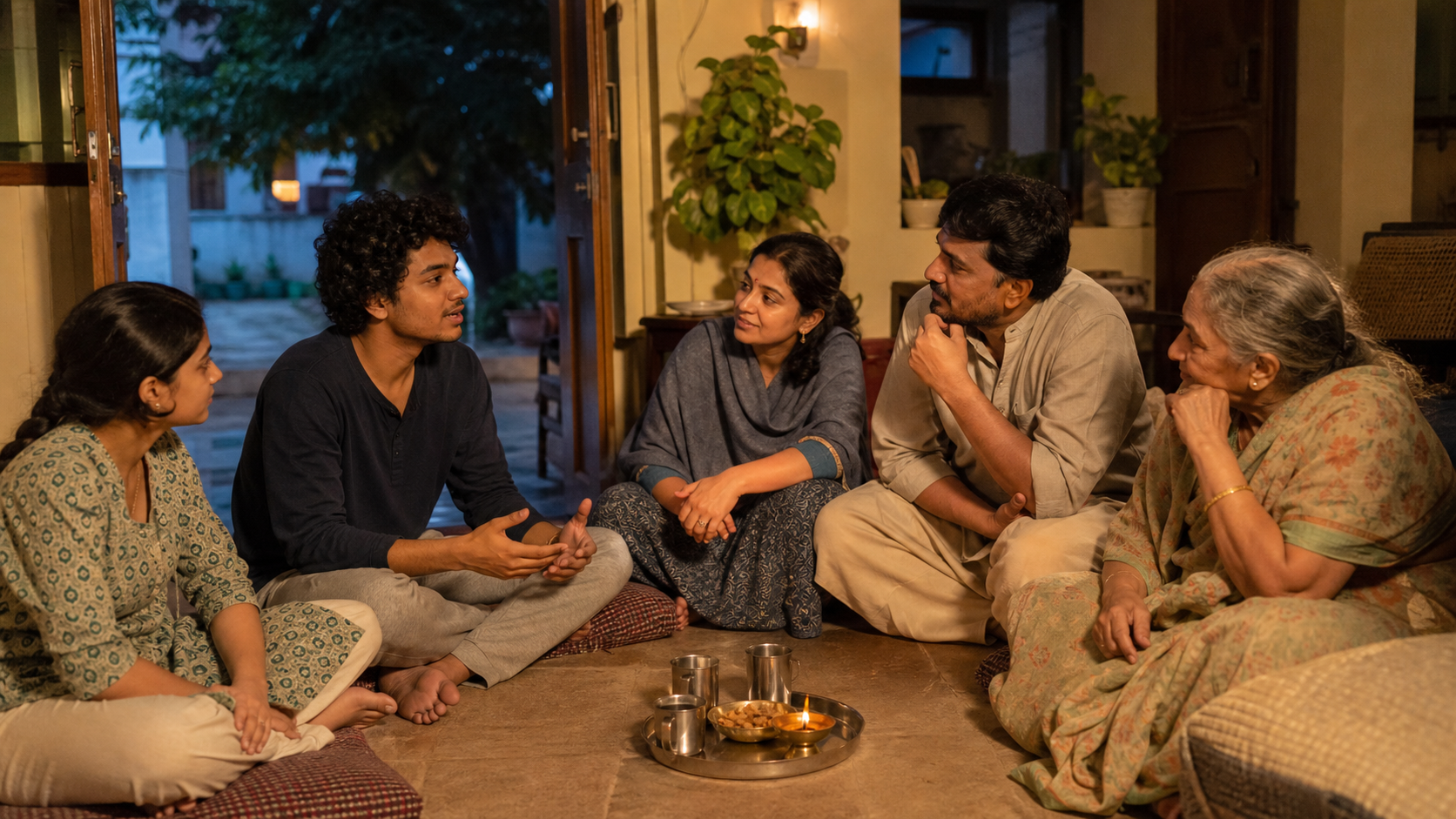
Situationships promise closeness without commitment, but dharmic traditions caution that warmth without ethical walls quickly becomes restlessness. This analysis reads Gen Z’s half-love trend through Hindu, Buddhist, Jain, and Sikh frameworks that balance kama with dharma. It explains why ambiguous contracts elevate anxiety and how the Purusharthas, Right Speech, ahimsa, and seva realign intimacy with…
-
Mahesh Navami 2026: Sacred Date, Auspicious Puja Vidhi, and Maheshwari Heritage Unveiled

Mahesh Navami 2026 falls on June 23, aligning with Jyestha Shukla Navami, and honors Lord Shiva as Mahesh. The festival blends precise tithi-based observance with accessible household and temple rituals, including Abhishekam, Bilva Patra offerings, and mantra-japa. It carries special cultural significance for the Maheshwari community, functioning as a reaffirmation of ethical commerce, philanthropy, and…
-
Bhadra in Hindu Astronomy: Unveiling the Two Bhadrapadas and Their Timeless Celestial Significance

Bhadra in Hindu astronomy refers to a paired lunar mansion—Purva Bhadrapada and Uttara Bhadrapada—rooted in the 27-nakshatra system that has guided observation and calendrics since Vedic times. The two Bhadrapadas occupy consecutive spans from late Aquarius into mid-Pisces, blending empirical sky-mapping with rich symbolic and ethical meanings. Classical Jyotiṣa associates them with Jupiter (Aja Ekapada)…
-
Decoding Hindutva as Sanatana Dharma: Comparing Christian, Islamic, and Marxist Fundamentalism

This in-depth comparative study restores Hindutva to its indigenous meaning as synonymous with Sanatana Dharma and contrasts its pluralistic architecture with fundamentalist patterns in strands of Christianity, Islam, and Marxism. Drawing on sociology of religion and India’s lived pluralism, it defines fundamentalism as a style—exclusive canon, centralized authority, boundary hardening—rather than a judgment on any…
-
Modi Meets Giampaolo Tomassetti (Jnananjana Dasa) in Rome: Kashi Art and Civilizational Bridges

Prime Minister Narendra Modi’s Rome meeting with Italian artist Giampaolo Tomassetti (Jnananjana Dasa) spotlighted cultural diplomacy through the gifting of a Varanasi painting. The exchange linked India–Italy ties with the soft power of sacred art, situating Kashi’s iconic ghats and the Ganga river within a broader civilizational conversation. This analysis decodes the artwork’s symbolism, technique,…
-
At Manipur Sangh Camp, RSS Leader Hails Indigenous Faiths as Hindutva’s Mother, Urges Plural Unity

At a Sangh training camp in Imphal East, Manipur, RSS Assam Kshetra Seva Pramukh Rajesh Deshkar stated, “Indigenous faith is the mother of Hindutva,” framing indigenous traditions as foundational to a plural civilizational ethos. The report from the North East underscores how service (seva), constitutional protections, and intercultural dialogue can align Hindu, Buddhist, Jain, Sikh,…
-
Kon‑Tiki’s Daring Proof: 5,000 Miles on a Balsa Raft—and What It Revealed About Polynesia

Kon‑Tiki tested an audacious question in maritime history: could a prehistoric-style balsa raft ride Pacific currents from Peru to Eastern Polynesia? Built with period-faithful materials and steered by guara centerboards and a square sail, the raft launched in April 1947 and made landfall at Raroia after roughly 101 days, validating transport feasibility. The expedition proved…
-
Political Subjugation, Internal Faultlines, and Hindu Civilisation: An Evidence-Based Reappraisal

UPSC Secretary Shashi Ranjan Kumar’s remarks—linking Hindu civilisation’s decline to political subjugation and internal shortcomings—have revived a vital debate. This evidence-based analysis distinguishes between transient state contraction and enduring civilisational continuity across Hinduism, Buddhism, Jainism, and Sikhism. It maps key turning points from the Delhi Sultanate and Mughal Empire to British Colonial Rule, while highlighting…
-
Bhairava’s Untamed Jata: Shiva’s Tantric Iconography, Cosmic Fire, and the Discipline of Time

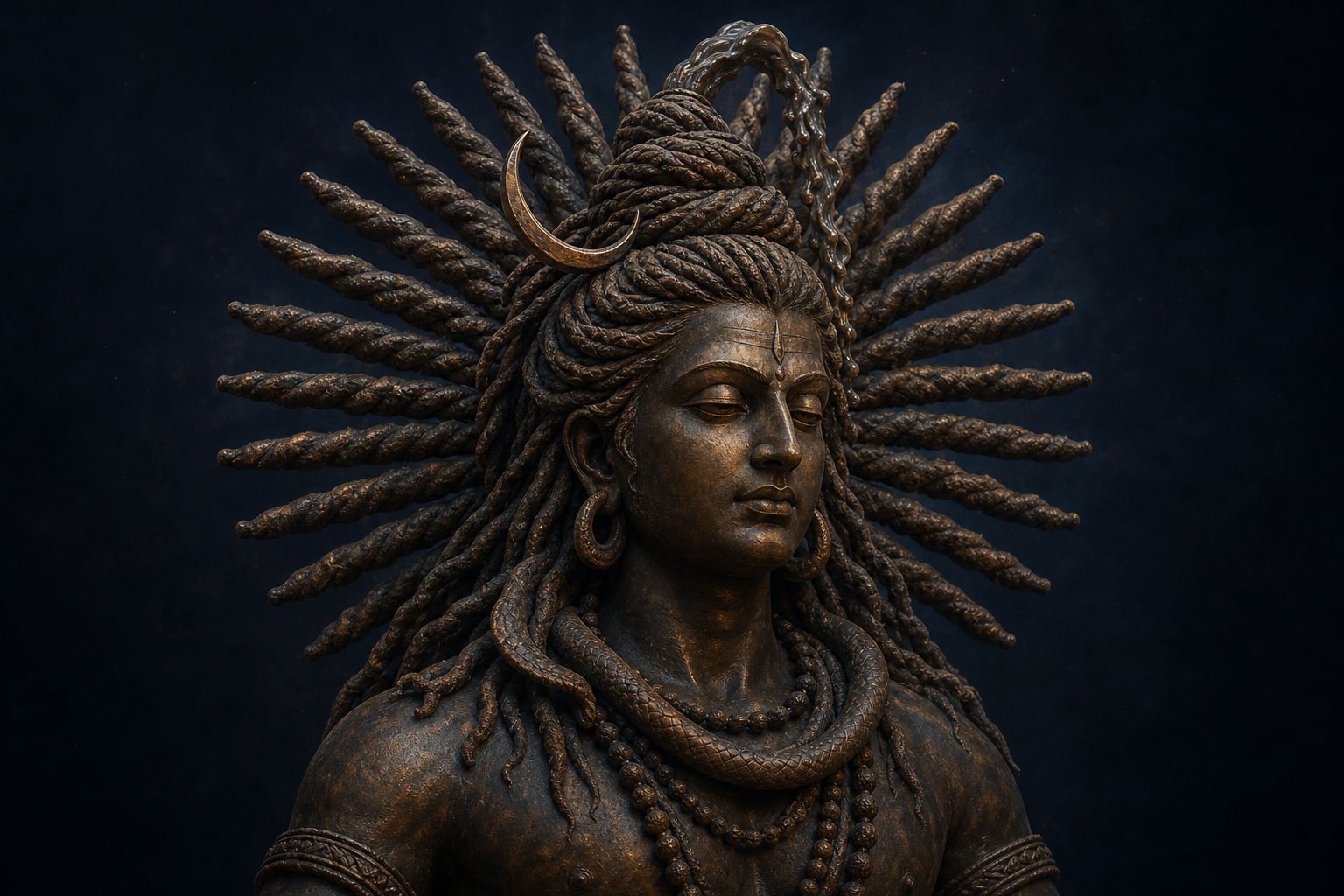
Bhairava’s untamed jata—often described as a “matted flame”—is a precise iconographic language rather than a dramatic flourish. Drawing on Agamic and Purāṇic traditions (including the Skanda Purāṇa’s Kāśī Khaṇḍa), the flame-like hair encodes tapas (ascetic heat), the governance of time (kāla), and the ethics of vigilant guardianship. Read through a yogic lens, it symbolizes the…
-
Historic Milestone: Italy Affirms Hindu Union, Advancing Dharmic Pluralism and Civic Rights

Italy has affirmed the Sanatana Dharma Samgha (Italian Hindu Union) as an official religious denomination under Article 8, consolidating the legal standing of Hindu communities through the Intesa framework. This step translates into practical rights: civil-effects marriages, pastoral care in public institutions, clearer pathways for temples and cultural centers, and transparent governance for recognized entities.…
-
From Axe to Bow: Parashurama and Rama’s Weapons across India’s Civilizational Evolution

Parashurama’s axe and Rama’s bow are more than weapons; they are precise metaphors for India’s civilizational evolution from corrective severity to codified restraint. Read together, they chart the passage from foundational pruning to lawful kingship, illuminating Kshatra Dharma and maryada in the Ramayana. The parashu symbolizes necessary removal of entrenched harm, while the Kodanda embodies…
-
Jyeshtha Mahina 2026 in Marathi Panchang: Definitive Dates, Adhik Maas Insights, and Key Vrats

Jyeshtha Mahina 2026 in the Marathi Panchang features an Adhik Maas, creating two consecutive Jyeshtha months. Adhik Jyeshtha runs from 17 May to 14 June 2026 (IST), followed by Nija Jyeshtha from 15 June to 14 July 2026. This arises because no Sankranti occurs between the May and June Amavasyas, a hallmark condition for Adhik…
-
Rama on Hanuman, Lakshman on Angada: Decoding Yuddha Kanda Strategy and Sacred Symbolism

This study examines Rama’s march to Lanka through the dual lenses of strategy and symbolism in the Yuddha Kanda. It traces how intelligence from Sundara Kanda matured into a disciplined campaign: ritual diplomacy with the ocean, Nala’s engineering of Rama Setu, and Sugriva’s team-of-teams command across a high-mobility Vanara army. It clarifies that Valmiki does…
-
Matak Hulāre Unveiled (Part 2): Swaying Rhythms, Folk Aesthetics, and Punjabi Dance Science

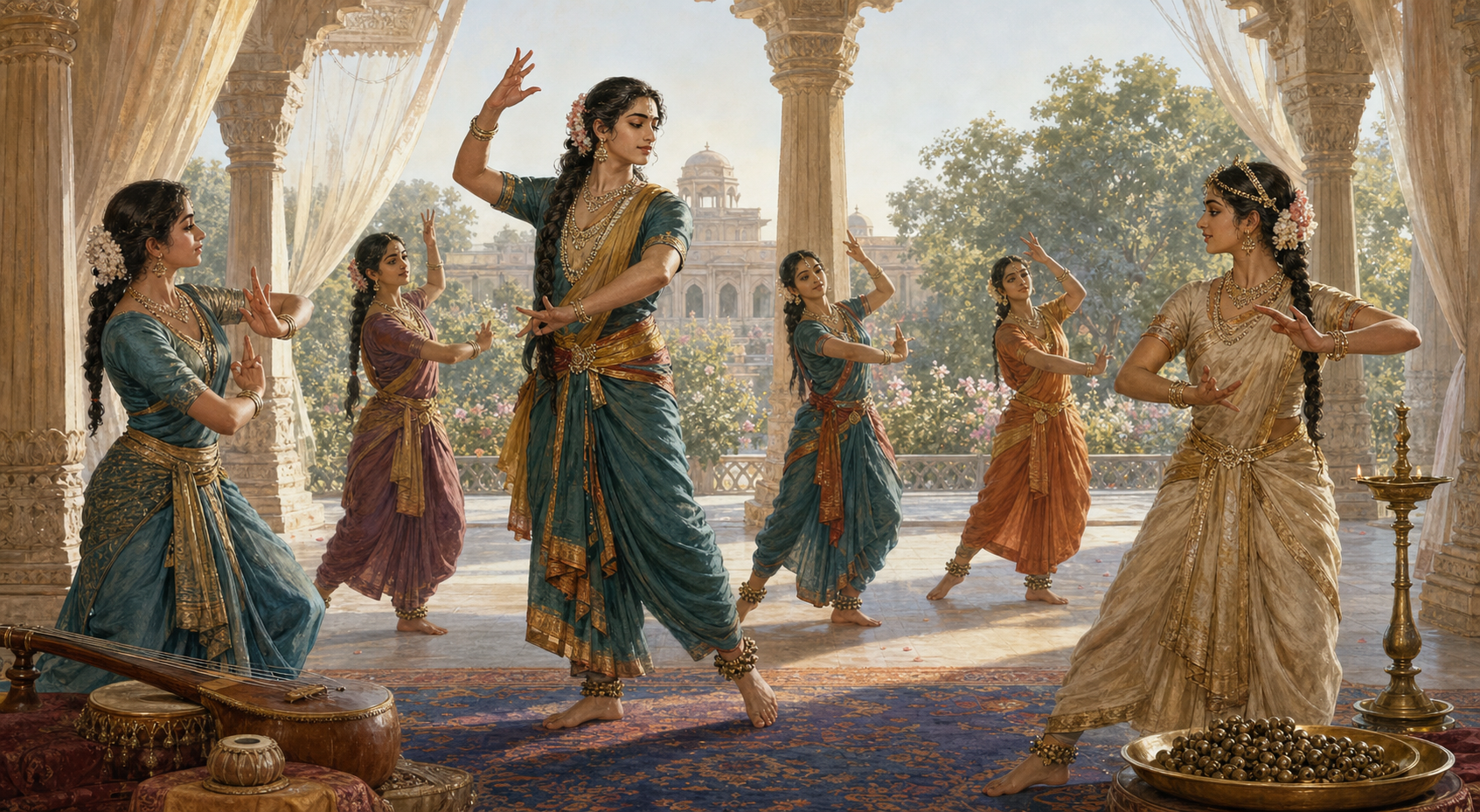
Matak Hulāre captures the essence of Punjabi folk movement as a disciplined sway animated by joy, community, and musical pulse. This in-depth second installment analyzes its cultural history across Giddha and Bhangra, explains rhythmic foundations such as keherva cycles, and details the roles of dhol, algoza, chimta, and tumbi. It explores boliyan as living oral…
-
Unmasking Putana and Jara: Demoness-Mother Archetypes, Tyranny’s Birth, and Dharma

Tyranny in Puranic and Itihasic literature emerges through distorted or restorative caregiving. This study compares two maternal archetypes: Putana, who weaponizes nurture under Kamsa’s regime in the Bhagavata Purana, and Jara, who joins the halves of the future Magadhan king Jarasandha in traditions linked to the Mahabharata. The contrast illuminates how intention and method shape…
-
Krishna’s Birth Reimagined: Jain Mahabharata on Karma, Kamsa, Jarasandha, and Destiny

The Jain Mahabharata reframes Krishna’s birth through the lenses of karma, Anekantavada, and ethical responsibility while honoring narrative motifs cherished across India. It presents Krishna as a Vasudeva, Balarama as a Baladeva, and Jarasandha as a Prativasudeva, aligning familiar events with a precise moral taxonomy. Rather than divine interruption, the sequence unfolds as the fruition…
-
From Riyadh to Tehran: How Srila Prabhupada’s Vedic Wisdom Inspires Unity and Hope

Interest in India’s ancient knowledge has expanded across Arab and Persian cultural spheres, especially during periods of uncertainty. This article examines why Srila Prabhupada’s books resonate in these contexts: philosophical clarity, rigorous translation, and accessible practice. It explains how Arabic and Persian editions preserve Vedic nuance while remaining readable for university courses and interfaith study…
-
Hare Krishna Kirtan on King’s Day 2026: Nitai Prabhu Leads a Vibrant Sankirtan in Amsterdam

On April 27, 2026, a mobile Hare Krishna kirtan led by Nitai Prabhu wove through King’s Day in Amsterdam, blending devotional rhythm with civic celebration. The procession introduced harinama-sankirtana—congregational chanting of the Hare Krishna maha-mantra—as an accessible form of urban spirituality and cultural exchange. Structured by mridanga, kartals, and harmonium, the call-and-response format enabled spontaneous…