-
Avesham in Hindu Tantrism: Profound Divine Absorption Beyond Possession

Avesham in Hindu Tantrism is a profound state of divine absorption in which ordinary ego-consciousness becomes receptive to sacred presence. Rather than reducing it to spirit possession, this article explains Avesham through mantra, Shakti, guru-guidance, ritual discipline, and the subtle body. It explores how the experience relates to surrender, self-dissolution, devotion, and the transformation of…
-
Self-Realization in Hinduism: Powerful Signs of Enthusiasm, Smile and Bliss

Self-realization in Hinduism is the direct recognition of the true self beyond body, mind and ego. Its signs are not limited to mystical language; they appear in daily life as enthusiasm, a natural smile and quiet bliss. Enthusiasm reflects action aligned with dharma rather than anxiety or ambition. A genuine smile reveals inner ease, humility…
-
Sacred Wilderness in Hinduism: Powerful Lessons from Forests, Beasts, and Dharma

Hinduism presents the wilderness not as a realm of dread, but as a sacred field of discipline, revelation, and dharma. Forests in Hindu scriptures become places where kings, sages, and seekers encounter humility, tapas, and moral testing. Animals are not reduced to symbols of evil; they appear as vahanas, avatars, teachers, guardians, and embodiments of…
-
When Truth Clears the Crowd: Hindu Wisdom on Honest and Lasting Bonds

Honesty in Hindu philosophy is more than social politeness; it is the discipline of aligning speech, conduct, and conscience with satya. This article explains how truthful living often filters relationships, causing shallow or transactional associations to fade while genuine companionship remains. Drawing from Hindu teachings, the Bhagavad Gita, the Upanishads, and the broader dharmic traditions…
-
The Difficult Power of Virtue: Hindu Wisdom on Hypocrisy, Dharma and Inner Reform

This article examines why people often praise virtue while failing to practice it in daily life. Drawing from Hindu wisdom, the Bhagavad Gita, Yoga philosophy, the Mahabharata, and broader Dharmic traditions, it explains hypocrisy as a gap between moral speech and disciplined action. The discussion shows that dharma is not a slogan, ritual identity, or…
-
Erasing Hinduism from Yoga: A Powerful Decolonial Call for Dharmic Integrity

This article examines how the Bhagavad Gītā and Patañjali’s Yoga Sūtra are sometimes detached from Hinduism through selective academic terminology. It explains why the modern history of the word “Hinduism” does not erase the older continuity of Hindu traditions, sampradāyas, and textual reception. The discussion places yoga within a shared Indic civilizational field shaped by…
-
Nagamani Revealed: The Powerful King Cobra Jewel Myth, Science, and Sacred Meaning

Nagamani, also known as the snake-stone or serpent jewel, is one of the most fascinating myths connected with cobras and naga traditions in Indian culture. This article explains the belief that a divine jewel rests on the head of a powerful serpent while carefully separating folklore from scientific evidence. Modern zoology does not support the…
-
Ramanandis in Hinduism: Powerful Bhakti Legacy of Devotion and Social Unity

The Ramanandis are one of the most influential Vaishnava orders in Hinduism, rooted in the devotional legacy of Ramananda and centered on Rama-bhakti. Their tradition combines Vishishtadvaita-influenced theology, vernacular devotion, monastic discipline, pilgrimage culture, and a strong emphasis on divine grace. This article explains their history, philosophy, ascetic institutions, literary influence, and continuing relevance in…
-
Powerful Truth: Why Erasing the Gītā and Yoga Sūtra Wounds Dharmic Unity

This article examines how denying the Hindu belonging of the Bhagavad Gītā and Patañjali’s Yoga Sūtra reflects a deeper problem in modern religious studies. It explains why the colonial history of the word “Hinduism” does not erase the older civilizational continuity of Hindu texts, practices, and lineages. The discussion places the issue within debates on…
-
India, Hinduism, and the Powerful Freedom of Dharmic Pluralism and Insight

This reflection presents India and Hinduism as living civilizational realities rather than fixed systems that can be reduced to ritual, geography, or linear history. It explains why Indian traditions often preserve memory through symbols, narratives, philosophy, sacred geography, and direct experience as much as through dates and documents. The essay explores Hinduism’s decentralized structure, its…
-
Integral Evolution: A Powerful Dharmic Map for 21st-Century Awakening

Integral Evolution presents a contemporary framework for spiritual awakening that joins meditation, maturity, shadow integration, service, and systemic responsibility. It argues that 21st-century awakening cannot remain confined to private mystical experience, because modern seekers live amid ecological, technological, social, and psychological complexity. The article explains how waking up, growing up, cleaning up, showing up, opening…
-
America at 250: The Powerful Dharmic Roots Hidden in Its Founding Vision

America’s 250th anniversary offers an opportunity to revisit the deeper roots of its founding vision of religious freedom and pluralism. Hinduism is often treated as a recent immigrant tradition in the United States, but Hindu thought and Indian civilizational models were already visible to eighteenth-century intellectuals. Texts such as A Code of Gentoo Laws and…
-
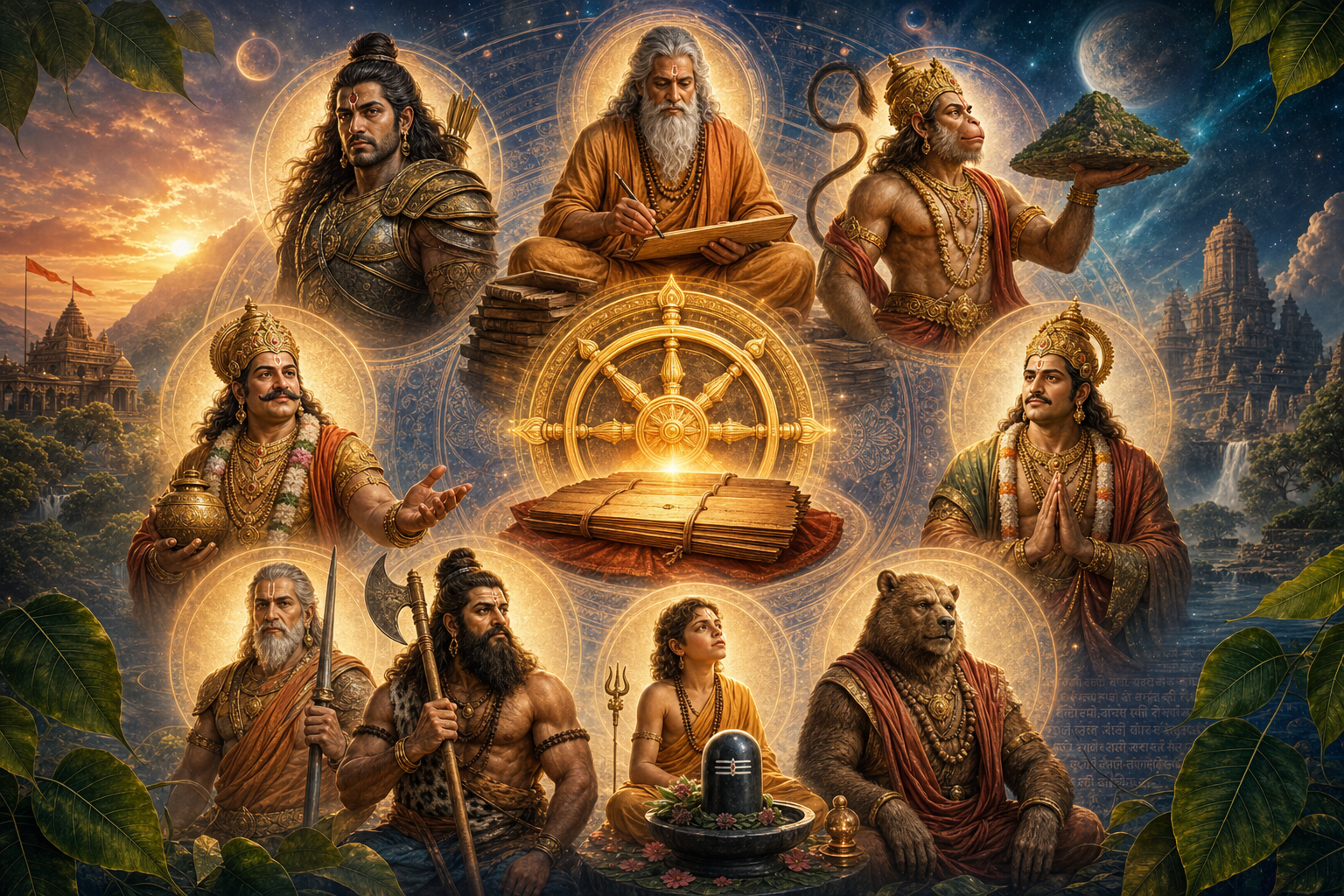
Nava Chiranjeevis: Powerful Lessons from Hinduism’s Immortal Witnesses

The Nava Chiranjeevis, or Nava Sanjivis, are the nine enduring witnesses of Hindu Puranic and Itihasa tradition. Their stories show that immortality in Hinduism is not merely endless life, but a deeper responsibility shaped by dharma, memory, devotion, knowledge, and consequence. Ashwatthama, Mahabali, Veda Vyasa, Hanuman, Vibhishana, Kripacharya, Parashurama, Markandeya, and Jambavan each preserve a…
-
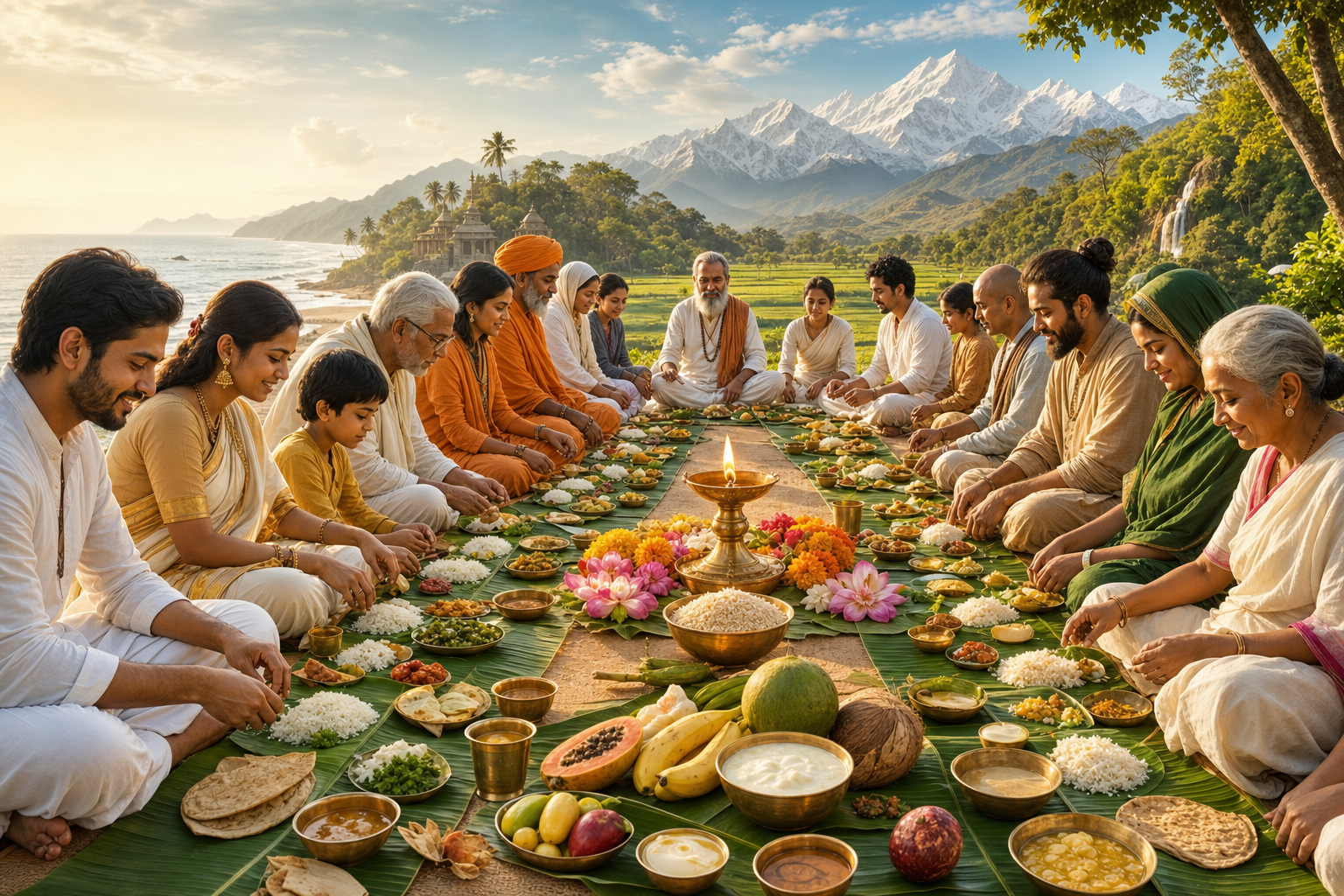
Why Hinduism’s Flexible Food Ethics Still Offer a Powerful Lesson in Unity

Hinduism is often misunderstood as a tradition that imposes vegetarianism on every follower, but its food philosophy is far more nuanced. The tradition honors vegetarianism, ahimsa, sattva, purity, and restraint while also recognizing regional ecology, family customs, health, occupation, and spiritual discipline. Food in Hindu life is not merely a dietary matter; it is tied…
-
Ajima Dhyo in the Kathmandu Valley: A Deep Dive into Nepal’s Living Shakta–Tantric Heritage

Ajima DhyoNewar Kathmandu’s living Shakta–Tantric traditionembeds the protective, maternal presence of the divine feminine into streets, courtyards, and crossroads. This article defines Ajima (आजिमा) as a class of guardian goddesses, relates them to Aṣṭamātṛkā and Navadurga forms, and maps their role in the Valley’s protective mandala. It explains daily Tantric ritual practice, the guthi system,…
-
Unveiling Gauni Bhakti: Harness the Heart’s Innate Devotion in Hinduism for Dharmic Unity

Gauni Bhakti names the heart’s innate devotionan unforced, everyday reverence that precedes argument or ritualand shows how natural feeling can mature into steady spiritual practice. By clarifying the philological sense of gauna (secondary) alongside its experiential sense (everyday and natural), the piece reconciles textual theology with lived devotion. Drawing on the Bhagavad Gita, the Bhagavata…
-
Beyond Birth: Why Scriptures Define a True Guru by QualitiesNot Caste or Lineage

Scriptures across the dharmic spectrum uphold qualities and realizationnot birthas the basis for authentic spiritual authority. Drawing on S.B. 7.11.35 and related teachings, this analysis explains why varṇa is determined by guna and karma, and how that principle governs the qualifications of a true guru. It revisits the Vrindavan controversy around Srila Bhaktisiddhanta Saraswati Thakura…
-
Universal Hope in Dharmic Thought: Jiva Goswami on Why Every Soul Is Destined for Freedom

This essay presents a clear, research-grounded account of why hope is universal in Dharmic thought, drawing on Śrī Jīva Goswami’s Paramatma Sandarbha and aligned teachings from the Bhagavad-Gita, the Upanishads, Buddhism, Jainism, and Sikhism. It explains how Paramatma’s immanence, the jīva’s intrinsic luminosity, and the contingency of ignorance together secure the eventual liberation of all…
-
Periya Karuppar Unveiled: The Unyielding Sentinel and Living Guardian of Tamil Villages

Periya Karuppar“the Great Dark One”is a living guardian deity of Tamil Nadu whose shrines anchor ethics, oath-taking, and social order at village thresholds. Rooted in the Ayyanar–Karuppar protective complex, his iconography (aruval, sword, staff, and dog) encodes lawful strength and vigilance. Rituals such as arul vaaku, boundary offerings, and community vows function as social technologies…
-
The King’s Four Wives: A Dharmic Allegory on Body, Wealth, Companionship, and Soul

A classic dharmic parable about a king and his four wives becomes a concise map of body, wealth, relationships, and the inner spiritual core. Read how Hinduism, Buddhism, Jainism, and Sikhism interpret the same story with different vocabularies yet convergent wisdom. Discover why only the cultivated inner reality accompanies beyond death while the body, possessions,…