-
Does God Really Exist? A Dharmic Deep Dive into Suffering, Karma, and Yuga Dharma

This long-form exploration reframes “Does God really exist?” through the dharmic lenses of Hinduism, Buddhism, Jainism, and Sikhism. It explains how Yuga Dharma situates the present age (Kali Yuga) and why accessible practices—like nāma-japa, kīrtana, satsanga, and seva—are especially potent now. Drawing on pramāṇa theory, Nyāya arguments, and Vedānta’s non-dual and devotional streams, it outlines…
-
Sharpening the Inner Compass: Trusting Intuition on the Dharmic Path with Clarity and Courage

Trustworthy intuition in Hinduism is not impulse but disciplined, dharma-aligned insight that integrates perception, reason, and sacred testimony. This article clarifies how the inner compass relates to Atman, the Upanishads, and the Bhagavad Gita, while showing convergences with prajñā in Buddhism, anekāntavāda in Jainism, and hukam in Sikhism. Readers learn practical tests for discernment—ahiṃsā, satya,…
-
Kishkindha Kanda Unveiled: Hampi’s Sacred Landscape, Dharma Debates, and Hanuman’s Rise

Kishkindha Kanda (Book IV of the Valmiki Ramayana) forges the Rama–vanara alliance, situates the narrative in the sacred Hampi–Anegundi landscape, and prepares the ground for Hanuman’s mission. Readers gain a clear map of key episodes—the pact with Sugriva, Vali-vadha’s dharma debate, Sugriva’s coronation, the monsoon interlude, and the strategic dispatch of search parties. The analysis…
-
Liberate the Self: Hindu, Buddhist, Jain, and Sikh Insights on Embracing True Nature

This long-form essay explores how Hinduism, Buddhism, Jainism, and Sikhism converge on a single, practical insight: suffering intensifies when one strives to become someone other than one’s true nature. Drawing on the Upanishads, Bhagavad Gita, Yoga Sutra, Sāṅkhya analysis, Buddhist teachings on craving and anatta, Jain doctrines of aparigraha and anekāntavāda, and Sikh wisdom on…
-
Break Free from the Cult of Approval: A Seven-Year Deprogramming Toward Dharmic Inner Freedom

This essay examines the “cult of approval” as a pervasive people-pleasing pattern and presents a seven-year deprogramming arc grounded in psychology and dharmic wisdom. It clarifies how unspoken social contracts—trading authenticity for belonging—form and why they are so hard to leave. It outlines pragmatic steps for change: mapping implicit rules, creating ethical distance, regulating the…
-
Backbiting and Dharma: Psychological, Social, and Karmic Costs—Plus Practical Remedies

Backbiting may appear trivial, yet dharmic ethics and modern psychology converge on its real costs: eroded trust, increased anxiety, fragmented communities, and deepened karmic imprints. Hinduism (Bhagavad Gita 17.15), Buddhism (Right Speech), Jainism (ahimsa and satya), and Sikhism (rejection of ninda) all prescribe compassionate, truthful, and beneficial speech. Research likewise shows that malicious gossip undermines…
-
Is Life Easy or Difficult? An Evidence-Backed Dharmic Guide to Joy, Suffering, and Mastery

Is life easy or difficult? A dharmic analysis shows the question spans two complementary levels: the conventional reality of dukkha (unsatisfactoriness) and the ultimate discovery of ananda (joy). Buddhism’s Four Noble Truths, the Yoga Sutra, Vedanta’s ananda doctrine, Jain anekantavada, and Sikh Chardi Kala together form a unified method for transforming difficulty into resilience while…
-
Ramayana’s Unfinished Truth: Why Rama and Sita Don’t Get a Fairy-Tale Ending (and Dharma’s Lesson)

Ramayana is not a fairy tale about bliss after victory; it is a rigorous meditation on dharma under the pressures of love, power, and public trust. The narrative after Ravana’s defeat intensifies into a study of rajadharma, where Rama’s personal anguish and public duty collide. Sita’s trials—Agni Pariksha, exile, and her return to Mother Earth—expose…
-
Shattering the Myth: Why Enlightenment Demands Action—Dharma, Karma Yoga, and Sacred Work

Many assume enlightenment frees a person from work; Hindu philosophy and its dharmic counterparts show the opposite. The Bhagavad Gītā teaches that action is unavoidable and must be transformed through Karma Yoga into selfless service. Dharma aligns individual role and aptitude with the common good, while prārabdha karma explains why even the realized remain outwardly…
-
Nīti in Hindu Thought: Timeless Ethics, Just Governance, and Dharmic Unity Explained

Nīti, from the Sanskrit nī (to lead), is the applied ethics of Hindu thought that unites personal virtue, just governance, and jurisprudence. This comprehensive overview clarifies how nīti relates to dharma, nyāya, rājadharma, and daṇḍanīti, explaining why means matter as much as ends. It surveys Vidura-nīti, the Arthasastra, Nītisāra, and narrative texts like the Pañcatantra…
-
From ‘Responsibly Broke’ to Financial Freedom: Healing Money Trauma with Dharma and Data

This evidence-based reflection traces the path from being “responsibly broke” to sustainable financial freedom by healing money trauma, building literacy, and aligning prosperity with Dharma. It explains how early experiences of financial control and shame hardwire the nervous system, shaping money scripts that drive avoidance or overspending. It then details actionable frameworks—zero-based budgeting or 50/30/20,…
-
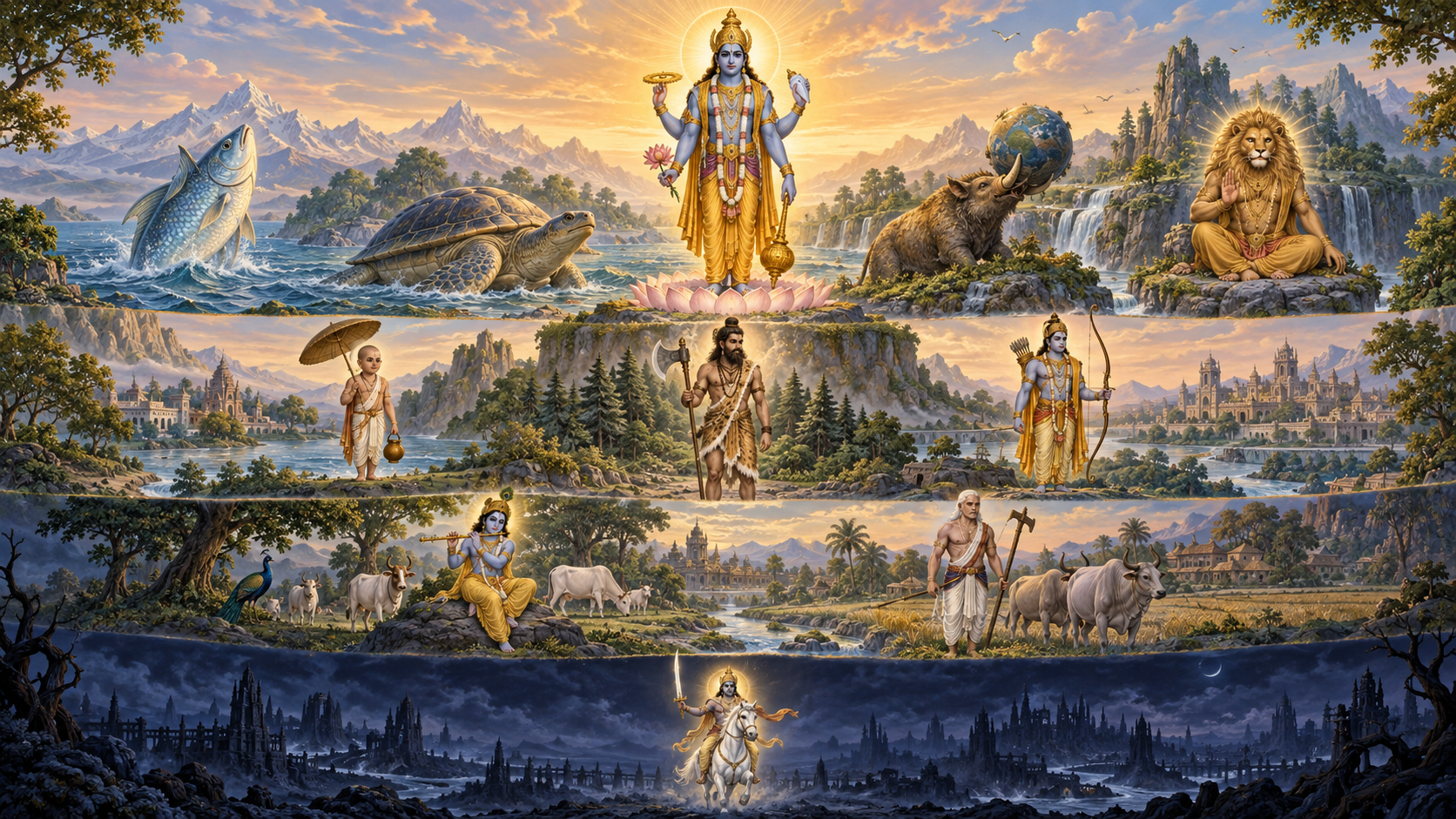
Bhagavan Parashurama: Warrior‑Sage Avatar of Vishnu Who Restored Dharma and Balance

Bhagavan Parashurama, the sixth avatar of Vishnu and a devoted worshipper of Shiva, embodies the Hari–Hara unity at the heart of Sanatana Dharma. Drawing on the Bhagavata Purana, Vishnu Purana, the Mahabharata, and the Ramayana, this comprehensive essay explains how Parashurama restored ethical order when royal power became predatory, then withdrew in penance to model…
-
Dharma in Daily Life: A Scholarly Guide to Virtue, Justice, and Well-Being Across Traditions

Dharma functions as a living code of virtue in the Hindu way of life, guiding choices that uphold justice, compassion, and social harmony. This long-form analysis explains its textual roots in the Upanishads, Dharmashastras, and the Bhagavad Gita, and shows how Purusharthas integrate ethics with prosperity and fulfillment. It offers a practical decision framework for…
-
Beyond Heaven and Hell: Karma, Consciousness, and Self-Reward in Dharmic Philosophy

This essay explains, in clear academic terms, why Dharmic traditions reject an externalized reward-and-punishment model after death while affirming a rigorous moral universe. It clarifies karma-phala using concepts like sanchita, prarabdha, and agami, and links Mimamsa’s apurva and Nyaya–Vaisheshika’s adrishta to a self-executing moral order. Hindu philosophy, Buddhism, Jainism, and Sikhism are presented in harmony:…
-
Vasudhaiva Kutumbakam and Dharma: A Powerful Blueprint for Shared Global Peace

Vasudhaiva Kutumbakam frames global peace as a disciplined practice of shared responsibility rooted in Rta, Dharma, and the ethics of ahimsa and karuna. The essay explains how loka-samgraha in the Bhagavad Gita links personal virtue to social welfare through reciprocal duty. It outlines pluralism across Hinduism, Buddhism, Jainism, and Sikhism as a practical foundation for…
-
Gifting the Shaligram Stone: Profound Punya and the Sacred Dharma Ban on Selling

Dāna—sacred giving—is celebrated across the dharmic traditions, and nowhere is its meaning more vivid than in gifting the Shaligram stone, the Śāligrāma-śilā revered as a svayambhū form of Viṣṇu. Puranic literature associates this act with boundless puṇya while insisting that a Shaligram must never be sold. The prohibition is not mere formality; it preserves the…
-
Dharma Unveiled: The Living Code of Virtue Guiding Daily Life Across Dharmic Traditions

Dharma is presented as a living, context-sensitive code of virtue shared across Hinduism, Buddhism, Jainism, and Sikhism. The article clarifies its scope—from universal virtues like ahiṃsā and satya to role-specific duties—and shows how it governs the pursuit of prosperity and well-being without compromising conscience. It draws on classical sources (Dharmashastras, the Bhagavad Gita, Buddhist canons,…
-
Tapasya in Kali Yuga: Powerful, Scripture-Sourced and Science-Backed Austerities for Modern Life

Tapasya in Kali Yuga is not self-mortification but an intelligent discipline that purifies body, speech, and mind for clarity and resilient living. Drawing on the Bhagavad Gita, Yoga Sutras, the Bhagavatam, and the Kali-Santarana Upanishad, it reframes penance as preparatory purification rather than an attempt to please the divine or force realization. Practical śarīra-, vāk-,…
-
Beyond Maya: Dharmic Wisdom on Materialism, Ethical Wealth, and Lasting Fulfilment

Hindu philosophy and its sister Dharmic traditions view wealth as a legitimate aim governed by ethics, moderation, and service. The puruṣārthas align Artha with Dharma and Moksha, while the Bhagavad Gita’s Karma Yoga reframes success as disciplined action without fixation on results. Upanishadic counsel, Yoga’s aparigraha, Buddhism’s Right Livelihood, Jain vows of limitation, and Sikh…