-
Bhagavan Parashurama: Warrior‑Sage Avatar of Vishnu Who Restored Dharma and Balance

Bhagavan Parashurama, the sixth avatar of Vishnu and a devoted worshipper of Shiva, embodies the Hari–Hara unity at the heart of Sanatana Dharma. Drawing on the Bhagavata Purana, Vishnu Purana, the Mahabharata, and the Ramayana, this comprehensive essay explains how Parashurama restored ethical order when royal power became predatory, then withdrew in penance to model…
-
Avatar vs Prophet: Decoding Sacred Roles, Divine Presence, and Dharma Across Faiths

This in-depth analysis explains the core difference between a Hindu avatāra and an Abrahamic prophet by examining ontology, revelation, soteriology, and ritual life. It shows how the avatāra is the Divine Presence entering the world to restore dharma, while the prophet is a human messenger who conveys God’s guidance. The piece nuances the comparison by…
-
Parashurama: The Saint-Warrior Avatar Who Reset Kshatra Dharma and Reclaimed the Land

Parashurama, the sixth avatar of Lord Vishnu and a devoted bhakta of Lord Shiva, embodies the union of spiritual austerity and disciplined strength to restore dharma. Scriptural accounts from the Bhagavata Purana, Vishnu Purana, Ramayana, and Mahabharata portray his mission as a principled reform of Kshatriya power when it strays into adharma. The narrative explores…
-
Dasavatara Jayanti 2026–2027: Authoritative Guide to Dates, Rituals, and the Ten Avatars of Vishnu

This authoritative guide to Dasavatara Jayanti 2026–2027 explains the ten incarnations of Lord Vishnu, the classical tithi framework for each Jayanti, and how to align observances with regional Panchang traditions. It clarifies Amanta vs Purnimanta month systems, sunrise-based tithi boundaries, and sampradaya-specific rules (e.g., Janmashtami midnight and Rama Navami midday). Each avatara’s theological meaning and…
-
Kalki Jayanti 2026: Date, Significance, Puja Vidhi and Panchang Guide for Shravana Shukla Shashti

Kalki Jayanti (Kalki Avatara Jayanti) in 2026 falls on Monday, 17 August, observed on Shravana Shukla Shashthi. The festival honors Lord Kalki, the tenth incarnation of Sri Maha Vishnu, and emphasizes ethical renewal over speculation about eschatological timing. This practical guide outlines calendar nuances across Purnimanta and Amanta systems, along with Tamil and Malayalam almanacs,…
-
Matsya Jayanti 2026 at Nagalapuram Vedanarayana Swamy: Sacred Sevas and Equinox Sun Miracle

Matsya Jayanti 2026 at Sri Vedanarayana Swamy Temple, Nagalapuram (Andhra Pradesh), will be observed on 21 March with early-morning Suprabhata Seva, Tomala Seva, and Archana, followed by public darshan. The festival, set in the Chaitra Month, honors Vishnu’s first Avataar and the safeguarding of the Vedas during the cosmic deluge. Nagalapuram’s famed equinoctial Surya Puja—when…
-
12 Incarnations of Ganesha: Sacred Avatars of Ganapati in the Mudgala and Ganesha Puranas

This overview situates the twelve incarnations of Ganesha within the Mudgala Purana and Ganesha Purana, emphasizing accurate, text-grounded understanding. It presents the Mahotkata Vinayaka narrative in the Satya Yuga, where Ganesha vanquishes Devantaka and Narantaka by scattering grains, and explains its ethical symbolism. It notes the fragmentary listing of Mayureshwara in the excerpt without speculating…
-
Krishna, Fountainhead of All Avatars: Profound, Unifying Wisdom for Dharmic Paths

Sanatana Dharma describes Krishna as the primeval Lord from whom all avatars emerge, preserving divine transcendence while engaging the world through plenary expansions. This framework, grounded in the Puranas and Bhagavad-Gita, explains how the Supreme remains untouched by material activity and continues eternal lila with devotees. Recognizing Balarama as the first expansion illustrates the cooperative…
-
Why Parashurama Stood Alone: The Profound Dharma Behind Vishnu’s Consortless Avatar

Parashurama’s consortless form is a purposeful feature of Vaishnava theology rather than an omission. Scriptural narratives emphasize his ascetic mission, where tapas, mobility, and disciplined detachment were essential to restoring kshatra-dharma. The diversity of Vishnu’s avatars reflects role-specific embodiments: Rama models household righteousness, Krishna social and relational dharma, and Parashurama corrective austerity. His status as…
-
Awaken the Dashavatara Within: Transformative Practices to Embody Vishnu’s Ten Archetypes

This article reframes the Dashavatara of Vishnu as ten inner states of consciousness that anyone can cultivate for ethical clarity, resilience, and compassion. Each avatar is paired with practical ways to invoke it—such as breath awareness, mindfulness, micro-habits, service, and values-based action. The approach aligns with Vedic wisdom, the Upanishads, and the Bhagavad Gita while…
-
Dashavatara Decoded: Ancient India’s Hidden Scientific Genius and Dharmic Unity

The Dashavatara offers a sophisticated, non-sectarian framework for thinking about evolution, consciousness, and cosmic order in a way that resonates across Hinduism, Buddhism, Jainism, and Sikhism. Interpreted academically, the avatars serve as pedagogical metaphors for ecological insight, ethical formation, and inner refinement. This approach avoids anachronism while honoring ancient India’s scientific wisdom expressed through symbols.…
-
Decoding Śūnya, Bhakti, and Avatāra: Profound Insights from Kashi’s ‘Mad Monk’

A rare Kashi dialogue with the so-called “Mad Monk” maps creation from Bhāvākāśa to bindu, rekhā, and vṛtta, framing śūnya as a luminous interval rather than mere emptiness. The Sadhu links kāma and prema to two textures of creation, explains how inner blossoming at sahasrāra, anāhata, maṇipūra, or mūlādhāra colours experience, and outlines a tenfold…
-
Parashurama, Balarama, Sri Rama: Mapping Humanity’s Ascent from Force to Righteousness

Hindu scriptures present an integrated model of moral evolution through Parashurama, Balarama, and Sri Rama. Together, these avatars map a movement from raw force to cultivated strength and ultimately to principled righteousness. Parashurama encodes the courageous correction of entrenched adharma. Balarama anchors strength in restraint, agriculture, and social balance. Sri Rama perfects the arc through…
-
Eternal Truth in Time: How Hindu Avatars Restore Dharma and Inspire Inner Freedom

This article explores the Hindu concept of avatars as the eternal manifesting within time to restore dharma and guide beings toward moksha. It grounds the discussion in the Bhagavad Gita and Puranic narratives, while noting philosophical nuances across Advaita, Viśiṣṭādvaita, and Dvaita. Readers discover how avatars function as ethical exemplars whose presence educates through action…
-
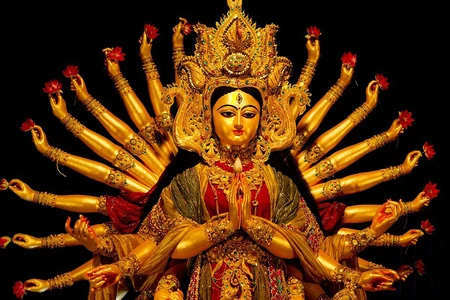
Navaratri and it’s broad spectrum dharmic influence

According to our ancient Sanatani scriptures which are the Saptasudhi, the theory of the Navratri festival has been described. We are normally aware of two types of Navratri that are Chaitra Navratri and Shardiya Navratri. But, you will be amazed to hear that Navratri falls four times in a year.