
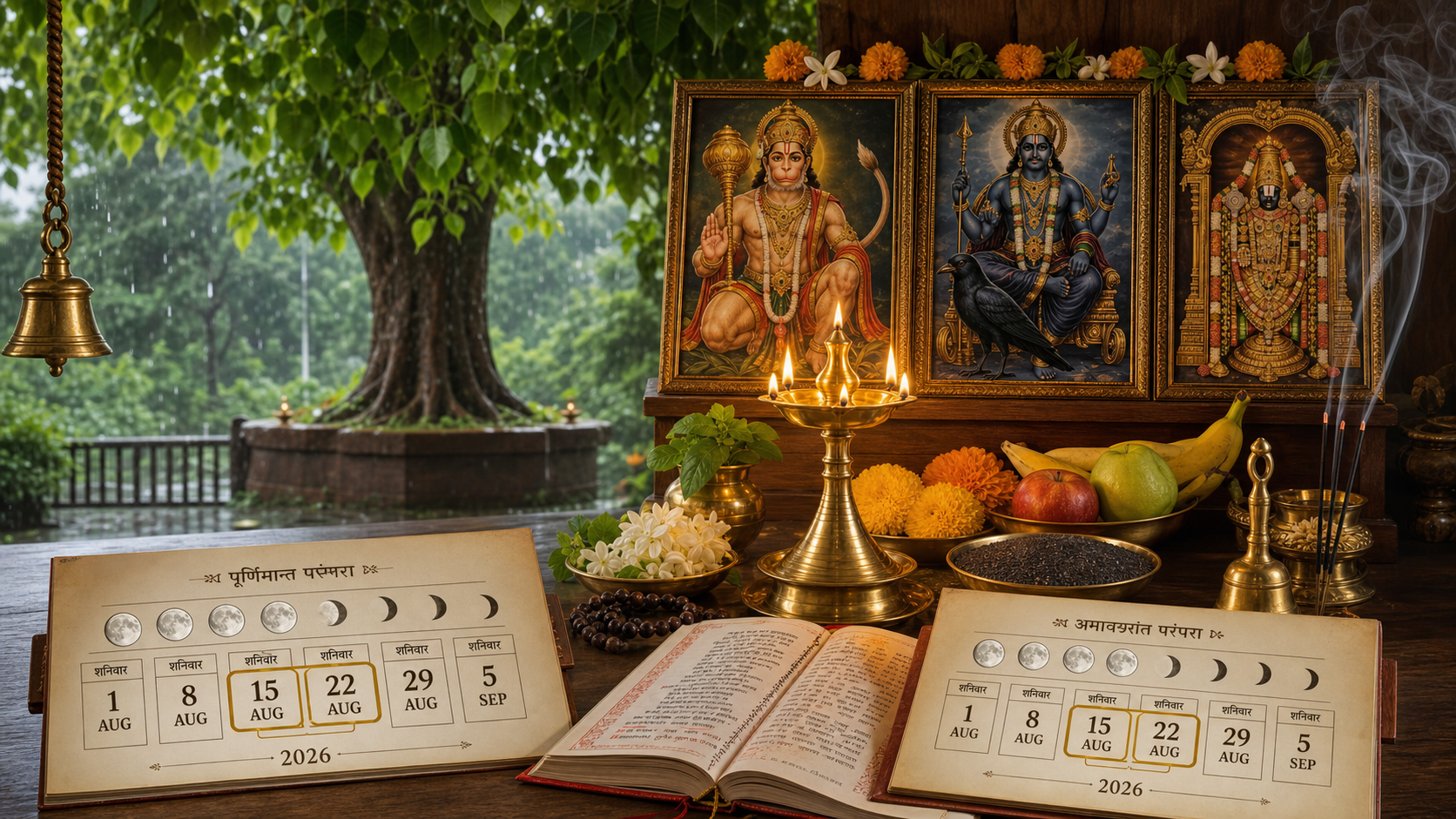
Shravan Shanivar 2026 at a glance. Shravan Shanivar, also written as Sawan Shaniwar, refers to the Saturdays that fall within the sacred lunar month of Shravan. The observance brings the discipline of Saturday worship into a month already associated with vrata, puja, pilgrimage, scriptural recitation and heightened devotional practice. Depending on regional custom, these Saturdays may be dedicated principally to Lord Hanuman, Shani Bhagavan or Lord Balaji, also known as Venkateshwara Swamy. The dates are not identical throughout India because Hindu communities use more than one system for defining the beginning and end of a lunar month.
Amavasyant Shravan Shanivar dates in 2026: Saturday, 15 August; Saturday, 22 August; Saturday, 29 August; and Saturday, 5 September. These dates apply to the Amavasyant or Amanta calculation commonly followed in Maharashtra, Gujarat, Goa, Karnataka, Andhra Pradesh and Telangana. In this system, Shravan extends from Thursday, 13 August, through Friday, 11 September 2026.
North Indian Shravan Shanivar dates in 2026: Saturday, 1 August; Saturday, 8 August; Saturday, 15 August; and Saturday, 22 August. These dates follow the Purnimant or Purnimanta calendar widely used in states such as Uttar Pradesh, Bihar, Rajasthan, Madhya Pradesh, Punjab, Himachal Pradesh, Uttarakhand, Delhi, Jharkhand and Chhattisgarh. Under this reckoning, Shravan begins on Thursday, 30 July, and concludes on Friday, 28 August 2026.
The dates shared by both systems are 15 August and 22 August 2026. This overlap is especially useful for families whose members come from different regions. August 1 and August 8 belong to Shravan only under the Purnimant reckoning, whereas August 29 and September 5 belong to Shravan only under the Amavasyant reckoning. The apparent disagreement between calendars therefore reflects two legitimate methods of naming lunar months rather than an error in either tradition.
Why the calendar difference occurs. A lunar synodic cycle lasts approximately 29.5 days, while a tithi is defined by each 12-degree increase in the angular separation between the Sun and Moon. Because a tithi does not necessarily begin at midnight, its civil-date assignment depends on the time of sunrise and the rule governing a particular observance. The Purnimant month runs from the day after one full moon to the next full moon and begins with Krishna Paksha. The Amavasyant month runs from the day after one new moon to the next new moon and begins with Shukla Paksha. Their month names differ during part of the cycle, but the two systems describe the same continuous movement of the Moon.
The 2026 date ranges also explain why a generic online search for “Shravan Shanivar 2026” may produce two different lists. A calendar prepared for Mumbai or Hyderabad will usually present the Amavasyant dates, while one prepared for Delhi or Lucknow will generally show the Purnimant dates. Devotees living outside India should consult a panchanga calculated for their own city because sunrise, tithi boundaries and time-zone differences can occasionally alter the locally applicable civil date.
The religious character of Shravan. Shravan is traditionally regarded as a season of spiritual restraint, purification and sustained devotion. Its name is historically associated with Shravana nakshatra, near which the full Moon is traditionally located when the month receives its designation. The month falls during the Indian monsoon season, when rain, renewed vegetation and a slower rhythm of travel have long shaped religious and household life. These environmental conditions do not provide a single explanation for every observance, but they contribute to Shravan’s recognizable atmosphere of renewal, inwardness and gratitude.
Shravan is strongly connected with Lord Shiva, yet it is not exclusively Shaiva. Its weekly observances also encompass forms of Shakti, Vishnu, Krishna, Hanuman, Surya and the Navagraha. Shravan Shanivar therefore reveals an important feature of Hindu practice: several devotional relationships can coexist within the same sacred period without requiring every household to follow an identical ritual program.
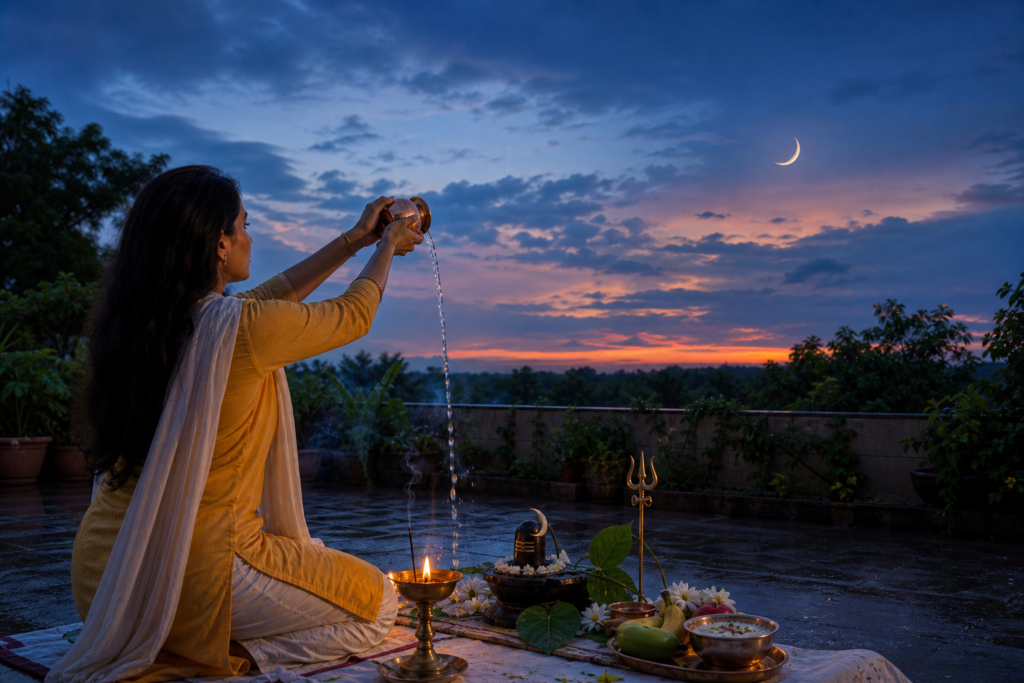
Why Saturday is associated with Shani Bhagavan. The Sanskrit-derived name Shanivara identifies Saturday as the weekday of Shani, the planetary deity associated with Saturn in Jyotisha. Shani is commonly understood as a demanding but morally serious figure connected with time, discipline, responsibility, endurance and the consequences of action. Devotees may undertake Shani Puja or Shani Shanti Pujan during Shravan Shanivar as an expression of humility and ethical self-correction, especially when navigating a period that their astrological tradition interprets as difficult.
Astrological language requires careful interpretation. Terms such as Shani Dosha, Sade Sati or an adverse Saturn period belong to Jyotisha and should not be treated as medical diagnoses or empirically guaranteed predictions. Worship may offer structure, hope, moral reflection and emotional steadiness, but no ritual should be presented as a guaranteed way to eliminate every hardship. A mature observance places devotion beside responsible decisions, honest work and appropriate professional assistance.
Why Lord Hanuman is worshipped on Shravan Shanivar. Hanuman is widely revered on Saturdays as a figure of strength, self-mastery, courage and unwavering seva to Sri Rama. Narrative traditions connect him with protection from the trials attributed to Shani, although details vary across regions and retellings. Hanuman worship consequently complements Shani worship: one emphasizes disciplined accountability, while the other embodies fearless devotion and the strength to meet adversity without surrendering moral clarity.
Common Hanuman practices include recitation of the Hanuman Chalisa, repetition of Rama Nama, reading from the Sundara Kanda, temple darshan and the offering of flowers, fruit or a simple sattvic naivedya. Sindoor and oil are associated with Hanuman worship in several communities, but they should be applied to a murti only where established custom permits it. Temple instructions and the guidance of the officiating priest take precedence over generalized online ritual lists.
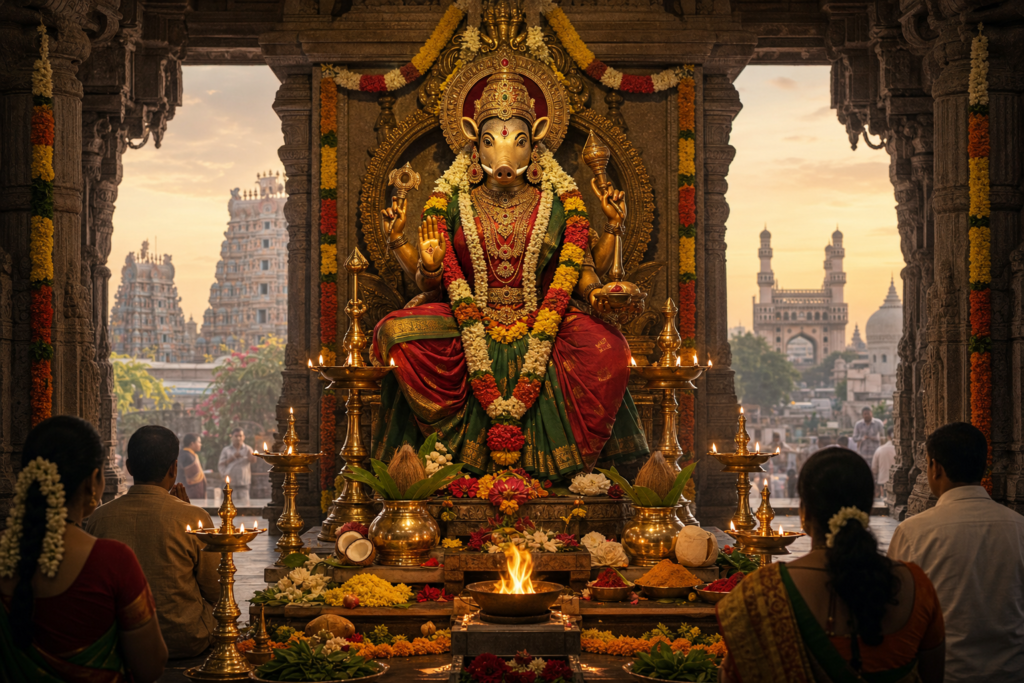
Why Lord Balaji is worshipped on these Saturdays. Saturday devotion to Lord Venkateshwara is especially prominent in many Telugu, Kannada and other South Indian households. During Shravan, devotees may perform Venkateshwara Swamy Vratham, recite Vishnu Sahasranama, chant the name of Srinivasa, visit a Balaji temple or prepare a simple offering at home. This Vaishnava dimension does not compete with Hanuman or Shani worship. Hanuman’s devotion to Rama and Balaji’s identity within the Vishnu tradition allow the practices to be understood as mutually reinforcing expressions of bhakti.
Offerings to Venkateshwara commonly include clean water, flowers, fruit, tulasi where it is available and ritually appropriate, and freshly prepared vegetarian naivedya. The theological emphasis rests on surrender, gratitude and remembrance rather than the material value of the offering. A small offering made attentively is consistent with the spirit of the vrata and may be more meaningful than an elaborate arrangement performed under social pressure.
Ashwattha Maruti Pujan in Maharashtra and Gujarat. A distinctive regional expression of Shravan Shanivar is Ashwattha Maruti Pujan, in which the Ashwattha tree and Lord Hanuman are revered. The Ashwattha, commonly identified as the sacred fig or peepal tree, carries extensive religious symbolism in South Asian traditions. Families may circumambulate the tree, offer flowers or water, recite prayers and present a special naivedya according to local custom.
Tree worship is most coherent when reverence is joined to ecological care. Nails, staples, plastic decorations, tightly bound thread and substances that can injure the bark should be avoided. Offerings should not become litter, and local rules governing public or temple trees should be respected. In this form, Ashwattha Puja connects inherited symbolism with practical stewardship of living sacred spaces.
A simple home observance. No single sequence is mandatory for every sampradaya, but a restrained household practice can begin with bathing, cleaning the worship space and arranging a lamp, water, flowers and suitable food offerings. The devotee may remember Ganesha, the family deity and the guru-parampara before making a brief sankalpa. The sankalpa can state the intention to observe Shravan Shanivar for devotion, ethical discipline, family well-being and the capacity to act responsibly.
A short Panchopachara-style worship may offer gandha or another permitted fragrance, flowers, incense, a safely placed lamp and naivedya. The devotee may then focus on Hanuman, Shani Bhagavan, Venkateshwara Swamy or the deity established by family tradition. Combining all three is permissible in many households, but it is not necessary. Concentrated worship of one chosen form can be fully complete when conducted with sincerity and respect.
For Hanuman-centered practice, the sequence may include Rama Nama, the Hanuman Chalisa and a few minutes of silent reflection on courage and seva. For Shani-centered practice, it may include a sesame-oil lamp where this can be managed safely, a Shani prayer, black sesame according to custom and a concrete act of charity. For Venkateshwara-centered practice, it may include Vishnu Sahasranama, a Srinivasa nama-japa, tulasi and a simple food offering. Each sequence should conclude with gratitude, arati where customary and respectful distribution of prasadam.
Fasting during Shravan Shanivar. A vrata is broader than food restriction. It is a chosen discipline that may include worship, truthfulness, moderation of speech, scriptural study, charity and control of harmful habits. Dietary forms vary considerably: some devotees take only fruit and milk, some eat one sattvic meal, some avoid grains, and others simply abstain from meat, alcohol and intoxicants. The appropriate form is the one received through family or sampradaya and sustained without vanity or avoidable harm.
Fasting should remain compatible with health and essential responsibilities. Children, older adults, pregnant or nursing people, those with diabetes, eating disorders or chronic illness, and anyone taking medication should not undertake a severe fast without appropriate medical guidance. A modified vrata based on simple food, prayer, charity and sensory restraint can preserve the religious intention. Dehydration, faintness or medication disruption is not a measure of greater devotion.
The ethical dimension of Shani worship. Because Shani is associated with justice, labor, patience and karmic consequence, the observance gains depth when ritual is accompanied by responsible conduct. Paying workers fairly, settling an overdue obligation, assisting an elderly or disabled person, feeding someone in need, caring for animals without causing public harm, or supporting a legitimate community kitchen can become practical extensions of the puja. Charity should protect the recipient’s dignity and should never be performed merely for display.
Hanuman’s example similarly shifts attention from fear to service. His strength in the Ramayana is inseparable from discernment, humility and devotion. A Shravan Saturday devoted to Hanuman may therefore include completing a neglected family duty, helping a neighbor, controlling anger or studying a passage that strengthens ethical judgment. Such acts make the vrata relevant beyond the worship room.
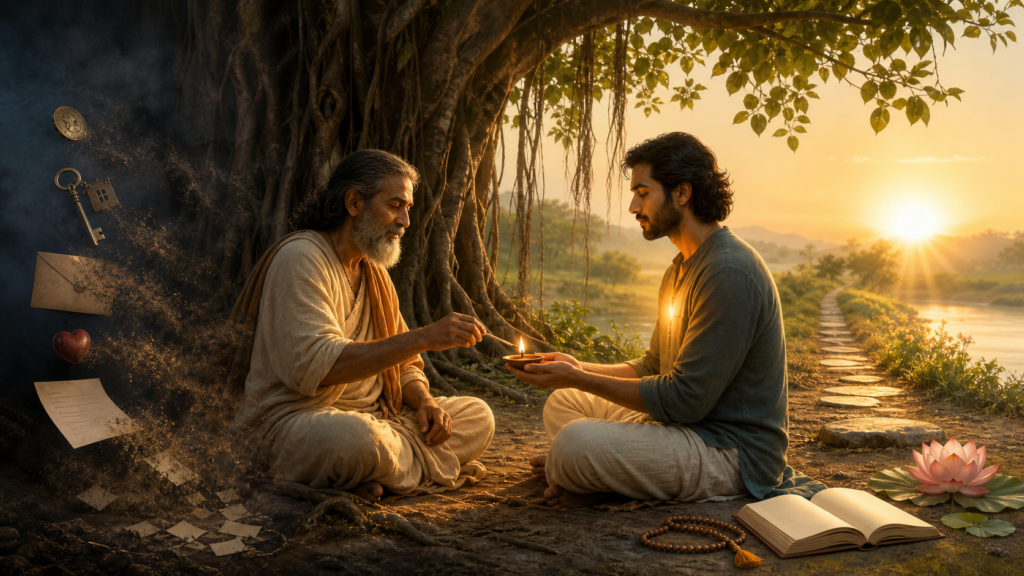
Venkateshwara devotion adds the disciplines of surrender and gratitude. In lived household practice, this can mean preparing food carefully, sharing prasadam, remembering absent relatives and acknowledging that prosperity carries responsibilities. The quiet repetition of these actions across four Saturdays often creates the observance’s deepest emotional effect: sacred time becomes visible through consistency rather than spectacle.
Morning or evening worship. Shravan Shanivar does not have one universal muhurta applicable to every deity and region. Venkateshwara worship is often performed in the morning, while some Shani traditions emphasize the late afternoon or evening. Hanuman worship may occur at either time. When a temple announces a specific abhishekam, alankara, archana or vrata schedule, that local schedule should be followed. A panchanga is necessary when an observance also depends on a particular tithi, nakshatra or pradosha period.
Temple observance. A visit may include darshan, participation in an authorized archana, listening to recitation and receiving prasadam. Devotees should follow dress, queue, photography and offering rules without assuming that practices permitted at one temple are valid at another. Oil should never be poured, objects should never be touched, and food should never be left near a shrine unless the temple explicitly allows it. These boundaries protect the deity, the ritual environment and the safety of the congregation.
Shani Shingnapur and numerous local Shani temples conduct special Saturday worship, while Hanuman and Balaji temples may experience heavier attendance throughout Shravan. Planning travel, allowing time for queues and avoiding pressure on older relatives can turn the visit into a calmer spiritual experience. Those unable to travel may observe the day at home; pilgrimage is valuable, but physical distance does not invalidate sincere remembrance.
Common misunderstandings. Shravan Shanivar is not a uniform pan-Indian festival with one compulsory menu, mantra or deity. It is a family of regional Saturday observances situated within Shravan. Nor does a missed Saturday automatically signify spiritual failure. Illness, employment, caregiving and unavoidable travel can require a shorter or modified practice. The tradition’s purpose is better served by steadiness and ethical awareness than by anxiety.
It is also unnecessary to treat Hanuman, Shani and Venkateshwara as rival choices. Some families honor one, some honor two, and others include all three. Theologically, the observance can accommodate Shaiva, Vaishnava, Smarta, regional and household frameworks. Respect for this diversity prevents a local custom from being incorrectly presented as the only authentic Hindu practice.
Household memory and emotional continuity. For many families, the meaning of Shravan Shanivar is carried through modest sensory details: monsoon rain beyond the doorway, the fragrance of incense, the sound of a familiar chalisa, a grandparent explaining a family rule, or prasadam shared after a day of restraint. These experiences give the observance emotional continuity without replacing its theological foundations. They also allow younger generations to encounter tradition through participation rather than abstract instruction alone.
Diaspora households often face a practical choice between the calendar of their ancestral region and a panchanga calculated for their present location. A coherent solution is to retain the inherited month system while using locally calculated sunrise and tithi times. Families connected to a temple may instead follow that institution’s published calendar so that private worship and community observance remain aligned. Whichever method is chosen should be recorded consistently rather than changed merely to obtain a preferred date.
Unity across Dharmic traditions. Shravan Shanivar belongs specifically to diverse Hindu ritual traditions and should be described with that precision. At the same time, the values cultivated through the vrata—self-restraint, compassion, non-harm, service, disciplined attention and care for community—resonate in different forms within Buddhism, Jainism and Sikhism. Recognizing this ethical kinship can strengthen mutual respect without erasing the distinct teachings, histories and practices of any tradition.
Practical conclusion. Devotees following the Amavasyant Panchanga should mark 15, 22 and 29 August and 5 September 2026. Those following the North Indian Purnimant calendar should mark 1, 8, 15 and 22 August. The most reliable observance combines the correct regional calendar with a sustainable vrata, focused puja, scriptural remembrance, charity and responsible daily conduct. In that balanced form, Shravan Shanivar becomes more than an attempt to obtain a desired result: it becomes a recurring discipline of courage, accountability, gratitude and seva.
Calendar and tradition references: The date framework was checked against the detailed Shravan Shanivar overview, the regional 2026 Shravan starting-date guide, an independent Purnimant and Amavasyant calendar comparison, and the regional account of Ashwattha Maruti Puja. Because panchanga calculations are location-sensitive, a locally prepared temple or household calendar remains the final practical reference.
Inspired by this post on Hindu Pad.








Leave a Reply
You must be logged in to post a comment.