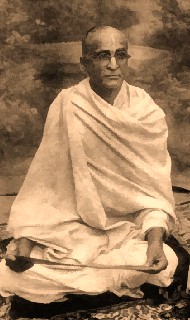
Srila Bhaktisiddhanta Sarasvati Thakura’s Disappearance Day invites reflective homage to a transformative figure in Gaudiya Vaishnavism whose influence radiates across Sanatan Dharma. As Srila Prabhupada explained, he was a ray of Visnu, a liberated soul sent by Krsna. That assessment frames both the spiritual stature and historical significance of a teacher who reshaped devotional practice for a modern world while remaining faithfully anchored in parampara.
The early life episode associated with Ratha-yatra remains especially evocative. Soon after his birth, the chariot stopped before the residence of Srila Bhaktivinoda Thakura; his mother carried him onto the chariot, and a garland from Lord Jagannatha fell upon the infant. Within Hindu Dharma, and particularly within the Lord Jagannath tradition, such moments are read as auspicious signs. Many readers experience a quiet sense of wonder at this account, sensing a providential thread that would later guide a life of scholarship, discipline, and service.
Historically, his life is inseparable from the mission of Srila Bhaktivinoda Thakura. He took birth to assist and extend that mission, and as a preacher he introduced thoughtful innovations that strengthened outreach without diluting essence. Observing the continuity between his work and that of Srila Prabhupada illuminates how the Guru-Shishya Tradition transmits both fidelity to core truths and agility in method. This continuity later informed institutions and communities associated with ISKCON (International Society For Krishna Consciousness), reinforcing the living relevance of Gaudiya Vaishnavism.
Central to his teaching is the insistence on practicing bhagavata-marga and pancaratriki-vidhi together. This synthesis aligns heartfelt devotion with disciplined ritual, uniting interior transformation with external practice. The balance he advocated resonates across the dharmic family: one may perceive parallels between inner cultivation and ethical discipline in Buddhist bhavana and vinaya, the Jain emphasis on samayik and vrata, and Sikh simran held within maryada. The shared thread is integration rather than opposition, harmony rather than hierarchy.
For contemporary seekers, this vision offers practical guidance. It encourages the cultivation of personal realization through study and remembrance while honoring the purifying power of regulated service and ritual. In a diverse society, such an approach becomes a bridge across traditions, supporting unity in spiritual plurality without erasing distinct lineages. The result is a resilient, compassionate practice grounded in Sanatan Dharma and open to constructive dialogue within the wider dharmic community.
On this Disappearance Day, remembrance becomes a discipline of gratitude and a recommitment to seva, sadhana, and study. The account of Lord Jagannath’s early blessing, the lifelong service to Srila Bhaktivinoda Thakura’s mission, and the enduring call to integrate bhagavata-marga with pancaratriki-vidhi together form a legacy that continues to inspire. In honoring Srila Bhaktisiddhanta Sarasvati Thakura, communities find a map for devotion that is at once rigorous, compassionate, and unifying.
Inspired by this post on Dandavats.