
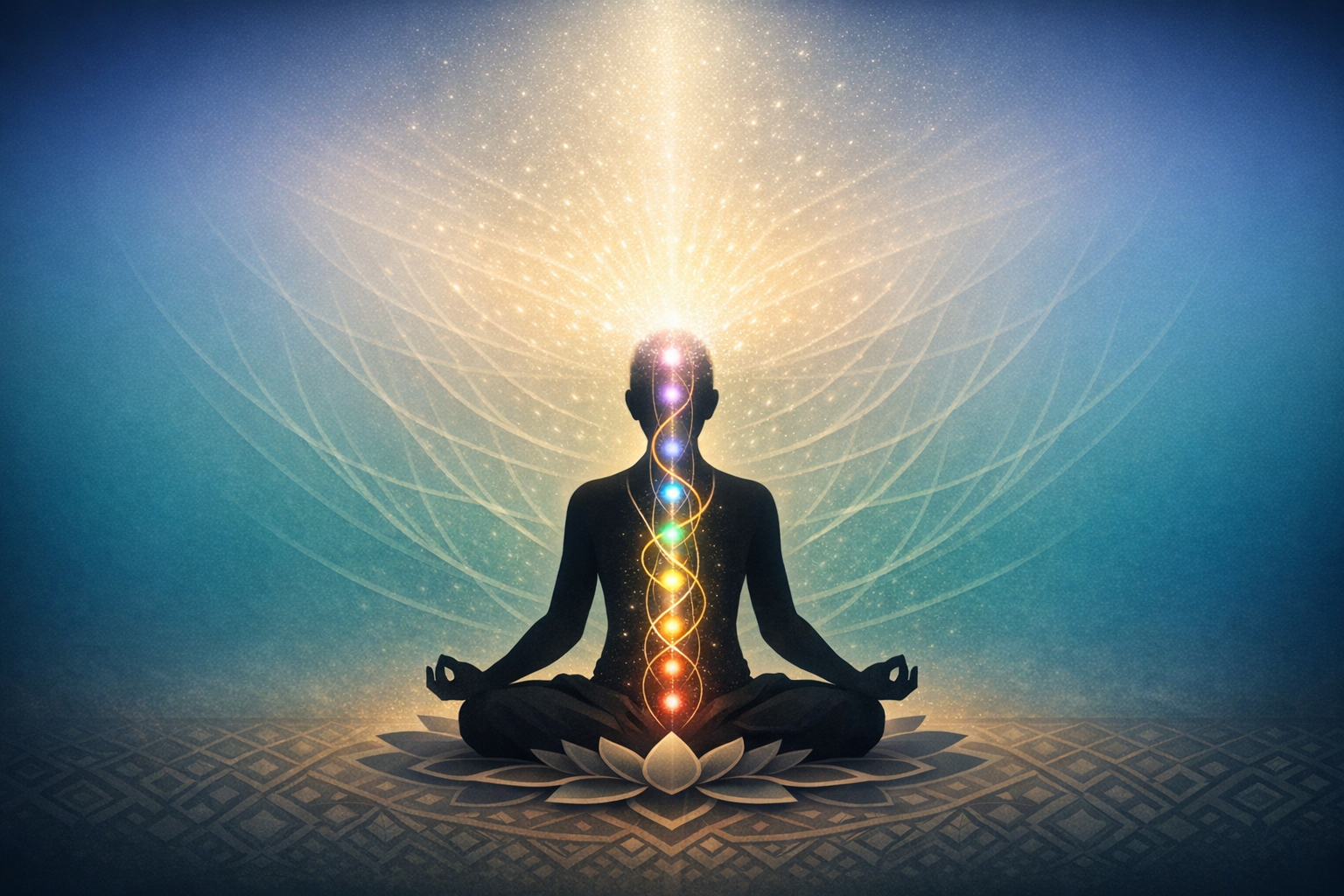
Layayoga, often described as the yoga of dissolution, occupies a distinctive place in Hinduism’s multifaceted yoga philosophy. It is concerned with the progressive dissolution (laya) of sensory, mental, and energetic patterns into subtler strata of awareness, culminating in the nondual realization of the identity of atman and Brahman. Framed within the wider tradition of Yoga in Hinduism, Layayoga complements and deepens disciplines such as Hatha Yoga, Raja Yoga, and Kriya Yoga by directing attention toward absorption rather than mere control, and toward abiding clarity rather than transient quietude.
Philologically, laya denotes dissolution, absorption, or melting away. In the context of vedanta, a useful distinction is sometimes made between mano-laya (temporary quiescence of the mind) and mano-nasha (final termination of ignorance). Layayoga, while employing states of absorption, is ultimately oriented toward stable insight rather than blankness; it aligns with Advaita Vedanta’s vision that the mind’s fluctuations (vrttis) are calmed so thoroughly that the nondual ground can be intuited as self-evident. Thus, Layayoga is not an escape from the world but a methodical passage from the gross to subtle, from agitation to lucidity, and from duality to unity.
Classical and medieval sources illuminate this trajectory. The Yoga Upanishads, including the Mandalabrahmana Upanishad, discuss yogic absorptions; the Yoga Tattva Upanishad classifies avenues of practice such as Mantra, Laya, Hatha, and Raja; while texts like the Nada-Bindu and Hamsa Upanishads detail inner sound (nada) and the So’ham current of ajapa-japa as vehicles for laya. The Hatha Yoga Pradipika, Shiva Samhita, and Gheranda Samhita further refine methods of pranayama, mudra, bandha, and dhyana that conduce to absorption. Together, these strands present Layayoga not as an isolated school, but as a current flowing through the broader river of Hindu yoga.
Within that river, Layayoga can be fruitfully understood as a convergent synthesis. From Raja Yoga it draws steadying disciplines of pratyahara, dharana, and dhyana. From Hatha Yoga it inherits the energetic grammar of nadis, chakras, pranayama, and bandhas. From Kriya Yoga it refines inner attention and breath-sound coordination. From vedanta it receives a nondual orientation that prevents absorption from collapsing into torpor and instead anchors it in insight. In practical terms, Layayoga interlaces these streams to dissolve obstacles and reveal undistorted awareness.
A technical understanding of yogic anatomy supports this work. The tradition speaks of prana coursing through a subtle network of nadis, of which ida and pingala flank the central sushumna nadi. Chakras articulate thresholds of transformation from muladhara through swadishtana, manipura, anahata, visudha, and ajna, with sahasrara envisioned as the crown of awakening. Layayoga places the sushumna nadi at the center of practice: when prana is harmonized and dissolved into this central channel, fluctuations recede and awareness stabilizes in its own luminosity.
One classical Layayoga doorway is pratyahara-laya, the quieting and withdrawal of the senses into the mind. Grounded in yama and niyama, the practitioner learns to let sensory data subside without repression, allowing attention to settle naturally. This is not indifference; it is clarity. As distractions attenuate, dharana becomes feasible and effort gradually yields to effortless resting in dhyana. In this continuum, laya matures from an episodic lull to a dependable background of serenity.
A second doorway is prana-laya, cultivated through measured pranayama. Techniques that lengthen, refine, and ultimately still the breath foster a parallel pacification of the mind, a principle verified in both classical manuals and contemporary studies of breath and the autonomic nervous system. Skillful use of bandhas and mudras stabilizes the ascent of prana toward the sushumna nadi. The injunction is caution and steadiness: Layayoga values precision and balance over intensity, ensuring the nervous system is soothed rather than strained.
A third doorway, nada-laya, draws on inner sound. The Nada-Bindu tradition describes how fine-grained attention begins to perceive spontaneous, unstruck resonance (anahata nada). By attending to this subtle current—not as a sensory novelty but as a meditative thread—attention finds an inward anchor that outlasts surface agitation. When used judiciously, nada becomes a bridge from dharana to dhyana and then to stable absorption, aligning with Layayoga’s emphasis on dissolution into the subtle.
A fourth doorway is tattva-laya, a contemplative dissolution from gross to subtle. Practices of bhuta-shuddhi and viveka examine the layers of embodiment through the pancha-kosha model—annamaya, pranamaya, manomaya, vijnanamaya, and anandamaya—until the transient is recognized as transient and consciousness abides as the invariant witness. This Pancha Kosha Viveka is not an intellectual exercise alone; it is experiential refinement that strips identification from each sheath, allowing awareness to rest as awareness.
A fifth doorway employs mantra-laya. Japa reduces conceptual churn and entrains the mind to rhythmic clarity. Ajapa-japa of So’ham, discussed in the Hamsa Upanishad and cognate teachings, synchronizes breath and awareness so that remembrance continues even without deliberate repetition. When infused with bhakti, mantra-laya dissolves egoic contraction into devotion, while keeping a vedantic discernment that devotion’s fullness is the Self’s fullness.
These doorways converge in meditation where dharana ripens into dhyana and dhyana clarifies into samadhi. In Layayoga discourse, it is vital to distinguish true laya from mere blankness. Temporary shut-downs of mental content can occur from fatigue or tamas, but they neither liberate nor clarify. Authentic absorption is lucent and wakeful; it unties knots by insight and steadiness, not by suppression. When such absorption becomes unwavering, the tradition speaks of nirvikalpa samadhi as the culmination of yogic endeavor and a gateway to nondual stabilization in life.
Kundalini dynamics provide a further explanatory lens. As prana becomes refined, it is said to ascend through the chakras via the sushumna nadi, softening the granthis (energetic knots) and dissolving residual conditioning. In Layayoga, the emphasis is less on spectacle and more on reliable inner quiet, ethical maturation, and integration. Kundalini is understood as intelligent and self-regulating when approached with humility, alignment to dharma, and guidance skilled in the nuances of yogic anatomy.
Ethical foundations are indispensable. Ahimsa, satya, asteya, brahmacharya, and aparigraha reduce the friction that destabilizes attention. Saucha, santosha, tapas, svadhyaya, and Ishvara-pranidhana cultivate inner hygiene, contentment, disciplined warmth, scriptural reflection, and surrender. Without these, pratyahara, dhyana, or advanced pranayama may magnify unresolved patterns; with them, Layayoga becomes a natural unfolding grounded in stability and care.
Guidance (guru-kripa) is equally emphasized in the tradition. A competent teacher calibrates practice, prevents overreach, clarifies experiences of laya versus lethargy, and, when appropriate, transmits momentum (shaktipata) that catalyzes absorption. Scriptural study of the Upanishads and allied texts, undertaken with viveka and humility, further aligns absorptive states with sound philosophical orientation so insight ripens into freedom rather than fascination.
From a comparative dharmic perspective, Layayoga’s language of dissolution resonates across traditions in a spirit of unity. Buddhism’s deep absorptions (jhāna) and teachings on nirodha emphasize pacification of mental fabrications; Jainism’s samayika, pratikraman, and the calming of passions (kshaya-upashama) point to ethical and contemplative quieting; Sikh teachings on simran and the anhad shabad echo the inner nada current. These parallels affirm a shared Indic commitment—Hinduism, Buddhism, Jainism, and Sikhism—to refine perception, reduce suffering, and realize an abiding truth beyond division.
Contemporary lenses add complementary insights. Breath-centered practices correlated with vagus nerve modulation can support autonomic balance, while focused-attention meditation may quiet self-referential rumination. Such findings, though provisional and method-dependent, harmonize with Layayoga’s age-old insistence that prana, attention, and ethics are inseparable. The science is not a replacement for tradition; rather, it underscores how carefully structured practice stabilizes mind and body together.
A practical Layayoga progression often begins with 10–15 minutes of seated stillness and breath awareness, 10–20 minutes of gentle pranayama attuned to comfort, and 20–30 minutes of inner focus—whether pratyahara-laya, mantra-laya, or nada-laya—followed by a brief period of silent resting. Over weeks and months, the ratio of technique to silence shifts as absorption becomes spontaneous. Periodic self-inquiry rooted in vedanta assures that states of quietude consolidate as abiding understanding rather than episodic relief.
Common challenges are well documented. Excess rajas produces restlessness and technique-chasing; excess tamas mimics laya as dullness. Ethical lapses destabilize practice, and premature intensity in pranayama or bandhas can fatigue the nervous system. The safeguards are classical: moderation, satsanga, steady svadhyaya, compassionate conduct, and consultation with a seasoned guide. Properly held, obstacles become occasions for refinement and deeper dissolution of the very tendencies that generated them.
Integration is the hallmark of maturity. Karma Yoga extends laya into action by dissolving doer-ship through service; Bhakti infuses absorption with warmth and gratitude; Jnana clarifies the ontological status of experiences so that even luminous samadhis are known as passing reflections in the timeless Self. In daily life this looks like even-mindedness, unforced compassion, and a quiet joy that does not depend on circumstance.
In sum, Layayoga in Hinduism is a rigorous, unhurried path that guides the practitioner from the gross to subtle, from multiplicity to unity, and from effort to effortless clarity. Its tools—pratyahara, pranayama, mantra, nada, kundalini alignment, and vedantic discernment—work together to dissolve agitation and reveal what was never absent. Read in conversation with the Upanishads and allied yoga texts, and honored alongside parallel insights in Buddhism, Jainism, and Sikhism, Layayoga stands as a shared civilizational treasure: a science of inner stillness that nurtures unity, wisdom, and compassionate living.
Inspired by this post on Hindu Blog.





Leave a Reply
You must be logged in to post a comment.