Tag: Kundalini

  • Bhairava’s Untamed Jata: Shiva’s Tantric Iconography, Cosmic Fire, and the Discipline of Time

    Bhairava’s Untamed Jata: Shiva’s Tantric Iconography, Cosmic Fire, and the Discipline of Time

    Bhairava’s untamed jata—often described as a “matted flame”—is a precise iconographic language rather than a dramatic flourish. Drawing on Agamic and Purāṇic traditions (including the Skanda Purāṇa’s Kāśī Khaṇḍa), the flame-like hair encodes tapas (ascetic heat), the governance of time (kāla), and the ethics of vigilant guardianship. Read through a yogic lens, it symbolizes the…

  • Decoding the Khatvanga: Skull Staff of Chamunda & Kali—Fearlessness, Tantra, and Transcendence

    Decoding the Khatvanga: Skull Staff of Chamunda & Kali—Fearlessness, Tantra, and Transcendence

    The khatvanga—skull-staff of Chamunda, Kali, and other fierce goddesses—emerges as a precise, multilayered symbol in Hindu iconography and tantric philosophy. This long-form analysis decodes its form (skull, bone staff, damaru, banner), its cremation-ground origins, and its ethical evolution from literal bone to wood or metal in mainstream ritual spaces. It clarifies how the staff encodes…

  • Beyond Rivalry: Why a True Vaidika Honors Tantra and a True Tantrika Reveres the Vedas

    Beyond Rivalry: Why a True Vaidika Honors Tantra and a True Tantrika Reveres the Vedas

    Vedas and Tantra are not adversaries but complementary avenues to the same truth, a reality long recognized across authentic lineages. This article traces their historical interdependence through the Agamas, Pancharatra, temple praxis, and Vedantic metaphysics to clarify why both are indispensable. It explains how mantra, yantra, mudra, nyasa, and Kundalini sadhana can integrate seamlessly with…

  • Why Red Rules Hindu Temples: Shakti, Auspiciousness, Ritual Power, and Color Science

    Why Red Rules Hindu Temples: Shakti, Auspiciousness, Ritual Power, and Color Science

    Red in Hindu temples is far more than ornament; it is the visual pulse of Shakti, auspiciousness, and energized devotion. This article explains how scriptures, Agamic traditions, and Shakta Tantras align red with rajas and protective grace, while temple practices translate meaning into materials such as kumkum, sindoor, and red flowers. It examines the role…

  • Aim Hrim Klim: Unlock the Sacred Triad of Shakti and the Three States of Consciousness

    Aim Hrim Klim: Unlock the Sacred Triad of Shakti and the Three States of Consciousness

    Aim Hrim Klim – the revered triad of bīja mantras – unites knowledge, compassionate power, and loving attraction into a single, practical discipline in Hindu spirituality. Drawing on classical mantra-śāstra and living lineages, the article explains how Aim clarifies cognition, Hrīṁ integrates heart-intelligence, and Klīṁ refines desire into dharmic will. It maps the triad to…

  • Bhujanga Lalita Tandava: Decoding Shiva’s Serpentine Grace and the Defeat of Avidya

    Bhujanga Lalita Tandava: Decoding Shiva’s Serpentine Grace and the Defeat of Avidya

    Bhujanga Lalita Tandava unites Shiva’s dynamic tandava with the soft cadence of lalita, translating complex Shaiva metaphysics into a clear, embodied grammar of movement. The dance’s serpentine wave, read through kundalini symbolism, demonstrates how intelligence and grace transform raw force into awakened action. Iconography of Nataraja—especially the subduing of Apasmara (avidyā)—grounds an ethics where clarity…

  • Kalika Tandava Decoded: Shiva’s Eight‑Armed Cosmic Dance of Renewal and Liberation

    Kalika Tandava Decoded: Shiva’s Eight‑Armed Cosmic Dance of Renewal and Liberation

    Kalika Tandava presents Shiva’s eight‑armed dance as a rigorous map of cosmic processes and inner transformation. The iconography—Abhaya and Varada mudras, damaru, agni, trishula, kapala, and more—translates metaphysics into a readable visual grammar. Drawing on Shaiva Agamas, Shilpa‑Shastras, and the Natya Shastra, the form aligns creation and dissolution with a living rhythm practitioners can contemplate…

  • Kalachakra in Hindu Tantra: Decoding the Wheel of Time, Consciousness, and Dharmic Unity

    Kalachakra in Hindu Tantra: Decoding the Wheel of Time, Consciousness, and Dharmic Unity

    Kalachakra in Hindu Tantra presents time as a living cycle that unifies microcosm and macrocosm, offering a precise path to the timeless ground of awareness. Drawing on the Maitri Upanishad and the Bhagavad Gita, it treats time as both measurable rhythm and doorway to the Akāla, the unconditioned. The framework integrates Vedic cosmology, pañcāṅga timing,…

  • Unlock the Paths of Yoga: A Comprehensive Guide to Hatha, Kundalini, Ashtanga, Kriya, Jivamukti

    Unlock the Paths of Yoga: A Comprehensive Guide to Hatha, Kundalini, Ashtanga, Kriya, Jivamukti

    This comprehensive guide clarifies five major paths—Hatha, Kundalini, Ashtanga, Kriya, and Jivamukti—showing how each unites body, breath, and mind while honoring shared dharmic ethics across Hinduism, Buddhism, Jainism, and Sikhism. Readers discover the philosophical foundations, core methods (asana, pranayama, bandhas, mudras, meditation), and practical safety cues that make practice sustainable. The article demystifies yogic anatomy…

  • Unlock the Power of Yoga: Hatha, Kundalini, Ashtanga, Kriya, Jivamukti—Comprehensive Guide

    Unlock the Power of Yoga: Hatha, Kundalini, Ashtanga, Kriya, Jivamukti—Comprehensive Guide

    This comprehensive guide clarifies the major types of Yoga—Hatha, Kundalini, Ashtanga, Kriya, and Jivamukti—through the classical eight-limbed framework. Readers learn how each style emphasizes distinct methods while sharing the same goal: a steady, compassionate, and lucid mind. Practical guidance covers pranayama, dhyana, sequencing, and the role of yama and niyama in everyday life. Evidence-informed notes…

  • Chinnamasta Jayanti 2026: Fierce Shakti Awakening—Date, Tithi, Rituals, Deep Meaning

    Chinnamasta Jayanti 2026: Fierce Shakti Awakening—Date, Tithi, Rituals, Deep Meaning

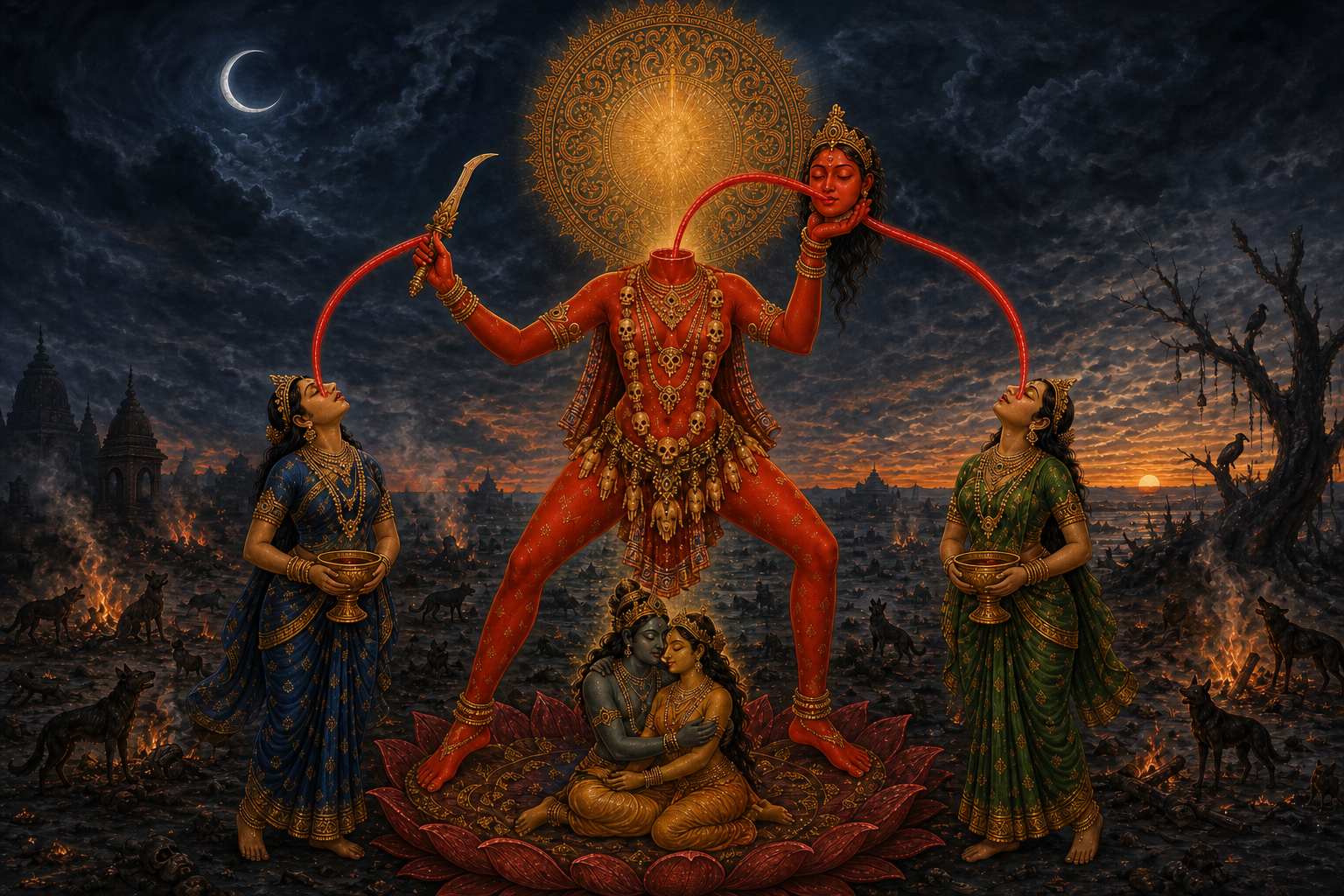
    Chinnamasta Jayanti 2026 falls on 29 April and is observed on Vaishakh Shukla Trayodashi according to the Hindu calendar. This comprehensive guide explains the festival’s date–tithi alignment, its profound Mahavidya symbolism, and how householders can perform a sattvic, family-friendly puja at home. It connects Chinnamasta’s fierce wisdom to yogic themes of manipura chakra, kundalini, and…

  • Nāda in Shaivism and Tantra: Unstruck Sound, Creation’s Pulse, and the Path of Awakening

    Nāda in Shaivism and Tantra: Unstruck Sound, Creation’s Pulse, and the Path of Awakening

    Nāda in Shaivism and the Śākta Tantras is more than audible sound; it is the unstruck vibration that initiates creation, structures language, and guides contemplative practice. This article clarifies nāda’s role in the Shaiva triad of nāda–bindu–kalā, the four levels of speech, and the 36-tattva cosmology. It explains how Oṁ, the Maheshvara Sūtras, and the…

  • Beejabhidhana in Tantrism: Decoding Sacred Seed Syllables for Transformative Mantra Yoga

    Beejabhidhana in Tantrism: Decoding Sacred Seed Syllables for Transformative Mantra Yoga

    Beejabhidhana in Tantrism offers a rigorous map of sacred sound, explaining how seed syllables (bījākṣaras) encode cosmology, deity-function, and method in a single phonemic unit. It clarifies the technical relation between letters, elements, chakras, nyāsa, and japa, enabling precise, lineage-aligned practice. The framework is academically rich yet experientially grounded, integrating phonetics, grammar, and ritual design…

  • Unveiling Nāga Kanyā: A Research-Backed Guide to Hinduism’s Boundless Serpent Guardian

    Unveiling Nāga Kanyā: A Research-Backed Guide to Hinduism’s Boundless Serpent Guardian

    Nāga Kanyā—“the virgin serpent”—is a pan-Indic guardian archetype whose maidenly autonomy and serpentine potency protect thresholds, waters, and life. This research-grounded overview situates Nāga Kanyā in Hindu scriptures and art (Jaratkaru, Ulūpī, Hoysala and Chola sculptures) while clarifying that “virgin” signifies self-sovereignty, not social status. It explains how nāga-kanyā symbolism converges with festivals such as…

  • Chinnamasta Jayanti 2026: Fierce Shakti Awakening—Date, Tithi, Rituals, Deep Meaning

    Chinnamasta Jayanti 2026: Fierce Shakti Awakening—Date, Tithi, Rituals, Deep Meaning

    Chinnamasta Jayanti 2026 falls on 29 April and is observed on Vaishakh Shukla Trayodashi according to the Hindu calendar. This comprehensive guide explains the festival’s date–tithi alignment, its profound Mahavidya symbolism, and how householders can perform a sattvic, family-friendly puja at home. It connects Chinnamasta’s fierce wisdom to yogic themes of manipura chakra, kundalini, and…

  • Unveiling Maya Bhuvaneswari: The Blue-Hued Cosmic Mother in Odisha’s Shakta Tantra

    Unveiling Maya Bhuvaneswari: The Blue-Hued Cosmic Mother in Odisha’s Shakta Tantra

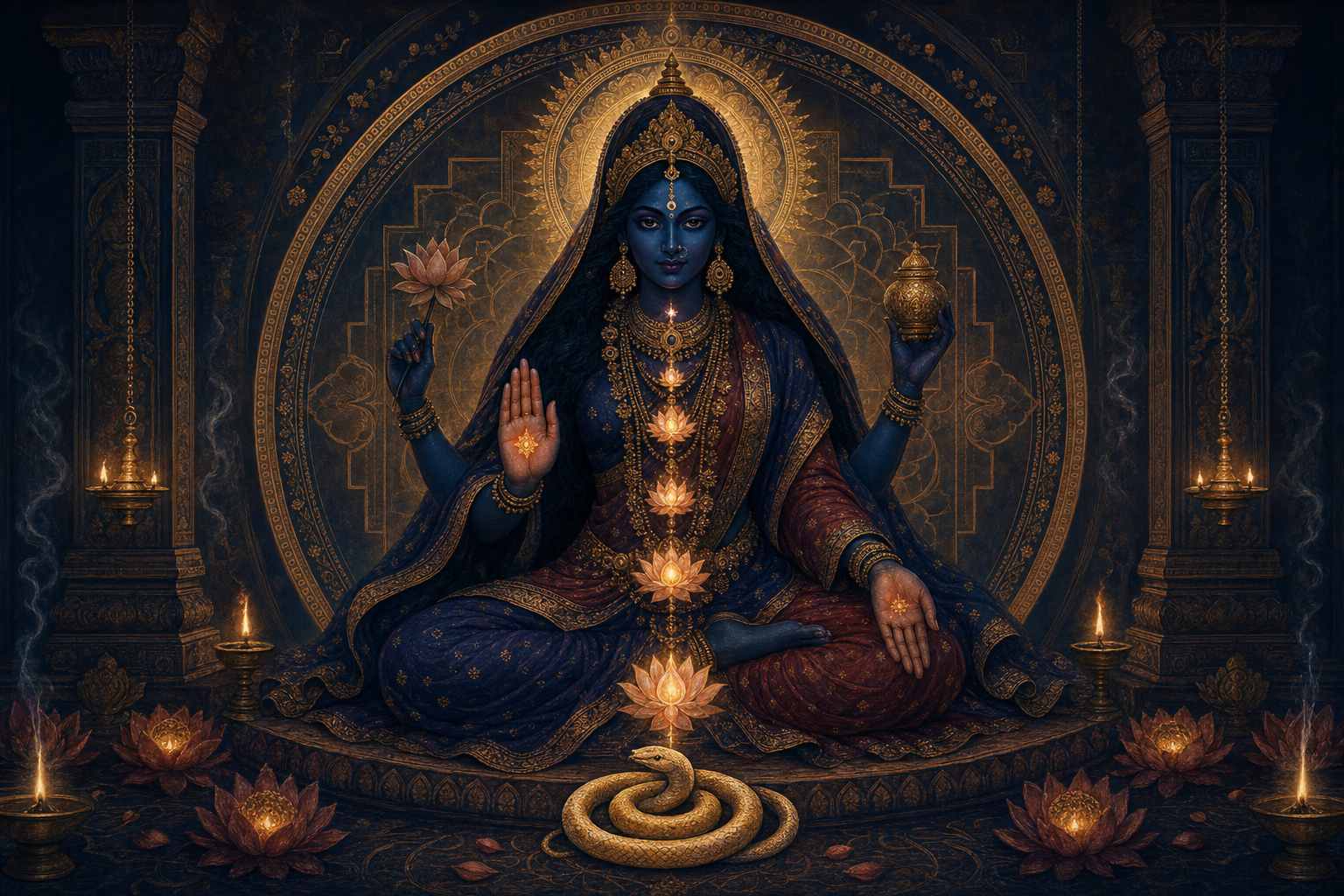
    Maya Bhuvaneswari, a distinctive Odisha-centered manifestation of Bhuvaneshwari among the Mahavidyas, embodies Mahamaya—the compassionate power through which consciousness appears as the universe. Rooted in Shakta Tantra, this blue-hued Hindu Goddess teaches discernment in the midst of life rather than rejection of it, aligning akasha tattva (space) with lived ethics. The article examines her iconography, mantra…

  • Five Sacred Trees of Tantra: Living Altars for Deep Meditation and Inner Awakening

    Five Sacred Trees of Tantra: Living Altars for Deep Meditation and Inner Awakening

    Tantric practitioners across the dharmic traditions purposefully select five sacred trees—Aśvattha (Peepal), Nyagrodha (Banyan), Bilva, Nimba (Neem), and Āmalakī (Amla)—to create a stable, lucid environment for deep meditation. Each species contributes a distinct blend of scriptural symbolism, ayurvedic energetics, ecological benefit, and subtle-body alignment. The Peepal supports clarity and uplift; the Banyan grounds long sittings;…

  • Shakini of the Vishuddhi Chakra: Bone-Breaking Power in Kubjika and Kularnava Tantras

    Shakini of the Vishuddhi Chakra: Bone-Breaking Power in Kubjika and Kularnava Tantras

    Shakini, the yogini of the Vishuddhi Chakra, is celebrated in the Kubjika Mata Tantra and the Kularnava Tantra as the luminous power that purifies speech, refines breath, and clarifies understanding. Her epithet “bone-breaking” signals not violence but compassionate reshaping of inner rigidity, enabling truthful and compassionate voice. Rooted in matrika doctrine, she governs the vowels…

  • Pranavopasana: Mastering Om for Self‑Realization, Inner Calm, and Dharmic Unity

    Pranavopasana: Mastering Om for Self‑Realization, Inner Calm, and Dharmic Unity

    Pranavopasana—meditation on the Pranava (ॐ)—is a disciplined path in Hinduism and Advaita Vedanta that moves attention from sound to silence and from symbol to the Ultimate Reality. Drawing on the Upanishads, Bhagavad Gita, and Patanjali, it unites devotion, meditation, and inquiry into a coherent practice for Self-realization. The article explains the A–U–M arc, the turiya…

  • Navratri Day 7 (25 March 2026): Master Kalaratri Puja with 10 Powerful, Auspicious Practices

    Navratri Day 7 (25 March 2026): Master Kalaratri Puja with 10 Powerful, Auspicious Practices

    The seventh day of Navratri (Saptami) on 25 March 2026 honors Goddess Kalaratri, the fierce-yet-auspicious Shubankari who dissolves fear and darkness. This guide clarifies the date for 2026, explains Kalaratri’s iconography and Sahasrara-chakra symbolism, and presents 10 precise practices—including sankalpa, Shodashopachara puja, moola-mantra japa, Devi Mahatmya recitation, disciplined fasting, a sesame-based havan, night meditation, and…