
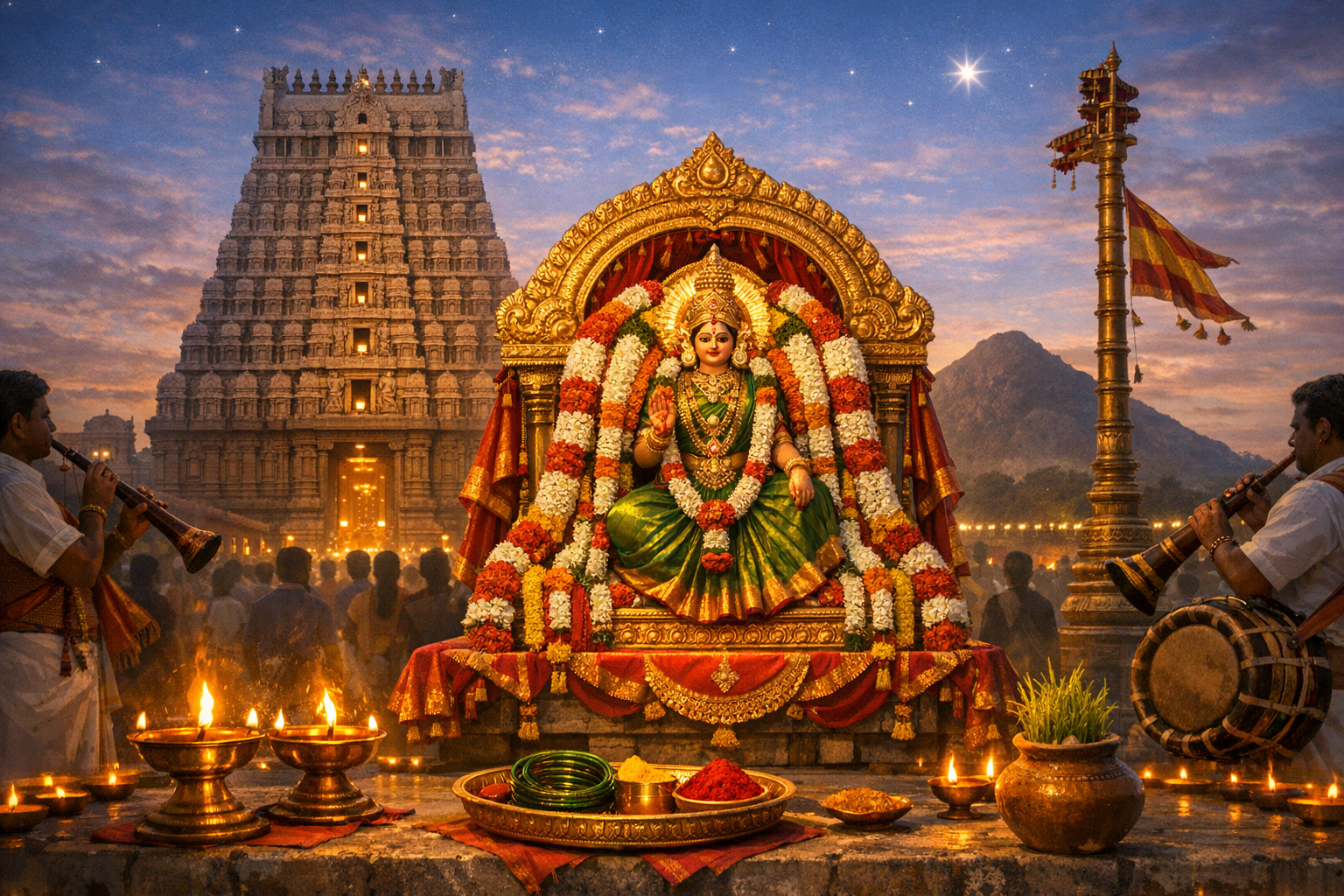
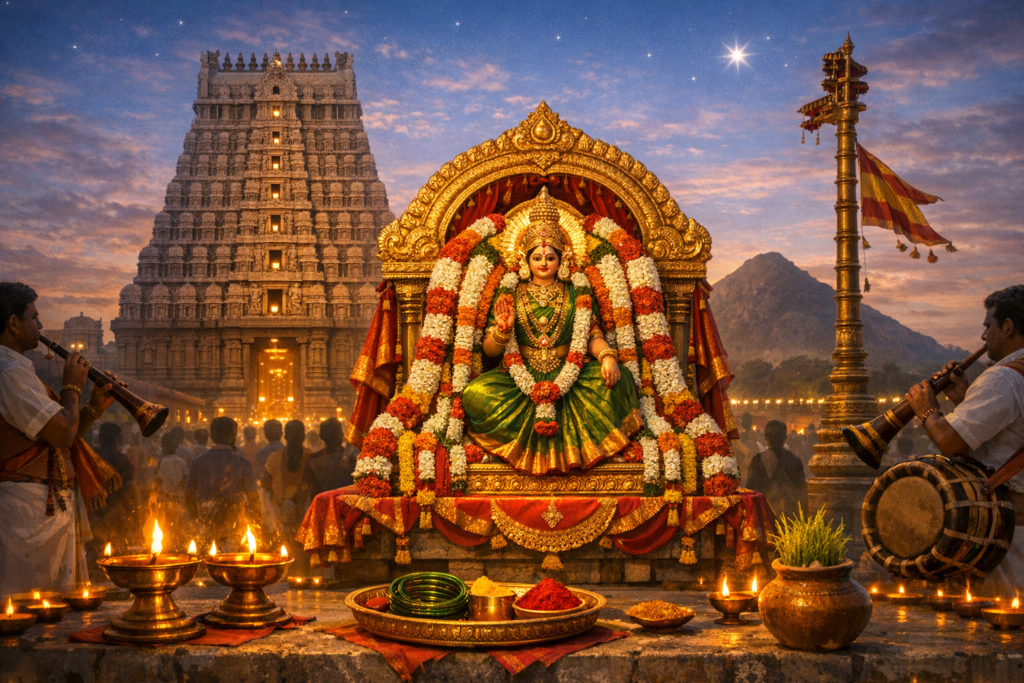
Thiruvannamalai’s Aadi Pooram at the Arunachaleswarar (Annamalaiyar) Temple stands among the most evocative Shakti‑centric observances in Tamil Nadu. In 2026, Aadi Pooram falls on 14 August, aligning with the Pooram (Poorva Phalguni) nakshatra during Aadi Masam. At this temple, the festival unfolds as a 10‑day Aadi Pooram Brahmotsavam, culminating on the Pooram day with special worship to Sri Unnamulai Amman, the consort of Sri Arunachaleswarar. The celebration weaves liturgy, processions, and classical Tamil devotional traditions into a single, immersive experience.
Arunachaleswarar Temple is revered as the Agni Sthala among the Pancha Bhoota temples, with the sacred Arunachala hill embodying the principle of divine fire. The temple’s monumental scale—its towering gopurams, vast courtyards, and elaborate mandapas—creates a ritual environment in which cyclical festivals such as Aadi Pooram take on architectural as well as theological resonance. Within this frame, Aadi Pooram emphasizes the Divine Feminine as Sri Unnamulai Amman, while holding space for the broader Tamil devotion that associates Aadi Pooram with Āṇḍāḷ (Andal) in Vaishnava temples.
The month of Aadi (mid‑July to mid‑August) traditionally foregrounds Amman festivals across Tamil Nadu. In Shaiva temples like Thiruvannamalai, Aadi Pooram centers on auspiciousness, protection, fertility, and community well‑being. The Pooram star’s transit in Aadi is treated as especially propitious for women’s welfare rites and for collective prayers seeking harmony in family and society.
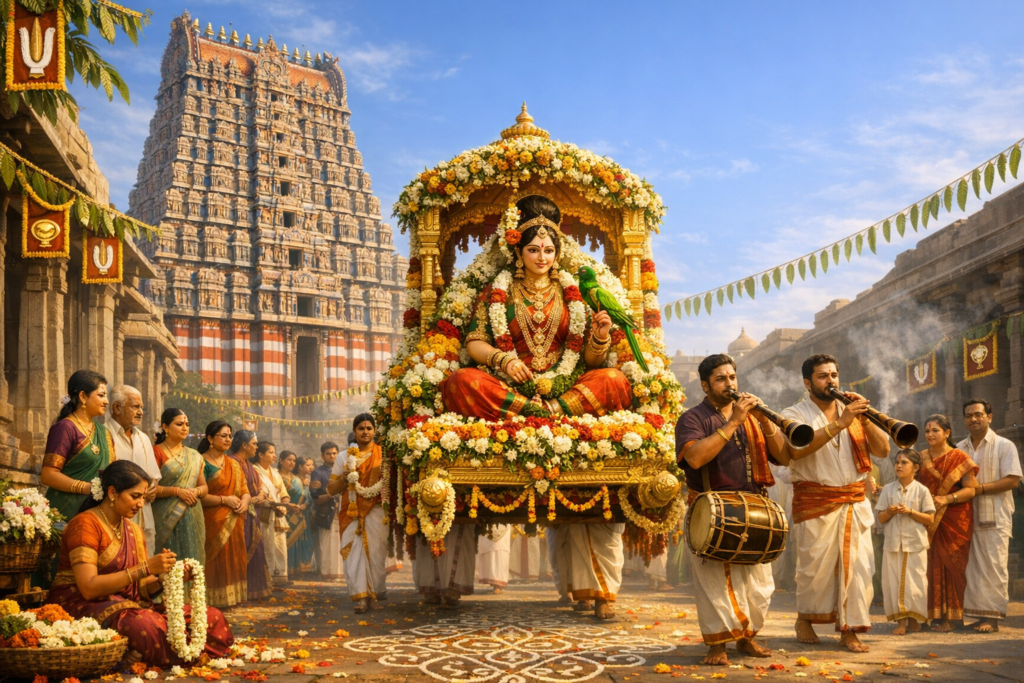
At Thiruvannamalai, the Aadi Pooram Brahmotsavam classically begins with preparatory sanctifications that may include Ankurarpanam (seed‑sowing rite invoking growth and purity) and Dhwajarohanam (ceremonial flag‑hoisting), which ritually inaugurate the festival cycle. Daily alankarams (iconic adornments) and processions of the deities on select vahanams are conducted with precise temple liturgy, concluding with Dhwajavarohanam (flag‑lowering) after the festival’s completion.
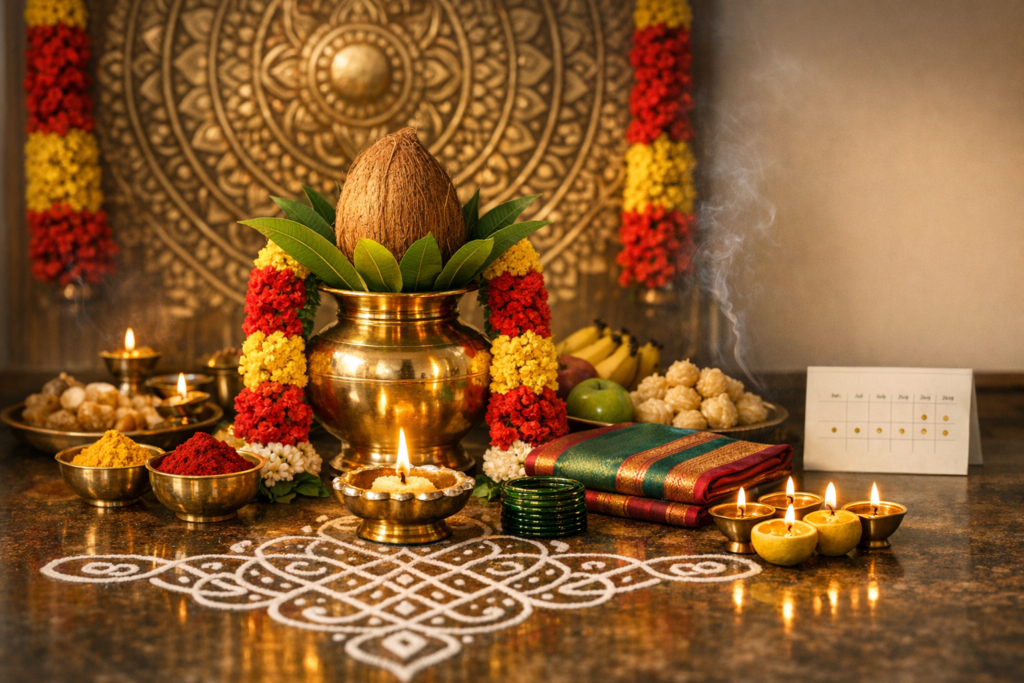
The Pooram day itself focuses on Sri Unnamulai Amman with special abhishekam, alankaram, and deepa offerings conducted according to Agamic guidelines and the temple’s established traditions. In many Tamil Shaiva temples, Aadi Pooram is associated with Valaikappu (a sanctifying bangle rite for the Goddess symbolizing auspiciousness and protection for women); specific forms and timings of this observance at Thiruvannamalai vary by the temple’s annual program and priestly directives.
While Aadi Pooram is Vaishnavite as Āṇḍāḷ’s Thirunakshatram in Vishnu temples, the Thiruvannamalai observance demonstrates Tamil religiosity’s integrative character: Shaiva worship of Amman during Aadi Pooram proceeds alongside cultural remembrance of Andal across the sacred geography of Tamil Nadu. This harmonizing impulse exemplifies the dharmic ethos of honoring diverse spiritual expressions without contradiction.
From a calendrical perspective, Aadi Pooram is determined by the Pooram (Poorva Phalguni) nakshatra’s occurrence within Aadi Masam. For 2026, regional panchangams indicate 14 August as Aadi Pooram in Tamil Nadu; however, devotees typically confirm local nakshatra transit and temple schedules, since practical observance follows sunrise, local latitude, and temple‑specific timekeeping conventions.
The ritual grammar of Brahmotsavam at Thiruvannamalai prioritizes order, continuity, and sanctity. Temple priests conduct homams and abhishekams in sequential fashion, reciting Vedic mantras and Tamil Shaiva hymns (such as selections from the Tevaram and the Tiruvācakam) to sanctify the festival’s flow. Floral, garment, and jewelry alankarams for Sri Unnamulai Amman, paired with precise lighting of deepas, create a layered ritual aesthetic linking sound, fragrance, color, and light.
Devotees describe the 10‑day cycle as a gradual intensification of grace (anugraha), culminating on the Pooram day when the Goddess is perceived as especially accessible to collective prayer. Many women observe fasts or vrata‑like disciplines, recite stotras dedicated to the Divine Mother, and offer bangles, turmeric, and vermilion as symbols of auspiciousness. Families pray for children’s well‑being, safe pregnancies, and household prosperity.
The spiritual philosophy underlying Aadi Pooram in a Shaiva context emphasizes Shakti as the active principle of manifestation, nurturing, and protection. At Arunachaleswarar Temple, where the Agni tattva is central, the festival is often understood as balancing the fiery ascendance of Arunachala with the cooling, life‑sustaining grace of Unnamulai Amman—an interplay that devotees recognize as essential to worldly and spiritual equilibrium.
Thiruvannamalai’s temple city infrastructure supports large pilgrim inflows during the festival. Crowd management, queue systems for darshan, and designated times for special pujas help sustain orderly participation. Devotees frequently plan early‑morning visits for calmer darshan and return in the evening for processions when the deities are carried on vahanams accompanied by traditional nadaswaram and tavil, enhancing the immersive devotional ambiance.
Girivalam (circumambulation of the Arunachala hill) is a year‑round practice customarily intensified on full‑moon days; while it is not structurally part of Aadi Pooram, many pilgrims integrate a measured pradakshina during their festival visit as a personal sadhana. Undertaken with mindfulness, respectful silence, and ecological care, girivalam complements temple worship by aligning personal rhythm with the sacred landscape.
Historically, the Annamalaiyar Temple complex expanded through Chola, later Pandya, and Vijayanagara patronage, with its eastern Rajagopuram rising prominently above the townscape. The scale of the architecture is not merely monumental; it encodes ritual pathways, acoustic resonance for hymns, and processional routes, all of which are activated during Brahmotsavams such as Aadi Pooram.
From a cultural heritage standpoint, Aadi Pooram sustains intangible practices—devotional music, temple crafts, floral garlanding, and culinary prasadam traditions—that constitute living knowledge systems. Artisans, archakas, musicians, and volunteers collaborate in skilled, interdependent roles, ensuring the festival’s continuity with fidelity to inherited standards.
The devotional literature of Tamil Shaivism, from the canonical Tevaram to works by later saints, informs the ethos of Aadi Pooram. While specific textual recitations vary, the mood of supplication to the Mother, gratitude for protection, and the pursuit of inner purity remains a constant leitmotif. Devotees often complement temple visits with home‑based recitations and lighting of lamps at dusk.
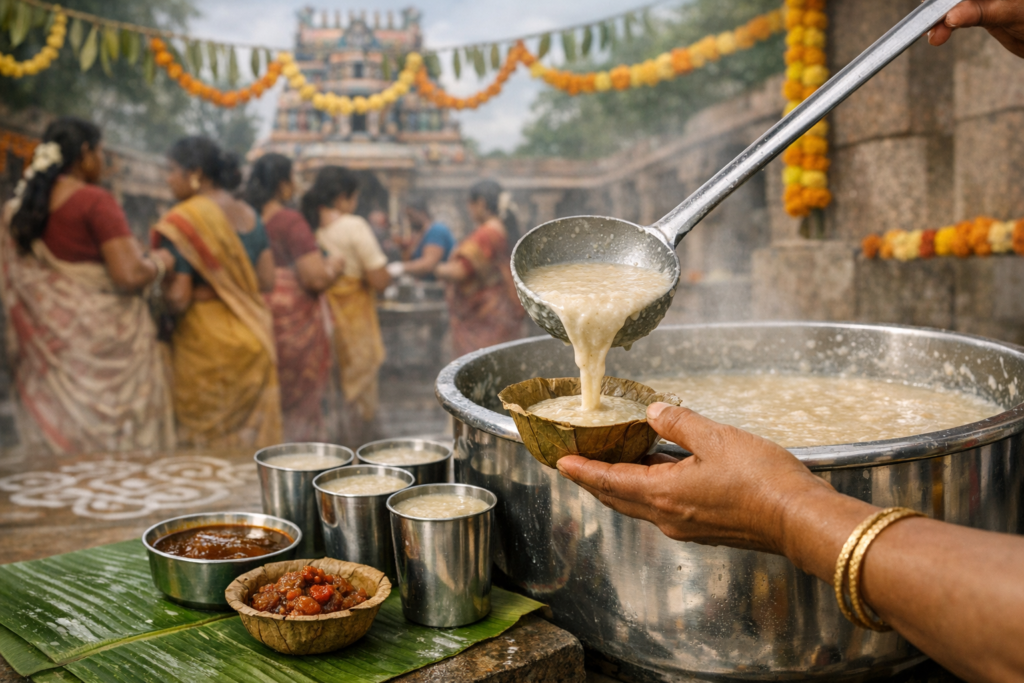
Aadi Pooram also serves as a community anchor. Distribution of prasadam, joint participation in processions, and shared observances among families help strengthen social bonds. The festival’s symbolism—particularly the bestowal of bangles and auspicious items—articulates a cultural ethic of care for women’s health, dignity, and joy.
In the broader dharmic landscape, the veneration of the compassionate, protective Mother resonates with allied values in Hinduism, Buddhism, Jainism, and Sikhism—namely non‑harm, truthfulness, generosity, and reverence for wisdom. The festival’s inclusive spirit thus speaks to a shared civilizational grammar of honoring life, nurturing community, and seeking inner refinement.
For pilgrims planning the 2026 visit, it is advisable to consult the temple’s official announcements closer to the dates for the detailed daily schedule, ticketed sevas (if any), and darshan timings. As Pooram day draws larger crowds, arriving early, carrying only essential items, and following the dress code customary to South Indian temples help ensure a serene experience.
Local etiquette includes maintaining queue discipline, refraining from photography where restricted, and observing temple norms around sanctum access. Offerings are best procured from authorized counters to support temple administration and ensure ritual conformity.
Environmentally mindful participation enriches the pilgrimage: avoiding single‑use plastics, respecting water sources near the temple tanks, and keeping processional routes clean sustain the sanctity of the sacred geography. Many devotees integrate acts of service (seva), such as distributing drinking water, to uplift fellow pilgrims.
Those arriving from outside Tamil Nadu typically travel via Tiruvannamalai railway station or by road from Chennai, Vellore, or Villupuram. Accommodation fills quickly in festival periods, making advance booking prudent. Local vegetarian eateries adapt menus for festival crowds, and prasadam distribution within the temple offers a devotional culinary experience.
For spiritual preparation, practitioners often undertake simple vrata disciplines in the days leading up to Aadi Pooram—moderation in diet, additional japa, and daily lighting of lamps at twilight. Such practices anchor the mind and help align personal intention with the festival’s auspicious current.
On the concluding day of the Brahmotsavam, Dhwajavarohanam ritually closes the cycle, returning the temple to its usual rhythm while retaining the accrued sanctity of the rites. Devotees often interpret this moment as an invitation to carry the festival’s blessings—equanimity, protection, and auspiciousness—into daily life.
In sum, Thiruvannamalai’s Aadi Pooram 2026 on 14 August is both a meticulously structured ritual sequence and a living cultural celebration. It affirms the Shakti principle at the heart of Tamil Shaivism, honors the unifying thread that links diverse dharmic traditions, and offers pilgrims a luminous doorway into devotion, discipline, and community.
Dates and timings are subject to local panchang calculations and temple notifications; devotees are encouraged to verify specifics with official sources in the lead‑up to the festival. Within that framework, the 10‑day Brahmotsavam remains a luminous constant: a time‑tested path to experience the grace of Sri Unnamulai Amman and the radiance of Sri Arunachaleswarar at the foot of Arunachala.
Inspired by this post on Hindu Pad.






Leave a Reply
You must be logged in to post a comment.