Tag: advait

  • Is the Universe an Illusion? A Rigorous Vedic Guide to Maya, Vedanta, and Liberation

    Is the Universe an Illusion? A Rigorous Vedic Guide to Maya, Vedanta, and Liberation

    Vedic scriptures call the world an “illusion” not to deny its existence, but to redefine reality with precision. Advaita Vedanta distinguishes absolute reality (Brahman) from empirical, dependent reality (the cosmos as mithyā) and explains how māyā and avidyā generate the appearance of multiplicity. Upanishadic teachings, supported by the Bhagavad Gita, show why the world is…

  • Encountering Mahaperiyava: A scholarly, soul-stirring journey with the Sage of Kanchi

    Encountering Mahaperiyava: A scholarly, soul-stirring journey with the Sage of Kanchi

    Shri Chandrashekarendra Saraswati Swamigal (Mahaperiyava), the 68th Jagadguru of the Kanchi Kamakoti Peetham, united rigorous Advaita Vedanta with a lived ethic of compassion and service. This academically grounded reflection explains how his padayatra, pedagogy, and daily austerities shaped an enduring model of spiritual leadership. Readers gain a clear overview of his scriptural method, practical household…

  • Neo‑Vedanta Unveiled: A Powerful Modern Synthesis Bridging Dharmic Wisdom and Pluralism

    Neo‑Vedanta Unveiled: A Powerful Modern Synthesis Bridging Dharmic Wisdom and Pluralism

    This article examines Neo‑Vedanta as a rigorous, modern synthesis of Vedāntic wisdom grounded in the Prasthanatraya (Upanishads, Bhagavad Gita, Brahmasutras). It traces historical catalysts in nineteenth‑century India and explains how Sri Ramakrishna and Swami Vivekananda anchored a plural, practice‑oriented vision. Readers gain a clear understanding of Ishta as a principle of respectful diversity and see…

  • Dissolve Thoughts at Their Source: Hindu Wisdom and Dharmic Science for a Clearer Mind

    Dissolve Thoughts at Their Source: Hindu Wisdom and Dharmic Science for a Clearer Mind

    Ancient Hindu wisdom teaches that thoughts gain power only when grasped; dissolving them at inception restores clarity and self-mastery. The method aligns with Yoga Sutra principles of vritti-nirodha, abhyasa, and vairagya, and is reinforced by Upanishadic and Bhagavad Gita guidance. Practical protocols—breath coherence, light labeling, mantra gating, atma-vichara, and somatic defusion—make the technique accessible in…

  • Dvaita vs Advaita in Hinduism: A Clear, Compassionate, Research‑Backed Guide to Vedanta

    Dvaita vs Advaita in Hinduism: A Clear, Compassionate, Research‑Backed Guide to Vedanta

    This research-backed guide clarifies the real differences between Dvaita and Advaita without reducing either system to caricature. It explains Advaita’s non-dual Brahman, Dvaita’s theistic realism, and why both accept the same core scriptures yet read them through distinct hermeneutics. Readers learn how Advaita’s three levels of reality and Dvaita’s Panchabheda lead to different, but equally…

  • No Destination, Only Awakening: Timeless Hindu Wisdom on the Transformative Spiritual Journey

    No Destination, Only Awakening: Timeless Hindu Wisdom on the Transformative Spiritual Journey

    Hindu wisdom reframes the spiritual path as unveiling rather than arrival: there is nowhere to go, nothing to acquire, and everything to recognize. Drawing on the Upanishads, the Bhagavad Gita, Advaita (advait), and the Yoga Sutra, this exploration clarifies the paradox of “no destination” as a disciplined return to presence. It outlines core methods—Jnana, Bhakti,…

  • Timeless Union: The Transformative Power of Jnana and Yoga for Moksha in Hindu Philosophy

    Timeless Union: The Transformative Power of Jnana and Yoga for Moksha in Hindu Philosophy

    This long-form exploration shows how Jnana and Yoga converge in Hindu philosophy to deliver both liberating knowledge and lived stability. It clarifies Vedantic epistemology alongside Patanjali’s practical method, demonstrating why insight requires disciplined cultivation. It maps ethical foundations shared across Hinduism, Buddhism, Jainism, and Sikhism, highlighting a profound unity among dharmic traditions. It offers a…

  • Unattached Like the Sun: Dharmic Wisdom on the Divine Light That Impartially Illumines All

    Unattached Like the Sun: Dharmic Wisdom on the Divine Light That Impartially Illumines All

    This article examines the Hindu aphorism that the Divine is like the sun—illuminating all without attachment—and shows how this insight unifies the Dharmic traditions of Hinduism, Buddhism, Jainism, and Sikhism. Drawing on scriptural anchors such as the Bhagavad Gita (13.33; 5.10; 9.9; 15.6; 15.12) and the Upanishads, it explains why Brahman/Īśvara is described as nirlepa…

  • Vidyaranya Jayanti 2026: Date, Puja Guide, and the Timeless Legacy of Vijayanagara’s Sage

    Vidyaranya Jayanti 2026: Date, Puja Guide, and the Timeless Legacy of Vijayanagara’s Sage

    Vidyaranya Jayanti 2026 will be observed on April 23 (Vaishakha Shukla Saptami), honoring Swami Vidyaranya—Madhavacharya (Madhava Vidyaranya)—the Advaita luminary and rajaguru of the early Vijayanagara Empire. This long-form guide outlines historical context, key texts (Panchadasi, Jivanmuktiviveka, Sarvadarśanasaṅgraha), and his association with Sringeri Sharada Peetham. Readers gain a practical puja framework for home observance, guidance on…

  • Karma and the Realized Soul in Hinduism: Sanchita, Prarabdha, Agami and Jivanmukti Explained

    Karma and the Realized Soul in Hinduism: Sanchita, Prarabdha, Agami and Jivanmukti Explained

    This article explains how the threefold classification of karma in Hinduism—sanchita, prarabdha, and agami—operates for both seekers and the realized person in Advaita Vedanta. It shows why Self-knowledge nullifies sanchita, prevents the accrual of agami, and yet allows prarabdha to complete its course until the body’s end. Readers gain scriptural grounding from the Bhagavad Gita…

  • Vidyaranya Jayanti 2026: Date, Puja Guide, and the Timeless Legacy of Vijayanagara’s Sage

    Vidyaranya Jayanti 2026: Date, Puja Guide, and the Timeless Legacy of Vijayanagara’s Sage

    Vidyaranya Jayanti 2026 will be observed on April 23 (Vaishakha Shukla Saptami), honoring Swami Vidyaranya—Madhavacharya (Madhava Vidyaranya)—the Advaita luminary and rajaguru of the early Vijayanagara Empire. This long-form guide outlines historical context, key texts (Panchadasi, Jivanmuktiviveka, Sarvadarśanasaṅgraha), and his association with Sringeri Sharada Peetham. Readers gain a practical puja framework for home observance, guidance on…

  • Ego’s Illusion of Difference: Dharmic Wisdom on Avidya, Unity in Diversity, and Healing

    Ego’s Illusion of Difference: Dharmic Wisdom on Avidya, Unity in Diversity, and Healing

    This essay examines why humans manufacture differences where none ultimately exist, using a dharmic framework drawn from the Upanishads, the Bhagavad Gita, Yoga Sutra, Anekantavada, Buddhist anatta, and Sikh teachings on Ik Onkar. It explains how avidya and ahankara harden provisional distinctions into identity, and how sama-darshana resists that process. It integrates classical Indian logic…

  • Pranavopasana: Mastering Om for Self‑Realization, Inner Calm, and Dharmic Unity

    Pranavopasana: Mastering Om for Self‑Realization, Inner Calm, and Dharmic Unity

    Pranavopasana—meditation on the Pranava (ॐ)—is a disciplined path in Hinduism and Advaita Vedanta that moves attention from sound to silence and from symbol to the Ultimate Reality. Drawing on the Upanishads, Bhagavad Gita, and Patanjali, it unites devotion, meditation, and inquiry into a coherent practice for Self-realization. The article explains the A–U–M arc, the turiya…

  • Eternal Paradox of Being: Nothing Is Lost, Yet Everything Changes in Hindu-Dharmic Thought

    Eternal Paradox of Being: Nothing Is Lost, Yet Everything Changes in Hindu-Dharmic Thought

    This essay decodes the paradox “Nothing can be wiped out; but nothing remains same” through the lens of Hindu philosophy and the wider dharmic traditions. It shows how the Upanishads, the Bhagavad Gita, Advaita, Samkhya, Nyaya-Vaisheshika, Buddhism, Jainism, and Sikhism converge on a coherent view: being persists while forms transform. Readers gain clear definitions (sat,…

  • A Triplicane Teacher’s Encounter with Ramana Maharshi: Silence, Self-Inquiry, and Grace

    A Triplicane Teacher’s Encounter with Ramana Maharshi: Silence, Self-Inquiry, and Grace

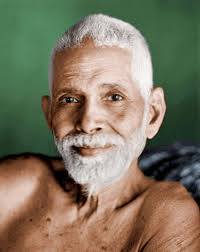
    Set in the 1980s at Hindu Higher Secondary School, Triplicane, this reflective account presents a teacher’s encounter with Ramana Maharshi and situates it within Advaita Vedanta. It clarifies the core of self-inquiry (“Who am I?”), explains how silence functions as a rigorous pedagogical medium, and shows how contemplative insight can enrich classroom ethics and student…

  • Gaudapada’s Asparshayoga Explained: The Fearless Non-Contact Path to Advaita Bliss

    Gaudapada’s Asparshayoga Explained: The Fearless Non-Contact Path to Advaita Bliss

    This essay unpacks Asparshayoga—Gaudapada’s “non-contact yoga” in Advaita Vedanta—as a knowledge-centered recognition that dissolves the subject–object split. It explains why the bliss of the Self is intrinsic rather than a peak produced by sensory contact, grounding the discussion in the Mandukya Upanishad’s map of Turiya. It clarifies how Asparshayoga differs from Patanjali’s technique-driven approach while…

  • Ajati in Advaita Vedanta: Radical Non-Birth, Mandukya Karika, and Deep Clarity

    Ajati in Advaita Vedanta: Radical Non-Birth, Mandukya Karika, and Deep Clarity

    Ajati—Advaita Vedanta’s doctrine of non-birth—asserts that ultimate reality never truly originates or changes, while preserving everyday causality and ethics at the empirical level. Rooted in the Mandukya Upanishad and Mandukya Karika, it culminates in the recognition of turīya, the ever-present awareness. By distinguishing absolute from empirical standpoints, Ajati avoids nihilism and affirms a positive, non-dual…

  • Nirupadhika in Advaita Vedanta: Adjunct-Free Brahman, Practice Insights, and Dharmic Parallels

    Nirupadhika in Advaita Vedanta: Adjunct-Free Brahman, Practice Insights, and Dharmic Parallels

    Nirupadhika—“without the upadhis”—names Advaita Vedanta’s insight that Brahman is never altered by limiting adjuncts such as body, mind, maya, or avidya. The article maps how nirupadhika contrasts with sopadhika, clarifies tri-level reality, and shows how Upanishadic hermeneutics (neti neti, tat tvam asi via bhaga-tyaga-lakshana) reveal the adjunct-free Self. It unpacks core methods—adhyaropa-apavada, Drig-Drishya Viveka, and…

  • Advaita Unveiled: Realizing Oneness with the Supreme for Freedom from Fear and Sorrow

    Advaita Unveiled: Realizing Oneness with the Supreme for Freedom from Fear and Sorrow

    This article examines the Advaita Vedanta insight that true wisdom is to see the Self (Atman) as not different from the Supreme Being (Brahman), and shows how that vision resonates across Hinduism, Buddhism, Jainism, and Sikhism. It outlines Advaita’s precise metaphysics (maya, avidya, adhyasa) and its methods (sravana–manana–nididhyasana, neti neti, drg-drishya-viveka, panchakosha-viveka). Readers gain a…

  • Ultimate Reality Cannot Be Taught: Profound, Experiential Wisdom in Hinduism and Dharmic Paths

    Ultimate Reality Cannot Be Taught: Profound, Experiential Wisdom in Hinduism and Dharmic Paths

    This long-form exploration clarifies why Ultimate Reality in Hindu philosophy cannot be taught as a mere concept and must be realized through direct experience. It maps the classical triad of śravaṇa–manana–nididhyāsana and the role of Guru–Shishya Tradition, highlighting how scripture and guidance remove ignorance rather than transfer realization. Readers gain a technically sound overview of…