-
Spirituality of Nature: Sacred Dharmic Wisdom, Science-Backed Healing, Inner Resilience

This long-form guide presents an academic yet accessible exploration of the spirituality of nature across Hinduism, Buddhism, Jainism, and Sikhism. It grounds ecological reverence in the Upanishads and the Bhagavad Gita, links practices like mindfulness and pranayama to measurable health benefits, and shows how Ahimsa and Aparigraha become daily Environmental stewardship. Readers gain a stepwise…
-
Unlock the Paths of Yoga: A Comprehensive Guide to Hatha, Kundalini, Ashtanga, Kriya, Jivamukti

This comprehensive guide clarifies five major paths—Hatha, Kundalini, Ashtanga, Kriya, and Jivamukti—showing how each unites body, breath, and mind while honoring shared dharmic ethics across Hinduism, Buddhism, Jainism, and Sikhism. Readers discover the philosophical foundations, core methods (asana, pranayama, bandhas, mudras, meditation), and practical safety cues that make practice sustainable. The article demystifies yogic anatomy…
-
Chinnamasta Jayanti 2026: Fierce Shakti Awakening—Date, Tithi, Rituals, Deep Meaning

Chinnamasta Jayanti 2026 falls on 29 April and is observed on Vaishakh Shukla Trayodashi according to the Hindu calendar. This comprehensive guide explains the festival’s date–tithi alignment, its profound Mahavidya symbolism, and how householders can perform a sattvic, family-friendly puja at home. It connects Chinnamasta’s fierce wisdom to yogic themes of manipura chakra, kundalini, and…
-
Nāda in Shaivism and Tantra: Unstruck Sound, Creation’s Pulse, and the Path of Awakening

Nāda in Shaivism and the Śākta Tantras is more than audible sound; it is the unstruck vibration that initiates creation, structures language, and guides contemplative practice. This article clarifies nāda’s role in the Shaiva triad of nāda–bindu–kalā, the four levels of speech, and the 36-tattva cosmology. It explains how Oṁ, the Maheshvara Sūtras, and the…
-
Chinnamasta Jayanti 2026: Fierce Shakti Awakening—Date, Tithi, Rituals, Deep Meaning

Chinnamasta Jayanti 2026 falls on 29 April and is observed on Vaishakh Shukla Trayodashi according to the Hindu calendar. This comprehensive guide explains the festival’s date–tithi alignment, its profound Mahavidya symbolism, and how householders can perform a sattvic, family-friendly puja at home. It connects Chinnamasta’s fierce wisdom to yogic themes of manipura chakra, kundalini, and…
-
From Turmoil to Tranquility: SB 3.28.10 on Yogic Breathing and the Power of Chanting

Srimad-Bhagavatam 3.28.10 presents a precise blueprint for mental purification: disciplined attention (the fire) and regulated breath (the air) refine the mind as heat and fanning purify gold. Framed by HH Ramai Swami’s exposition, the verse aligns with modern findings on vagal tone, heart-rate variability, and the calming effects of slow, coherent breathing. Lord Caitanya’s recommendation…
-
Master Your Breath, Still Your Mind: Kapila’s Precise Yogic Protocol in SB 3.28.8

SB 3.28.8 presents Kapila’s concise blueprint for meditation: a sanctified, secluded space; an easy, erect posture (svasti samāsīnaḥ); and regulated breath control. The verse aligns environment, asana, and pranayama to quiet the senses and stabilize attention for dhyana. Practical guidance includes seat preparation, spinal alignment, and gentle ratios such as 4–4 progressing to 4–6 exhalations.…
-
Pranavopasana: Mastering Om for Self‑Realization, Inner Calm, and Dharmic Unity

Pranavopasana—meditation on the Pranava (ॐ)—is a disciplined path in Hinduism and Advaita Vedanta that moves attention from sound to silence and from symbol to the Ultimate Reality. Drawing on the Upanishads, Bhagavad Gita, and Patanjali, it unites devotion, meditation, and inquiry into a coherent practice for Self-realization. The article explains the A–U–M arc, the turiya…
-
Laghima Siddhi in Hinduism: The Sacred Science of Lightness to Elevate Mind, Body, and Life

Laghima Siddhi, one of the classical ashta-siddhis in Hinduism, signifies far more than levitation; it encodes a holistic science of lightness spanning ethics, breath, posture, diet, and contemplation. Anchored in sources like the Bhagavata Purana and thematically aligned with Patanjali’s Yoga Sutra, Laghima relates to mastery of udana vayu and the cultivation of sattva. In…
-
Kundalini Tantra Unveiled: A Scientific, Dharmic Guide to Awakening the Serpent Power

This comprehensive guide presents Kundalini Tantra as a precise, ethical, and integrative science shared across dharmic traditions. It clarifies yogic anatomy (nadis, chakras, sushumna nadi) and explains how breathwork, bandhas, mudras, mantra, and meditation organize subtle energy safely. A stepwise 12-week framework details how to build foundations with yama-niyama, asana, and pranayama before progressing to…
-
From Overwhelm to Ease: A Dharmic, Science-Backed Guide to Cooling an Anxious Mind

Anxiety can be cooled reliably by combining physiology, contemplative training, and ethical living. This guide bridges modern neuroscience with dharmic wisdom from Hinduism, Buddhism, Jainism, and Sikhism to offer practical tools that downregulate the nervous system. Readers learn how breath awareness, pranayama, and humming stimulate the vagus nerve and improve HRV for fast-acting calm. Somatic…
-
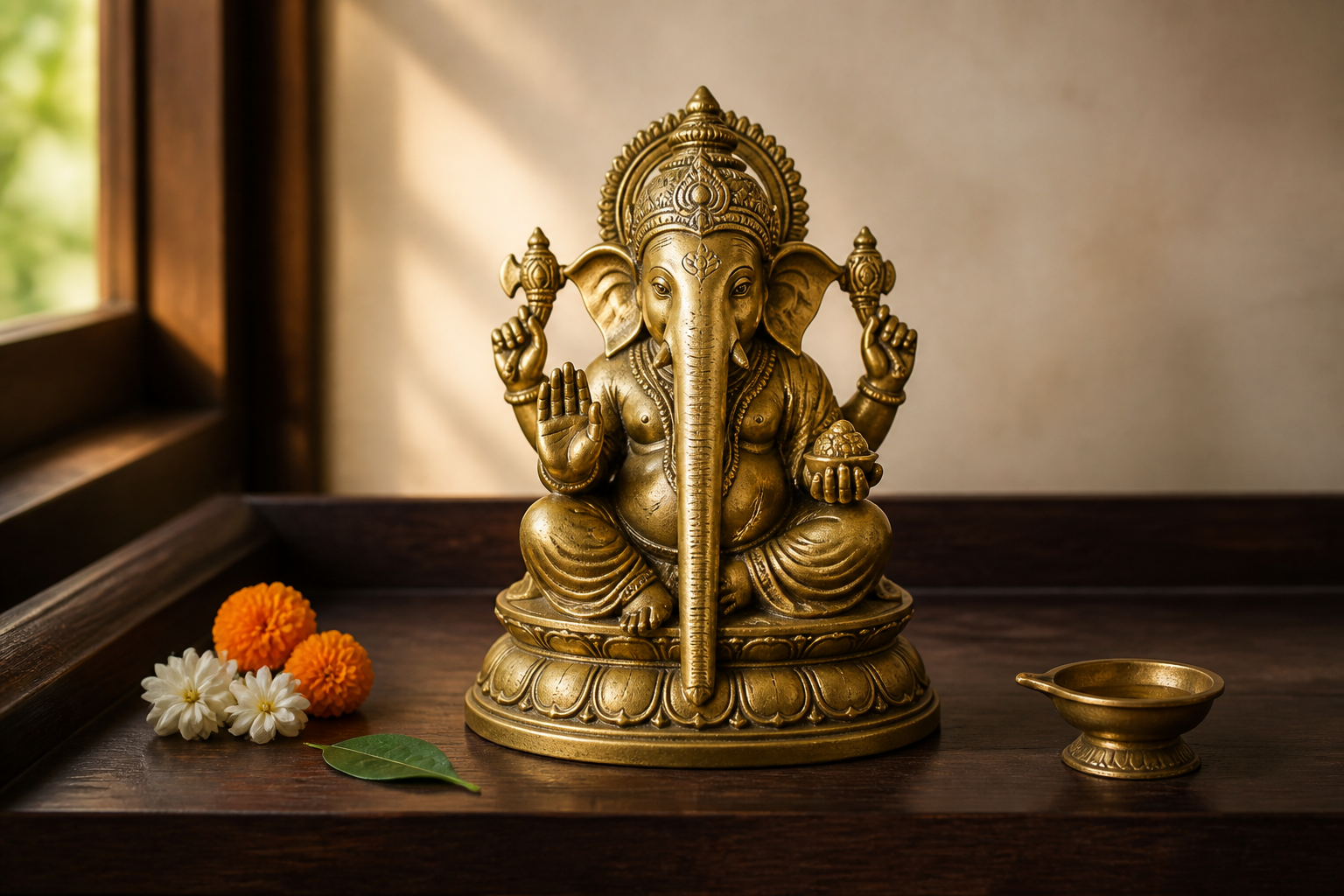
Siddhidata Ganesha’s Right‑Coiled Trunk: Sacred Discipline, Temple Protocols, and Home Guidance

Siddhidata Ganesha’s right‑coiled trunk (dakshinavarti) carries a potent, solar symbolism that calls for strict, temple‑grade discipline. This long‑form guide explains why many traditions advise keeping such forms in temples or in homes only where steady nitya‑puja and satvika living are realistically sustained. It clarifies the pranic rationale (Ida–Pingala–Sushumna), summarizes Shilpa Shastra and Agama perspectives, and…
-
Goddess Shivani as Divine Shakti: Symbolism, Yogic Science, and Awakening Consciousness

Goddess Shivani is presented as a luminous expression of Devi Shakti, the Sacred Feminine that awakens divine consciousness in Hindu philosophy. The discussion clarifies Shivani’s identity as an epithet aligned with Parvati, explores Shiva–Shakti non-duality, and explains the five cosmic functions, the triad of shaktis, and their ethical implications. Yogic science is detailed through Kundalini,…
-
Ekajata’s Single Braid: Powerful Symbolism of Focus, Protection, and Supreme Consciousness

Goddess Ekajata’s single braid is a concentrated teaching in Hindu Tantra: a symbol of supreme consciousness, one-pointed focus (ekagrata), and vigilant spiritual protection. Read as Tantric anatomy, it reflects the unification of ida and pingala within the sushumna nadi, supporting sustained dhyana and the ascent of Kundalini. The braid’s tightly bound form evokes vows, secrecy,…
-
Radiant Kankali Kali and the Chakras: A Transformative Guide to Sacred Energy Centers

This article explores Kankali Kali as a radiant symbol of transformative strength within Hindu spirituality, illuminating how her fierce compassion supports the harmonization of the chakras. It outlines each sacred energy center—from mulādhāra to sahasrāra—and explains how ethical clarity, steady breath, and mindful practice guide balanced awakening. Readers gain a practical, non-dogmatic framework for working…
-
Goddess Chinnamasta and the Jackals: Tantric Symbolism, Fierce Grace, and Inner Transformation

Goddess Chinnamasta’s self-decapitated form and the presence of jackals create a profound Tantric teaching on ego-transcendence, impermanence, and compassionate energy. The three blood streams symbolize iḍā, piṅgalā, and suṣumṇā, suggesting redistribution of prāṇa rather than loss. Jackals, as cremation-ground denizens, represent threshold spaces and the recycling of form, turning fear and instinct into wisdom. Psychological…
-
Straight Trunk Ganesha: Profound Symbolism, Yogic Meaning, and Life‑Enhancing Benefits

The straight-trunk form of Shri Ganesha symbolizes yogic balance, evoking the sushumna nadi and the transcendence of duality through dhyana. Traditionally associated with sattva and inner clarity, this rare depiction supports focused study, calm decision-making, and steady spiritual practice. Devotees value it for harmonizing everyday responsibilities with inner stillness, reinforcing ethical living and compassionate action.…
-
Ghata (Ghatavastha) in Hatha Yoga: Unlocking Breath, Balance, and the Jiva–Paramatman Union

Ghata or ghatavastha is a pivotal Hatha Yoga stage where breath, mind, and subtle energy stabilize, aligning the jiva with Paramatman. Drawing on the Hatha Yoga Pradipika and Gheranda Samhita, it highlights pranayama as both physiological refinement and spiritual integration. Practitioners experience steadier kumbhaka, balanced prana and apana, and a calm, clear mind. Benefits include…
-
Discover the Vishuddha (Throat) Chakra: The Complete Guide to Pure Speech and Truth

The Vishuddha (Throat) Chakra is the fifth energy center associated with communication, self-expression, and truth. Rooted in the Sanskrit idea of “purification,” it refines thought into sound and cultivates ethical speech across dharmic traditions. Symbolized by a sixteen-petaled lotus and attuned through the mantra “ham,” it integrates heart insight with mental clarity. Balanced expression emerges…
-
Anahata Chakra Explained: The Complete Guide to Mastering Heart-Centered Balance

The Anahata Chakra, or Heart Chakra, is the fourth energy center and serves as a bridge between grounded living and higher insight. Its Sanskrit meaning, “unstruck,” points to a subtle inner resonance of peace and unity. This guide clarifies location, symbolism, and qualities—love, compassion, and forgiveness—while outlining signs of balance and imbalance. It presents practical…