Tag: Upanishads

  • Jnana Yoga and Karma Yoga: A Definitive, Heart-Centered Guide to Wisdom, Duty, and Moksha

    Jnana Yoga and Karma Yoga: A Definitive, Heart-Centered Guide to Wisdom, Duty, and Moksha

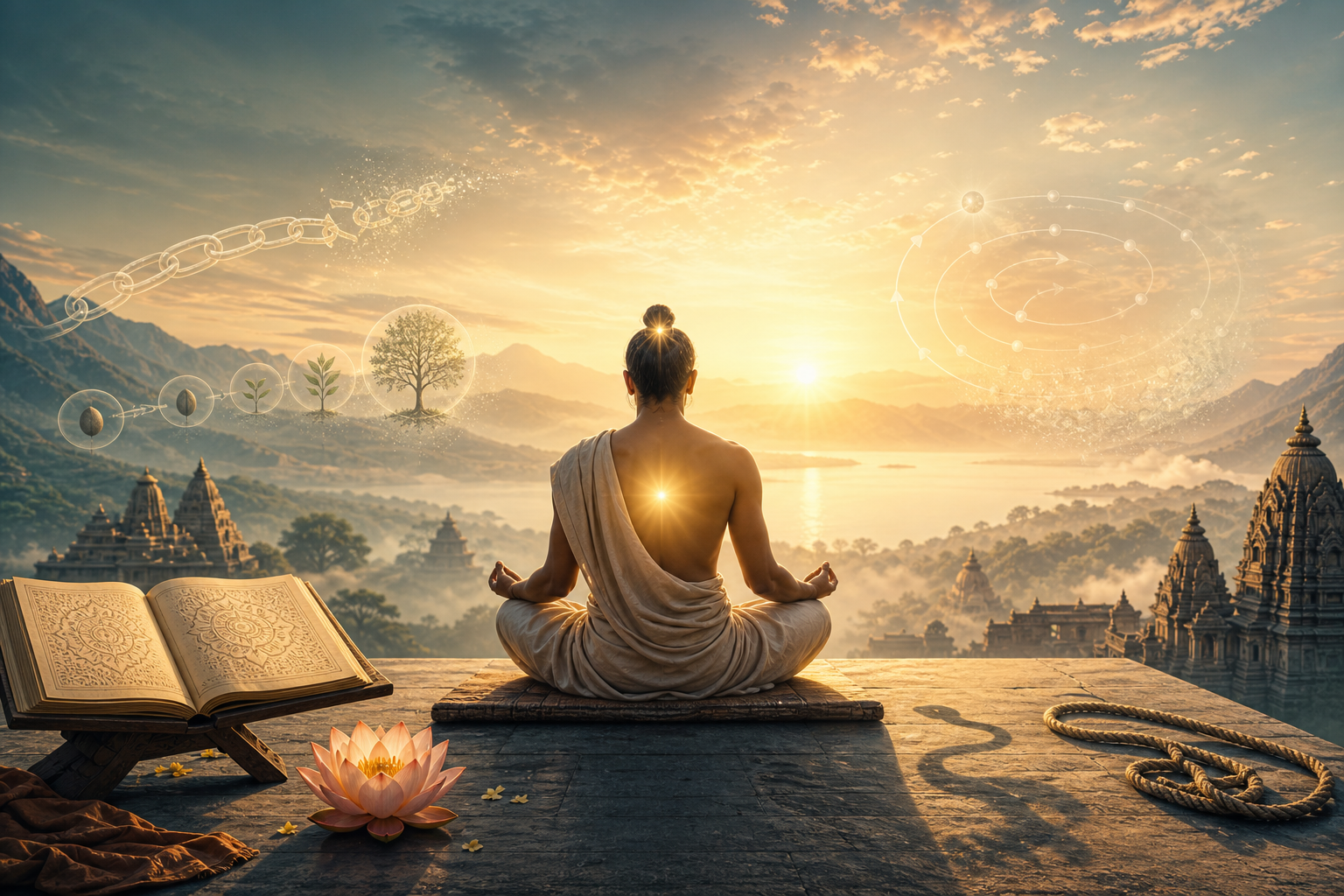
    Jnana Yoga and Karma Yoga are complementary yogic disciplines in Hinduism that unite liberating insight with selfless duty. Grounded in the Upanishads and the Bhagavad Gita, Jnana clarifies reality through viveka and nididhyasana, while Karma refines character via nishkama karma, isvararpana buddhi, and prasada buddhi. The two paths interpenetrate: ethical action purifies the mind for…

  • Before the Beginning: The Profound Self-Awakening of Consciousness in Sanatana Dharma

    Before the Beginning: The Profound Self-Awakening of Consciousness in Sanatana Dharma

    Sanatana Dharma advances a radical thesis: creation is Consciousness awakening to itself, not an external fabrication. Drawing on the Upanishads, Bhagavad Gita, Advaita Vedanta, Kashmir Shaivism, and Samkhya–Yoga, this essay explains how the Absolute (Brahman) both pervades and transcends the cosmos. It maps macrocosm to experience via the Mandukya’s four states and clarifies cyclical time—sṛṣṭi,…

  • Madhyandina Shakha of the Shukla Yajurveda: Yajnavalkya’s timeless legacy, texts, rituals, and reach

    Madhyandina Shakha of the Shukla Yajurveda: Yajnavalkya’s timeless legacy, texts, rituals, and reach

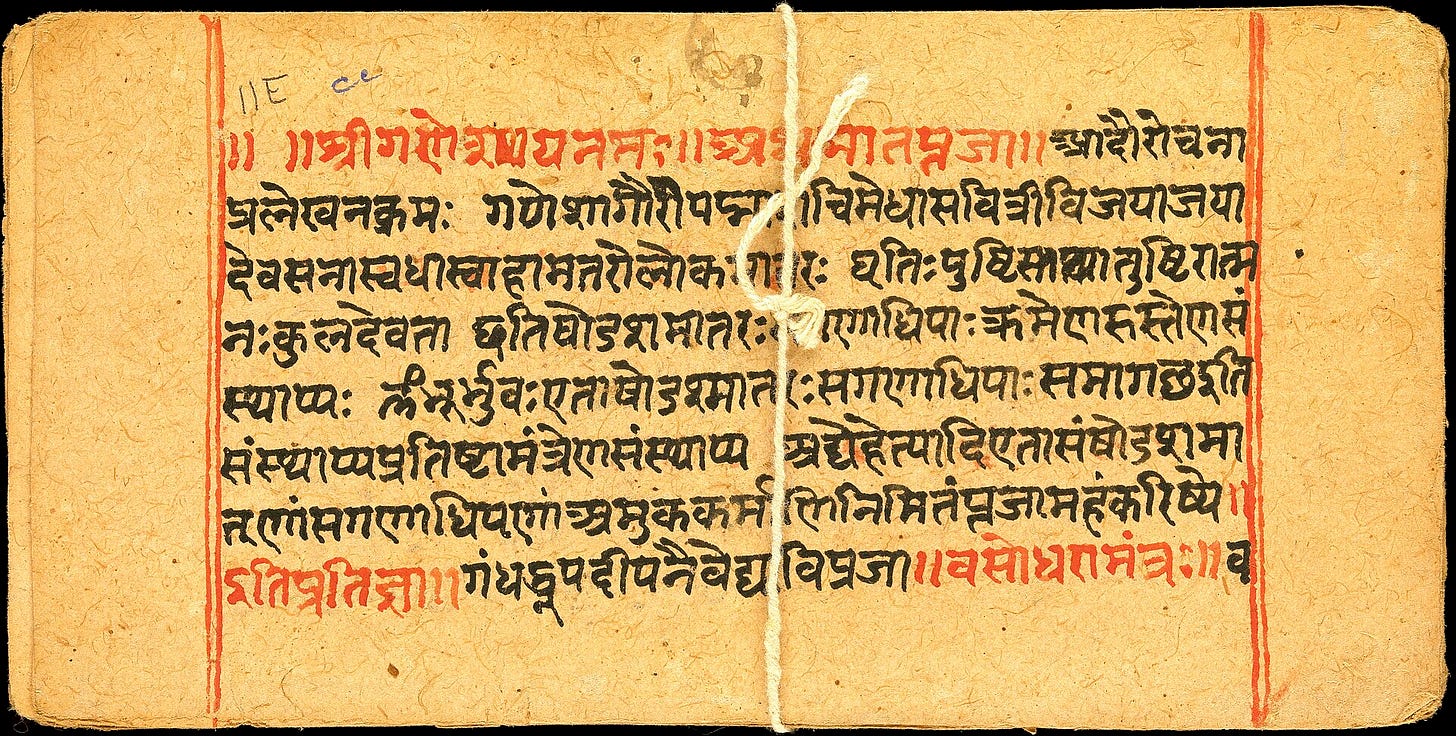
    Madhyandina Shakha is a principal recension of the Shukla Yajurveda, tracing its lineage to Yajnavalkya and preserving a carefully ordered ritual and philosophical corpus. Its core texts—the Vājasaneyi Madhyandina Saṁhitā and the Śatapatha Brāhmaṇa (Madhyandina)—transmit the Isha and Brihadaranyaka Upanishads, uniting precise liturgy with deep inquiry into the Self. Auxiliary works such as the Kātyāyana…

  • Atma vs Anatma Explained: A Scholar’s Guide to Inner Freedom, Clarity, and Lasting Peace

    Atma vs Anatma Explained: A Scholar’s Guide to Inner Freedom, Clarity, and Lasting Peace

    This in-depth guide clarifies the difference between Atma (the changeless witness) and Anatma (all that arises and passes), showing why this insight is the key to inner freedom and lasting peace. Drawing on the Upanishads, the Bhagavad Gita, Vedanta, Sāṅkhya-Yoga, and Nyāya-Vaiśeṣika, it presents multiple, mutually reinforcing methods: Pancha Kosha Viveka, Drg-Drsya Viveka, Avasthātraya analysis,…

  • Mastering Lifelong Learning: Dharmic Methods that Transform Observation into Wisdom

    Mastering Lifelong Learning: Dharmic Methods that Transform Observation into Wisdom

    Rote learning produces fragile knowledge; dharmic education converts observation into durable wisdom. Drawing on Hinduism, Buddhism, Jainism, and Sikhism, this piece outlines a replicable pathway: inquiry, reasoning, contemplative assimilation, and ethical action. It maps classical pramanas to modern evidence-based methods such as retrieval practice, spaced repetition, and mindfulness. Nyaya’s tarka, Mimamsa’s hermeneutics, Vedanta’s sravana–manana–nididhyasana, Buddhist…

  • Vishnu’s Cow and Shiva’s Bull: A Profound Decoding of Order and Wild Energy in Sanatana Dharma

    Vishnu’s Cow and Shiva’s Bull: A Profound Decoding of Order and Wild Energy in Sanatana Dharma

    This in-depth exploration decodes why Hinduism venerates the cow and the bull, showing how Vishnu’s pastoral symbolism and Shiva’s bull iconography express a unified philosophy of order and wild energy in Sanatana Dharma. Drawing on Vedic, Puranic, and Agamic currents, it clarifies the ethical ecology of ahimsa, yajña, and sustainable stewardship. The analysis interprets Nandi…

  • Ashadha Purnima (Guru Purnima) 2026: Date, Rituals, Vyasa Puja Guide & Dharmic Unity

    Ashadha Purnima (Guru Purnima) 2026: Date, Rituals, Vyasa Puja Guide & Dharmic Unity

    Ashadha Purnima—also known as Guru Purnima or Veda Vyasa Purnima—falls on 29 July 2026 and honors the Guru-Shishya Tradition across the dharmic family. The festival venerates Bhagavan Veda Vyasa and the transpersonal Guru principle that links knowledge with ethical living. This long-form guide explains the lunar calendar basis of the observance, regional variations, and the…

  • Many Gods, One Reality: Scientific, Historical, and Philosophical Logic of Hindu Plurality

    Many Gods, One Reality: Scientific, Historical, and Philosophical Logic of Hindu Plurality

    Why does Hinduism speak in many divine names yet point to one Reality? This long-form analysis synthesizes Vedic and Upanishadic insights with anthropology, cognitive science, and systems theory to show how multiplicity in Hinduism is an intentional design for accessibility, memory, and social cohesion. It clarifies the debated phrase “330 Million Gods in Hinduism,” explains…

  • Unveiling the Golden Wisdom of Sri Sadasiva Brahmendra: Advaita Quotes, Music, and Practice

    Unveiling the Golden Wisdom of Sri Sadasiva Brahmendra: Advaita Quotes, Music, and Practice

    Sri Sadasiva Brahmendra, the 18th‑century Advaita sage of Tiruvisainallur near Kumbakonam, shaped South Asia’s spiritual landscape through luminous Sanskrit kirtanas and incisive nondual teaching. His widely cherished refrains—“Sarvam Brahma-mayam,” “Manasa sañcarare Brahmani,” and “Pibare Rāma-rasam”—translate Upanishadic insight into accessible, daily practice. Read together, they offer a coherent path: perceive all as Brahman, abide the mind…

  • Manava Janma Uddeshya: A Transformative Dharmic Guide to the Purpose of Human Life

    Manava Janma Uddeshya: A Transformative Dharmic Guide to the Purpose of Human Life

    This long-form exploration presents Manava Janma Uddeshya—the purpose of human birth—as a rigorous, unified framework across Hinduism, Buddhism, Jainism, and Sikhism. It clarifies the Purusharthas within Sanatana Dharma, aligns worldy aims with Dharma, and situates Moksha as the culminating horizon. Readers gain an actionable, research-informed roadmap that integrates meditation, ethical discipline, devotion, study, and seva.…

  • Arise, Awake: Swami Vivekananda’s Call to Relentless Focus, Dharmic Grit, and Goal Mastery

    Arise, Awake: Swami Vivekananda’s Call to Relentless Focus, Dharmic Grit, and Goal Mastery

    This essay situates “Arise, Awake, and Stop not till the Goal is reached” within its Katha Upanishad roots and explains how Swami Vivekananda shaped it into a modern, action-oriented ethic. It decodes the triad—Arise (initiate), Awake (attend), and Stop not (complete)—as a full cycle of disciplined effort aligned with Dharma. Drawing on the Bhagavad Gita…

  • Devotion Through Buddhi and Grace: Mastering Hindu Bhakti via Consciousness and Surrender

    Devotion Through Buddhi and Grace: Mastering Hindu Bhakti via Consciousness and Surrender

    This essay examines two complementary currents of Hindu devotion—buddhi-yoga (devotion through consciousness and intelligence) and prapatti/śaraṇāgati (devotion through surrender)—grounded in the Bhagavad Gita, the Bhāgavata Purāṇa, Vedānta, and Yoga. It explains how disciplined study, reflection, and mindful ritual refine devotion, while wholehearted entrustment to the divine expands receptivity to grace. The discussion translates classical terms…

  • Stop Chasing Birthplaces: Honor Guru-Bhakti by Living the Teaching, Not Worshiping Soil

    Stop Chasing Birthplaces: Honor Guru-Bhakti by Living the Teaching, Not Worshiping Soil

    This essay clarifies a core paradox in dharmic spirituality: gurus teach transcendence of body and place, yet communities often fixate on birthplaces and relics. It reframes sacred geography as a valid but secondary aid to sadhana, drawing on the Bhagavad Gita, the Upanishads, and the Guru-Shishya Tradition. Case studies from Hinduism, Buddhism, Jainism, and Sikhism…

  • The Unchanging Supreme Self: Uddhava Gita’s Profound Guide to Inner Freedom in Turbulent Times

    The Unchanging Supreme Self: Uddhava Gita’s Profound Guide to Inner Freedom in Turbulent Times

    The Uddhava Gita teaches that the supreme self (ātman) remains unchanged and unaffected by the material world, a principle that is both philosophically rigorous and practically transformative. Set within the Bhagavata Purana, it integrates Vedānta’s discernment with Bhakti’s warmth and Karma Yoga’s responsibility to offer a complete path to moksha. The text’s emphasis on the…

  • When Life Finds Balance: The Dharmic Science of Harmony in Hinduism, Buddhism, Jainism, Sikhism

    When Life Finds Balance: The Dharmic Science of Harmony in Hinduism, Buddhism, Jainism, Sikhism

    This in-depth exploration shows how balance—defined as dynamic homeostasis guided by dharma—produces well-being, clarity, and social harmony across Hinduism, Buddhism, Jainism, and Sikhism. Drawing on puruṣārtha, guna theory, Panchakosha, the Bhagavad Gita, Patanjali’s Yoga, and Ayurveda, it explains why moderation is a rigorous discipline, not a compromise. Parallels with the Buddhist Middle Path, Jain Anekantavada,…

  • Burning for Power or Truth? Asuric vs Human Tapas in Hindu Dharma, with Scriptural Insights

    Burning for Power or Truth? Asuric vs Human Tapas in Hindu Dharma, with Scriptural Insights

    Tapas in Hindu Dharma is a double-edged heat: it can fuel domination or refine awareness. Drawing on the Bhagavad Gita, Yoga Sutra, Upanishads, and Purāṇic narratives, this analysis distinguishes asuric austerity (ambition, harm, display) from sattvic human tapas (truth, non-harm, integration). It maps these paths onto the guṇa framework, shows how intention and method determine…

  • Become the Witness: Rise Above Matter and Realize Consciousness with Timeless Dharmic Wisdom

    Become the Witness: Rise Above Matter and Realize Consciousness with Timeless Dharmic Wisdom

    This long-form, academically grounded essay explains why over-identification with matter creates volatility and how dharmic traditions teach a precise, trainable alternative: witness-consciousness (sakṣi-bhāva). Drawing from Sāṅkhya–Yoga, Advaita Vedānta, the Bhagavad Gītā, Buddhist mindfulness, Jain anekāntavāda, and Sikh practices such as Naam Simran, it shows the deep unity of Hinduism, Buddhism, Jainism, and Sikhism. Readers gain…

  • Decoding the Silent Guru: Powerful Differences Between Vyakhyana and Jnana Dakshinamurti

    Decoding the Silent Guru: Powerful Differences Between Vyakhyana and Jnana Dakshinamurti

    Dakshinamurti in Śaiva tradition manifests as the primordial teacher, with two pedagogically distinct but complementary forms: Vyakhyana Dakshinamurti (exposition) and Jnana Dakshinamurti (direct realization). This article clarifies their iconographic markers—chinmudra versus vyakhyana/vitarka mudra, the prominence of pustaka and akshamala—and interprets their philosophical import through Vedanta’s arc from śravaṇa and manana to nididhyasana. Drawing on the…

  • Why Detachment Unlocks Maximum Happiness: A Dharmic, Evidence-Based Guide from Gita to Yoga

    Why Detachment Unlocks Maximum Happiness: A Dharmic, Evidence-Based Guide from Gita to Yoga

    Detachment in Hinduism is a trainable skill that unlocks maximum happiness by freeing the mind from compulsion. Grounded in the Isha Upanishad and Bhagavad Gita, it reframes enjoyment as arising from renunciation and the release of outcome-clinging. Yoga Sutra’s abhyasa-vairagya method makes this pragmatic, while allied teachings in Buddhism, Jainism, and Sikhism affirm the shared…

  • Timeless Dharmic Science of Joy: A Sacred Blueprint for Lasting Happiness Within

    Timeless Dharmic Science of Joy: A Sacred Blueprint for Lasting Happiness Within

    Hindu philosophy holds that lasting happiness is not acquired but uncovered by cultivating a living relationship with the Divine within. Drawing on the Upanishads, Bhagavad Gita, and Yoga philosophy, this exploration distinguishes fleeting pleasure from the abiding fullness called ānanda. The analysis integrates Advaita, Viśiṣṭādvaita, and Dvaita perspectives, while honoring dharmic unity with Buddhism, Jainism,…