
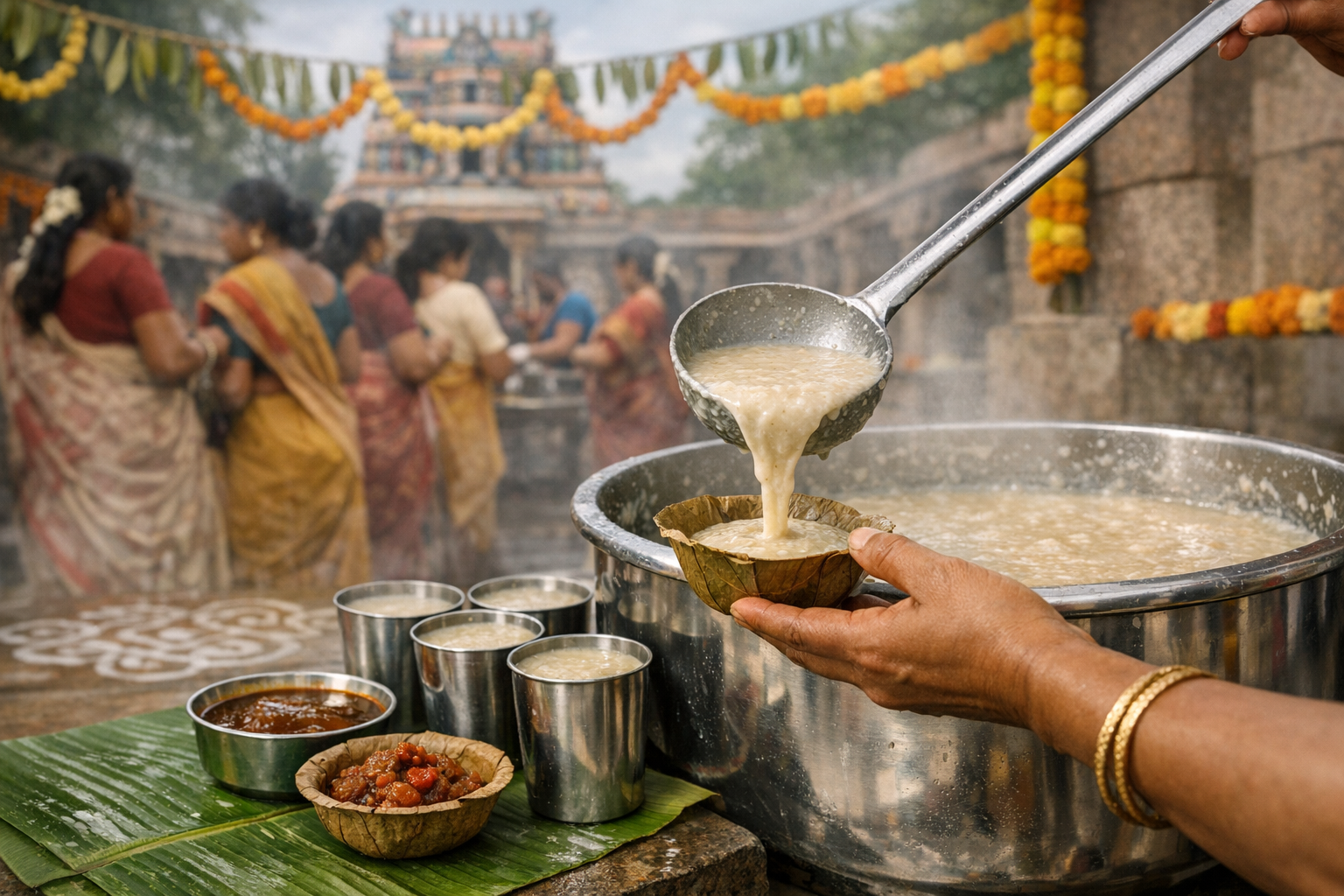
Across Tamil Nadu, Amman temples come alive in Aadi Masam (mid-July to mid-August) with the cherished tradition of preparing and sharing Aadi koozh as prasadam. This cooling, mildly tangy porridge—served customarily with oorugai (pickle) or Pulikuzhambu—anchors seasonal worship of Mariamman, Kaliamman, and other manifestations of the Divine Mother. The offering is both devotional and practical, reflecting agricultural rhythms, monsoon conditions, and a deep ethic of community care.
In the ritual calendar, Aadi Velli (Fridays) and Aadi Sevvai (Tuesdays) draw especially large congregations to Amman kovils, while many villages and towns celebrate Aadi Thiruvizha with processions, vow-fulfillment rites, and mass annadanam. Devotees align their observances with these auspicious days, seeking blessings for health, rainfall, and household well-being. The prominence of Amman worship during Aadi also reflects a classical Tamil understanding of seasonal forces and the nurturing, protective aspect of Shakti.
Aadi koozh is a nourishing, lightly fermented porridge. In many regions it is prepared with kambu (pearl millet), while others prefer ragi (finger millet) or a millet–rice blend. After cooking the grains to a smooth consistency and allowing them to cool, the preparation is rested to ferment gently and then thinned with water and mor (buttermilk) to a drinkable or ladleable texture. The result is naturally satiating, pleasantly sour, and especially refreshing in humid weather.
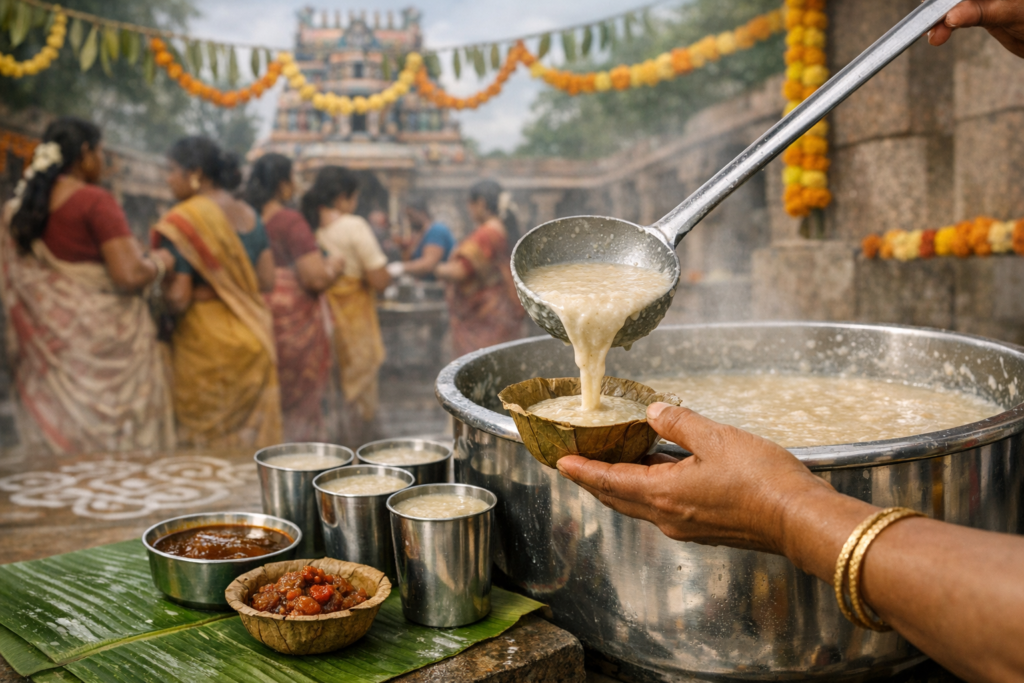
Pairings are integral to both taste and tradition. Temples typically distribute the koozh alongside simple accompaniments—most commonly oorugai or Pulikuzhambu. The acidity of tamarind-based Pulikuzhambu complements the lactic tang of the porridge, while pickles add salinity and spice for electrolytic balance. These sides enhance palatability without overshadowing the sanctity or simplicity of the prasadam.
Ritually, Aadi koozh is offered as nivedyam to Amman and then shared as prasadam. The symbolism is multilayered: a cooling, sattvic preparation offered to the heat-dissolving, protective Mother; a grain-based sustenance aligning with agrarian cycles; and a communal act of annadanam that upholds dharmic values of compassion and service. Many households observe personal vows during Aadi—seeking protection from illnesses, ensuring good rains, or expressing gratitude—and fulfill them through participation in koozh sevas.
Preparation at scale follows time-tested methods. Millets are soaked and cooked to a smooth paste, cooled, and allowed to ferment lightly overnight. On the day of distribution, the porridge is thinned to the desired consistency, mixed with buttermilk, and seasoned with salt. In many temple contexts, onions and garlic are avoided for naivedyam, preserving a sattvic profile. Some local traditions may add a gentle tempering of mustard seeds and curry leaves after offering, while others keep the porridge untempered to maintain ceremonial austerity.
Large Amman temples and smaller shrines alike deploy community kitchens to meet the demand of Aadi gatherings. Volunteers manage soaking, boiling, stirring in large cauldrons, portioning, and service lines. Simple, robust hygiene practices—clean vessels, safe water, proper cooling, and timely distribution—are prioritized to preserve the integrity and safety of the prasadam, especially in warm monsoon conditions.
Nutritionally, millets such as kambu and ragi are rich in dietary fiber, iron, magnesium, and B vitamins. Gentle lactic fermentation can improve bioavailability of certain micronutrients and contributes to a pleasing acidity that aids digestion. Combined with buttermilk, Aadi koozh becomes hydrating and satiating, while accompaniments like Pulikuzhambu provide spice-forward flavors that stimulate appetite and digestion in humid climates.
The seasonality is not incidental. Aadi coincides with heavy humidity and the onset of monsoon-linked agricultural activities. A lightly sour, cool porridge steadies the body, supports hydration, and offers sustained energy—qualities that elders across Tamil Nadu repeatedly affirm through lived experience and intergenerational knowledge. The offering thus unites ritual intention with climatic wisdom.
Regional diversity enriches the tradition. Some districts emphasize kambu koozh; others prefer ragi koozh. Textures range from drinkable to ladle-thick, and salinity varies by local palate. While Pulikuzhambu and pickle are common pairings, certain shrines may introduce subtle variations in spice, sourness, or serving vessels, all while observing the fundamental principles of temple purity and prasadam etiquette.
The social dimension is central. Aadi koozh annadanam is organized to be inclusive, with devotees and visitors served without distinction. This egalitarian meal resonates with a broader dharmic ethos witnessed across traditions—Hindu annadanam, Sikh langar, Buddhist dāna, and Jain aahaar-daan—affirming compassion, dignity, and shared community life. The practice reinforces unity across India’s diverse spiritual landscape while honoring local Tamil heritage.
Women’s leadership is palpable in Aadi observances. From planning to cooking and vow-related rituals, intergenerational teams sustain the cuisine, the schedule, and the sanctity. Oral histories, household techniques, and regional preferences are transmitted through practice—ensuring that Aadi koozh remains a living tradition rather than a static recipe.
Across Tamil Nadu—at Samayapuram Mariamman Kovil (Tiruchirappalli), Punnainallur Mariamman (Thanjavur), and countless urban and rural Amman shrines in districts such as Chennai, Salem, Madurai, Tirunelveli, Nagapattinam, and Kanyakumari—Aadi koozh distribution is a highlight of the month. Specific dates, line management, and serving times are temple-dependent; devotees typically consult local announcements for Aadi Velli, Aadi Sevvai, and festival schedules.
Environmental mindfulness often accompanies the tradition. Many temples and communities encourage the use of reusable steel tumblers or biodegradable leaf cups (donai). The preference for millets supports local agrarian economies and biodiversity, aligning devotion with sustainable foodways. The renewed interest in millets across India has also spotlighted Aadi koozh as an exemplar of time-honored, climate-smart cuisine.
Those planning to participate may keep simple guidelines in mind. Modest attire is customary; queues are respected; prasadam is received with the right hand; and food is consumed with reverence and without waste. Individuals sensitive to dairy may request smaller portions or consume the porridge before buttermilk is added, where feasible and permitted by temple volunteers.
Beyond the meal, Aadi koozh represents intangible cultural heritage—culinary knowledge, ritual discipline, and communal service braided together in practice. The offering functions as nourishment, medicine, and metaphor: cooling the body, steadying the mind, and embodying the maternal care of Amman for all who seek refuge.
In sum, Aadi koozh in Amman temples of Tamil Nadu is a sacred and practical prasadam. It honors Shakti through simplicity, uplifts communities through annadanam, conserves local ecologies through millets, and mirrors the shared dharmic value of feeding without discrimination. As Aadi returns each year, so does this graceful confluence of ritual, nutrition, and community—sustaining bodies and hearts in equal measure.
Inspired by this post on Hindu Pad.










Leave a Reply
You must be logged in to post a comment.