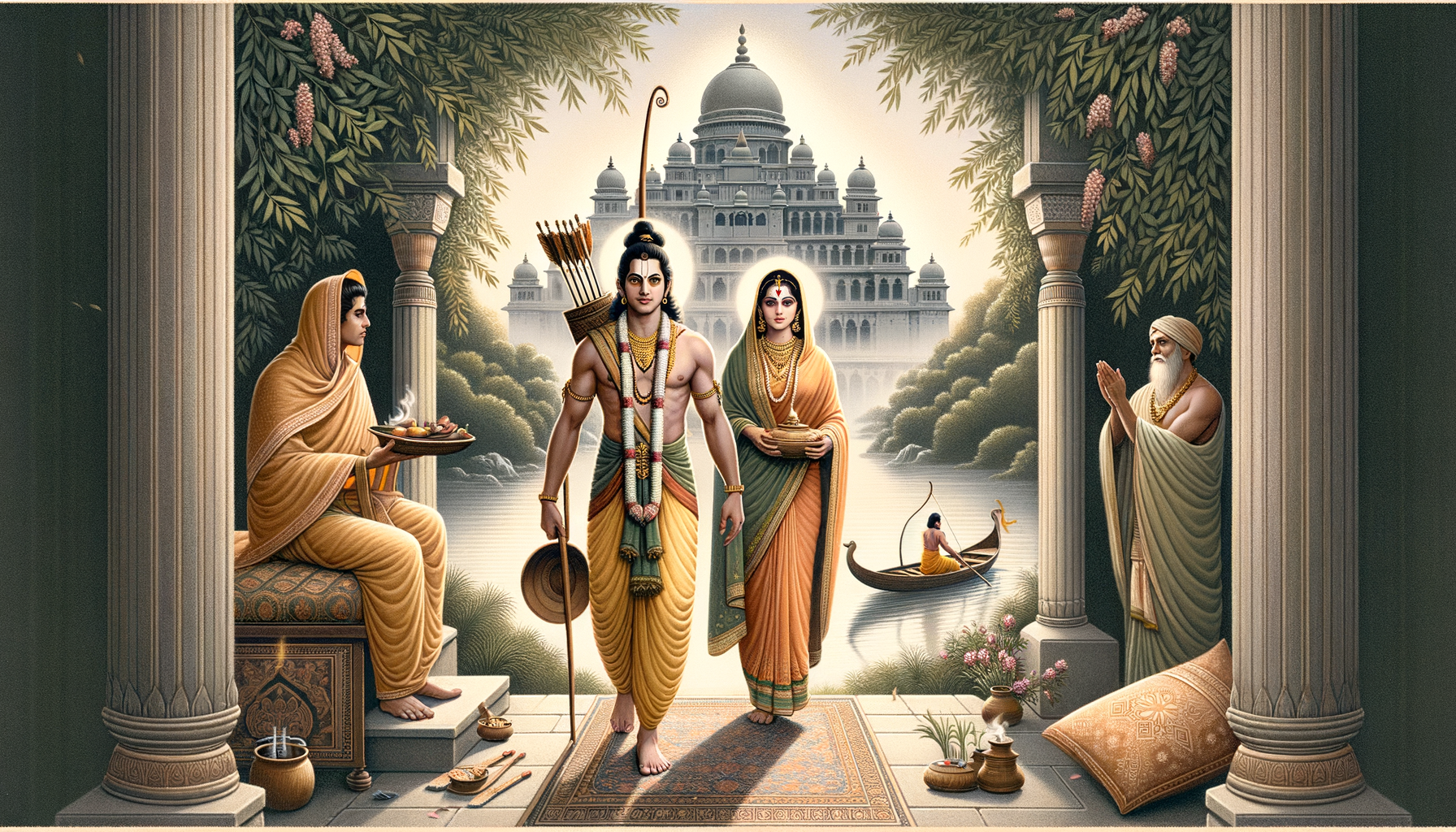
The Ayodhya Kanda, the second book of Valmiki’s Ramayana, centers on Ayodhya and unfolds a compelling study of dharma, righteous leadership, and filial duty. Set against the cultural and political fabric of Kosala, these episodes trace the transition from anticipated coronation to voluntary exile, shaping the ethical arc of Lord Rama’s life and the moral landscape of Ayodhya.
King Dasharatha’s resolve to install Rama as Yuvaraja reflects a moment of political maturity and social harmony. The city prepares with festival-like anticipation, recognizing Rama’s virtuestruthfulness, restraint, compassion, and devotion to dharmaas the foundation of just governance. This scene underscores how ethical leadership safeguards both state and society.
The narrative then turns as Queen Kaikeyi, recalling two boons granted by Dasharatha, asks for Bharata’s coronation and Rama’s fourteen-year vanvas. Influenced by Manthara’s counsel, Kaikeyi’s demand introduces moral complexity rather than simple antagonism; it becomes the crucible in which vows, truth, and duty are tested, and the epic’s deeper inquiry into dharma gathers force.
Rama’s serene acceptance of exile, honoring his father’s word, stands as a decisive affirmation of satya and dharma. Sita’s unwavering resolve to accompany him, and Lakshmana’s loyal commitment, elevate the episode from personal sacrifice to a shared ethic of family duty and righteous conduct. Their choice illustrates that adherence to principle can coexist with compassion and courage.
As the trio departs Ayodhya, public grief reveals the bond between ruler and people. Along the journey, devotion and hospitality mark key halts: the crossing of the Ganga with Guha, the reverence of sage Bharadwaja, and the welcome at Valmiki’s hermitage. The settlement at Chitrakoot becomes a contemplative sanctuary, where renunciation and responsibility are held in balance.
In Ayodhya, Dasharatha’s passing deepens the pathos. Bharata returns from Kekaya to a realm transformed by grief. Rejecting a throne gained through wrongful means, he embodies righteous dissent: sorrow at the circumstances, fidelity to family, and reverence for dharma over ambition.
The meeting at Chitrakoot forms the ethical heart of Ayodhya Kanda. Bharata pleads for Rama’s return; Rama affirms the sovereignty of vows and duty. The symbolic coronation of the paduka (sandals) enshrines a rare model of governanceBharata ruling from Nandigrama as regent, with Rama’s authority intact and visible. Power is thus reframed as stewardship anchored in restraint, trust, and accountability.
Encounters with sages such as Atri and Anasuya further refine the epic’s ethical lens. Sita receives counsel on simplicity, steadfastness, and gentle strength, linking household virtue with social harmony. This hermitage ethos illuminates how inner discipline sustains outer orderan insight that prepares the narrative’s movement toward the forest in later kandas.
Collectively, these episodes offer enduring lessons: vows orient action, dharma steadies leadership, and humility preserves social cohesion. The values highlightedsatya, ahimsa, seva, self-restraint, and compassionresonate across dharmic traditions in Hinduism, Buddhism, Jainism, and Sikhism, affirming a shared moral grammar that honors unity in spiritual diversity.
For contemporary readers, Ayodhya Kanda clarifies how personal integrity and public duty can be harmonized. Through Lord Rama, Sita, Lakshman, Bharata, and King Dasharatha, the Ramayana reveals that ethical leadership is not merely triumphant but transformativeguiding families, communities, and realms toward justice, empathy, and lasting trust.
Inspired by this post on Hindu Pad.