-
Why the Pandavas Chose Exile: The Fierce Triumph of Dharma Over Power

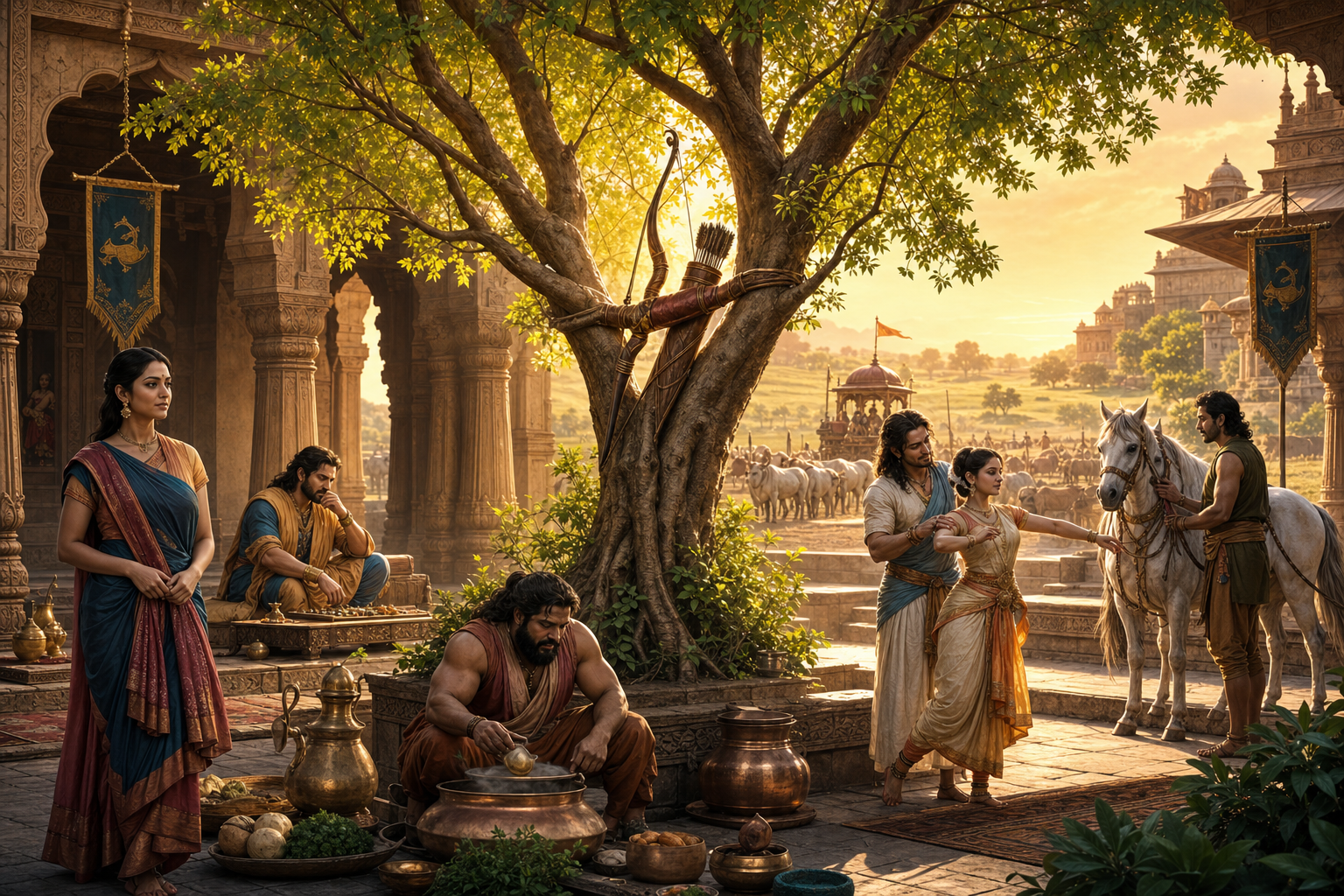
The Pandavas accepted exile not because they lacked strength, but because dharma required restraint before rightful action. Yudhishthira’s decision preserved moral legitimacy, protected Rajadharma, and prevented an impulsive civil war from obscuring the injustice committed by the Kauravas. The exile transformed the Pandavas’ suffering into preparation, discipline, and public testimony. It also exposed the difference…
-
Rama’s Unshaken Exile: Powerful Lessons in Dharma, Restraint, and Inner Calm

Rama’s departure from Ayodhya is one of the Ramayana’s most profound lessons in dharma, restraint, and moral courage. The episode shows Rama not as emotionally untouched, but as deeply human and fully aware of the pain caused by exile. His calm is not passivity; it is disciplined self-command guided by truth, filial duty, and social…
-
Kashmiri Ramayana: Dasharatha’s Blinding Tears and Karma’s Weight

This rewritten article explores the Kashmiri Ramayana’s moving portrayal of King Dasharatha weeping until grief blinds him after Rama’s exile. It explains how the episode deepens the Ramayana’s teachings on dharma, attachment, parental love, and the inescapable workings of karma. The piece connects Dasharatha’s suffering with the earlier Shravana Kumara episode, showing how karmic consequence…
-
Virata Kingdom in the Mahabharata: Powerful Lessons from the Matsya Refuge

The Virata Kingdom, also known as the Matsya Kingdom, is one of the most meaningful settings in the Mahabharata because it marks the Pandavas’ final year of exile. This article explains how Virata became the place where hidden identity, humility, courage, and dharma were tested. It explores the roles of Yudhishthira, Bhima, Arjuna, Nakula, Sahadeva,…
-
Sita’s Agni Pravesha and Exile: Understanding Sri Rama’s Dharma, Duty, and Moral Dilemma

This in-depth analysis clarifies why Sri Rama sent Devi Sita to exile despite knowing her purity by separating two often-confused episodes: Sita’s Agni Pravesha in the Yuddha Kanda and her later exile in the Uttara Kanda. It explains Agni Pravesha as a theological attestation within Vedic ritual logic and highlights puranic teachings (such as the…
-
Sita’s Agni Pravesha and Exile: The Contested Ethics of Rajadharma and Public Trust

Sita’s Agni Pravesha and exile remain the Ramayana’s most debated ethical crucible. Read closely, the episodes test the alignment of substantive truth with public trust, contrasting private duty and rajadharma under intense social scrutiny. Valmiki’s narrative presents Agni as the supreme witness, while later traditions (such as the Maya Sita motif) further safeguard Sita’s inviolability.…
-
Sita’s Agni Pravesha and Exile: The Contested Ethics of Rajadharma and Public Trust

Sita’s Agni Pravesha and exile remain the Ramayana’s most debated ethical crucible. Read closely, the episodes test the alignment of substantive truth with public trust, contrasting private duty and rajadharma under intense social scrutiny. Valmiki’s narrative presents Agni as the supreme witness, while later traditions (such as the Maya Sita motif) further safeguard Sita’s inviolability.…
-
Ayodhya Kanda’s Defining Moments: Duty, Exile, and Timeless Dharma in the Ramayana

Ayodhya Kanda, the second book of Valmiki’s Ramayana, presents a rigorous exploration of duty, vows, and righteous leadership centered in Ayodhya. It follows King Dasharatha’s plan to crown Rama, Kaikeyi’s boons, and Rama’s voluntary exile (vanvas), with Sita and Lakshmana choosing to accompany him. The grief of Ayodhya, the sanctity of Chitrakoot, and Bharata’s principled…
-
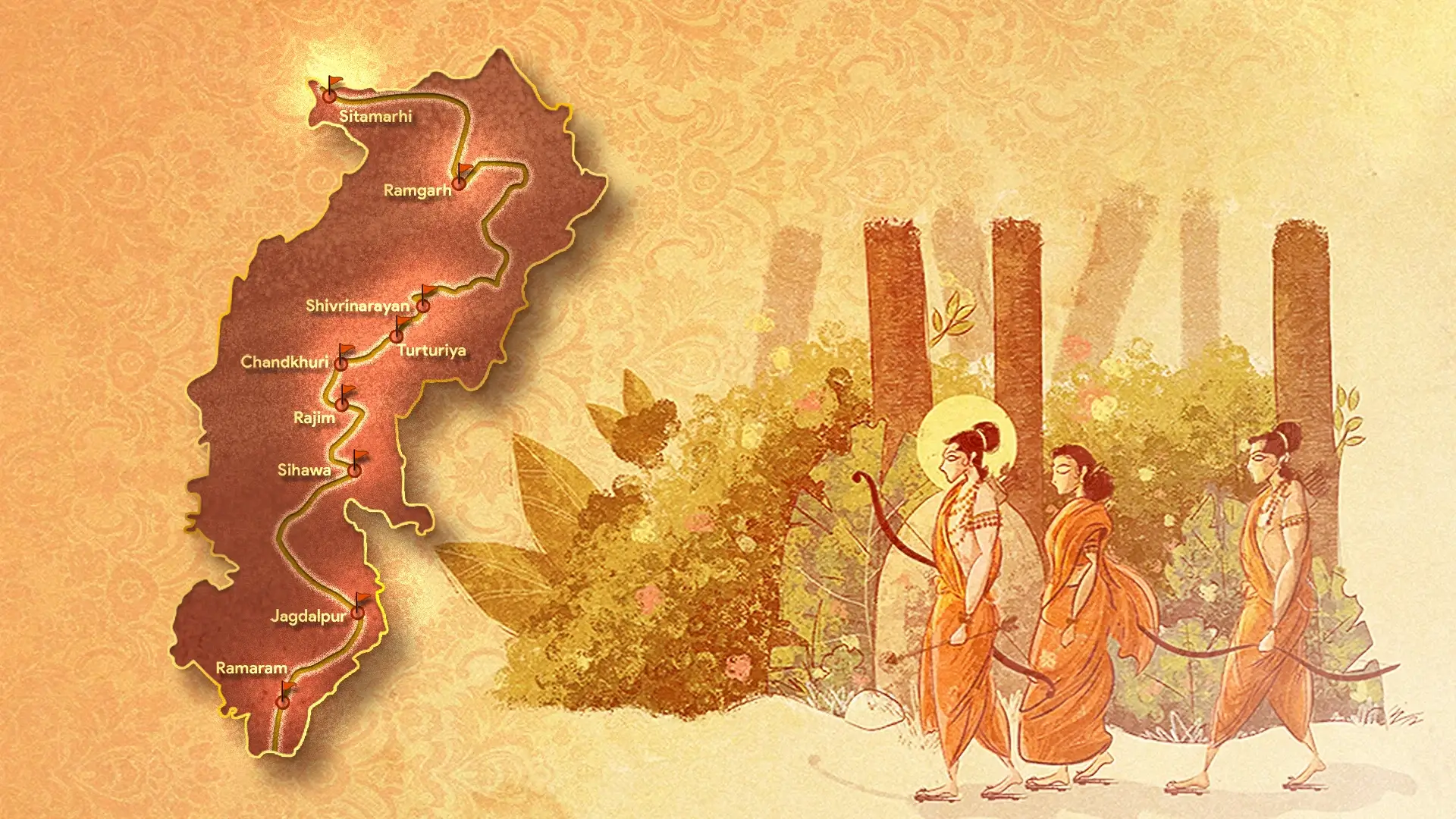
Tracing the Route of Lord Shri Ram’s Vanvaas

In Sanatan Itihaas – Ramayana, Lord Shri Ram is considered one of the most revered and worshipped deities. He is known as the seventh avatar of Lord Vishnu and is believed to have taken birth on Earth to restore Dharma or righteousness. Lord Shri Ram’s life is an inspiring tale of courage, sacrifice, and devotion,…