-
Ramayana’s Unfinished Truth: Why Rama and Sita Don’t Get a Fairy-Tale Ending (and Dharma’s Lesson)

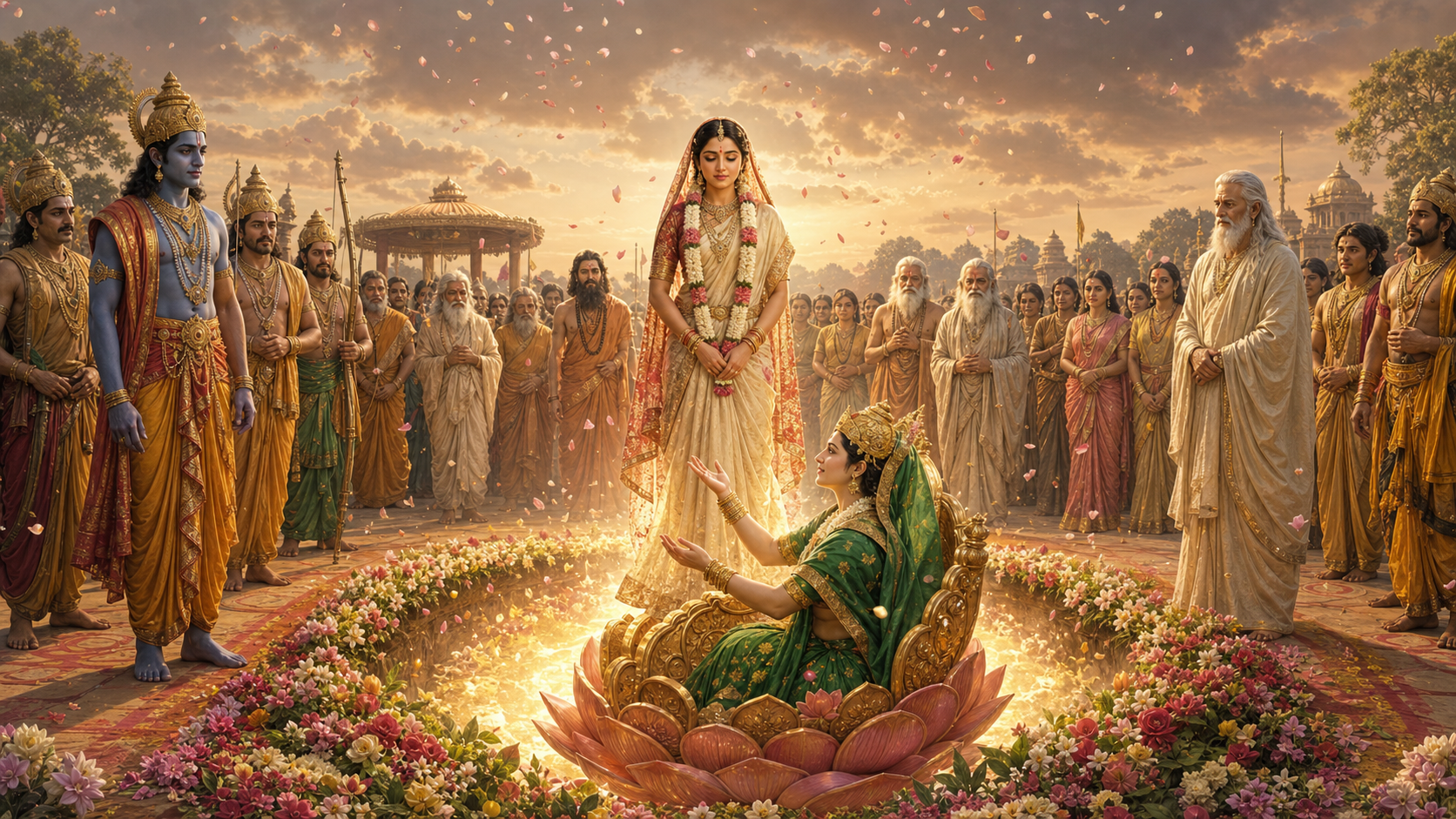
Ramayana is not a fairy tale about bliss after victory; it is a rigorous meditation on dharma under the pressures of love, power, and public trust. The narrative after Ravana’s defeat intensifies into a study of rajadharma, where Rama’s personal anguish and public duty collide. Sita’s trials—Agni Pariksha, exile, and her return to Mother Earth—expose…
-
From Valmiki to Tulsidas: Rama’s Journey from Human Ideal to Supreme Divine—Explained

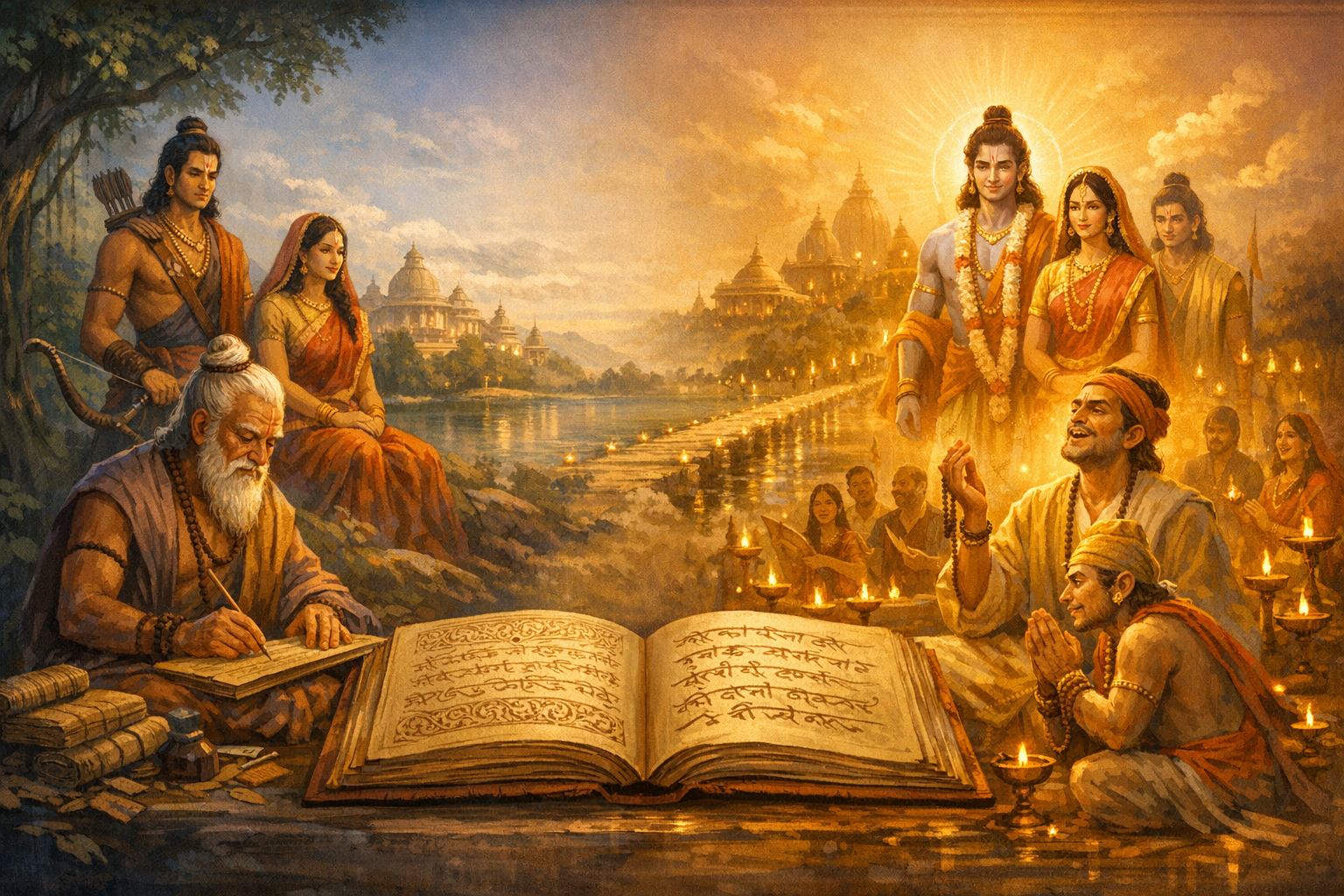
This scholarly comparison explains how Valmiki’s Sanskrit Ramayana and Tulsidas’ Awadhi Ramcharitmanas offer complementary visions of Rama—one as Maryada Purushottama, the ethical human exemplar, and the other as the Supreme Divine of the Bhakti Tradition. It situates both texts in their historical and linguistic contexts, clarifying why Sanskrit itihasa and vernacular kirtan-poetics produce different emphases.…
-
Earth-born Sita Devi: A Scholarly, Soul-Stirring Portrait of Dharma in the Valmiki Ramayana

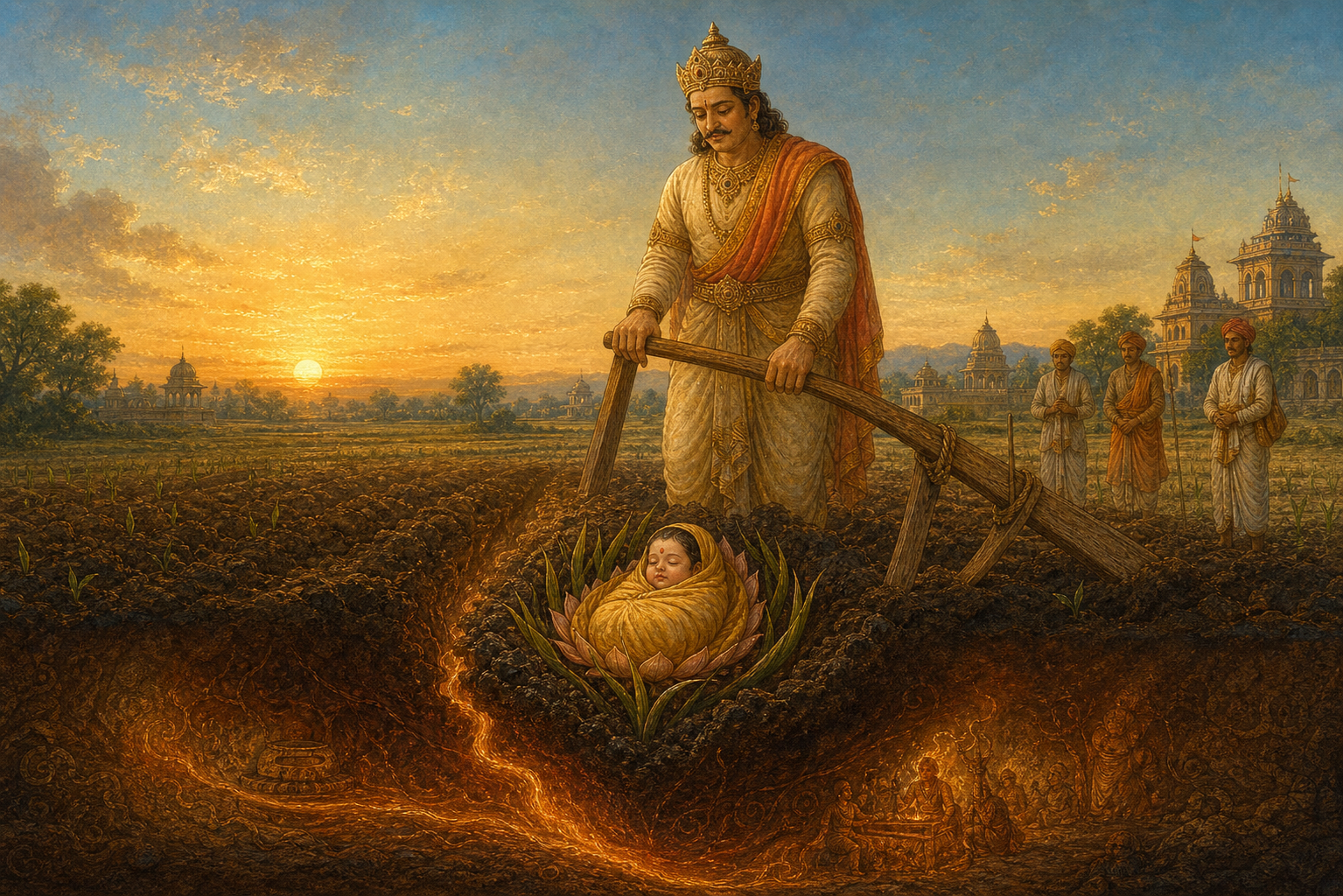
Sita Devi’s Earth-born manifestation, celebrated in Valmiki’s “Sita-ayah Charitam Mahat,” anchors the Ramayana’s ethical vision around truth, compassion, and the Sacred Feminine. Drawing on King Janaka’s testimony, the narrative affirms Sita as āyonijā—discovered in a furrow while preparing a yajna—thereby linking her to Bhumi Devi and an ecological ethic of reverence for the Earth. Her…
-
Sita’s Agni Pravesha and Exile: Understanding Sri Rama’s Dharma, Duty, and Moral Dilemma

This in-depth analysis clarifies why Sri Rama sent Devi Sita to exile despite knowing her purity by separating two often-confused episodes: Sita’s Agni Pravesha in the Yuddha Kanda and her later exile in the Uttara Kanda. It explains Agni Pravesha as a theological attestation within Vedic ritual logic and highlights puranic teachings (such as the…
-
Ramayana in Brief: A Powerful, Immersive Summary of Lord Rama’s Epic, Dharma, and Legacy

This academically grounded Ramayana in Brief presents a lucid, kāṇḍa-by-kāṇḍa Summary of Ramayana, highlighting Lord Rama’s ethical leadership, Sita’s steadfastness, Hanuman’s service, and the triumph of dharma. It carefully situates the Valmiki Ramayana within its seven-part structure, notes key textual traditions, and clarifies how themes like maryada, rajadharma, and dharma-yuddha shape the story. Readers gain…
-
Sita’s Agni Pravesha and Exile: The Contested Ethics of Rajadharma and Public Trust

Sita’s Agni Pravesha and exile remain the Ramayana’s most debated ethical crucible. Read closely, the episodes test the alignment of substantive truth with public trust, contrasting private duty and rajadharma under intense social scrutiny. Valmiki’s narrative presents Agni as the supreme witness, while later traditions (such as the Maya Sita motif) further safeguard Sita’s inviolability.…
-
Sita Devi and Vedic Mothers: Powerful Lessons in Dharma, Resilience, and Nurturing Leadership

Vedic literature and the epics present mothers as ethical anchors who transmit dharma, cultivate resilience, and preserve cultural memory. Centering on Sita Devi—who chose forest exile and raised Lava and Kusha in Valmiki’s āśrama—the essay examines how maternal agency becomes moral leadership. It extends the analysis to Kunti and Gandhari in the Mahabharata, and to…
-
Grounded by Jatayu, Ravana Took to the Skies: Sita’s Abduction and the Power of Dharma

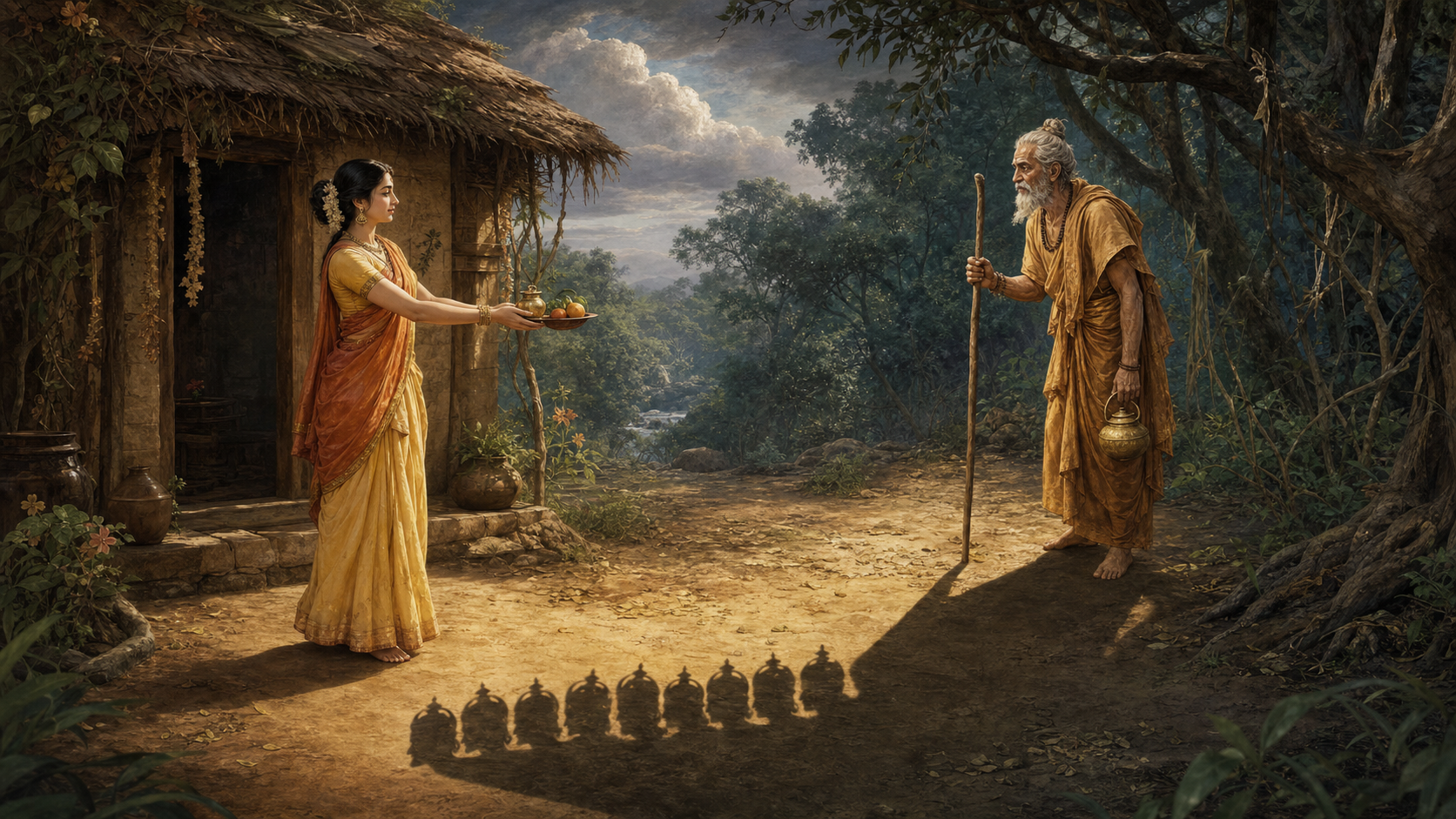
This long-form analysis examines the Jaṭāyu–Rāvaṇa confrontation during Sītā’s abduction, clarifying how South Indian retellings and the Vālmīki Rāmāyaṇa portray the shift from an aerial chariot to Rāvaṇa’s own ākāśa-gamana (flight) after the vehicle is disabled. It explains the semantics of ratha and vimāna, the narrative status of the Pushpaka Vimāna, and why regional traditions…
-
Sita’s Agni Pravesha and Exile: The Contested Ethics of Rajadharma and Public Trust

Sita’s Agni Pravesha and exile remain the Ramayana’s most debated ethical crucible. Read closely, the episodes test the alignment of substantive truth with public trust, contrasting private duty and rajadharma under intense social scrutiny. Valmiki’s narrative presents Agni as the supreme witness, while later traditions (such as the Maya Sita motif) further safeguard Sita’s inviolability.…
-
Ramayana in Brief: A Powerful, Immersive Summary of Lord Rama’s Epic, Dharma, and Legacy

This academically grounded Ramayana in Brief presents a lucid, kāṇḍa-by-kāṇḍa Summary of Ramayana, highlighting Lord Rama’s ethical leadership, Sita’s steadfastness, Hanuman’s service, and the triumph of dharma. It carefully situates the Valmiki Ramayana within its seven-part structure, notes key textual traditions, and clarifies how themes like maryada, rajadharma, and dharma-yuddha shape the story. Readers gain…
-
Sita Navami 2026 (Apr 25): Auspicious Puja Vidhi, Vrat Guide, Panchang Rules & Significance

Sita Navami 2026 falls on April 25, aligning with Vaishakha Shukla Navami in the Hindu calendar. This comprehensive guide explains the festival’s scriptural foundations, cultural depth, and ecological symbolism, spotlighting Sita as an embodiment of dharma and a manifestation of Goddess Lakshmi. It clarifies Panchang-based tithi rules, the Udaya Tithi and Madhyahna approaches, and why…
-
Repakula Subbamma Thota Utsavam 2026: Sacred Garden Procession of Sita–Rama in Tirupati

Repakula Subbamma Thota Utsavam in Tirupati, observed on Saturday, 4 April 2026, brought the Utsava Murthis of Sri Sita, Sri Rama, and Lakshmana into a sanctified garden setting for darshan and ritual celebration. Beginning at 9:30 AM, the procession integrated Veda parayanam, Nadaswaram, and community bhajans, exemplifying how sacred movement extends grace beyond the sanctum.…
-
Repakula Subbamma Thota Utsavam, Tirupati: Sacred Garden Procession at Sri Kodandarama Swamy Temple

The “Repakula Subbamma Thota Utsavam” in Tirupati is a spring garden festival honoring Sri Sita, Rama, and Lakshmana at the Sri Kodandarama Swamy Temple. Observed on Saturday, 4 April 2026, it began with a 9:30 AM procession of the Utsava Murthies, bringing sacred presence into a verdant public space. The thota (garden) setting reflects a…
-
Ashes of Lanka: Subaltern Ramayana Insights on Dharma, Civilians, and War Ethics

This essay reframes the burning of Lanka in Sundara Kanda through a subaltern, ethically rigorous lens that centers the ordinary people of the golden city. It retains reverence for Hanuman’s strategic brilliance and Sri Rama’s cause while probing the moral costs of urban fire on artisans, traders, elders, and children. Drawing on Dharmayuddha norms and…
-
Sita’s Sacred Resolve: Why Only Rama Could Rescue Her—and What It Teaches About Dharma

Why did Sita insist that only Rama rescue her, even when Hanuman could have carried her to safety? This long-form analysis of Sundara Kanda shows how her decision unites maryada, kshatra-dharma, reputation, and tactical prudence into a single, coherent ethic. Drawing on Valmiki Ramayana and key regional traditions, it explains why justice in the Ramayana…
-
Rama Katha: Scholarly, Soul-Stirring Life History of Sri Rama, the Maryada Purushottama

This comprehensive Rama Katha presents a scholarly yet accessible life history of Sri Rama, the Maryada Purushottama, rooted in Valmiki Ramayana and allied traditions. Readers gain a clear overview of the seven kandas, from Ayodhya and vanvas to the Setubandha, Yuddha Kanda, and Sri Rama Pattabhishekam. Ethical complexities—such as Vali-vadha and the Agni Pariksha—are examined…
-
Ramayana’s Powerful Blueprint: Dharma vs. Disorder and the Quest for Just Leadership

This essay examines how the Ramayana confronts humanity’s enduring paradox: the quest to draw order from chaos without promising utopia. It analyzes dharma as a multi-layered system—cosmic, social, and personal—and shows how Rama’s choices model rule-bound leadership (rajadharma) under real-world constraints. Readers gain a technically grounded framework for just decision-making: prioritize norms, exhaust diplomacy before…
-
How Rama and Lakshmana Overcame Viradha’s Boon: A Defining Battle in Aranya Kanda

Set in the early sargas of the Aranya Kanda, the encounter with Viradha in Valmiki’s Ramayana demonstrates how Rama and Lakshmana combine disciplined courage with lawful ingenuity to defeat a rakshasa protected by a boon. The episode transforms a battlefield into a seminar in applied ethics: honor the letter and spirit of law, adapt strategy…
-
Washerman’s Whisper and Sita’s Ordeal: Unraveling Ramayana’s Most Debated Mystery

The ‘washerman episode’ in the Ramayana is more than a narrative twist; it is a rigorous exploration of ethics, governance, and compassion. This article situates the scene—five spies praising Sri Rama and a sixth overhearing a washerman’s harsh rebuke—in its textual and historical contexts, noting variations across Valmiki’s Uttara Kāṇḍa and later vernacular traditions. It…
-
Inside the Narasimha Purana: The Maya Sita Mystery behind Ravana’s Abduction

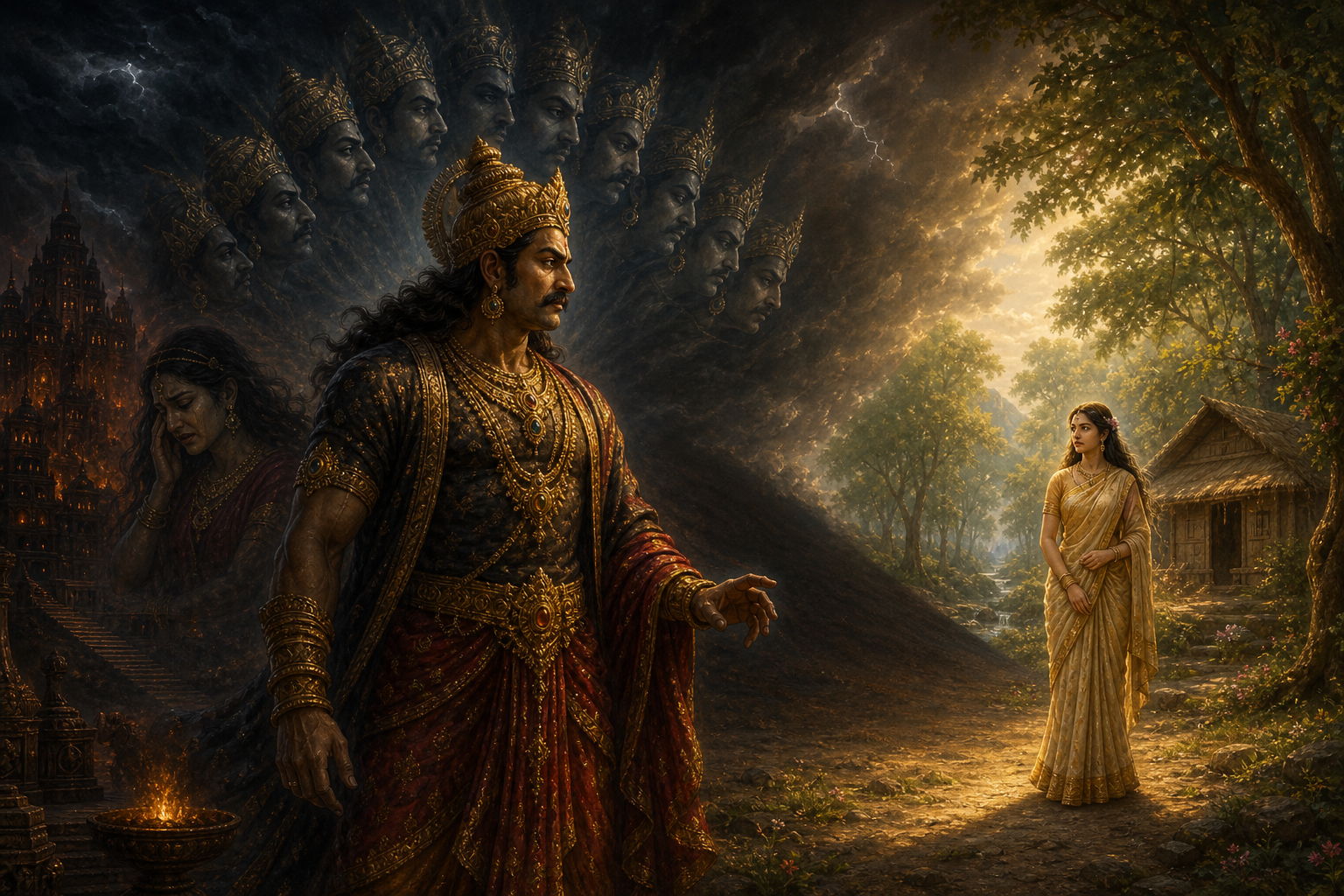
This essay explores a Puranic reinterpretation—attributed to the Narasimha Purana—of the Ramayana episode in which Ravana kidnaps Sita, proposing that he abducted a divinely fashioned “Maya Sita.” It explains how Agni shelters the true Sita, reframing the Agni-pariksha as a public revelation of truth rather than a punitive ordeal. Readers gain a clear, technical understanding…