-
Powerful Truth: Why Mahabharata Was Not Simply Jaya Expanded into Bharata

The familiar claim that the Mahabharata evolved from an 8,800-verse Jaya into a 24,000-verse Bharata and then into the 100,000-verse Mahabharata is more complicated than it appears. A close reading of the Adi Parva suggests that the number 8,800 refers to difficult or knotty verses, not necessarily to a complete early text called Jaya. The…
-
Jada Bharata vs. Kali Yuga: Unmasking Algorithmic Gurus and Reclaiming Timeless Dharma

Jada Bharata’s encounter with the modern attention economy offers a precise lens for navigating Kali Yuga’s spiritual noise. Grounded in the Bhagavata Purana, the sage’s teachings on vairagya, mauna, sakshi-bhava, and nishkama-karma map cleanly onto today’s influencer culture and consumer spirituality. Clear criteria from the Upanishads and the Gita help distinguish authentic guidance from spectacle…
-
Avanaddha: The Sacred Science of Indian Drums from Vedic Pushkara to Pakhawaj

Avanaddha, the classical Indian family of drums defined in the Natyashastra, links Vedic references such as pushkara and dundubhi with today’s diverse performance, ritual, and communal traditions. This article explains how construction techniquesshell materials, membrane fastening, and the famed syahi loadingengineer near-harmonic overtones and pitch-centered strokes. It surveys major drum types (mridangam, pakhawaj, khol, chenda,…
-
Kaliyuga Ramayana: Timeless Dharma, Courage, and Compassion for Today’s World

Kaliyuga Ramayana offers a contemporary, ethical reading of the Ramayanaset in the Treta Yugaapplied to modern challenges. It distills lessons from Lord Rama, Mata Sita, Lakshmana, Bharata, and Shatrughna into practical guidance for leadership, family duty, and social harmony. The text’s symbolsRavana as ego, the vanara sena as collective service, and the bridge to Lanka…
-
Brotherhood in the Ramayana: Sacred Bonds of Duty, Sacrifice, and Enduring Unity

Brotherhood in the Ramayana is portrayed as a disciplined ethic of love, respect, sacrifice, and dharma that stabilizes families and strengthens kingdoms. Rama and Lakshman exemplify vigilant companionship in adversity, while Bharata’s renunciation models humility in leadership. Shatrughna’s quiet service shows how consistent responsibility sustains the common good. In contrast, Ravana’s rejection of counsel and…
-
Ayodhya Kanda’s Defining Moments: Duty, Exile, and Timeless Dharma in the Ramayana

Ayodhya Kanda, the second book of Valmiki’s Ramayana, presents a rigorous exploration of duty, vows, and righteous leadership centered in Ayodhya. It follows King Dasharatha’s plan to crown Rama, Kaikeyi’s boons, and Rama’s voluntary exile (vanvas), with Sita and Lakshmana choosing to accompany him. The grief of Ayodhya, the sanctity of Chitrakoot, and Bharata’s principled…
-
Sibling Bonds in the Ramayana: Timeless, Powerful Lessons on Dharma and Unity in Kaliyuga

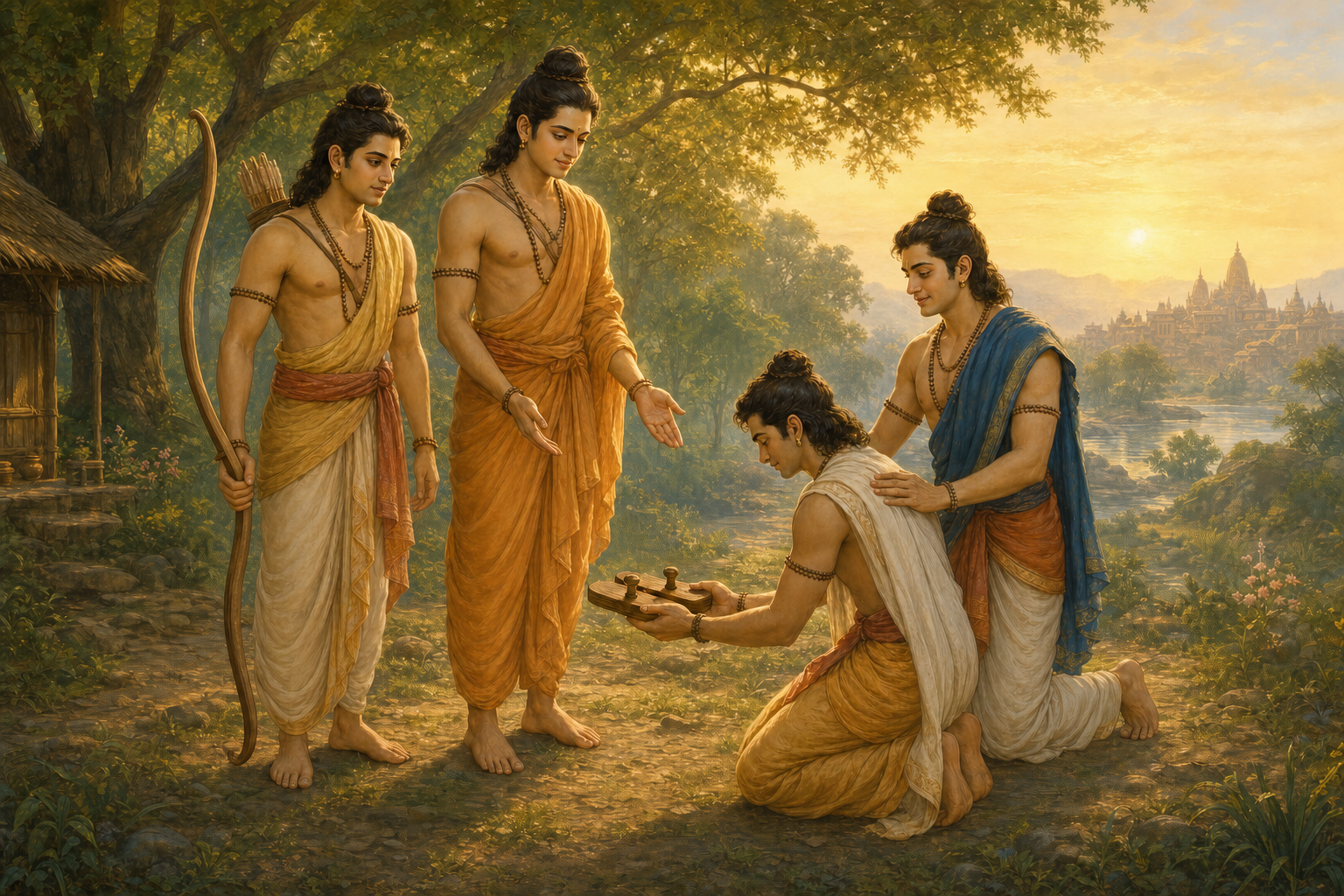
The Ramayana’s sibling bonds offer a clear ethical framework for Kaliyuga, modeling fraternal love, duty, and sacrifice through Rama, Bharata, Lakshmana, and Shatrughna. Bharata’s stewardship under Rama’s paduka exemplifies humility and accountability over ambition. Rama and Lakshmana illustrate complementary roles and counsel in crisis, while Shatrughna’s quiet service honors the dignity of unseen labor. These…
-
The Shanghai Cooperation Organisation (SCO) Meet In Goa – Substance Or Cosmetics?

By Maj Gen Neeraj Bali (Retd). In September last year, when India assumed the rotational chairmanship of the Shanghai Cooperation Organisation, it formally invited all the members to the Foreign Ministers’ confabulations. Inevitably, the list of invitees included China and Pakistan, two countries with which India shares geography and, unfortunately, intractable acrimony.
-
Supreme Courts: Threats across the world

Israeli Judicial reforms, India’s own Judicial Reform Bill and even US Supreme Court appointments have all created waves. Supreme Courts across the world seem to be under threat. Is it so? If the Parliament passes a law for judicial reforms, the Supreme Court must accept that law and move on. The Supreme Court has abrogated…
-
Dharmic Education in an Age of Deliberate De-Hinduisation of Bharata

What we now call as “Dharmic education” was the natural state of our social and cultural life even 60-70 years ago. Even in the mid-1970s, we had a sizeable number of people who earned their livelihood as poets or singers or bards, performing Bhagavata Melas, Ram Katha, Puranas, Harikathas, etc. These artists were largely illiterate…