-
Why the Pandavas Chose Exile: The Fierce Triumph of Dharma Over Power

The Pandavas accepted exile not because they lacked strength, but because dharma required restraint before rightful action. Yudhishthira’s decision preserved moral legitimacy, protected Rajadharma, and prevented an impulsive civil war from obscuring the injustice committed by the Kauravas. The exile transformed the Pandavas’ suffering into preparation, discipline, and public testimony. It also exposed the difference…
-
Rama’s Unshaken Exile: Powerful Lessons in Dharma, Restraint, and Inner Calm

Rama’s departure from Ayodhya is one of the Ramayana’s most profound lessons in dharma, restraint, and moral courage. The episode shows Rama not as emotionally untouched, but as deeply human and fully aware of the pain caused by exile. His calm is not passivity; it is disciplined self-command guided by truth, filial duty, and social…
-
Rama’s Exile Reimagined: How the Indonesian Ramayana Transforms Vanvas into Sacred Austerity

The Indonesian Ramayana preserves the familiar arc of Rama’s 14-year exile while transforming its meaning through Javanese-Balinese ethics, performance, and iconography. Drawing on the Kakawin Ramayana, Prambanan’s ninth-century reliefs, and wayang and kecak traditions, exile (vanvas) is recast as tapa brataa disciplined pathway to leadership rather than mere banishment. Local concepts such as nrimo ing…
-
Sita’s Agni Pravesha and Exile: Understanding Sri Rama’s Dharma, Duty, and Moral Dilemma

This in-depth analysis clarifies why Sri Rama sent Devi Sita to exile despite knowing her purity by separating two often-confused episodes: Sita’s Agni Pravesha in the Yuddha Kanda and her later exile in the Uttara Kanda. It explains Agni Pravesha as a theological attestation within Vedic ritual logic and highlights puranic teachings (such as the…
-
How Rama and Lakshmana Overcame Viradha’s Boon: A Defining Battle in Aranya Kanda

Set in the early sargas of the Aranya Kanda, the encounter with Viradha in Valmiki’s Ramayana demonstrates how Rama and Lakshmana combine disciplined courage with lawful ingenuity to defeat a rakshasa protected by a boon. The episode transforms a battlefield into a seminar in applied ethics: honor the letter and spirit of law, adapt strategy…
-
Ayodhya Kanda’s Defining Moments: Duty, Exile, and Timeless Dharma in the Ramayana

Ayodhya Kanda, the second book of Valmiki’s Ramayana, presents a rigorous exploration of duty, vows, and righteous leadership centered in Ayodhya. It follows King Dasharatha’s plan to crown Rama, Kaikeyi’s boons, and Rama’s voluntary exile (vanvas), with Sita and Lakshmana choosing to accompany him. The grief of Ayodhya, the sanctity of Chitrakoot, and Bharata’s principled…
-
Discover the Sacred Secrets of Panchavati: A Complete Guide to Its Symbolism in Ramayana

Panchavati, the sacred grove of the Ramayana on the Godavari River, is more than a location; it is a symbol of disciplined living, ecological reverence, and ethical courage. The grove’s “five trees” evoke harmony of the senses and elements, framing exile (vanvas) as a path of inner refinement. Key episodesŚūrpaṇakhā’s encounter, the golden deer, Sita’s…
-
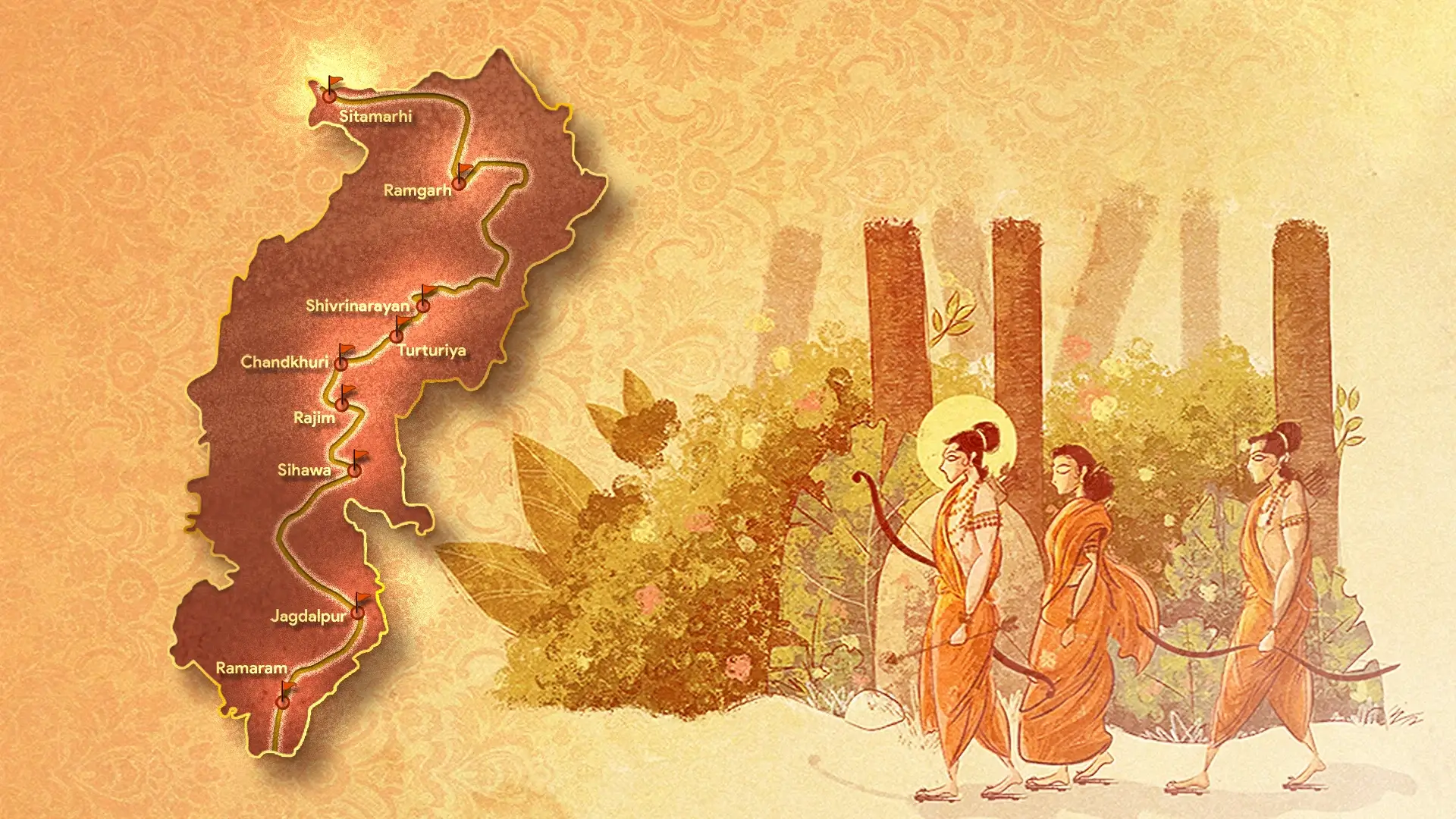
Tracing the Route of Lord Shri Ram’s Vanvaas

In Sanatan Itihaas – Ramayana, Lord Shri Ram is considered one of the most revered and worshipped deities. He is known as the seventh avatar of Lord Vishnu and is believed to have taken birth on Earth to restore Dharma or righteousness. Lord Shri Ram’s life is an inspiring tale of courage, sacrifice, and devotion,…