Within the layered theology of Shaivism, Shiva emerges simultaneously as the ineffable absolute and the cosmic player whose sportive grace assumes sacred visibility in lilamurtis“playful forms” revealed for the upliftment of beings. These forms translate the ungraspable mystery of the formless into intelligible images, gestures, and rituals that educate, console, and transform. Read through this lens, Shaiva iconography is not static art but a living pedagogy that aligns philosophical insight, ethical action, and contemplative practice across generations.
The lilamurtis articulate the classical Indian insight that the same reality can be experienced both as nirguna (beyond attribute) and as saguna (with attributes). By allowing wisdom to be contemplated through sight, touch, sound, and movement, these forms turn metaphysics into encounter. The resonance of this vision extends across dharmic traditionsHinduism, Buddhism, Jainism, and Sikhismwhere form serves to focus awareness, cultivate virtue, and foster inner freedom while affirming unity in diversity.
A foundational starting point is the aniconic presence of the Shiva Linga. Far from being a reductive symbol, the Linga functions as a sign (liṅga as “mark”) of the infinite axis that links earth and sky, immanence and transcendence. Its inseparability from the pīṭha or yoniground of manifestationexpresses the inseparability of consciousness (Purusha) and creative power (Prakriti). This aniconic center anchors the many iconic lilamurtis that elaborate Shiva’s teachings in narrative and symbol.
The Agamas and Shilpa Shastras provide the technical grammar for these forms: proportions (tāla), hand-gestures (mudra), attributes (āyudha), postures (āsana), and viewing protocols (darśana). Texts such as the Kāmikāgama, Suprabhedāgama, Mayamata, and Manasara, read alongside the Puranas and the Upanishads, determine how each form encodes doctrine and directs practice. The result is a precise, repeatable iconographic science that carries theology from line and metal into ritual and ethical life.
Among the most celebrated lilamurtis is Nataraja, Shiva as the Lord of Dance. Encircled by the prabhāmaṇḍala (halo of flames), the right hand raises the ḍamaru, seed of sound and time; another holds the flame of dissolution; the front right offers abhaya (fearlessness); the front left gestures toward the lifted foot, refuge and release. Trampling Apasmarathe dwarf of forgettingNataraja embodies the five cosmic acts (pañcakṛtya): creation, preservation, dissolution, concealment, and grace. The image condenses ontology, epistemology, and soteriology into a single, lucid event of movement.
Nataraja also binds temple, text, and performance into one continuum. The Natyashastra’s 108 karaṇas are carved on Chidambaram’s gateways; dancers in traditions such as Bharatanatyam internalize these grammar-gestures as spiritual discipline; the community experiences the dance during Arudra Darshan when the cosmic rhythm is ritually re-presented. Philosophically rigorous yet emotionally immediate, Nataraja offers an exemplar of how Shaiva imagery unites scholarship and devotion.
Ardhanarishvara, the half-Shiva half-Parvati form, communicates the indivisibility of consciousness and energy. It dismantles binary thinkingnot by erasing difference, but by harmonizing complementarity. At ethical and social levels, the form affirms reciprocity, care, and balance; at ecological levels, it nudges practice toward living in equilibrium with the natural world. For many devotees, encountering Ardhanarishvara evokes a felt sense of wholeness that reframes gender, relationship, and community in compassionate terms shared across dharmic cultures.
Dakshinamurti, the south-facing Guru under the banyan, teaches through silence (mauna-vyākhyā). In this form, the transmission of knowledge is immediate, non-conceptual, and stabilizing. Iconographically, the chinmudra encapsulates the reunion of individual and absolute; the presence of attentive sages symbolizes the fertility of discipleship. The figure has shaped learning cultures across India by elevating contemplation, listening, and inner steadiness as indispensable modes of knowing.
SomaskandaShiva with Uma and the child Skandacenters household virtue and community continuity. Pallava and Chola bronzes, and the Somaskanda panels placed behind the main Linga in many Tamil sanctums, express the theological insight that liberation and love are not adversaries. The image informs rites for family wellbeing and becomes a touchstone for ethical responsibilities that ripple outward from home to society.
Gangadhara, “Bearer of the Ganga,” recalls a civilizational memory that integrates myth, hydrology, and ethics. By receiving the river in his matted locks, Shiva tames and redirects force into nourishment. Theologically, compassion channels power; ritually, the form inspires water reverence; practically, it has animated ecological sensibilities in pilgrimage circuits along the Ganga and beyond. Narratives in the Shiva Purana and Skanda Purana interweave the descent of Ganga with vows to protect and purify.
Tripurantaka, the destroyer of the three cities, encodes inner warfare rather than outer conquest. In Shaiva Siddhanta exegesis, the three cities symbolize the triple impuritiesāṇava (egoic contraction), karma (imprints of action), and māyā (misapprehension). Shiva’s single arrow becomes the focused insight that dissolves confusion at its root. This form authorizes courage without cruelty, aligning martial valor with self-mastery in continuity with the broader dharmic ethos.
Kirata-Arjuna depicts Shiva as a forest hunter testing and then empowering Arjuna with the Pashupatastra. The episode teaches humility, discernment, and disciplined readiness. It also preserves a conversation between ascetic intensity and householder duty, a dialogue central to the Indian imagination where renunciation and responsibility refine each other.
Harihara, a composite of Vishnu and Shiva, affirms a pluralistic theological space where devotion does not require rivalry. By presenting unity-in-difference, Harihara has historically moderated sectarian heat and reinforced the dharmic ability to honor multiple paths. The form thus underwrites a shared civilizational compact visible in temples, festivals, and textual traditions alike.
Bhairava, the awe-inspiring guardian of thresholds and time (Kala Bhairava), concentrates attention on ethical vigilance and the consequences of negligence. In Kashi and Kathmandu, Bhairava is the sentinel before whom vows are tempered with sobriety. The form reminds communities that freedom must be yoked to responsibility and that protection of sacred spaces is both an outer and inner discipline.
Chandrasekhara, crowned with the crescent, marks the cyclical intelligence of time; Neelakantha, with the blue throat from containing the halahala poison, manifests radical compassionthe willingness to hold toxicity without transmitting it. These two forms guide communities through cycles of upheaval and healing, urging equanimity in crisis and generosity in action.
Pasupati, “Lord of beings,” emphasizes kinship with all life. The form inspires care for animals and habitats and resonates with Buddhist and Jain commitments to non-harm as well as with Sikh ethical service. It pushes religious practice beyond private piety into public guardianship of the vulnerablehuman and non-human alike.
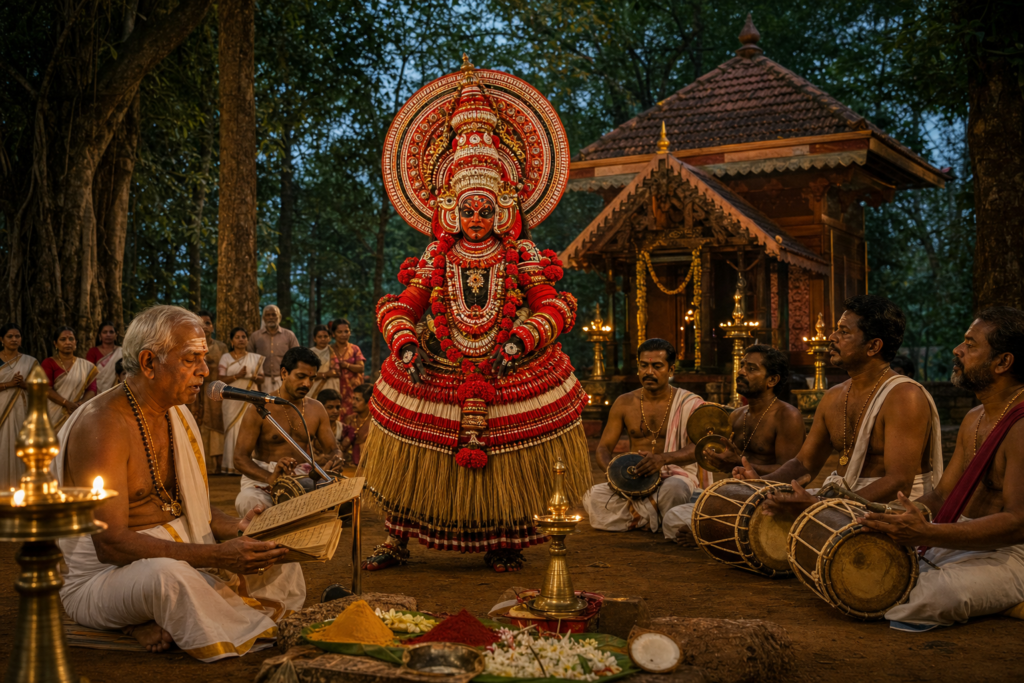
Lingodbhava narrates the vision of Shiva as an infinite column of fire before which Brahma and Vishnu discover the limits of their own searching. In South Indian temples, Lingodbhava is often installed on the western sanctum wall as a relief; in some Kerala traditions, the theme also appears in ritual kalam drawings. The image invites humility before the boundless and establishes the Linga as the axis of inexhaustible meaning.
Traditions of Ashtamurti present two complementary mappings. One enumerates eight epithetsSharva, Bhava, Rudra, Pasupati, Ugra, Mahadeva, Bhima, Ishanawhile another aligns Shiva with the five great elements (earth, water, fire, air, space) and the two luminaries (sun, moon), integrating cosmic and liturgical time. Both profiles teach that divinity saturates elemental and ethical order alike.
The technical clarity of Shaiva iconography reflects a sophisticated design science. Proportional canons (tāla), stance and balance (sthāna), hand symbolism (mudra), and attribute placement (āyudha) are prescribed to stabilize perception and induce meditative poise. When artisans follow the Agamic pramāṇa (standards), the resulting image invites both aesthetic delight and contemplative absorption, ensuring accessibility without diluting metaphysical precision.
Temple architecture extends this grammar into spatial pedagogy. A typical South Indian Shiva temple places Dakshinamurti on the southern niche (koshta), Lingodbhava on the west, and Brahma or Durga on the north, inviting circumambulation as a journey through instruction, revelation, and completion. Somaskanda panels frequently appear behind the main Linga, affirming that the sanctum’s stillness also shelters relational warmth. Gopurams and corridors, inscribed with narrative panels and dance karaṇas, turn pilgrimage into an embodied reading of scripture.
Ritually, these forms become dynamic through abhishekam (ceremonial bathing), alaṅkāra (adornment), naivedya (offering), and dīpa ārādhanā (worship with light). The cycles of daily, fortnightly, and annual worship create rhythmic contact points where communities recalibrate intention and gratitude. In countless homes, Shivalinga Puja mirrors the temple liturgy in simplified form, proving that accessibility and depth can coexist.
Sound and movement complete the picture. The recitation of the Sri Rudram and allied mantras attunes the mind to layered meaning; classical dance traditions render theological insight as choreographic intelligence; festival processions enact belonging across caste, language, and region. When devotees witness Nataraja’s chariot during Arudra Darshan or participate in Maha Shivaratri vigils, personal aspiration and collective memory reinforce each other.
These forms also nourish inter-dharmic kinship. The emphasis on compassionate action in Neelakantha, the valor of self-mastery in Tripurantaka, the contemplative silence of Dakshinamurti, and the ecological sensitivities of Gangadhara and Pasupati echo values esteemed in Buddhism, Jainism, and Sikhism. The shared civilizational commitment to truth, non-harm, and service allows these images to function as bridges rather than borders.
Modern scholarship often highlights how lilamurtis synthesize text, ritual, and aesthetics into a coherent knowledge-system. Bronze masterpieces from the Chola ateliers, inscriptions, Agamic manuals, and performance lineages together verify that Shaiva images were never intended as mere decoration. They are instruments of learningprecise, repeatable, and open to progressive deepening through practice.
Contemporary communities continue to adapt these forms with integrity. Diaspora temples curate exhibitions on Shiva Nataraja’s symbolism, urban congregations organize ecology-focused Gangadhara processions, and families integrate Somaskanda-centered observances to reinforce compassionate kinship. Digital platforms have expanded access to teachings on Guru Dakshinamurthy and to high-fidelity recordings of Vedic chant, sustaining continuity without sacrificing rigor.
Engagement is most fruitful when multi-modal. Study the Agamic and Purāṇic narratives; view the images with patient attention; observe abhishekam and understand its inner logic; listen to the cadence of mantras; and, when possible, walk the temple circumambulatory path that spatializes the teaching. Over time, the lilamurtis disclose an integrative education in which metaphysical clarity, ethical steadiness, and aesthetic joy converge.
In sum, the sportive grace of Shiva in lilamurtis reveals a tradition where theology becomes experience. From the still axis of the Linga to the kinetic wisdom of Nataraja, from the tenderness of Somaskanda to the guardianship of Bhairava, each form is a doorway into the same boundless presence. By honoring their diversity, communities across the dharmic family preserve unityan expansive unity grounded in knowledge, compassion, and shared practice.
Inspired by this post on Hindu Blog.