
-
Medha Dakshinamurti Iconography: A Definitive Guide to Shiva’s Sovereign of Intellect
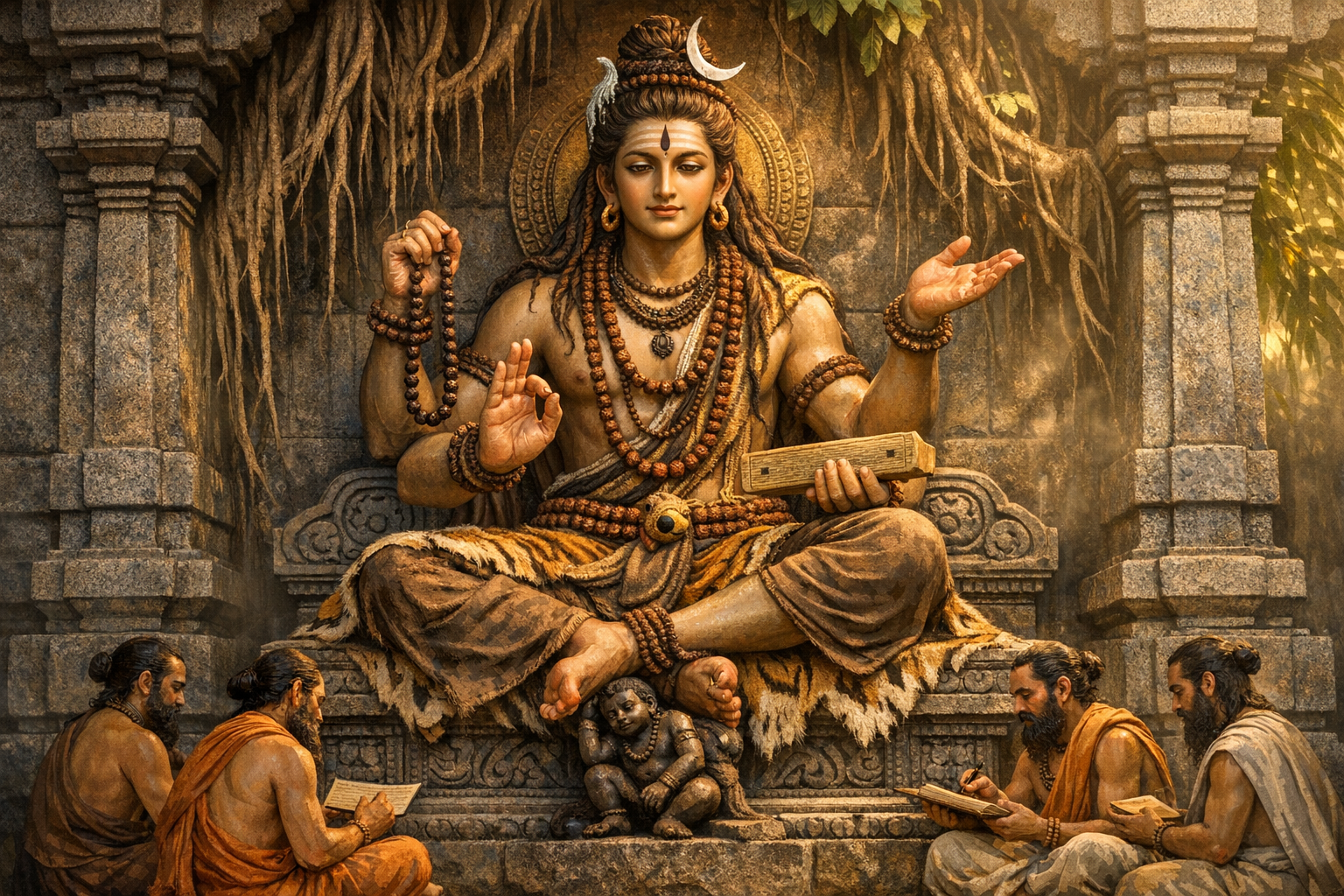
Medha DakshinamurtiShiva as the sovereign of intellectembodies the silent pedagogy of wisdom encoded in South Indian temple art. This comprehensive guide deciphers the icon’s attributes (jñana/chin mudra, akshamala, pustaka), posture beneath the banyan, and the symbolism of Apasmara subdued underfoot. Readers learn how to identify Medha Dakshinamurti in the south koshta, understand shilpa-shastra proportional canons,…
-
Samhara Dakshinamurti Unveiled: Tantric Iconography, Fierce Symbolism, and Sacred Meaning
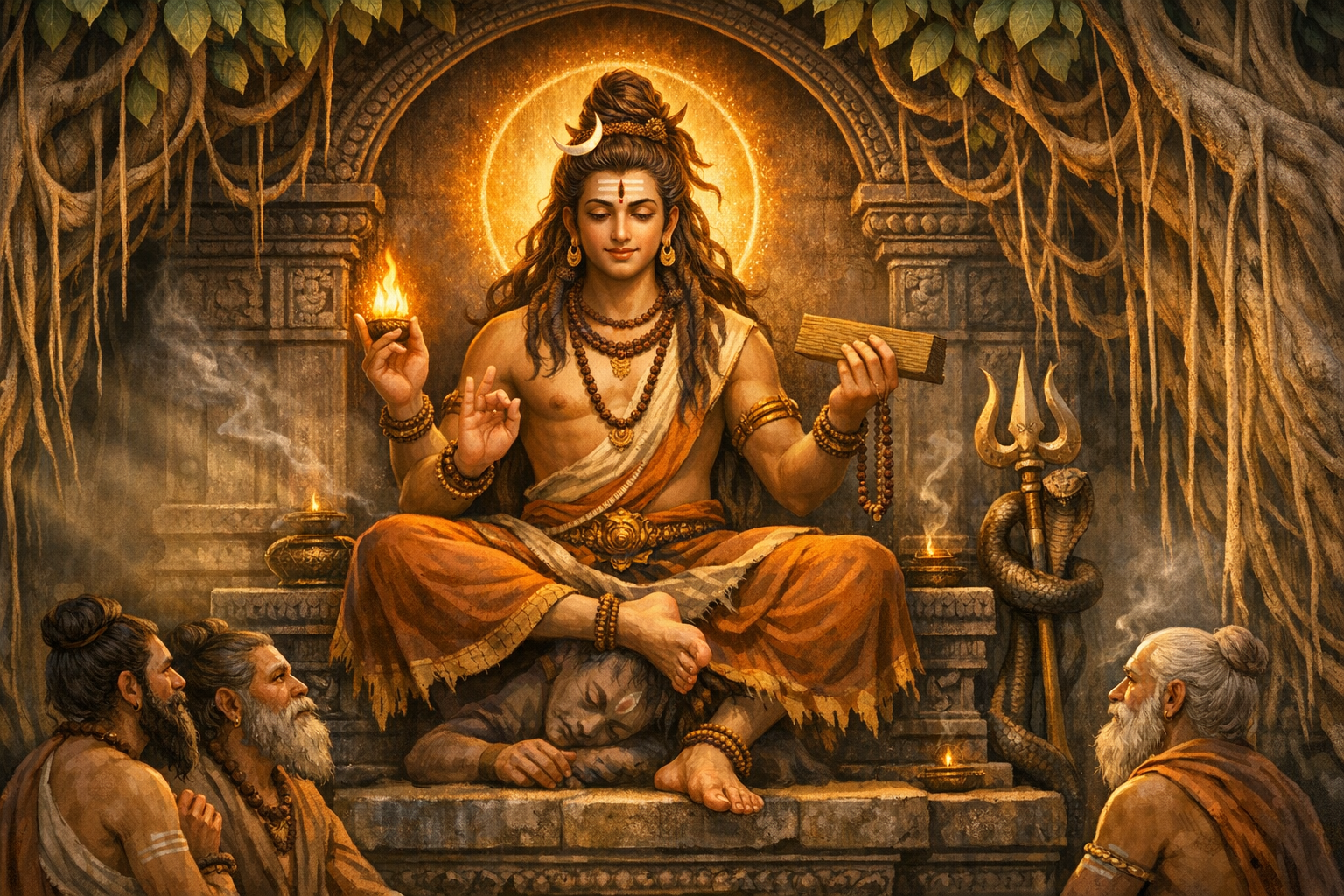
Samhara Dakshinamurti distills Shiva’s role as the silent guru who dissolvesnot destroyswhat obscures knowledge. This long-form, research-driven essay maps the iconography (banyan canopy, Apasmara, mudras, agni) and shows how the Samhara nuance shifts emphasis toward the transformative fire of discernment. It explains how attributes like fire, rosary, and scripture operate as practical metaphors in tantric…
-
Vinadhara Dakshinamurti: Standing Shiva as Adi Guru of Sound, Symbolism, and Wisdom
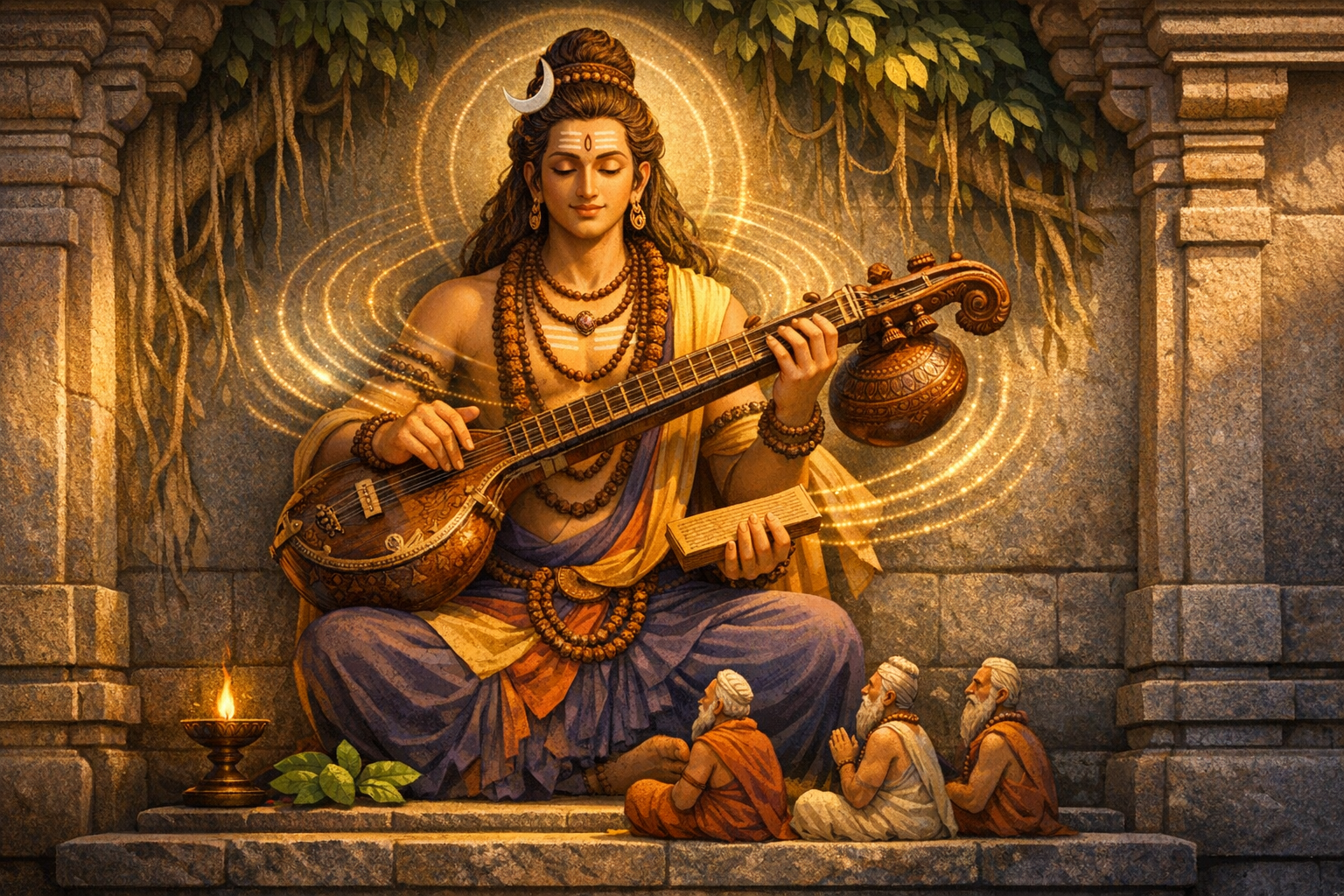
Vinadhara DakshinamurtiShiva as the standing Adi Guru with the vīṇāunites the famed silence of the teacher with the revelatory power of sacred sound. This long-form, research-driven exploration clarifies how orientation to the south, the banyan, the instrument, and the Guru’s poise disclose core Shaiva insights. Readers gain a technical view of iconography and temple architecture…
-
Decoding the Silent Guru: Powerful Differences Between Vyakhyana and Jnana Dakshinamurti
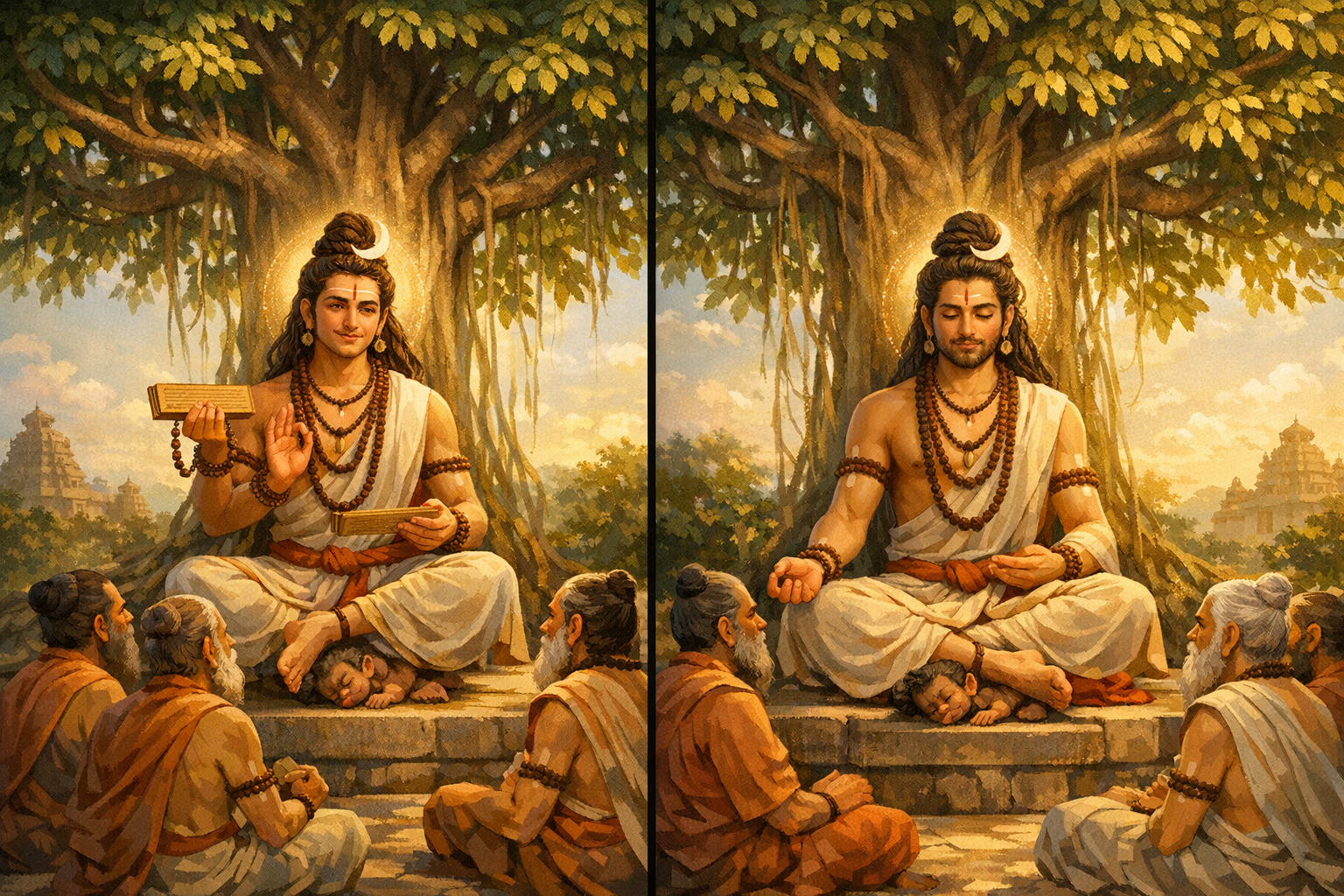
Dakshinamurti in Śaiva tradition manifests as the primordial teacher, with two pedagogically distinct but complementary forms: Vyakhyana Dakshinamurti (exposition) and Jnana Dakshinamurti (direct realization). This article clarifies their iconographic markerschinmudra versus vyakhyana/vitarka mudra, the prominence of pustaka and akshamalaand interprets their philosophical import through Vedanta’s arc from śravaṇa and manana to nididhyasana. Drawing on the…
-
Lakuti Dakshinamurti Unveiled: Tantric Iconography, Sacred Symbols, and Living Wisdom
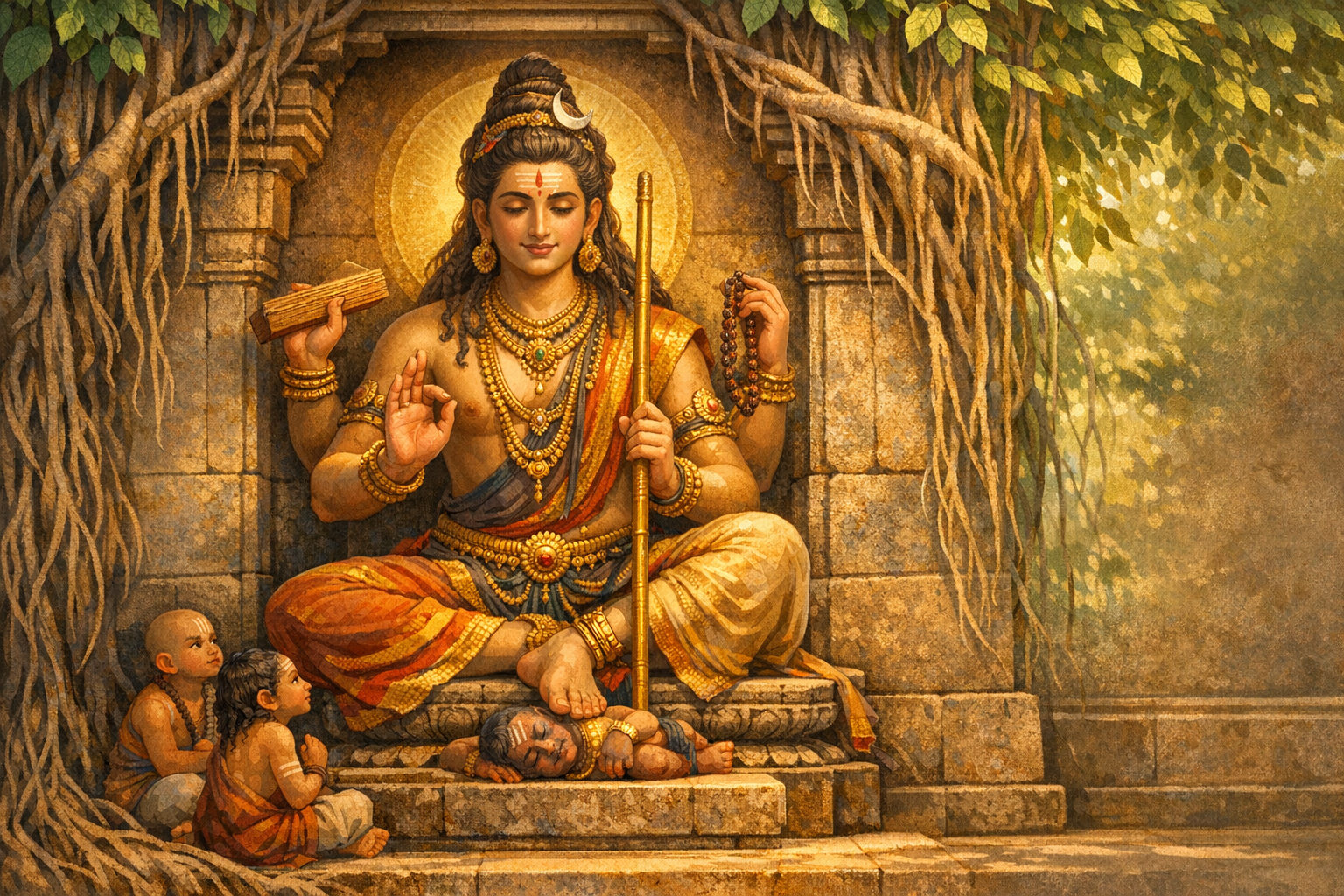
This in-depth exploration unveils Lakuti (Lagudi) Dakshinamurti as the south-facing Adi Guru whose staff encodes sovereignty, discipline, and the subtle spinal axis of awareness. Readers gain a clear, textually grounded understanding of how this staff-bearing variant fits within the broader Dakshinamurti quartet set out in Agamas and Shilpa Shastra. The article decodes each attributechinmudra, akshamala,…
-
Jnana Shasta under the Banyan: The Silent Teacher of Wisdom, Iconography, Practice, and Unity
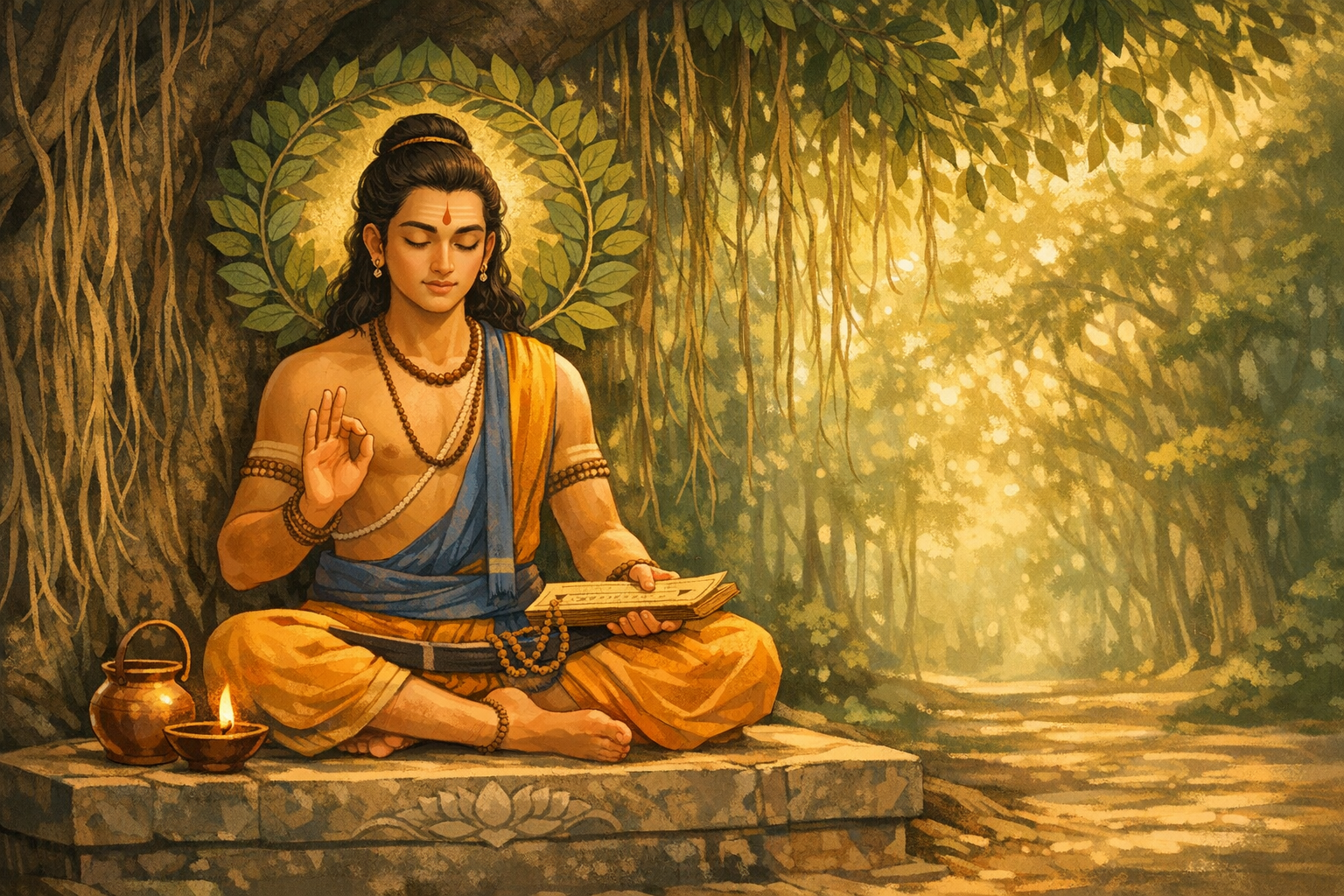
Jnana Shasta, the Silent Teacher, is a contemplative form of Śāstā (Ayyappa) that embodies inner illumination and serenity beneath the sacred banyan tree. This essay maps the iconographyposture, jñāna-mudrā, pustakaand its roots in Agamic and śilpa traditions, situating the deity within the larger Hindu philosophy of unity. It explains how the banyan symbolizes lineage, learning,…
-
Shiva’s Playful Forms (lilamurtis): Deep Symbolism, Agamic Iconography, Living Tradition

This essay decodes Shiva’s lilamurtisplayful sacred forms that translate the formless into transformative encounterthrough the lenses of Agamic iconography, Purāṇic narrative, and living ritual. It explains the aniconic meaning of the Linga and shows how iconic forms like Nataraja, Ardhanarishvara, and Dakshinamurti encode philosophy as gesture and posture. Readers learn how temple architecture and ritual…
-
Mayiladuthurai’s Vadaranyeswarar: Nandi’s Redemption under Dakshinamurti’s Timeless Grace
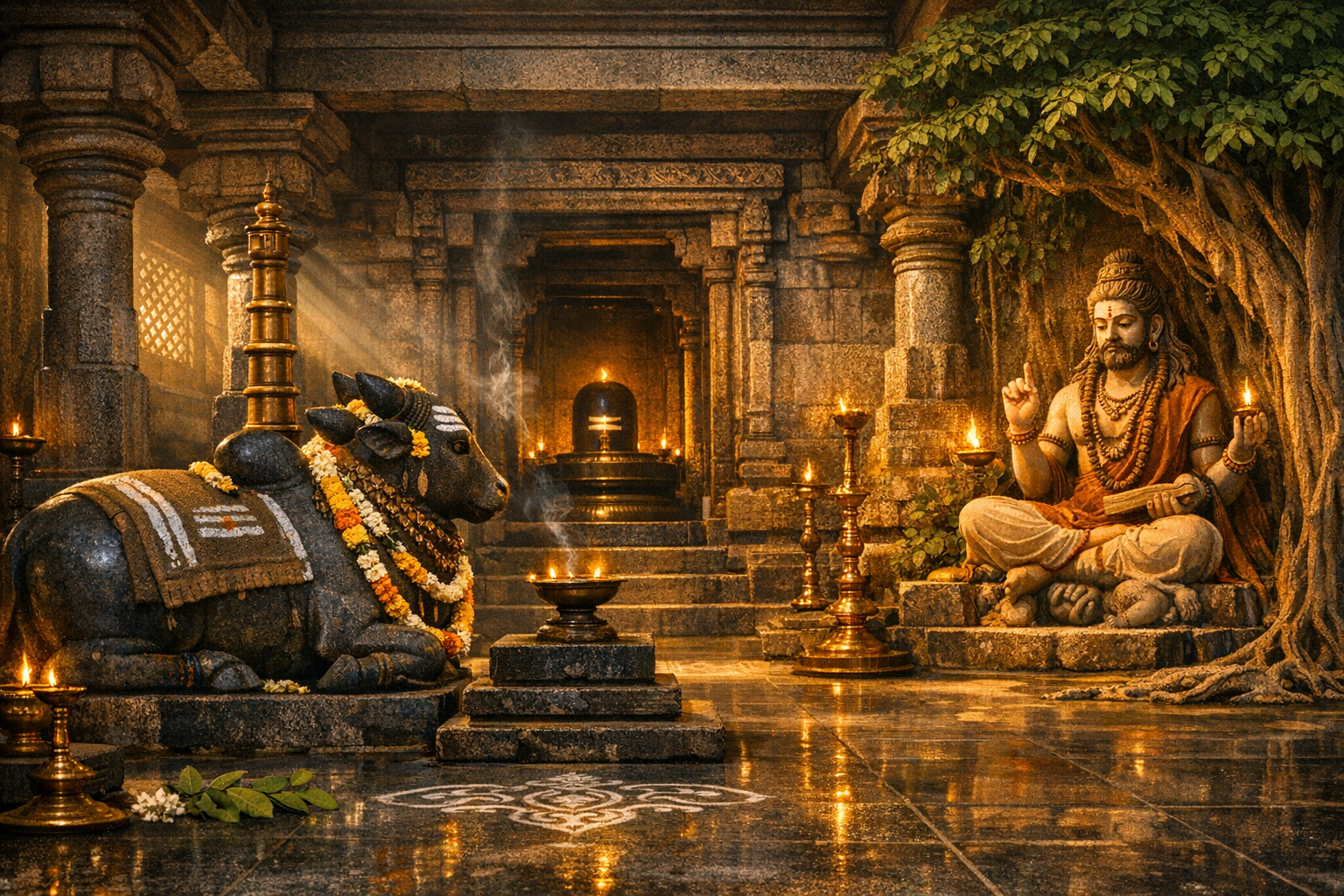
Set on the Kaveri’s banks in Mayiladuthurai, the Vadaranyeswarar Temple preserves a luminous legend in which Nandi’s unintended pride dissolves under Dakshinamurti’s silent, southward teaching. The narrative is embodied in spaceclear sight-lines, pedagogic iconography, and the banyan’s contemplative presenceturning architecture into spiritual practice. Readers discover how Dravidian temple grammar, Shaiva-Agamic iconography, and Thevaram recitation integrate…
-
Yoga Dakshinamurti Unveiled: Two Sacred Postures, Agamic Iconography, and Inner Silence

Dakshinamurti, Shiva’s south-facing form, embodies the Adi Guru whose silence instructs more deeply than speech. This long-form guide decodes two canonical idol forms of the Yoga DakshinamurtiDhyana-Padmasana and Virasana/Maharajalilasanausing Agamic and Shilpa Shastra principles. Readers learn practical cues to identify each form in temples, from asana and yogapatta to mudras, attributes, and the optional presence…
-
Veenadhara Dakshinamurthy: Shiva’s Musician-Guru in Pallava and Chola Temple Art
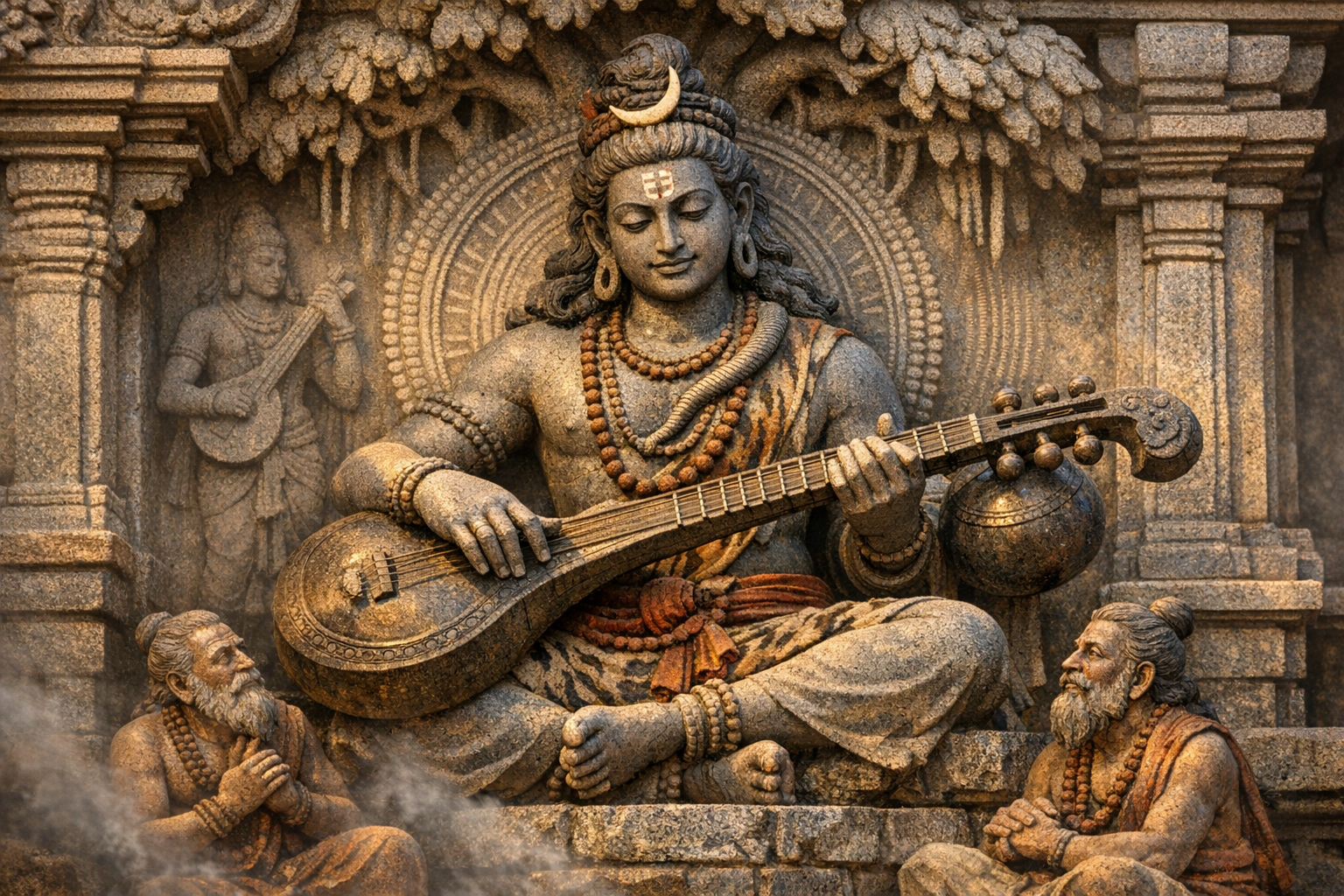
Veenadhara Dakshinamurthy portrays Shiva as the musician-guru, where wisdom becomes audible as sacred sound. Distinguishing aasana (seated) and sthanaka (standing) variantslinked respectively with Chola refinement and early Pallava dynamismclarifies how form encodes function in South Indian temple architecture. The veena symbolizes disciplined harmony of senses and breath, turning listening into a pathway of learning. Practical…
-
Dakshineshwari Stuthi: Timeless Praise of Shakti, Consort of Lord Dakshinamurthy

Dakshineshwari Stuthi honors Ma Dakshineshwari Mata as Shakti and as the consort of Lord Dakshinamurthy, the Guru form of Shiva. The hymn reveres her as the foremost Sanyasini, aligning renunciation, wisdom, and compassion in a single spiritual ideal. Devotees approach the stuthi with mindful breath, clear intent, and measured recitationoften during auspicious observances like Navaratri,…
-
Mother Goddess Dhara & Dakshinamurthy Shiva: Sacred Union of Wisdom-Shakti

Sanatana Dharma venerates Dakshinamurthy as the Adi Guru whose luminous silence reveals inner knowledge. Honoring “Mother Goddess Dhara” as the flowing Shakti of wisdom offers a symbolic, devotional complement to this south-facing form of Shiva. The union of wisdom and Shakti affirms an Advaita insight: consciousness and its compassionate expression are inseparable. Framed through the…
-
Discover the Rare Standing Dakshinamurthy at Thiruvaikavur’s Vilwavaneswarar Temple
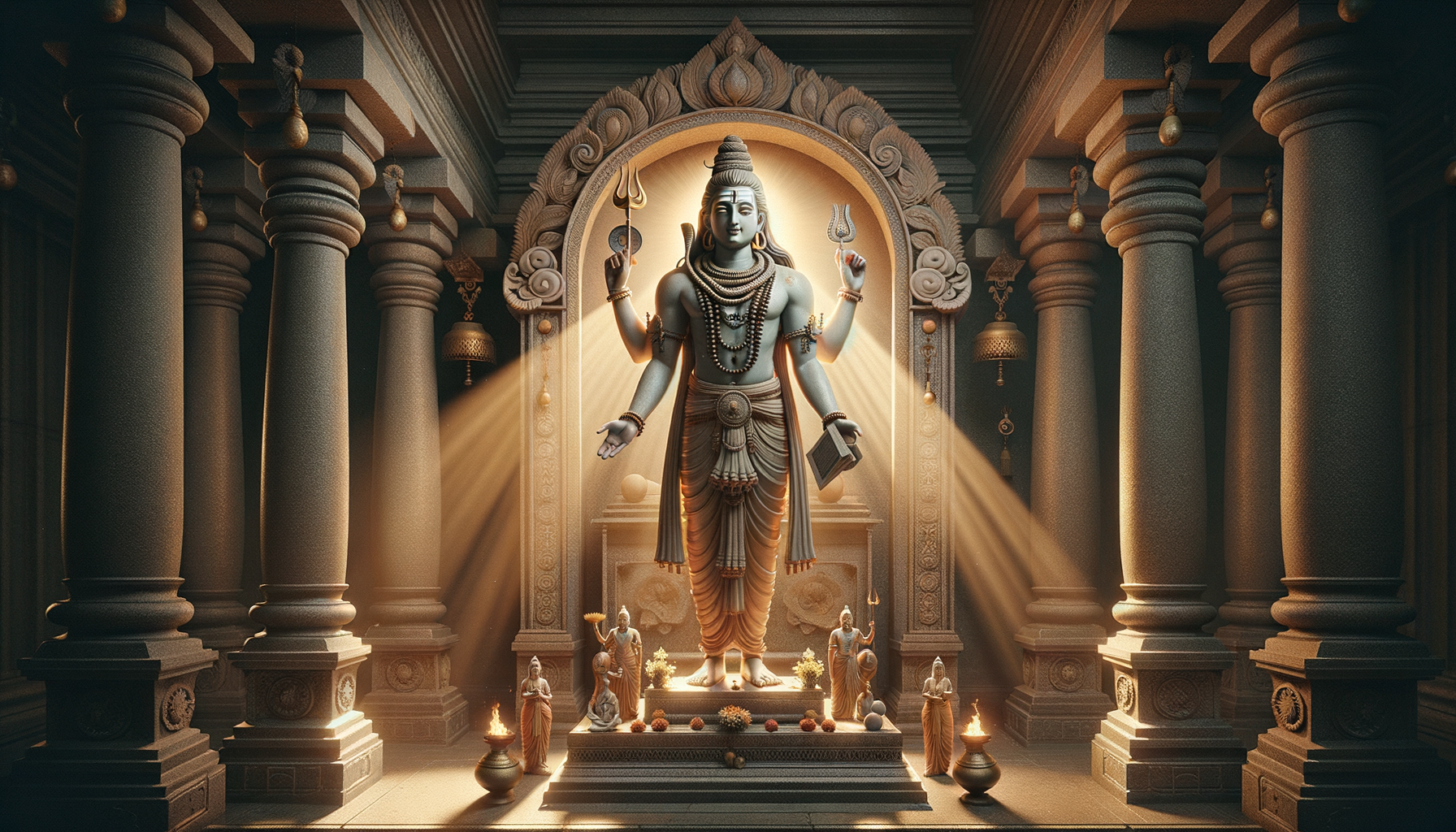
At the Thiruvaikavur Vilwavaneswarar Temple in Tamil Nadu, a rare standing Dakshinamurthy offers a distinctive encounter with Shiva as the supreme teacher. Unlike the more common seated icon beneath a banyan tree, this south-facing form conveys wisdom in motionknowledge that actively guides seekers. Visitors often find the darshan simultaneously grounding and invigorating, encouraging clarity, humility,…
-
Vyasa Poornima: The Peerless Educational Heritage of India

Explore the profound reverence for Guru Dakshinamurthy, the embodiment of spiritual knowledge and wisdom, in this enlightening blog post. Adi Sankara’s verses pay tribute to the Guru who imparts knowledge through silence, emphasizing the Guru’s role in awakening the inner resplendence of spiritual wisdom. This post delves into the essence of the Guru-Shishya tradition in…