-
Vaikasi Visakam 2026: Date, Rituals, Temple Highlights, and Deep Significance

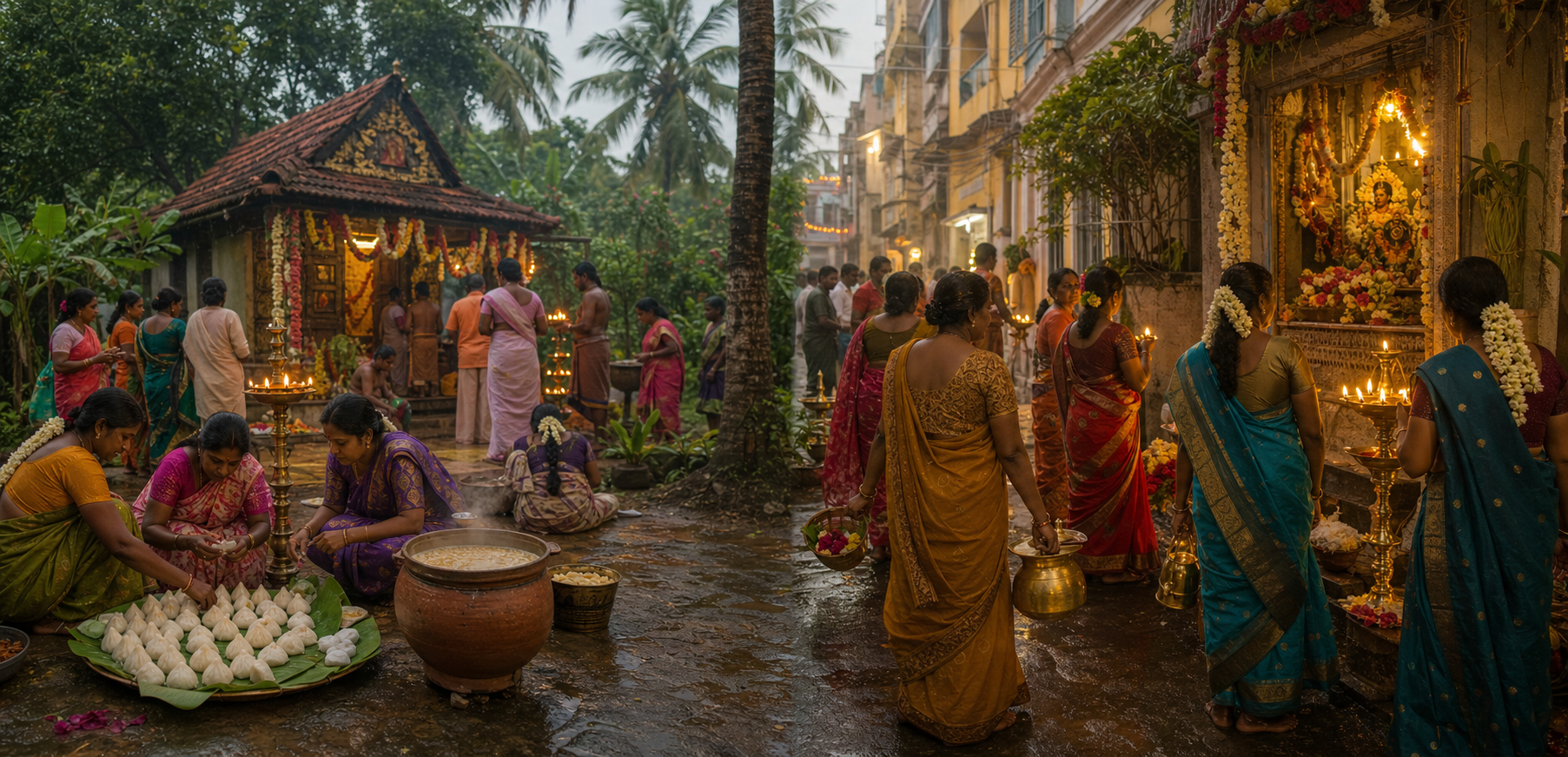
Vaikasi Visakam 2026, the birth-star festival of Lord Muruga (Subramanya, Shanmuga), will be observed on 30 May, when Visakam Nakshatra aligns with the Tamil solar month of Vaikasi. The festival is star-based, not tithi-based, and temples set muhurta locally, often guided by the sunrise rule or the dominant duration of Visakam. This comprehensive guide explains…
-
Sura Linga Revealed: Celestial Shivalingas of the Devas, Cosmic Order, Ritual Science, Protection

Sura Lingas—Shivalingas believed to be installed by Devas—embody a sophisticated synthesis of metaphysics, temple architecture, and ritual science in Hinduism. This long-form guide explains how Sura Lingas anchor cosmic order (ṛta) and provide a protective axis for communities, drawing on Puranic, Agamic, and śilpa-śāstra perspectives. Readers gain clarity on consecration (prāṇa-pratiṣṭhā), canonical Linga morphology, vastu-aligned…
-
Why Red Rules Hindu Temples: Shakti, Auspiciousness, Ritual Power, and Color Science

Red in Hindu temples is far more than ornament; it is the visual pulse of Shakti, auspiciousness, and energized devotion. This article explains how scriptures, Agamic traditions, and Shakta Tantras align red with rajas and protective grace, while temple practices translate meaning into materials such as kumkum, sindoor, and red flowers. It examines the role…
-
Surajkund Hanuman Temple, Mandla: Experience Hanuman’s Three Timeless Forms Revealed Daily

Surajkund Hanuman Temple in Mandla, Madhya Pradesh, is famed for a living tradition in which devotees perceive Hanuman’s murti in three forms across a single day—Bala (child), Yuva (youth), and Vriddha (elder). Set near a ritual water body and open sky, the temple’s environment lets sunlight, reflection, and lamp glow shape a uniquely dynamic darshan.…
-
Bhuridakshinaya Bhairava: Guardian of Dharma, Southern Direction, and Sacred Abundance

Bhuridakshinaya Bhairava unites fierce guardianship with ethical generosity, drawing on the multiple meanings of dakshina as offering, right-hand propriety, and the southern direction. The epithet’s Vedic resonance with bhuri-dakshina illuminates a moral economy in which right giving completes right worship. In Shaiva Tantra, Bhairava’s role as Kshetrapala aligns with directional theology, temple architecture, and observances…
-
Nemili Sri Bala Tripurasundari Peetam, Vellore: Sacred history, rituals, darshan tips, and travel guide

Nemili Sri Bala Tripurasundari Peetam in the Vellore region (Ranipet district) is a revered house-temple 20 km from Kaveripakkam, where devotees worship Sri Bala—the powerful child-form of Tripurasundari—with intimate, precise Sri Vidya rituals. The shrine’s strength lies in its homely sanctity, meticulous daily puja, and Navaratri celebrations that blend tenderness with theological depth. Pilgrims can…
-
Sri Varahaswami Temple, Tirumala: Timeless Legends, Sacred Routes, and Ritual Significance

Sri Varahaswami Temple in Tirumala stands on the northern bank of Swami Pushkarini and preserves the hill’s identity as Adi Varaha Kshetra. Drawing on the Venkatachala Mahatmya traditions of the Varaha Purana and Padma Purana, it explains why many pilgrims first worship Varaha before proceeding to Sri Venkateswara Temple. The guide clarifies iconography, ritual order,…
-
Thiruporur Kandaswamy Temple: Legends, Ritual Science, Darshan Timings, and Festival Guide

Thiruporur Kandaswamy temple (Thiruporur Murugan Temple) in Chengalpattu, Tamil Nadu, is a living center of Murugan worship renowned for Dravidian architecture, precise Agamic ritual, and a vibrant festival calendar. Visitors can plan around clear darshan timings (6:30 am–12:30 pm; 3:30 pm–8:00 pm) and four daily pujas that culminate in abhishekam and deepa aradhana. The temple’s…
-
Gifting the Shaligram Stone: Profound Punya and the Sacred Dharma Ban on Selling

Dāna—sacred giving—is celebrated across the dharmic traditions, and nowhere is its meaning more vivid than in gifting the Shaligram stone, the Śāligrāma-śilā revered as a svayambhū form of Viṣṇu. Puranic literature associates this act with boundless puṇya while insisting that a Shaligram must never be sold. The prohibition is not mere formality; it preserves the…
-
Paada Puja Explained: The Timeless, Transformative Ritual of Reverence and Dharmic Unity

Paada Puja (Paada Pooja) is a timeless Dharmic ritual that elevates hospitality into sacred practice, honors the guru–shishya relationship, and completes Hindu worship through the upachara of washing and adorning the feet. Rooted in the ideal Atithi Devo Bhava, it appears across sampradayas and Dharmic traditions, from Vaishnava padukas and śāṭāri customs to Buddhist Buddhapada…
-
Hanuman Jayanti 2026 at Tirumala: Sacred Silk Vastrams for Japali Hanuman & Special Pujas

Hanuman Jayanti will be observed in Tirumala on 12 May 2026 with Tirumala Tirupati Devasthanam (TTD) presenting silk vastrams (Pattu Vastrams) to Sri Japali Hanuman and conducting special pujas to Sri Bedi Anjaneya. The practice of offering silk vastrams is rooted in Vaishnava agamic injunctions, expressing purity, honor, and protection in temple alankara. Pilgrims can…
-
Ponnakalva Utsavam 2026: Chitra Pournami Procession at Govindaraja Swamy Temple, Tirupati

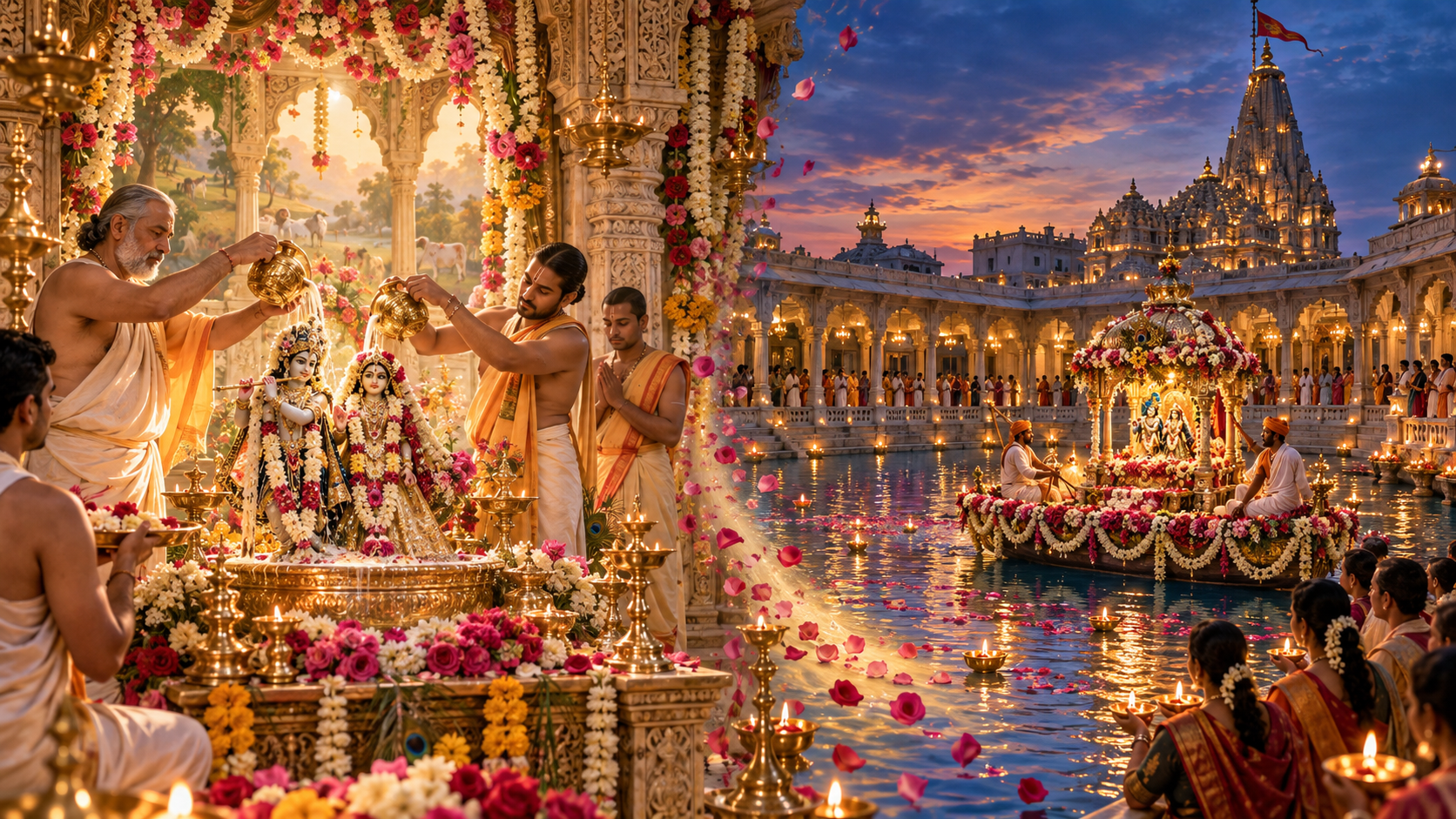
Ponnakalva Utsavam in Tirupati will be observed on Chitra Pournami (1 May 2026), beginning with a 6:00 AM departure of Sri Govindaraja Swamy’s utsava murti and a Snapana Tirumanjanam at Ponnakalva Mandapam, before arriving at Sri Padmavathi Ammavari Temple, Tiruchanoor, around 5:00 PM. This long-standing Vaishnava procession links two major TTD-managed shrines, underscoring inter-shrine coherence…
-
Śrīmad Bhāgavatam 3.22.28 and Nṛsiṁha Caturdaśī: Timeless Dharma, Protective Grace, and Bhakti Power

Śrīmad Bhāgavatam 3.22.28 situates household vows within a God-centered ethic, showing how domestic life becomes a disciplined path of bhakti-yoga. Read alongside the devotional mood of Nṛsiṁha Caturdaśī, the verse underscores a unified principle: sincere vows invite protective grace. The Prahlāda–Nṛsiṁha narrative exemplifies devotion under trial and the Lord’s compassionate precision in safeguarding truth. Practical…
-
Shaligram, Shankha, and Tulsi: Unlocking Vishnu’s Living Presence and Timeless Grace

This comprehensive exploration presents the sacred triad of Shaligram, Shankha, and Tulsi as a living, scripturally grounded pathway to Vishnu worship. It clarifies the Shaligram’s geological identity as a natural ammonite fossil from the Kali Gandaki near Muktinath, honored as a svayambhū form of Vishnu requiring no prāṇa-pratiṣṭhā. It explains how the Shankha (Turbinella pyrum)…
-
Purva Linga and Achala Shivlings: Uncreated Symbols of Shiva’s Eternal Presence

This article explains why the Purva Linga is counted among the Achala Shivlings in Shaivism and how it epitomizes an uncreated, immovable presence of Shiva. It clarifies the philology of “pūrva” and the aniconic meaning of the Shivalinga, linking these ideas to Lingodbhava and Maha Shivaratri. Readers learn how temple architecture, Abhishekam, and daily puja…
-
May 2026 Sacred Festivals at Tirupati Sri Kodandarama Swamy Temple: Timings, Rituals, Processions

Sri Kodandarama Swamy Temple in Tirupati will observe two Poornima festivals in May 2026—on May 1 and May 31—with the Ashtottara Shatakalasabhishekam at 9:30 AM and an evening procession at 5:30 PM. The 108-kalasha abhishekam honors Sri Kodandarama Swamy with Sita and Lakshmana, echoing classical symbolism tied to the number 108. The Mada-street procession extends…
-
Panchamrita Abhisheka: Sacred Science, Symbolism, and Temple Tradition of the Five Nectars

Panchamrita Abhisheka—the bathing of deities with milk, curd, ghee, honey, and sugar/jaggery—unites sacred symbolism, Ayurveda, and practical icon care. Sri Sri Ravishankar’s observation that these five are “like nectar” echoes Agamic and Puranic guidance and explains why they endure in temple ritual. Each substance contributes uniquely: milk cools and nourishes, curd clarifies, ghee protects, honey…
-
18 Research-Backed Facts about Ganesha: Iconography, Mantras, Festivals, and Global Legacy

This comprehensive, research-grounded guide presents 18 essential facts about Ganesha—his Puranic origins, rich iconography, mantras, and threshold role as Prathama Pujya. Readers will learn how symbols such as the goad, noose, modaka, and the mouse vahana communicate psychological discipline and ethical intent. The overview explains the eight incarnations (Mudgala Purana), monthly observances like Sankatahara Chaturthi,…
-
Tirupati Kodandarama Swamy Temple May 2026: Auspicious Purnima Abhishekam, Timings & Processions

Sri Kodandarama Swamy Temple in Tirupati will observe two major festival days in May 2026, featuring Ashtottara Shatakalasabhishekam at 9:30 AM on May 1 and on May 31 (Poornima), and evening processions at 5:30 PM along the four Mada streets. The 108-kalasha abhishekam highlights Vaishnava liturgical precision and communal well-being, while the public procession extends…
-
Panchamrita Abhisheka Explained: The Sacred Science of Milk, Curd, Honey, Jaggery, and Ghee

Panchamrita Abhisheka—using milk, curd, ghee, honey, and jaggery/sugar—stands on a foundation of scriptural sanction, symbolic depth, and practical wisdom. Puranas and Agamas prescribe these edible, sattvika substances because they nourish, purify, and sweeten both the murti and the devotee’s inner state. Ayurveda further clarifies their properties: milk soothes, curd transforms, ghee illumines, honey harmonizes, and…