Tag: Temple Architecture

  • The 64 Yoginis Unveiled: Sacred Geometry, Cosmic Dance, and Tantric Power

    The 64 Yoginis Unveiled: Sacred Geometry, Cosmic Dance, and Tantric Power

    The Yogini Chakra is a sacred Tantric configuration in which numerous female powers form an architectural, ritual, and cosmic circle. This study explains why the number sixty-four became influential while showing that historical lists and temple counts were never completely uniform. It examines the open-air temples of Hirapur, Ranipur-Jharial, Khajuraho, Bhedaghat, and Mitaoli through archaeology,…

  • Jaya and Vijaya Revealed: The Four-Armed Guardians of Vishnu’s Sacred Threshold

    Jaya and Vijaya Revealed: The Four-Armed Guardians of Vishnu’s Sacred Threshold

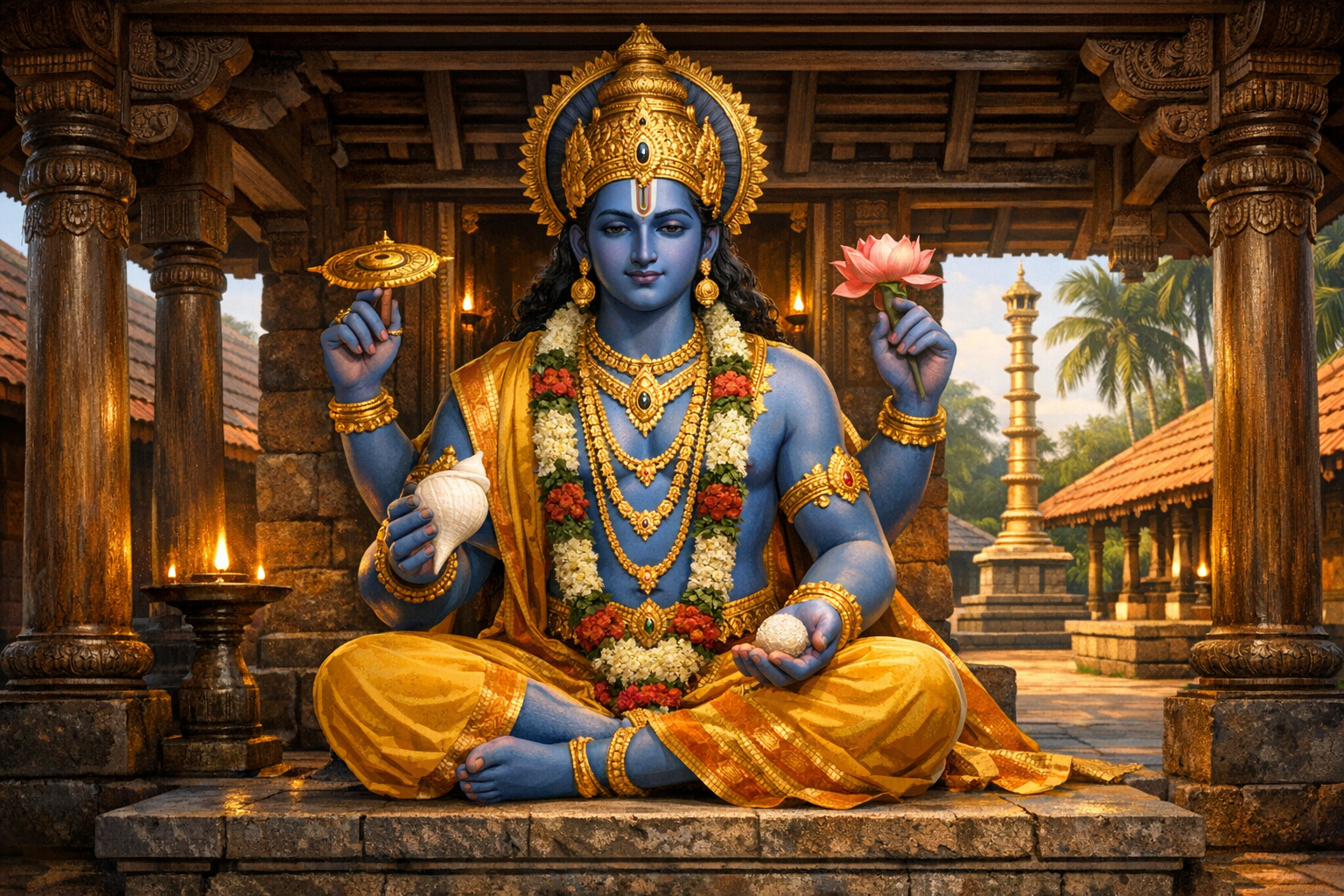
    Jaya and Vijaya are far more than imposing figures placed beside a Vishnu temple doorway. Their four-armed forms combine Vaishnava theology, sacred architecture, martial symbolism, ritual practice, and exceptional sculptural skill. Their Puranic story presents a profound lesson about guardianship, showing that authority must remain guided by humility and discernment. The conch, discus, mace, lotus,…

  • Khetaka Revealed: The Shield’s Powerful Meaning in Hindu Sacred Sculpture

    Khetaka Revealed: The Shield’s Powerful Meaning in Hindu Sacred Sculpture

    The khetaka is far more than a minor shield placed in a deity’s hand: it is a sophisticated element in the visual language of Hindu sacred sculpture. This study explains its Sanskrit terminology, textual background, material forms, and relationship to the protection of dharma. It examines how the shield functions in images of Durgā, Bhadra…

  • Gaja Kundala Revealed: The Sacred Elephant Earring in Hindu Sculpture

    Gaja Kundala Revealed: The Sacred Elephant Earring in Hindu Sculpture

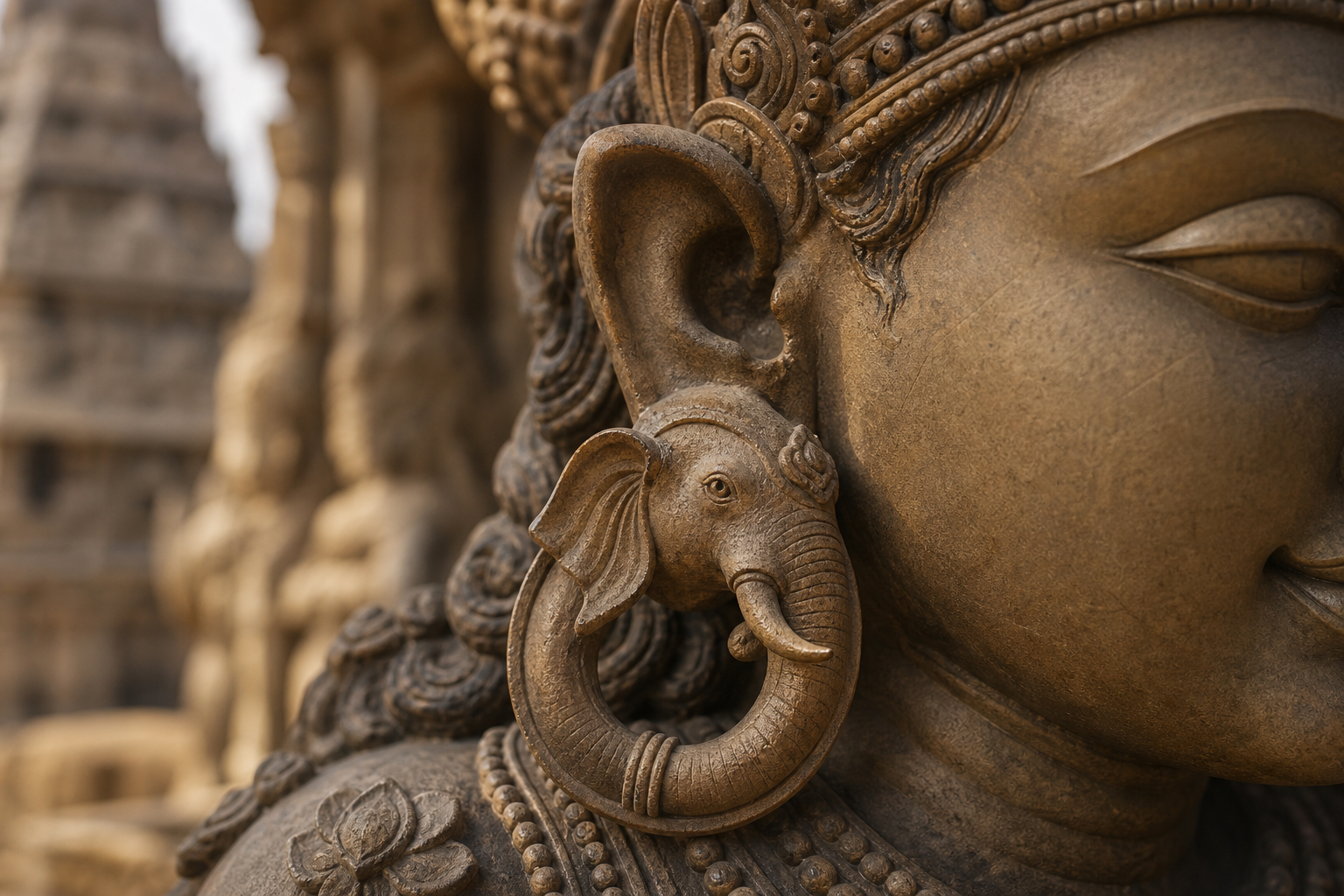
    The gaja kundala is an elephant-form earring in Hindu sacred sculpture, combining ornament, iconography, and symbolic meaning. It belongs to the broader family of kundalas and carries associations of strength, royal dignity, auspiciousness, fertility, and sacred abundance. Its elephant symbolism connects it to figures and ideas such as Airavata, Ganesha, Gaja Lakshmi, temple ceremony, and…

  • Brahma as Urdhva Dikpala: Powerful Wisdom of the Celestial Guardian

    Brahma as Urdhva Dikpala: Powerful Wisdom of the Celestial Guardian

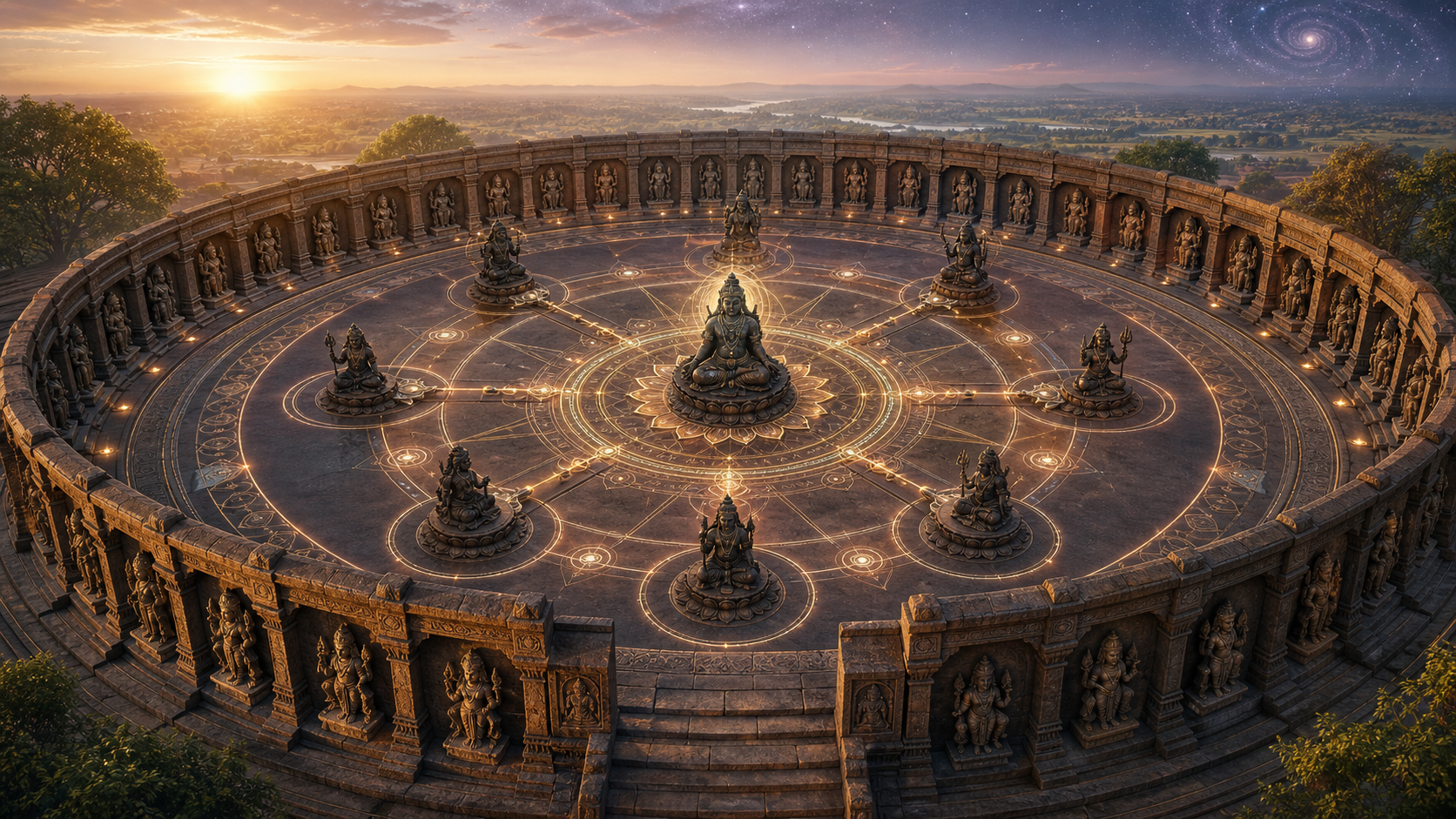
    Brahma as Urdhva Dikpala reveals how Sanatana Dharma understands space as sacred, ordered, and spiritually meaningful. The Dasha Dikpalas, or guardians of the ten directions, transform the universe into a mandala of divine protection and cosmic orientation. Brahma’s role as the upward guardian connects him with creation, sacred knowledge, temple architecture, and the human aspiration…

  • Devanahalli Fort Revealed: Powerful Temples, Inscriptions and Living Heritage

    Devanahalli Fort Revealed: Powerful Temples, Inscriptions and Living Heritage

    Devanahalli is far more than an expanding settlement on Bengaluru’s edge; it is a historically layered heritage zone shaped by fort architecture, temple culture, inscriptions, and living ritual traditions. The Devanahalli Fort traces its origins to 1501 CE and reflects the political transitions from the Avati Nadaprabhus and Vijayanagara influence to Mysore, Hyder Ali, Tipu…

  • Lingaraj Temple Bhubaneswar: Powerful History, Sacred Architecture, and Living Faith

    Lingaraj Temple Bhubaneswar: Powerful History, Sacred Architecture, and Living Faith

    Lingaraj Temple in Bhubaneswar is one of Odisha’s most important Hindu temples and a landmark of Kalinga temple architecture. Dedicated primarily to Lord Shiva as Lingaraj, the temple also expresses the Hari-Hara unity of Shiva and Vishnu. Its sacred identity is rooted in Ekamra Kshetra, the traditional mango-grove landscape described in the Ekamra Purana. The…

  • Urvashi in Hindu Sculpture: Sacred Apsara Beauty, Symbolism, and Temple Art

    Urvashi in Hindu Sculpture: Sacred Apsara Beauty, Symbolism, and Temple Art

    Urvashi in Hindu sculpture represents far more than celestial beauty; she embodies the meeting point of mythology, temple architecture, dance, rasa theory, and sacred feminine symbolism. This article explains how the Apsara tradition appears in Hindu temple art through surasundaris, devanganas, shalabhanjikas, dancers, musicians, and graceful figures carved into sacred architecture. It places Urvashi within…

  • Srirangam’s Sacred Power: Ranganatha, Nammalvar, and the Living Vaishnava Temple

    Srirangam’s Sacred Power: Ranganatha, Nammalvar, and the Living Vaishnava Temple

    Srirangam is one of the most important living temple traditions in Bharat and the foremost Divya Desam of Sri Vaishnavism. This long-form reflection explores Sri Ranganathaswamy Temple through its architecture, Alvar poetry, Ramanujacharya’s theology, and the sacred memory of Pillai Lokacharya. It explains how the seven prakarams symbolize a movement from worldly life toward Bhooloka…

  • Kundika in Hindu Sculpture: Sacred Water, Divine Grace, and Temple Iconography

    Kundika in Hindu Sculpture: Sacred Water, Divine Grace, and Temple Iconography

    The kundika is a sacred ritual water vessel in Hindu sculpture, often confused with the kamandalu but carrying its own distinct iconographic and ritual meaning. This article explains how the kundika represents purity, consecration, sacred hospitality, and divine grace in Hindu temple art. It examines the vessel’s connection with abhishekam, tirtha, river goddesses, sages, Brahma,…

  • Devanahalli’s Hidden Heritage: Forts, Temples and Sacred Memory Near Bengaluru

    Devanahalli’s Hidden Heritage: Forts, Temples and Sacred Memory Near Bengaluru

    Devanahalli near Bengaluru is far more than an airport-side town or a peripheral urban settlement. Its fort, temples, inscriptions, sacred tanks, and living worship traditions preserve more than five centuries of Karnataka’s cultural heritage. The Sri Rukmini–Satyabhama Sametha Venugopalaswamy Temple reveals the depth of Vaishnavite devotion, Vijayanagara-era artistic influence, Dravidian architecture, and Ramayana narrative sculpture.…

  • Prithvinath Temple’s Hidden Sculptures Reveal a Powerful Buried Heritage

    Prithvinath Temple’s Hidden Sculptures Reveal a Powerful Buried Heritage

    Prithvinath Temple in Gonda, Uttar Pradesh, is famous for its massive Shivling, but its lesser-known sculptural fragments may hold even greater historical significance. The temple’s outer walls contain weathered idols that appear to reflect Shaiva, Vaishnava, and possibly Buddhist artistic traditions. These sculptures are vulnerable to erosion from weather and repeated ritual offerings, making preservation…

  • Graiveyaka in Hindu Sculpture: The Powerful Sacred Collar of Divine Authority

    Graiveyaka in Hindu Sculpture: The Powerful Sacred Collar of Divine Authority

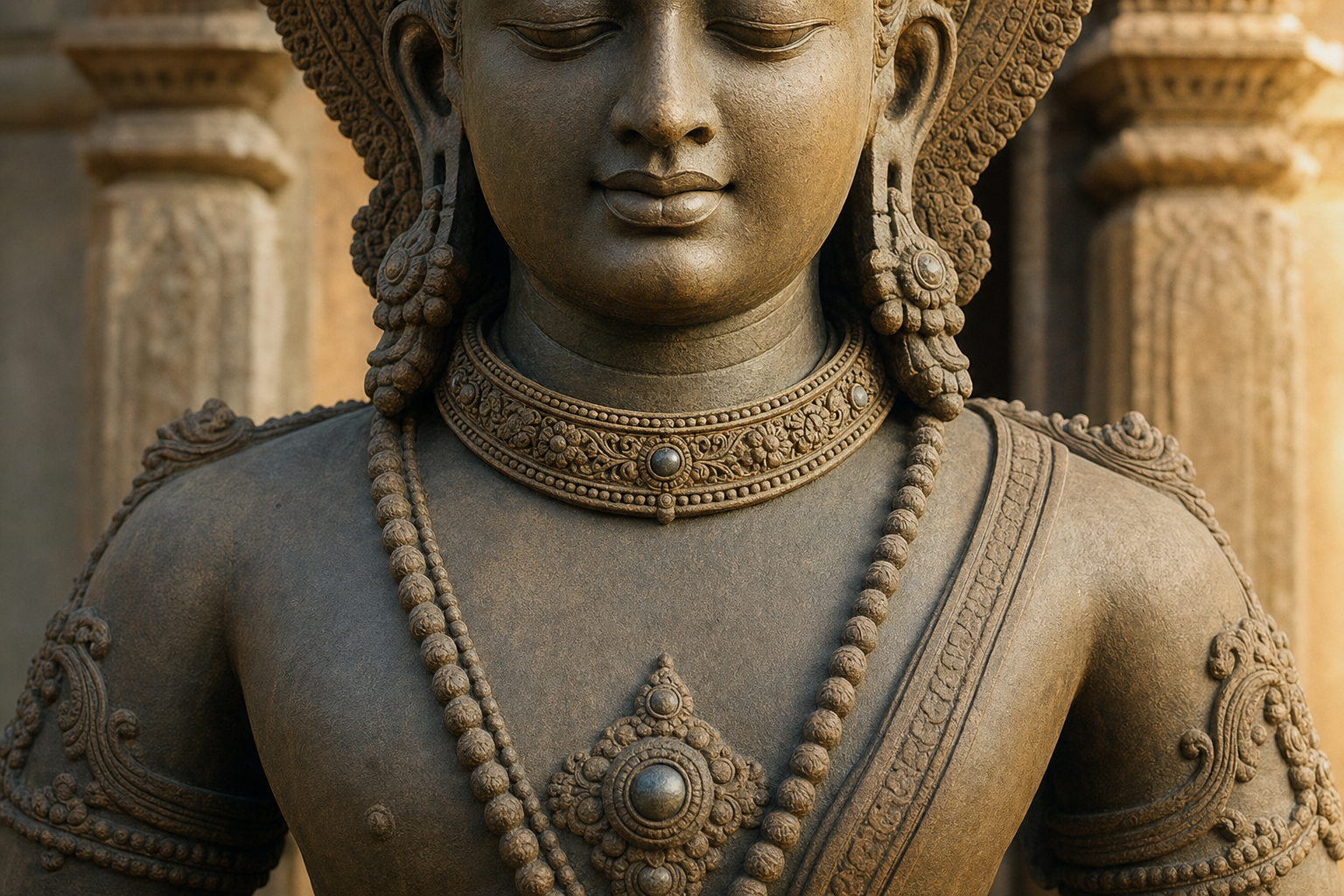
    The graiveyaka is a close-fitting throat ornament in Hindu sculpture, derived from the Sanskrit griva, meaning neck or throat. This article explains how the ornament differs from longer necklaces such as the ekavali, dama, and hara, and why its placement matters in sacred iconography. It explores the graiveyaka as a marker of divine authority, mantra,…

  • Sacred Phala in Hindu Sculpture: Powerful Fruit Symbolism, Prosperity and Wisdom

    Sacred Phala in Hindu Sculpture: Powerful Fruit Symbolism, Prosperity and Wisdom

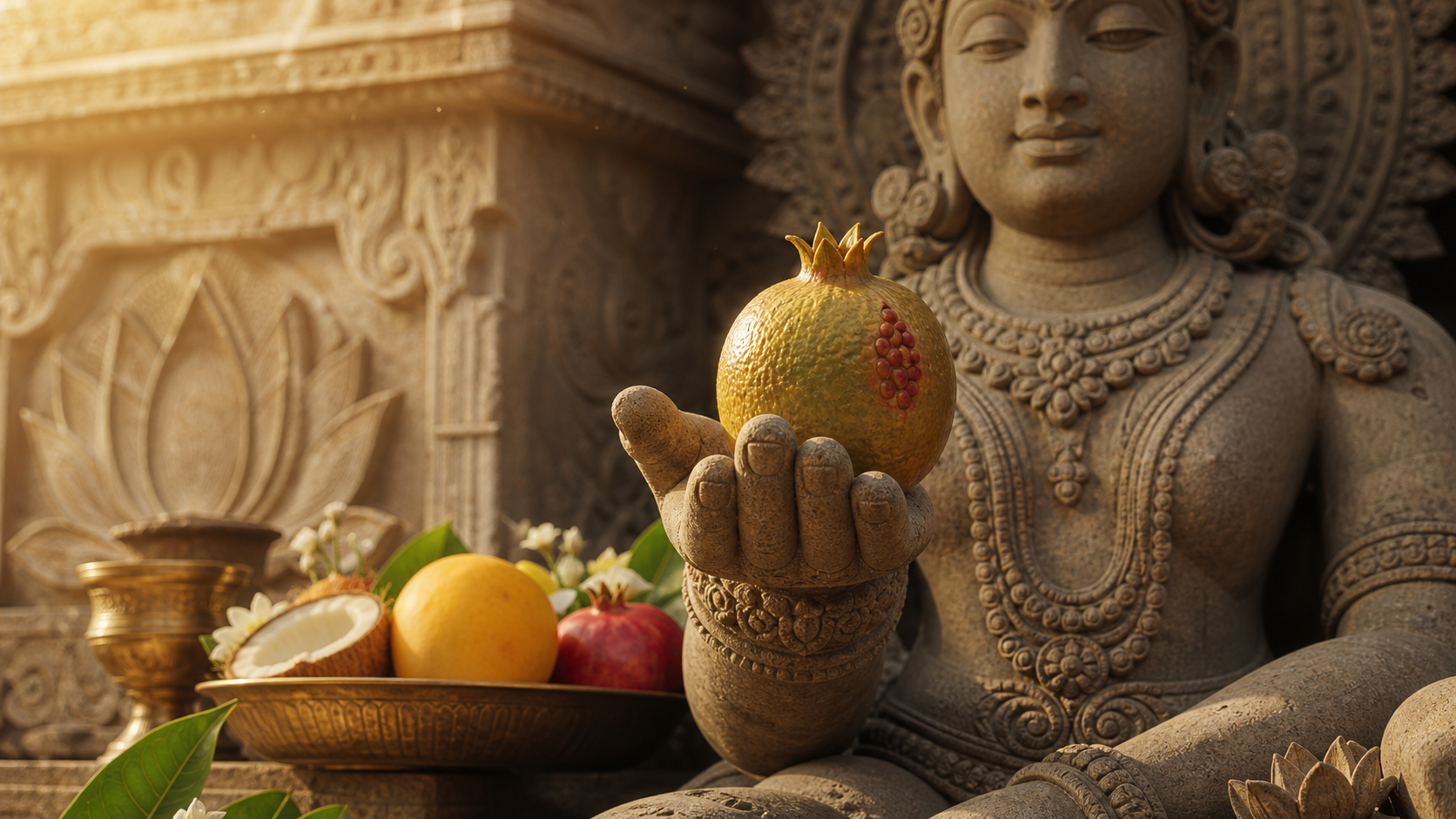
    The phala, or sacred fruit, is one of the most subtle yet meaningful symbols in Hindu sculpture. It represents abundance, fertility, prosperity, karma-phala, spiritual fruition, and the transformation of offerings into prasada. This article explains how fruits such as the citron, pomegranate, mango, and coconut function within Hindu iconography and temple art. It also explores…

  • Vijayanagara’s Enduring Splendor: Hampi’s Art, Architecture, and Sacred Power

    Vijayanagara’s Enduring Splendor: Hampi’s Art, Architecture, and Sacred Power

    Vijayanagara at Hampi was one of medieval India’s most sophisticated capitals, combining sacred architecture, military planning, hydraulic engineering, royal ceremony, and artistic excellence. This rewritten study explains how the city developed on the Tungabhadra River and why its landscape of temples, tanks, fortifications, palaces, bazaars, and sculptures remains central to Indian history. It highlights the…

  • Alapadma Mudra Revealed: The Sacred Open Lotus in Hindu Art and Dance

    Alapadma Mudra Revealed: The Sacred Open Lotus in Hindu Art and Dance

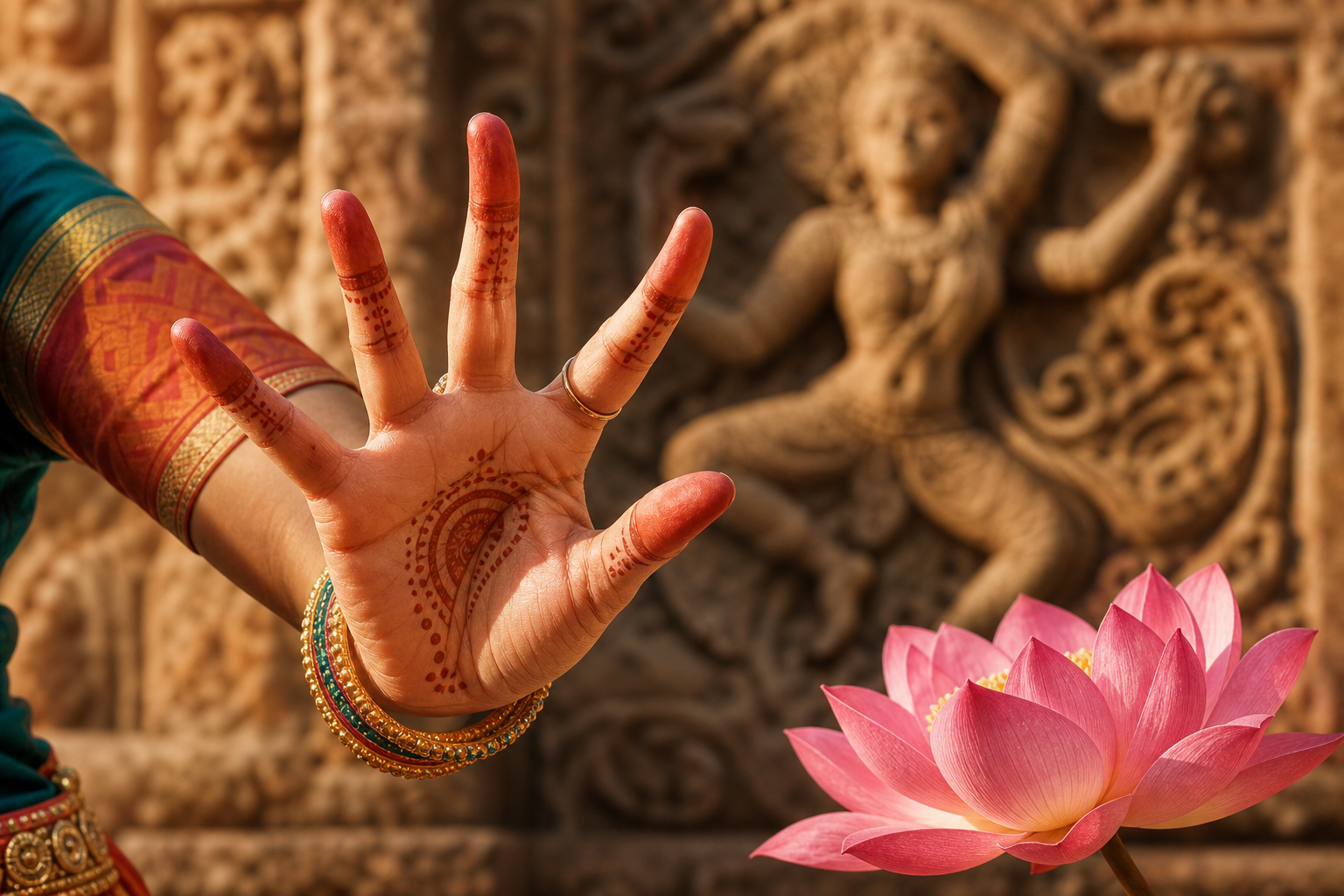
    Alapadma Mudra, the open lotus hand, is one of the most graceful and symbolically rich gestures in Hindu art and Indian classical dance. This expanded study explains how the mudra represents blossoming, beauty, sacred refinement, emotional expression, and spiritual awakening. It connects the gesture to Hindu sculpture, temple iconography, Bharatanatyam, Odissi, Kuchipudi, Mohiniyattam, and the…

  • Sacred Architecture Revealed: How Form, Space, and Symbol Awaken Meaning

    Sacred Architecture Revealed: How Form, Space, and Symbol Awaken Meaning

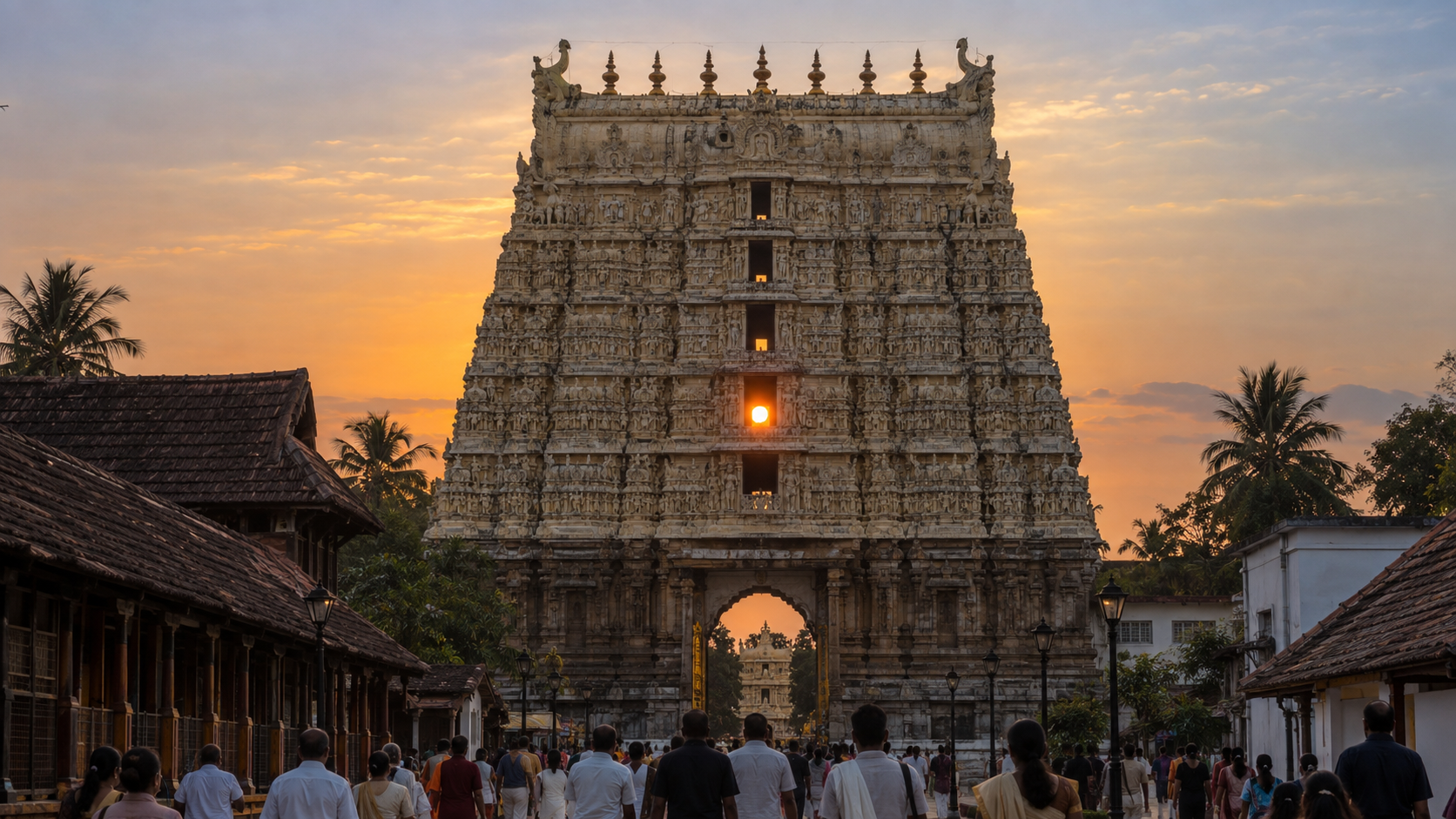
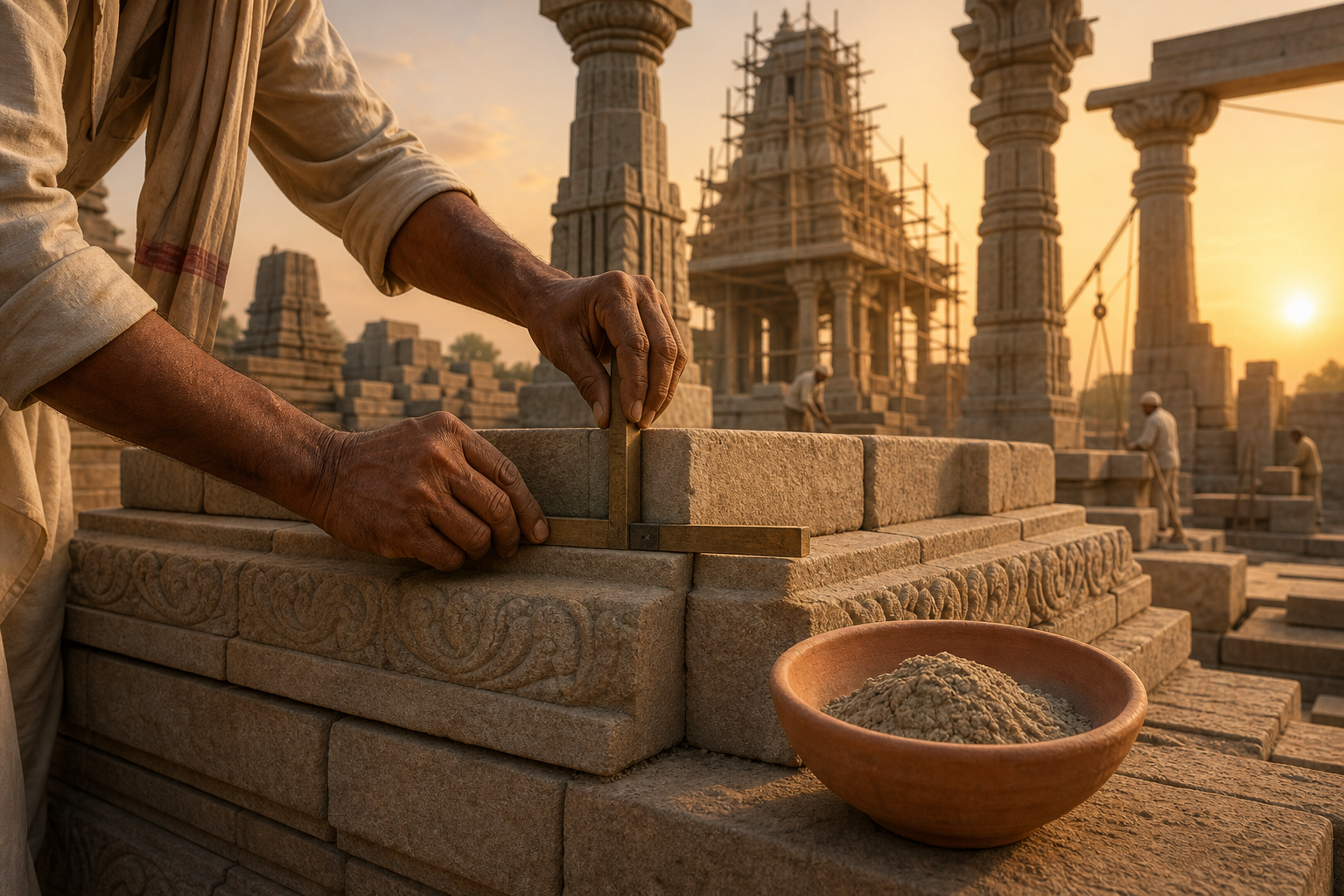
    Sacred architecture is presented as a disciplined field where form, space, and symbol shape human consciousness. Drawing from the Bhagavad-gita’s distinction between kshetra and kshetrajna, the article explains how the built environment becomes an external field that interacts with inner awareness. It connects Vastu Shastra, Bhakti Yoga, temple architecture, sacred geography, and sustainable design into…

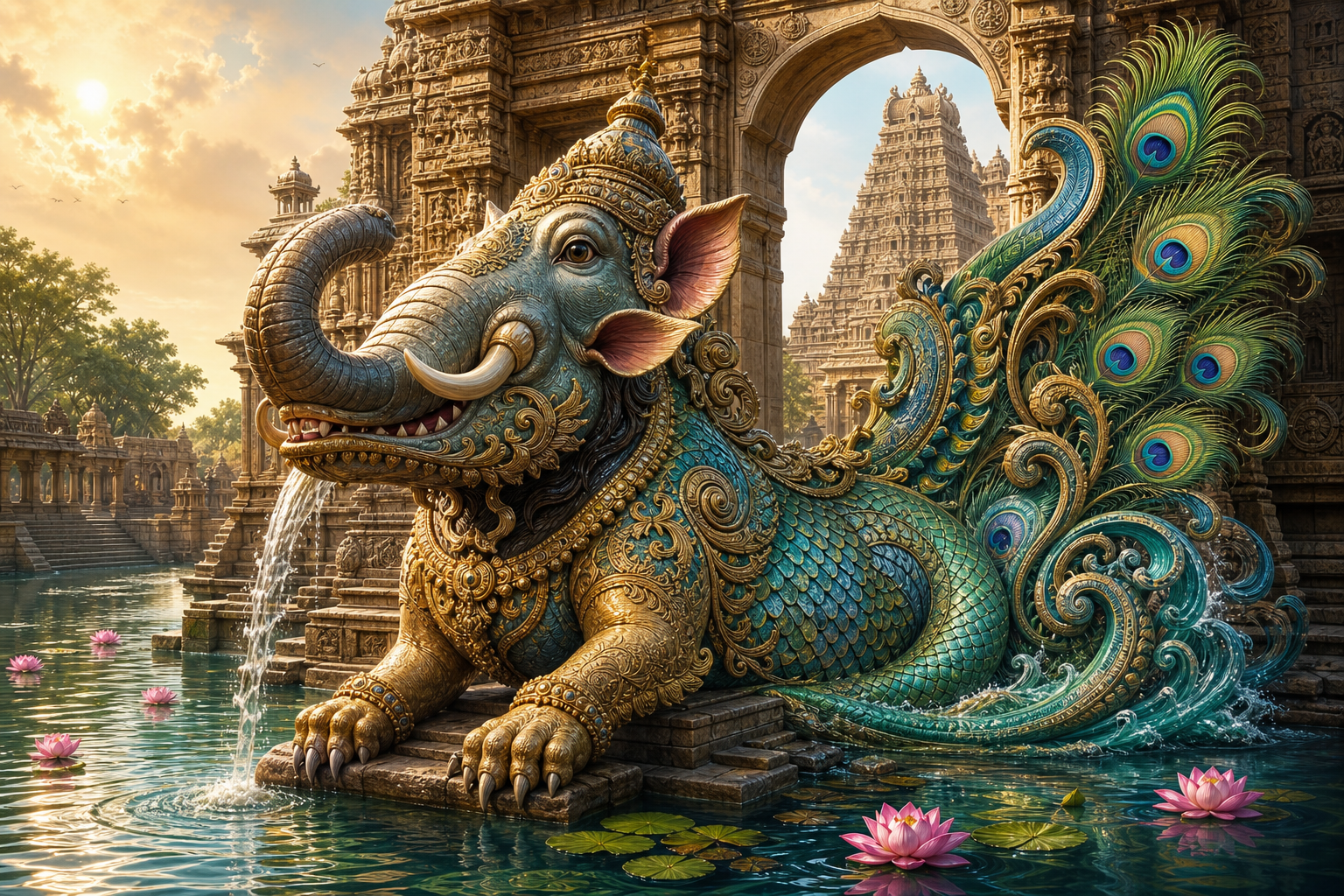
  • Makara in Hindu Scriptures: Powerful Seven-Animal Symbol of Water and Wisdom

    Makara in Hindu Scriptures: Powerful Seven-Animal Symbol of Water and Wisdom

    Makara is one of the most fascinating composite creatures in Hindu scriptures, sacred art, and temple architecture. Traditionally associated with Varuna, Ganga, Narmada, Kamadeva, and Makara-kundala iconography, it represents water, fertility, protection, desire, and cosmic order. Its seven-animal form brings together the elephant, crocodile, boar, monkey, fish, lion, and peacock as a symbolic body of…

  • Hindu Temple vs Mosque: A Respectful Deep Dive into Sacred Architecture, Rituals, and Theology

    Hindu Temple vs Mosque: A Respectful Deep Dive into Sacred Architecture, Rituals, and Theology

    Sacred spaces embody theology. This respectful deep dive explains how Hindu temples and mosques translate belief into architecture, ritual, and community life. It clarifies immanence and darshan in temples versus tawhid and aniconism in mosques, and compares plans, elements, soundscapes, and calendars. Readers learn the functions of garbhagriha, mandapa, shikhara, qibla, mihrab, minbar, and wudu.…

  • Decoding the Amukta: The Sacred Throat Ornament in Hindu SculptureMeaning, Types, Symbolism

    Decoding the Amukta: The Sacred Throat Ornament in Hindu SculptureMeaning, Types, Symbolism

    This study decodes the amuktathe sacred throat ornament in Hindu sculptureas a concentrated sign of doctrine rather than mere decoration. Drawing on Śilpaśāstra and Āgama canons, it explains how the amukta aligns with graiveyaka and kaṇṭhikā types, why it frames vāc and prāṇa at the throat, and how its materials and techniques shape meaning. Comparative…