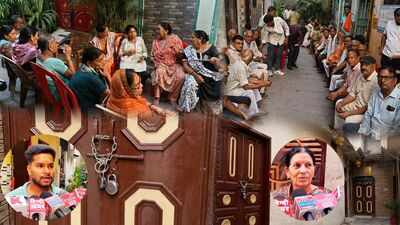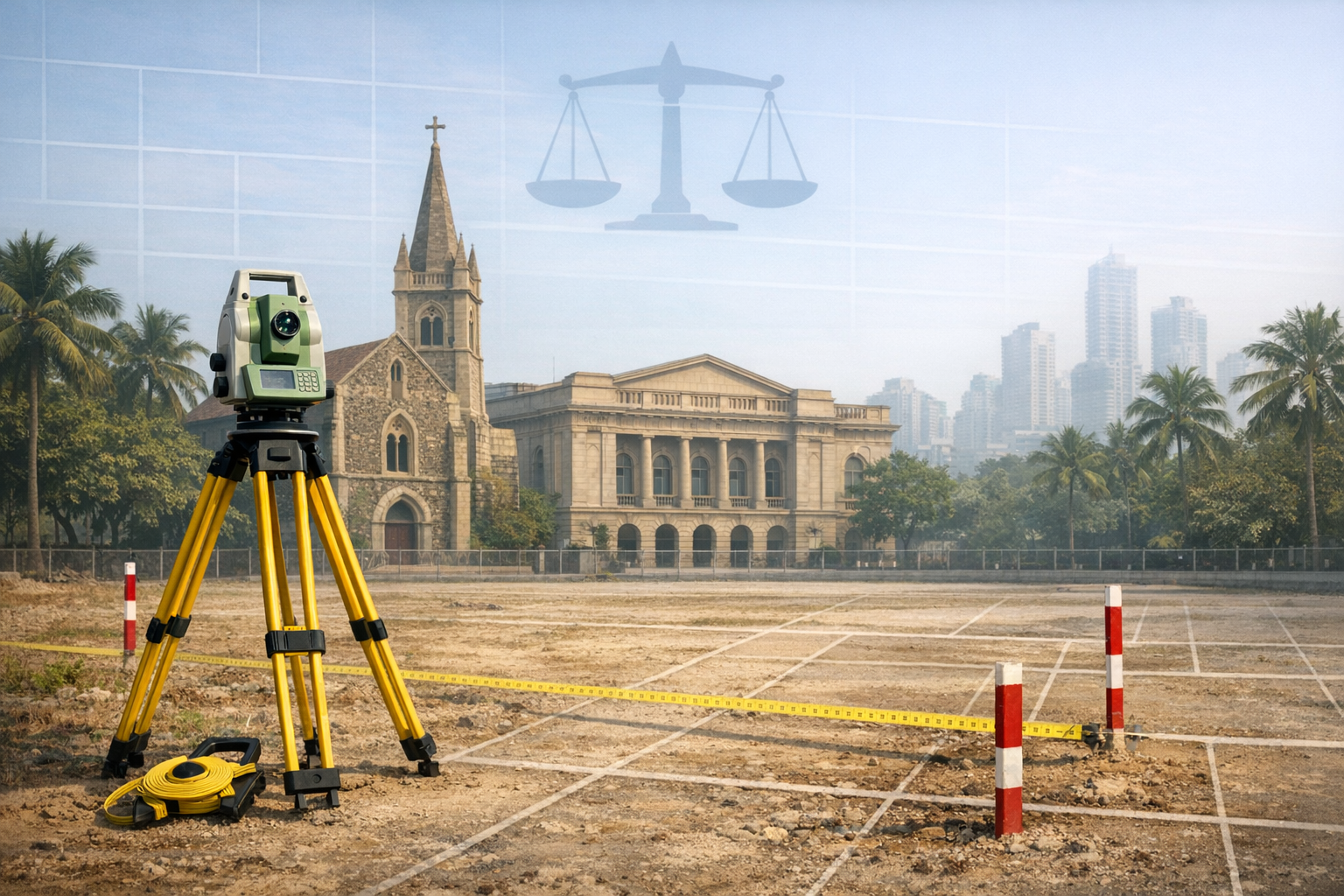
Hindu Vidhidnya Parishad (HVP) has publicly raised concerns about the alleged illegal occupation of government land by the Church of St Andrew and St Columba in Mumbai, requesting decisive administrative review and action. The development places renewed emphasis on land governance, due process, and the imperative of maintaining public trust in how religious institutions interface with state-owned property in a densely populated metropolis.
The allegation, as reported, concerns the status of government land and the extent of occupation attributable to a religious institution. Such assertions require rigorous verification through authoritative land records, joint measurements, and a fair hearing. In the interest of both rule of law and interfaith harmony, any conclusion must rest on transparent evidence and legally sound procedure that is uniformly applied across cases.
Why this matter resonates beyond a single parcel of land is clear: encroachment disputes in Mumbai touch the heart of Law and Society, Governance, and Community Relations. The equitable stewardship of public land is a cornerstone of urban planning, public finance, and social cohesion. In plural societies, uniform enforcement of land and building laws safeguards not only the integrity of state property but also the credibility of Religious Institutions that operate within a constitutional framework.
The legal context in Maharashtra provides a clear scaffold for resolving such disputes. Government land is held in trust for the public, and occupation or use is governed by state revenue and municipal laws. The Maharashtra Land Revenue Code establishes occupancy norms and empowers the district administration to identify and remove unauthorized occupations following due process. The Mumbai Municipal Corporation Act authorizes municipal authorities to address unauthorized structures and land use violations, again subject to notice and hearing. Where religious trusts are involved, the Bombay Public Trusts Act provides oversight to ensure that trust property and activities adhere to applicable laws and fiduciary standards.
Indian courts have consistently affirmed the public trust doctrinemandating that the state act as a guardian of public resourcesalongside the principles of natural justice. This balance requires authorities to demonstrate that evidence has been collected fairly, that concerned parties have been heard, and that any order is reasoned, proportionate, and consistent with policy. In practical terms, the framework protects both the public interest in government land and the rights of religious communities to manage their institutions lawfully.
A transparent procedural blueprint can guide resolution without prejudice or polarization: (1) initiate a preliminary fact-finding to identify the precise plot, survey numbers, and governmental title; (2) conduct a joint measurement and demarcation survey with the Survey Department, ensuring that representatives of the institution and local officials are present; (3) issue a detailed show-cause notice outlining documentary evidence; (4) hold a fair hearing, allowing the institution to produce title documents, leases, grants, or permissions; (5) issue a speaking order summarizing evidence, legal basis, and findings; (6) provide for statutory appeal and review; (7) if an encroachment is established, implement rectification or removal with a time-bound plan and an emphasis on safety and dignity; (8) publish essential, non-sensitive information to sustain public confidence.
Documentary evidence typically decisive in Mumbai includes: the property card (City Survey record/CTS) and its mutation entries; any lease, license, or grant documents issued by the state or municipal authorities; cadastral and development plan maps; relevant zoning permissions; inspection notes and panchnamas; and, where appropriate, time-stamped geospatial imagery. In urban land disputes, the reliability of the property card and the chain of title or tenancy documents often becomes pivotal.
Institutional roles are delineated by statute. The District Collector (Mumbai City or Mumbai Suburban, as applicable) has primary responsibility for government land administration and encroachment removal under revenue laws. The Municipal Corporation addresses unauthorized construction and usage under its governing Act. The Charity Commissioner oversees compliance by registered religious trusts with trust laws, while the Police ensure law and order during sensitive enforcement or survey operations. Coordinated, well-documented action by these bodies reduces procedural errors and minimizes community friction.
From a community relations perspective, land disputes involving religious institutions are best managed with deliberate, non-confrontational engagement. Setting up a joint dialogue mechanism with resident associations, local representatives, and institutional trustees can clarify facts, avoid rumor cascades, and preempt escalation. Such engagement underscores that the goal is lawful compliance, not the targeting of any faitha message that promotes interfaith dialogue and trust in public institutions.
Balancing the right to worship with the rule of law is crucial. The Indian Constitution protects religious freedom while requiring conformity with laws governing property, safety, and urban development. If encroachment is established, authorities may consider policy-compliant options such as boundary correction or regularization where legally permissible and in the public interest; where not permissible, an orderly, humane removal with adequate notice and clarity is essential. If allegations are unsubstantiated, a public closure with documented reasoning protects both the institution’s reputation and civic trust.
Judicial guidance across analogous matters highlights two enduring principles: uniform enforcement regardless of the religious identity of an institution, and adherence to natural justice. Uniformity prevents perceptions of selective application of the law, while natural justice ensures that decisions are anchored in evidence, not sentiment. Both principles are indispensable for preserving the legitimacy of Governance in a city as diverse as Mumbai.
To minimize polarization and misinformation, official updates should be timely, precise, and accessible. Summaries of surveys, notices, and ordersredacted to protect sensitive datacan be placed in the public domain. This reduces dependence on speculative narratives and helps the wider community understand that the process is evidence-based, rights-sensitive, and consistent with policy in all Land Disputes.
The perspective of dharmic unityembracing Hinduism, Buddhism, Jainism, and Sikhismoffers a constructive compass for navigating such issues. Shared values of satya (truth), ahimsa (non-violence), and dharma (duty) align with a civic ethos that privileges fairness, compassion, and transparent procedure. In this view, ensuring that Religious Institutions comply with land and building laws is part of a larger commitment to social harmony, equitable development, and mutual respect across communities.
Practical recommendations flow naturally from this framework: mandate joint, time-bound surveys for contested parcels; digitize and publicly share authoritative land records to the extent permitted by law; standardize show-cause templates and speaking orders to improve legal clarity; establish an interdepartmental coordination cell for high-sensitivity land cases; and provide training on conflict-sensitive community engagement. These steps strengthen institutional capacity and signal a non-partisan approach to compliance.
In sum, HVP’s call for administrative action on an alleged encroachment by the Church of St Andrew and St Columba should be met with a rigorous, transparent, and rights-respecting process. Whatever the factual outcomeestablished encroachment, partial boundary adjustment, or full exonerationthe pathway to resolution must be even-handed and well documented. A process rooted in due diligence and respectful dialogue strengthens Law and Society, reassures citizens that Governance is impartial, and reinforces Community Relations and interfaith harmony in Mumbai.
Inspired by this post on Hindu Jagruti Samiti.