-
Unveiling Goddess Kaveri in Hindu Sculpture: Iconography, Ritual Power, and Sacred Geography

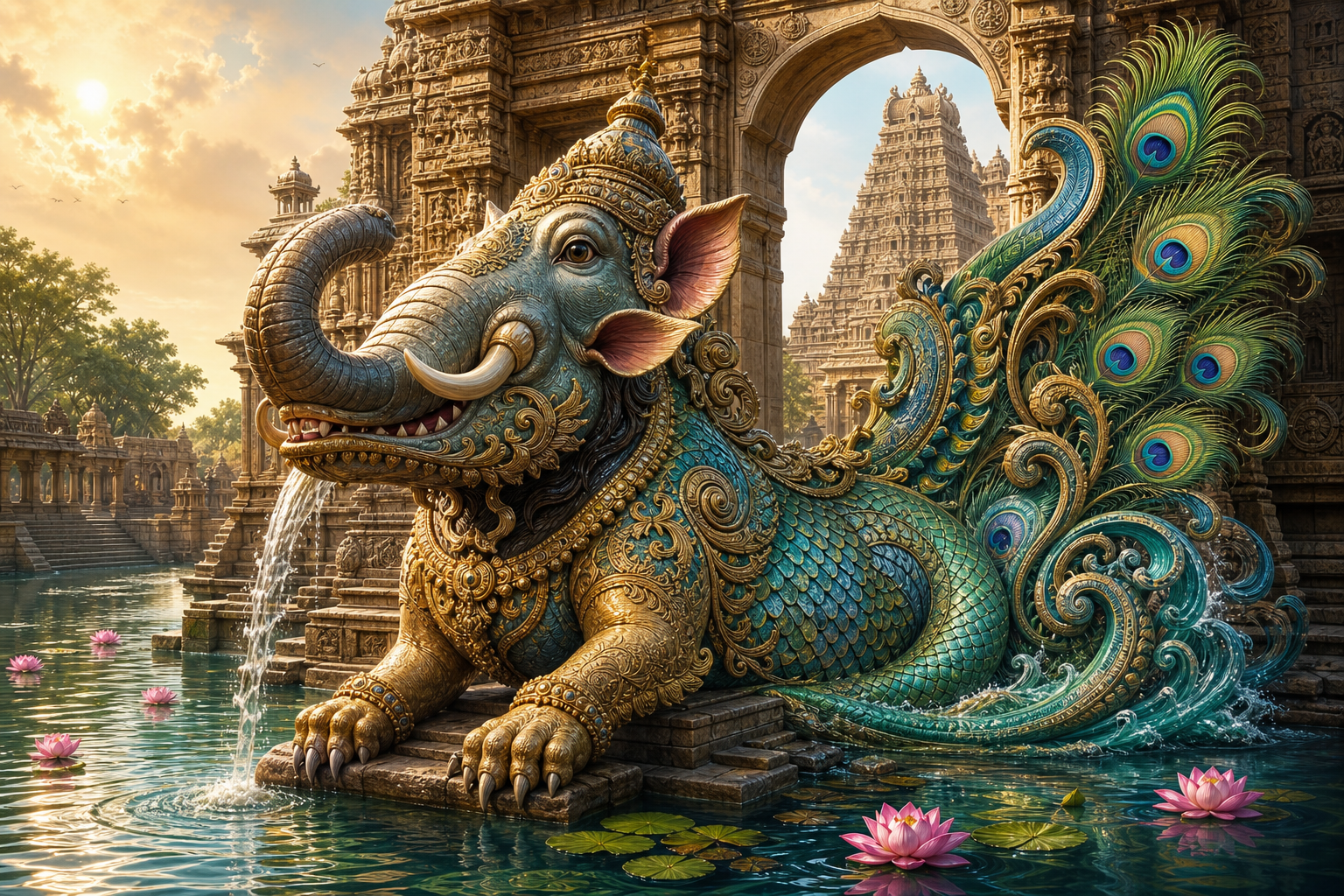
Goddess Kaveri, revered as a living river and divine mother, is rendered in Hindu sculpture through a precise visual grammar that blends Shilpa Shastra canons with the lived rhythms of sacred geography. This essay explains how to recognize her iconography, from kumbha and lotus attributes to makara-toranas and gentle mudras, and shows where she commonly…
-
Lakshmi Ganapati in the 32 Forms: Tantric Iconography, Sacred Symbolism, and Meaning

Lakshmi Ganapati—one of Ganesha’s thirty-two forms—embodies the sacred union of wisdom and prosperity within a Tantric and puranic framework. This in-depth guide clarifies that the name denotes Ganesha infused with Lakshmi-tattva, often attended by Siddhi and Riddhi, rather than a substitution with Goddess Lakshmi. Readers will learn how each attribute—pasha, ankusha, ratna-kumbha, modaka, and lotus—maps…
-
Asitanga Bhairava Unveiled: Iconography, Mantras, and the Sacred Power of the Golden Lord

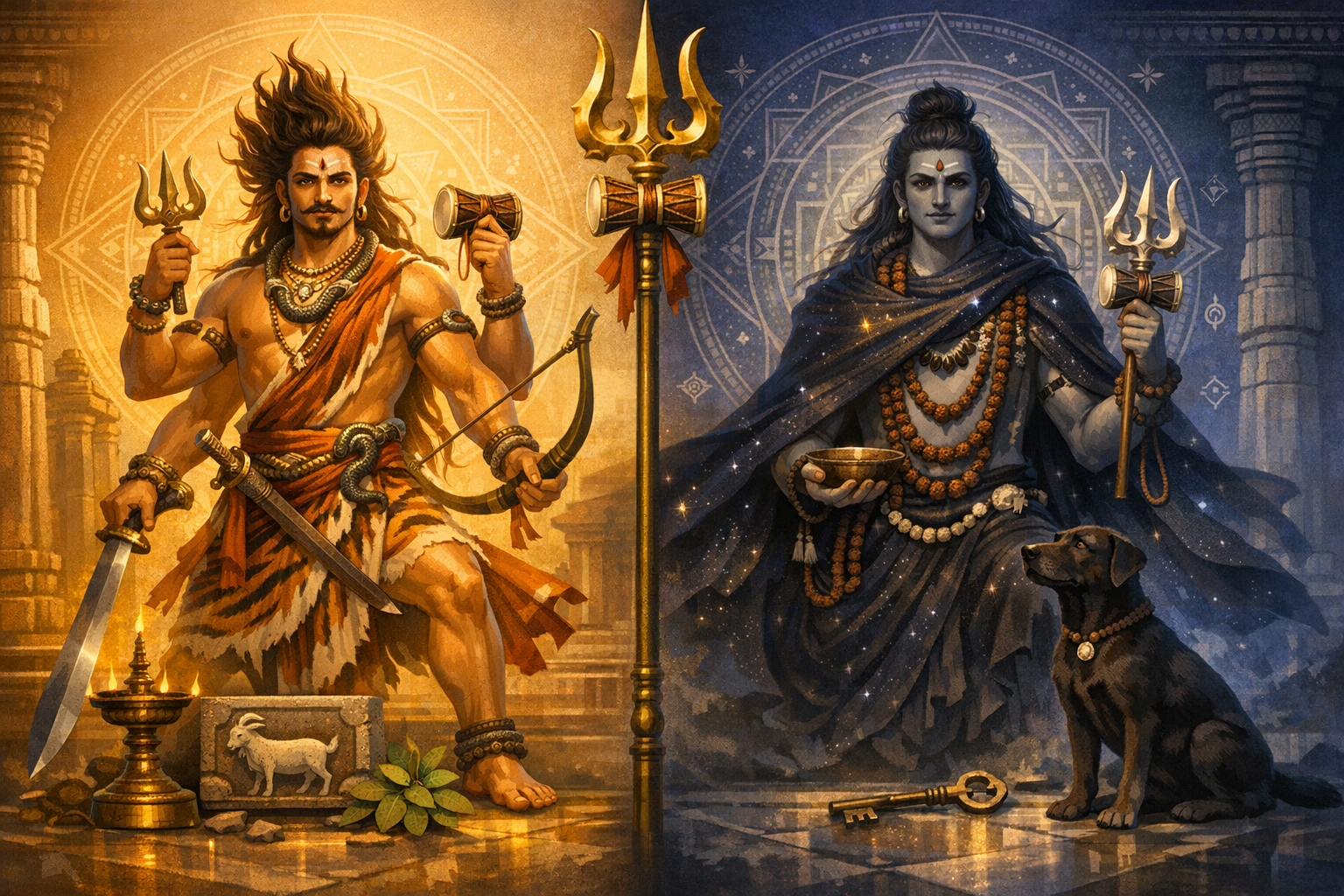
Asitanga Bhairava, the Golden Lord of the First Octet, embodies a luminous, eastward guardianship that unites protection with awakening. This long-form exploration decodes his iconography—golden hue, trident, drum, skull-bowl, and threshold placement—so readers can recognize and interpret the form in temples and texts. It clarifies how attributes map to disciplined practice, turning weapons into inner…
-
Dashabhujeshwara Decoded: Five-Faced, Ten-Armed Shiva—Iconography, Mantras, Ritual Power

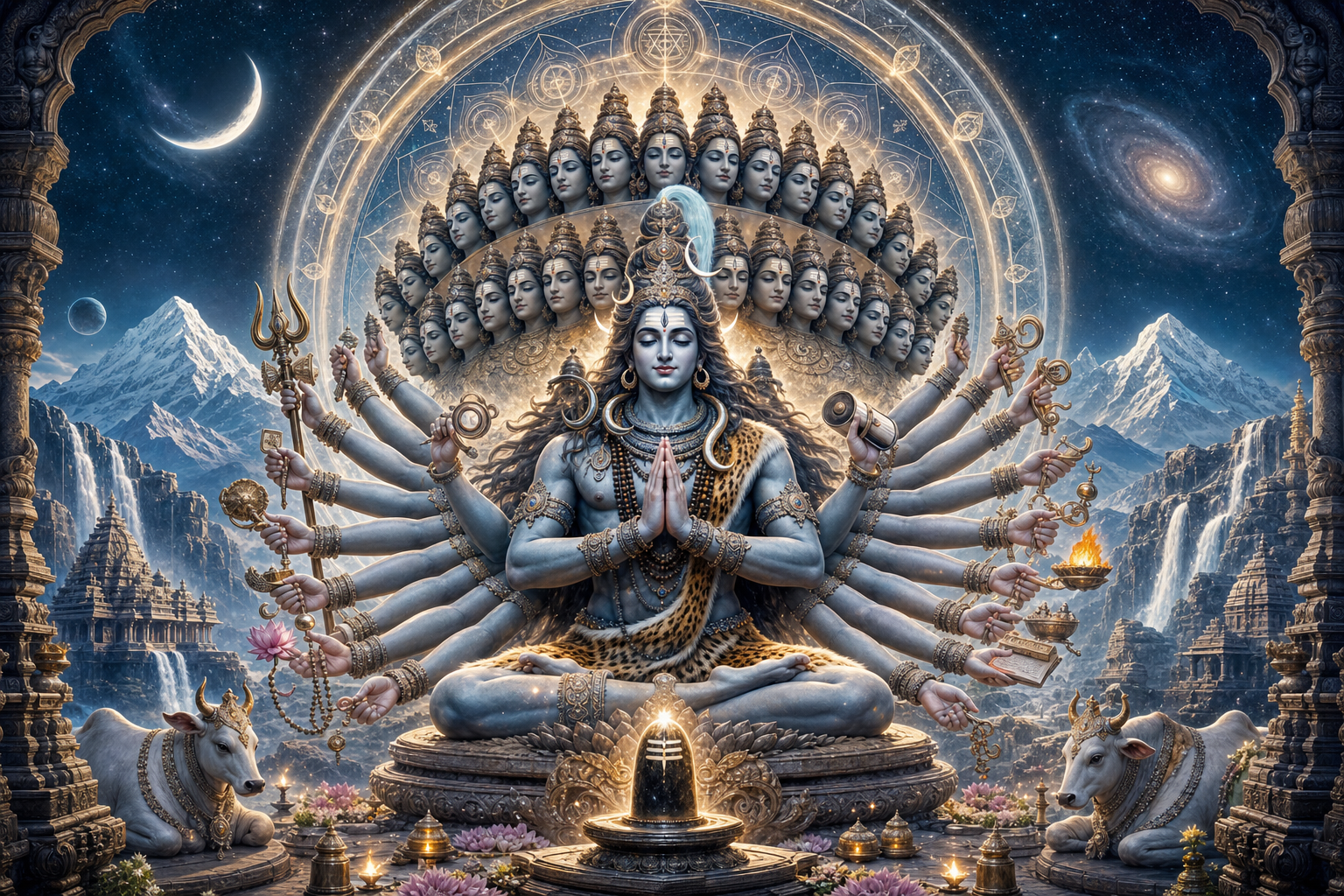
Shiva’s Dashabhujeshwara form—five-faced and ten-armed—embodies the Pañcabrahma theology in which one Absolute performs five cosmic acts: creation, sustenance, dissolution, concealment, and grace. Drawing on the Śiva Purāṇa, Āgamas, and Śilpa-Śāstras, this explainer clarifies how each face (Tatpuruṣa, Aghora, Vāmadeva, Sadyojāta, Īśāna) aligns with directions, mantras, and meditative practice. It decodes the ten arms as sovereignty…
-
The Eleven Forms of Goddess Kali: Fierce Compassion, Iconography, and Living Devotion

This article explores the eleven forms (Ekadasha) of Goddess Kali as preserved in Bengali and eastern Indian Shakta traditions. It situates each form—Adya, Dakshina, Shyama, Bhadra, Smasana, Raksha, Siddha, Guhya, Hansa, Bhima, and Chamunda—within clear iconography, ritual practice, and philosophical meaning. Readers learn how the Goddess embodies both gentle reassurance and fierce compassion, guiding household…
-
Hanuman’s Honeybee Stratagem: Foiling Mahiravana in Patala to Save Rama and Lakshmana

This long-form analysis narrates how Hanuman’s honeybee form and Panchamukhi manifestation foil Mahiravana’s Patala ritual to rescue Rama and Lakshmana. It situates the episode in later and regional Ramayana traditions, clarifying its relationship to Valmiki while highlighting its wide cultural reception in performance and temple iconography. The essay unpacks Patala cosmology, the five-lamp life-bond, and…
-
Decoding Vishnudharmottara Purana: The Awe-Inspiring Vyuha Manifestations of Vishnu

This article decodes the Vyuha doctrine of Vaishnava theology through the lens of the Vishnudharmottara Purana and the Pancharatra–Vaikhanasa traditions. It explains the fourfold emanations—Vasudeva, Sankarshana, Pradyumna, and Aniruddha—and the classical distribution of the six divine excellences across them. It shows how the Purana’s image-making canons turn metaphysics into clear, teachable iconography, especially in Caturvyuha…
-
Hanuman’s Tail-Dome and the Underworld Duel: Mahiravana’s Deception and a Dharmic Rescue

This analytical retelling explores the Mahiravana (Ahiravana) episode from later Ramayana traditions, where Hanuman’s innovative “tail-dome” defense is outwitted by a master of illusion and redeemed by a precise, dharmic rescue in Patala. It situates the story within regional Ramayana literatures, clarifies iconography around Panchamukhi Hanuman, and explains the technical constraint of extinguishing five life-lamps…
-
Makaradhwaja and Hanuman’s Karmaphala: Unveiling Dharma, Lineage, and the Fire of Lanka

This essay offers a scholarly, engaging reading of Makaradhwaja—the wondrous “son of Hanuman” said to arise from sweat after the Lanka Dahana—as a profound meditation on karmaphala in the Ramayana tradition. It clarifies that the tale is absent from the Valmiki Ramayana and instead flourishes in later and regional sources such as the Krittivasi Ramayan,…
-
Batuk Bhairav Iconography Decoded: Symbols, Rituals, and the Guardian Child of Shiva

Batuk Bhairav, the youthful guardian form of Shiva, unites fierce protection with approachable grace. This iconography guide decodes his attributes—trident, drum, skull-bowl, dog vahana—and explains how each symbol teaches fearless clarity and compassionate vigilance. Readers learn how to identify Batuk Bhairav in temples, where to look for threshold shrines, and how regional styles (Varanasi, Bengal–Nepal,…
-
Swarnakarshana Bhairava: Guardian of Gold, Prosperity, and Dharma in Kali Yuga

Swarnakarshana Bhairava—“the one who draws gold”—is a Shaiva Tantric form that links prosperity to disciplined guardianship, especially relevant in Kali Yuga. The iconography, often golden and protective, signals plenitude anchored in vigilance and ethics rather than greed. Textual and ritual traditions frame this Bhairava as a kṣetrapāla of resources, aligning wealth with dharma, responsibility, and…
-
Bhairava’s Untamed Jata: Shiva’s Tantric Iconography, Cosmic Fire, and the Discipline of Time

Bhairava’s untamed jata—often described as a “matted flame”—is a precise iconographic language rather than a dramatic flourish. Drawing on Agamic and Purāṇic traditions (including the Skanda Purāṇa’s Kāśī Khaṇḍa), the flame-like hair encodes tapas (ascetic heat), the governance of time (kāla), and the ethics of vigilant guardianship. Read through a yogic lens, it symbolizes the…
-
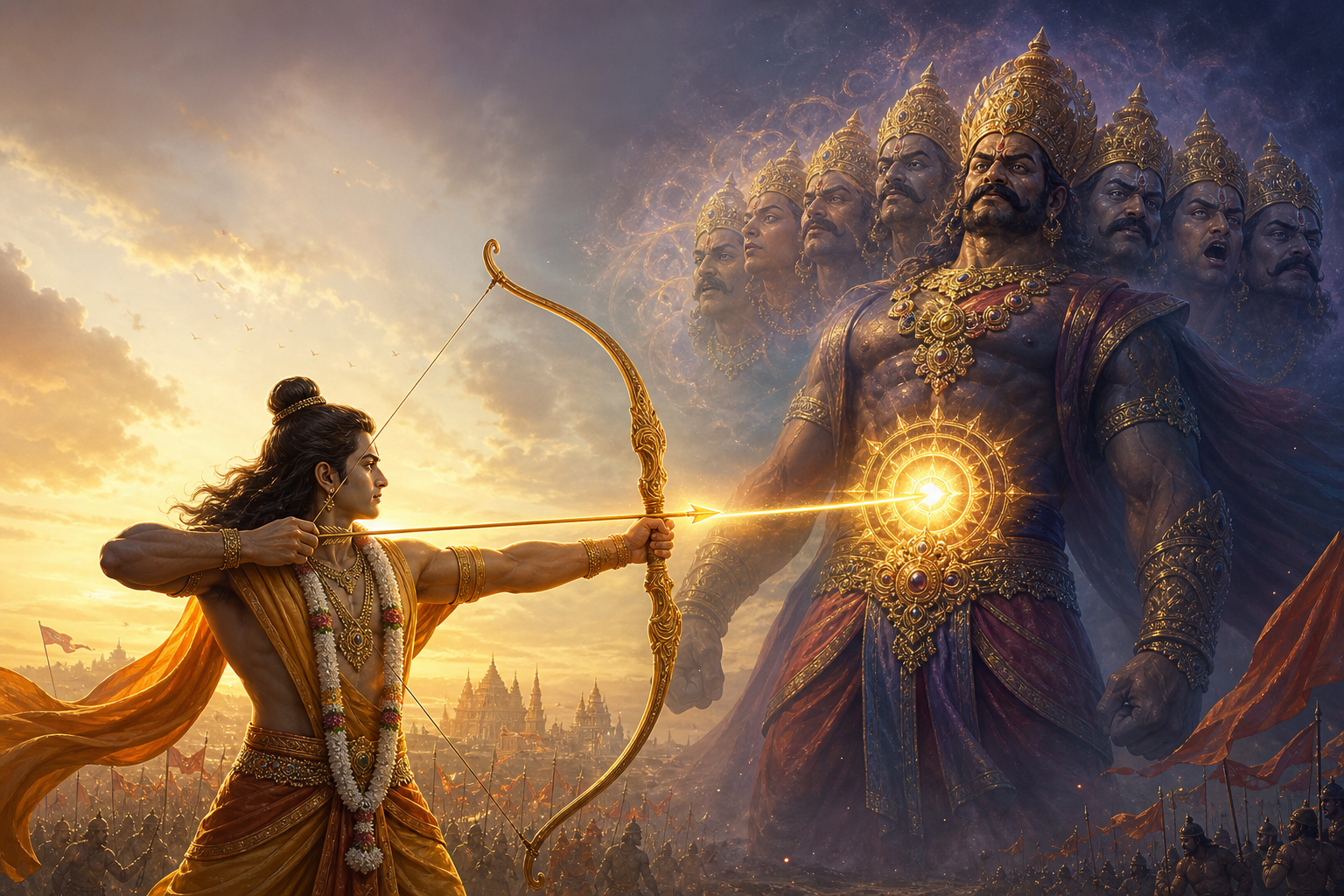
From Axe to Bow: Parashurama and Rama’s Weapons across India’s Civilizational Evolution

Parashurama’s axe and Rama’s bow are more than weapons; they are precise metaphors for India’s civilizational evolution from corrective severity to codified restraint. Read together, they chart the passage from foundational pruning to lawful kingship, illuminating Kshatra Dharma and maryada in the Ramayana. The parashu symbolizes necessary removal of entrenched harm, while the Kodanda embodies…
-
Decoding the Khatvanga: Skull Staff of Chamunda & Kali—Fearlessness, Tantra, and Transcendence

The khatvanga—skull-staff of Chamunda, Kali, and other fierce goddesses—emerges as a precise, multilayered symbol in Hindu iconography and tantric philosophy. This long-form analysis decodes its form (skull, bone staff, damaru, banner), its cremation-ground origins, and its ethical evolution from literal bone to wood or metal in mainstream ritual spaces. It clarifies how the staff encodes…
-
Unlocking the Samakanda Shivling: Sacred Geometry, Agama Proportions, and Trimurti Harmony

The Samakanda Shivling is a mānuṣa liṅga crafted so that the Brahmā, Viṣṇu, and Rudra sections are exactly equal in height. This sacred geometry embodies the Trimūrti’s harmony, turning complex theology into an accessible visual and ritual language. Drawing on Śilpa-Śāstra and Śaiva Āgama guidance, it balances square, octagonal, and circular principles across the vertical…
-
Rama on Hanuman, Lakshman on Angada: Decoding Yuddha Kanda Strategy and Sacred Symbolism

This study examines Rama’s march to Lanka through the dual lenses of strategy and symbolism in the Yuddha Kanda. It traces how intelligence from Sundara Kanda matured into a disciplined campaign: ritual diplomacy with the ocean, Nala’s engineering of Rama Setu, and Sugriva’s team-of-teams command across a high-mobility Vanara army. It clarifies that Valmiki does…
-
Timeless Welcoming Grace: Ahuya–Varada Mudra in Hindu Iconography and Sculpture
Ahuya–Varada Mudra crystallizes a powerful promise in Hindu iconography: an invitation to approach, followed by the boon of grace. The analysis clarifies etymology and form—Ahuya as a welcoming inclination, Varada as the classic downward, open palm—while distinguishing them from Abhaya. Drawing on Shilpa Śāstra canons, regional styles (Chola, Odishan, Pāla–Sena, Hoysala), and ritual practice, it…
-
From Jamun to Jambudvipa: Sacred Dark Hues, Divine Cosmology, and Bharata’s Enduring Soul

Jamun’s deep purple hue, Jambudvipa’s sacred geography, and the dark complexions of Divine iconography converge to reveal a unifying civilizational vision of Bharata. Drawing on Hindu Puranas, Buddhist Pali sources, and Jain cosmography, the analysis shows how Jambudvipa frames Bharata-varsha as a moral and spiritual habitat rather than a mere map. The essay connects sacred…