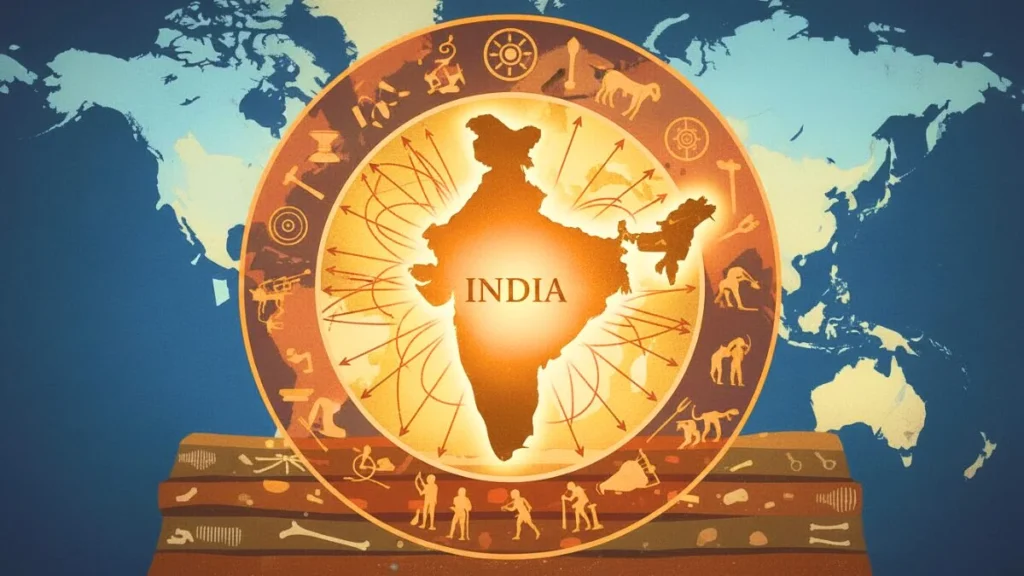
This fourth installment of The War They Could Not Win examines the deepest front of an unwinnable contest: not the battlefield alone, but the long struggle to uproot a living civilizational matrix grounded in dharmic traditionsHinduism, Buddhism, Jainism, and Sikhism. Across changing regimes and the long arc of British Colonial Rule, the central pattern is consistent. Military triumphs did not translate into civilizational conquest, because the target was a plural, self-renewing ecosystem of norms, institutions, and memory that eluded central capture.
Two principles explain why this war proved unwinnable. First, the dharmic sphere is inherently polycentric: spiritual authority, social service, artisanal knowledge, and ethical deliberation are distributed across monasteries, mathas, gurudwaras, mandirs, Jain upāśrayas, village assemblies, and family lineages. Second, its philosophical grammar valorizes plurality. The Jain doctrine of Anekantavada, the Buddhist ethic of karuṇā, the Sikh vocation of seva and the sant-sipāhī ideal, and the Hindu affirmation of Vasudhaiva Kutumbakam form a civilizational compact that welcomes many paths while maintaining shared ethical floorboards such as Ahimsa, satya, and dharma.
From a systems perspective, this compact functions as a resilient, modular network characterized by redundancy, overlapping jurisdictions, and continual feedback loops. The Guru–Shishya Tradition propagates knowledge horizontally and vertically; village assemblies legislate custom in situ; sanghas and sangats mobilize care and defense; and household ritual transmits meaning across generations. Such polycentricity raises the “cost of conquest” because no single nodetext, throne, treasury, or templecontains enough control to rewrite the whole.
Precolonial precedents illustrate the pattern. Scholarly and mercantile highways once connected centers like Nalanda University to port cities and pilgrimage circuits, while the Gupta Empire and Gurjara-Pratihara polities brokered diverse cults, crafts, and courts. Even when political turbulence or iconoclasm disrupted sacred sites, communities reconstituted endowments, relocated deities, recopied Sanskrit Manuscripts, rebuilt shrines, and maintained liturgical calendars. Temple Architecture encoded cosmology, jurisprudence, aesthetics, and agrarian management into stone and inscription, ensuring that knowledge and community finance could be restored after shock.
The 1857 War of Independencealso remembered as the Revolt of 1857was a civilizational stress test. It brought into coalition an unexpected spectrum of actors: sepoys, taluqdars, artisans, scholars, monastics, and householders. Despite regional divergences and varied strategic horizons, the insurgent landscape revealed cross-cutting solidarities that British intelligence had underestimated. Crucially, social coordination did not rely on a single command center; it flowed through kinship, veneration networks, guilds, and pilgrimage routes that imperial surveillance could not fully map.
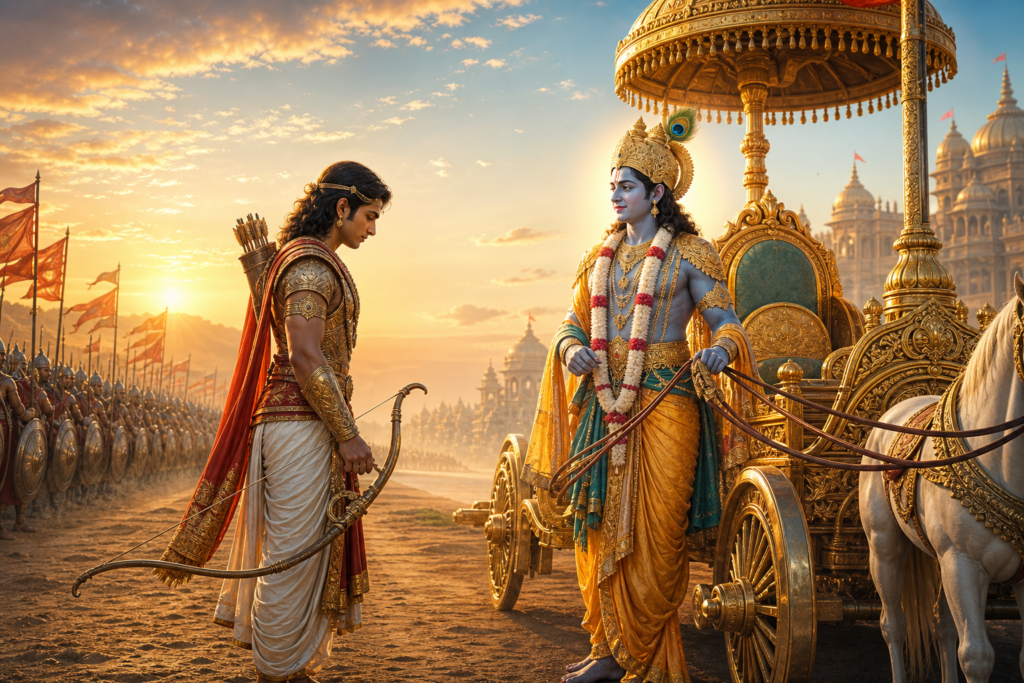
Historical records show that communities across faith lines joined both overt resistance and quiet civil defense. The ethical grammar of the agenourished by the Upanishads, the Bhagavad Gita, Buddhist suttas, Sikh rehats, and Jain śāstrasproved capable of aligning shared duties even where doctrinal differences persisted. The grammar mattered more than uniformity: a common language of righteous conduct, protection of the vulnerable, and fidelity to ancestral trusts allowed moral coordination under duress. This is the deeper meaning of Hindu-Muslim unity observed in many districts during the crisis.
Following suppression, British Colonialism reconfigured land and political power in ways that attacked the supply lines of culture: revenue settlements fragmented patronage, criminalized itinerant livelihoods, and pressed village institutions into bureaucratic molds. Famines and extractive trade further weakened the local surplus that had traditionally flowed into mathas, vihāras, gurudwaras, and mandirs. And yet, the social body adaptedredirecting donations, consolidating trusts, and reactivating endowment logic well-documented in temple and monastery records.
The colonial “knowledge front” attempted a deeper strike. Policies associated with William Bentinck and Thomas Babington Macaulay reweighted English Education to privilege European canons, while philological and anthropological schemes popularized the Aryan Invasion Theory and Eurocentrism as default explanatory frames. Over time, these narratives migrated into administrative common sense and textbooks, shaping elite opinion and even some nationalist counter-discourse.
Countervailing currents emerged quickly. Swami Vivekananda’s interventions reframed Hinduism’s inclusive vision for the world, placing śraddhā and universal ethics at the center of modern discourse. Thinkers such as Aurobindo Ghosh articulated a civilizational renaissance that integrated Vedic heritage with contemporary political thought. Reformers and educatorsAnnie Besant among thembuilt alternate pedagogies, while Buddhist, Jain, Sikh, and Hindu institutions revived textual study, public service, and ethical activism as converging streams of Indian nationalism.
Scriptural ecosystems supported this resurgence. The Upanishads and the Bhagavad Gita trained minds to distinguish enduring principles from transient power; Jain Anekantavada taught non-absolutism in judgment; Buddhist insight practices tempered reaction with awareness; Sikh bani and maryada fused devotion with civics. The result was not sameness, but a robust framework for interreligious respect that translated naturally into public action.
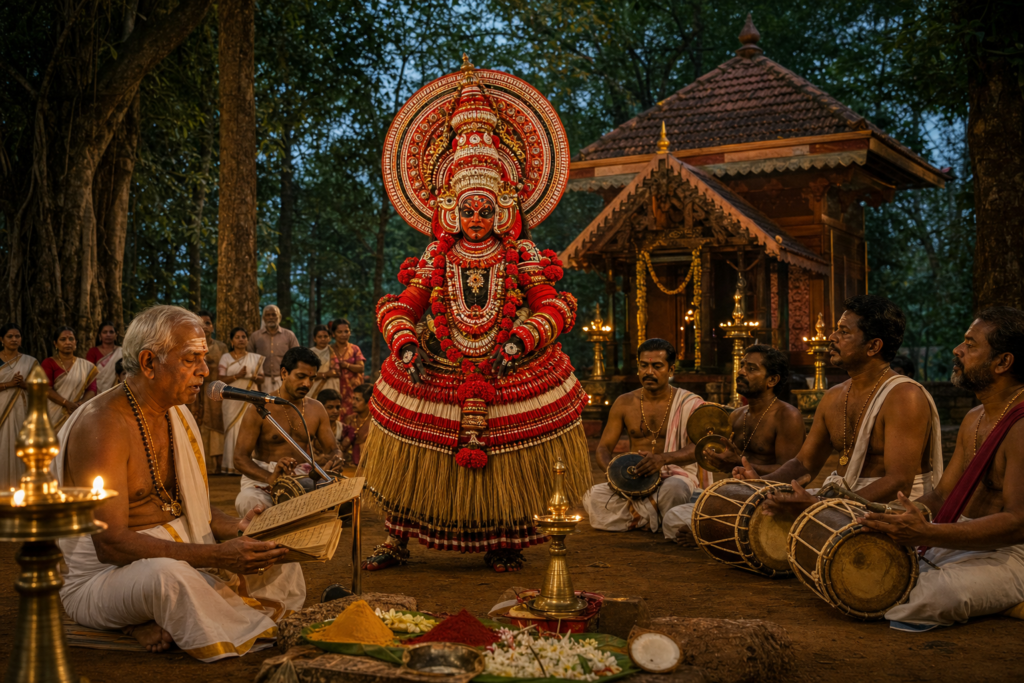
Built heritage preserved governance memory. Inscriptions on temple walls capture land grants, water management, dispute resolution, and guild compacts; the spatial logic of Temple Architecture choreographs community assembly, seasonal redistribution, and food security; corridor networks between sacred sites constitute a pan-Indian logistics of hospitality. Each layer made the civilizational body more repairable after rupturea cultural equivalent of “right to repair.”
Pedagogically, the Guru–Shishya Tradition created a redundancy-rich pipeline. If a monastery was shuttered, study could resume in a patron’s courtyard; if libraries were dispersed, manuscripts survived in households and mathas; if major teachers were exiled, knowledge traveled with disciples. This distributed pedagogyvisible from Nalanda University’s medieval collegiums to gurukuls and pathshalasreduced the risk of single-point failure.
Regional patterns reinforce the thesis. In Bengal, sabhas and akharas knit artisanal, devotional, and scholastic life; in Punjab, the discipline of the Khalsa and the open, universal langar created an everyday grammar of equality; in Maharashtra, warkari pilgrimages sustained collective virtue and mutual aid. Each milieu linked metaphysics to public ethics, turning spirituality into a durable infrastructure for service and solidarity.
After 1947, constitutional guaranteesparticularly Article 25 and Article 26recognized freedom of conscience and the autonomy of religious institutions. When lived sincerely, these provisions protect exactly the kind of civilizational polycentricity that made foreign domination brittle in the first place. They enshrine the principle that diversity in worship and association is not a concession, but a constitutional asset.
Interfaith synergy remains the moral center of this resilience. Festivals and fastsVesak, Paryushana, Gurpurab, Deepavaliorganize the year around service and remembrance. In many households, ancestral stories of the 1857 War of Independence are retold alongside hymns and verses, building an emotional commons that links private devotion with public responsibility.
A contemporary front of this unwinnable war is narrative warfare. Selective historiography, media bias, and reductive academic frames can still obscure the plural past. The remedy is not counter-bias, but better method: rigorous Comparative Religion, transparent Historiography, multilingual source-work on Sanskrit Manuscripts and vernacular records, and open archives that welcome cross-community scholarship by Hindus, Buddhists, Jains, Sikhs, and others.
A constructive national program can be framed around four axes. First, heritage documentation and conservation that acknowledges living ritual economies, not only monuments. Second, renewed investment in classical and vernacular education, including Sanskrit, Pali, Prakrit, Gurmukhi, and regional scripts. Third, public pedagogy that highlights Ahimsa, Anekantavada, and seva as shared civilizational ethics. Fourth, local autonomy for religious endowments with transparent audit and community oversight, aligned to the spirit of Article 25–26.
Technical metrics can aid policy. Network analysis can identify cultural bridges (festivals, pilgrimages, libraries) with high betweenness centrality for protection; percolation models can test how many nodes must fail before memory transmission collapses; ethnographic baselines can measure how Guru–Shishya lineages and village assemblies adapt under stress; and legal diagnostics can ensure that institutional autonomy does not drift into opacity.
At the level of everyday life, resilience is sustained by small, repeated acts. Langar kitchens, Jain animal hospitals, Buddhist meditation centers, and temple annadanam programs convert metaphysical commitments into measurable public goods. These practices stabilize neighborhoods during crisis, resist dehumanization, and instantiate the civilizational axiom Vasudhaiva Kutumbakam.
The war, then, could not be won because it targeted a plurality that is neither fragile nor accidental. By yoking spiritual diversity to social cooperation, the dharmic sphere rendered conquest costly and assimilation incomplete. Where a monolithic system seeks uniform obedience, this civilizational design invites conscientious participation.
Understanding this structure clarifies the work ahead. Protecting Cultural Heritage, revitalizing Temple Architecture and archives, supporting monastic and scholastic institutions across traditions, and deepening interfaith friendship are not nostalgic projects; they are strategies of democratic strength. They secure Indian nationalism to its broadest ethical base and re-center the promise that many truths can coexist without violence.
The lesson of Part 4 is simple and demanding. A plural civilization prevails when it treats differences as sources of learningnot threats to be erased. In that spirit, the unity of Hindu, Buddhist, Jain, and Sikh traditions remains the quiet engine of India’s continuity, and the ultimate reason the war against its soul could not, and cannot, be won.
Inspired by this post on SikhNet – News.