Tag: Nalanda University

  • The War They Could Not Win: How Dharmic Resilience Defied Empire and Erasure

    The War They Could Not Win: How Dharmic Resilience Defied Empire and Erasure

    This long-form analysis explains why attempts to subdue India’s civilizational core repeatedly failed. It argues that dharmic polycentricity—rooted in Hindu, Buddhist, Jain, and Sikh traditions—produced resilient networks of ethics, learning, and care beyond the reach of central control. Drawing on the Revolt of 1857, British Colonial Rule, and the intellectual countercurrents of Vivekananda and Aurobindo,…

  • Reclaiming India’s Dharmic Sense of History: Evidence, Empathy, and Method

    Reclaiming India’s Dharmic Sense of History: Evidence, Empathy, and Method

    This essay offers a rigorous, empathetic roadmap to reclaim India’s Dharmic sense of history. It dismantles the colonial trope that Hindus lacked historical consciousness by surveying Itihasa, Puranas, caritras, inscriptions, and temple records across Ancient India and Medieval India. It explains why certain indigenous archives thinned during the medieval era and shows how to read…

  • Nalanda vs. Takshashila: Inside South Asia’s Legendary Learning Hubs and Their Lasting Legacy

    Nalanda vs. Takshashila: Inside South Asia’s Legendary Learning Hubs and Their Lasting Legacy

    Takshashila and Nalanda illuminate two complementary models of ancient education in South Asia: a teacher‑centered, city‑embedded network and a purpose‑built, campus‑centered Mahāvihāra. Takshashila’s Gandhāran milieu fostered multilingual, practice‑oriented scholarship at a crossroads of Achaemenid, Hellenistic, and Indic worlds. Nalanda, sustained by Gupta, Harṣa, and Pāla patronage, curated advanced specialization, international translation networks, and a renowned…

  • Sanskrit vs Prakrit in Ancient India: A Sacred Dialogue Shaping Faith, Culture, and Power

    Sanskrit vs Prakrit in Ancient India: A Sacred Dialogue Shaping Faith, Culture, and Power

    Sanskrit and Prakrit formed a sacred dialogue in Ancient India, shaping ritual, philosophy, drama, and everyday communication across Hinduism, Buddhism, Jainism, and later Sikhism. Rather than rigid opposites, they functioned as complementary registers within a diglossic ecology that prized both precision and accessibility. The article maps their historical development from Old to Middle to New…

  • From Humble Beginnings to Enduring Eminence: Scholarship, Faith, and Dharmic Unity

    From Humble Beginnings to Enduring Eminence: Scholarship, Faith, and Dharmic Unity

    This essay maps the path from humble beginnings to enduring eminence through the dharmic lenses of scholarship, faith, struggle, legacy, and inspiration. It shows how the Guru-Shishya Tradition, Nalanda-style scholastic cultures, Jain Anekantavada, Sikh Seva, and vedantic inquiry create complementary routes to excellence. Readers gain a pragmatic five-vector blueprint—Vidya, Sadhana, Seva, Sangha, and Shraddha—for integrating…

  • Complete Analysis of D.N. Jha’s Claims: Discover Facts, Context, and Dharmic Harmony

    Complete Analysis of D.N. Jha’s Claims: Discover Facts, Context, and Dharmic Harmony

    This academically balanced analysis explores the debates surrounding D.N. Jha, assessing his Marxist historiographical approach, its reception, and its impact on understanding Indian history. Readers discover how The Myth of the Holy Cow is interpreted both as source-critical scholarship and as insensitive to the cow’s sacred status in dharmic life. The discussion addresses concerns about…

  • The Complete Exposé: Discover How D.N. Jha’s Narratives Distort Indian History and Faith

    The Complete Exposé: Discover How D.N. Jha’s Narratives Distort Indian History and Faith

    I take you inside my personal investigation of D.N. Jha’s work and how, in my view, Marxist historians reshaped Indian history. I explain why The Myth of the Holy Cow felt like a direct affront to the Hindu Community and how such narratives influence public memory. You’ll see how I argue that Jha’s approach distorted…

  • When Bakhtiyar Khalji Wiped out Gauda-Desa from Existence

    When Bakhtiyar Khalji Wiped out Gauda-Desa from Existence

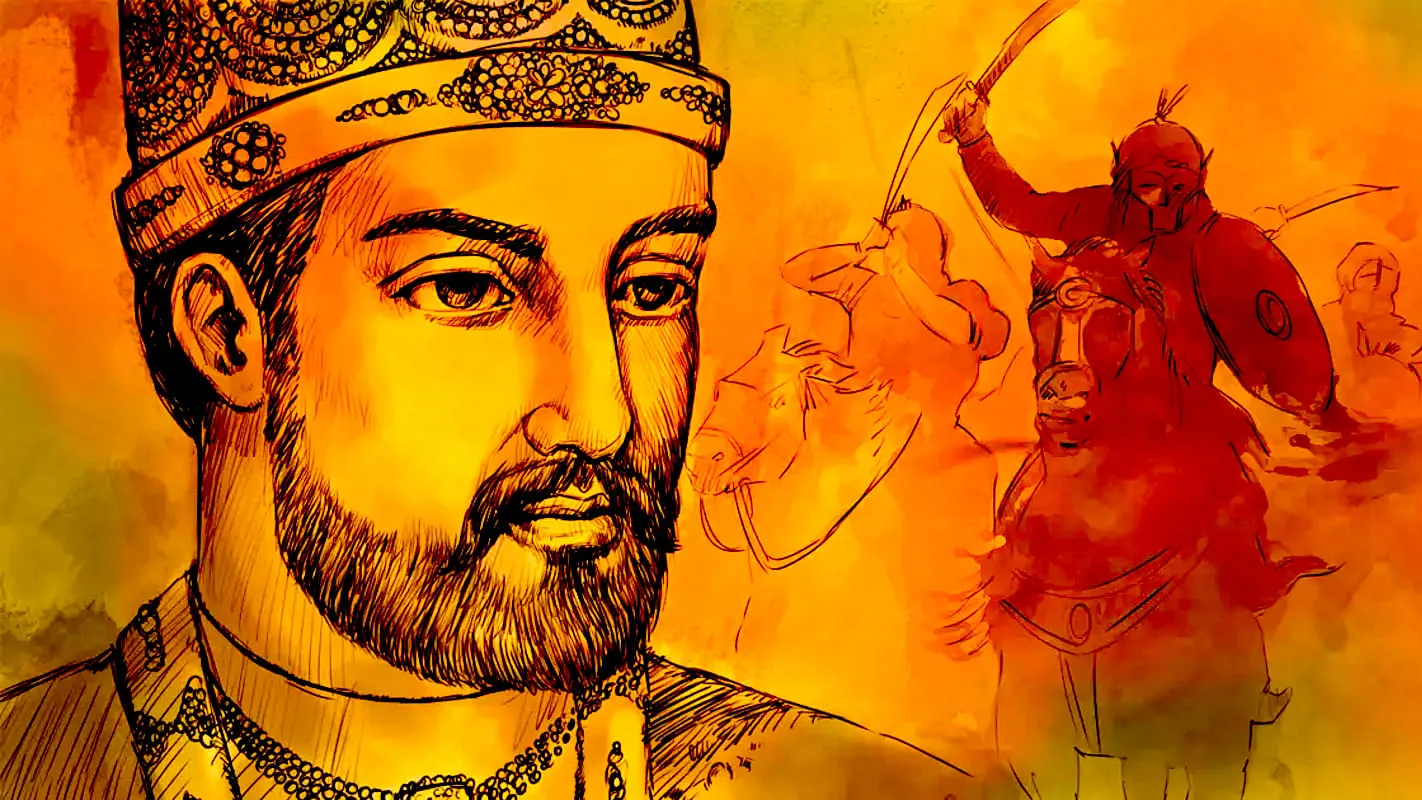
    Bakhtiyar Khalji’s catastrophic devastation of the ancient city of Gaur marked a pinnacle in his career of plunder and genocide. Gaur, a historic center of Sanskrit learning and Hindu culture, was thoroughly obliterated, replaced by Islamic structures. This transformation permanently altered Bengal’s cultural and religious landscape, erasing its Sanatana past.

  • Vyasa Poornima: The Peerless Educational Heritage of India

    Vyasa Poornima: The Peerless Educational Heritage of India

    Explore the profound reverence for Guru Dakshinamurthy, the embodiment of spiritual knowledge and wisdom, in this enlightening blog post. Adi Sankara’s verses pay tribute to the Guru who imparts knowledge through silence, emphasizing the Guru’s role in awakening the inner resplendence of spiritual wisdom. This post delves into the essence of the Guru-Shishya tradition in…