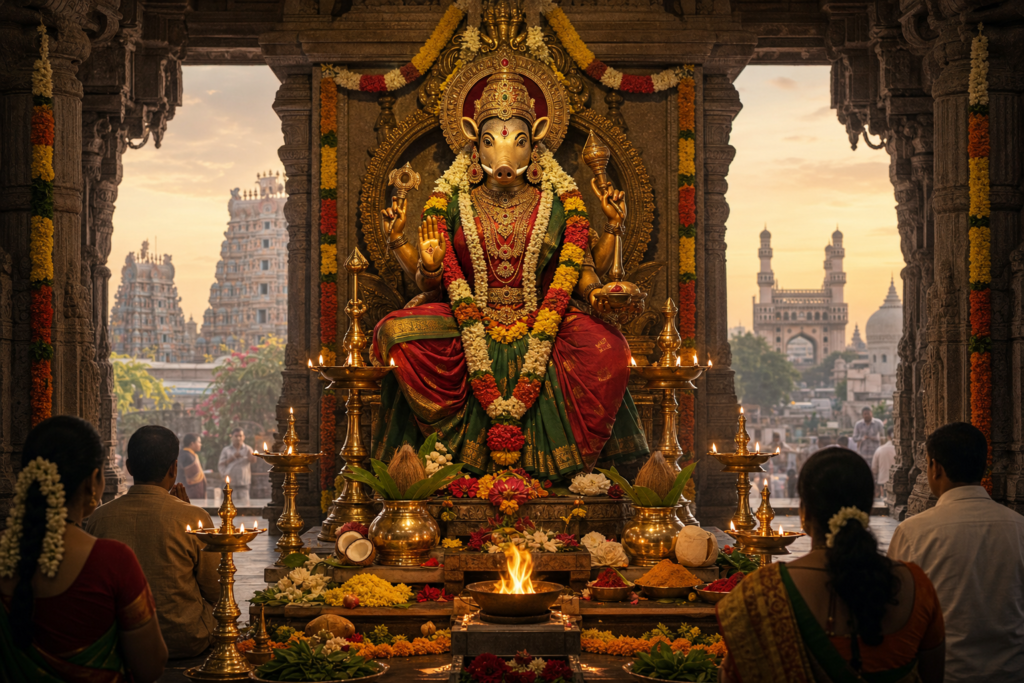
Claims that Deity worshipwhether addressed as image worship or reverence to the murtiis a recent development in the Vedic Tradition do not withstand textual or historical scrutiny. Across the sweep of Sanatana Dharma, practice evolves in response to human capacities, lifespans, and social conditions, yet remains anchored in continuity. The Vedic culture recognizes multiple valid avenues for spiritual development, and the persistence of temple worship demonstrates an enduring lineage rather than a modern innovation.
According to the well-known framework of yugasSatya-yuga, Treta-yuga, Dvapara-yuga, and Kali-yugadifferent practices emerge as especially effective for spiritual growth. In Satya-yuga, extended lifespans and steady minds supported deep meditation. In Treta-yuga, yajna, havan, and other fire rituals formed the recommended path. In Dvapara-yuga, elaborate Deity worship, replete with offerings, sacred mantras, and devotional song, prevailed. These modalities did not disappear when epochs shifted; rather, they continued in varying degrees as living traditions within Hinduism.
In Kali-yuga, while meditation, ritual observances, and temple worship endure, the chanting of mantrasespecially the Hare Krishna mantrais widely recognized in the Bhakti Tradition as both highly efficient and accessible. This emphasis on sacred sound aligns with the practical needs of the present age, where brief yet potent practices help stabilize attention and cultivate devotion. Crucially, this does not negate other time-honored disciplines; it highlights a primary recommendation that complements, rather than replaces, diverse Vedic practices.
Experientially, many seekers attest that darshan of the murti can concentrate the mind, evoke reverence, and deepen commitment to the Hindu way of life. Others find that silent meditation, daily worship, or selfless service provides their most direct gateway to inner transformation. Mantra chantingsuch as steady japa or collective kirtanhelps integrate devotion into the rhythms of everyday life, making profound spiritual work possible amid contemporary demands.
Unity in Diversity is intrinsic to the dharmic family of traditions. While Hinduism articulates yuga-specific recommendations, the underlying principles resonate broadly: mindful remembrance in Buddhism, the Namokar Mantra in Jainism, and Naam Simran in Sikhism exemplify the shared priority of disciplined attention, ethical refinement, and devotion to truth. Recognizing this convergence encourages mutual respect and nurtures harmony across dharmic paths without erasing their distinctive practices and philosophies.
Seen in this light, Deity worship is not a recent invention but a venerable strand of Vedic Traditions, integrated with meditation, ritual, and mantra across epochs. In Kali-yuga, the heightened recommendation of chanting complements temple worship and meditation, offering a balanced approach that is both historically grounded and practically effective. Embracing this plural ethos strengthens Cultural Heritage, clarifies misconceptions, and supports seekers in choosing a pathwhether murti-puja, meditation, yajna, or mantrathat best fosters devotion, wisdom, and compassionate living.
Inspired by this post on Dandavats.