Tag: Bhakti Tradition

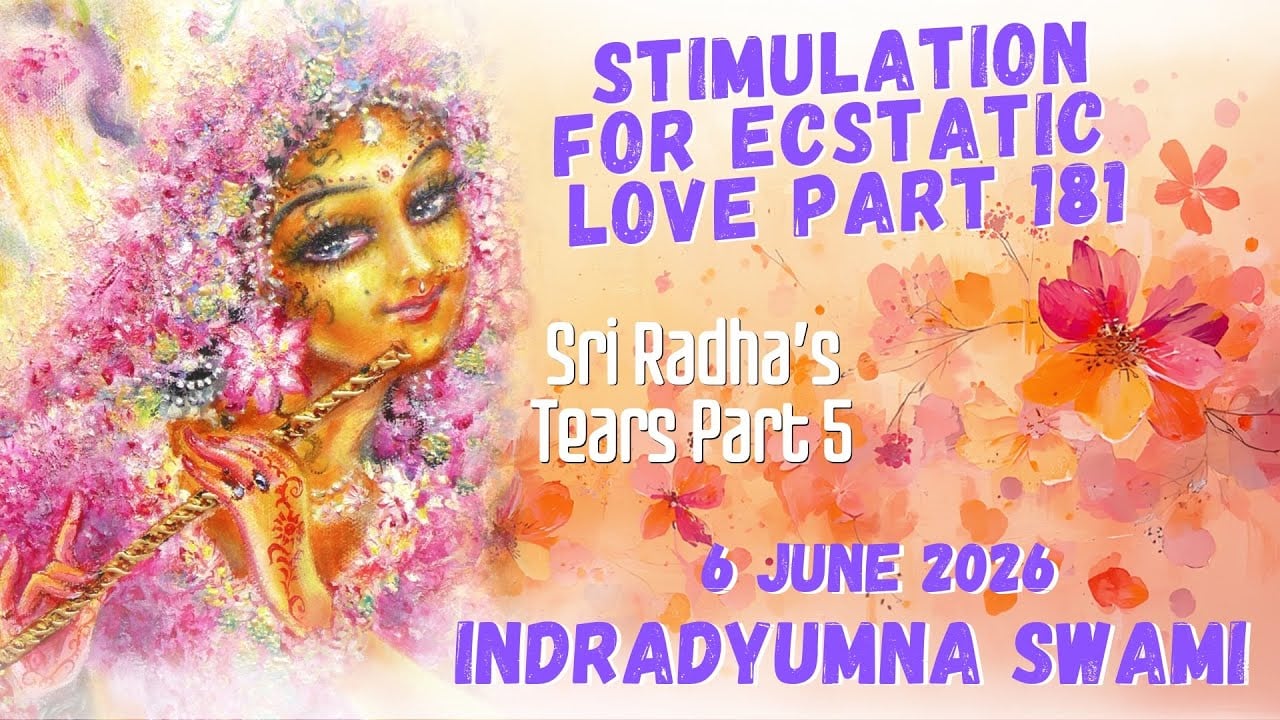
  • Sri Radha’s Tears Part 10: Profound Lessons on Ecstatic Love and Bhakti-Rasa

    Sri Radha’s Tears Part 10: Profound Lessons on Ecstatic Love and Bhakti-Rasa

    This long-form companion to “Sri Radha’s Tears Part 10” explains why tears carry profound theological meaning in Gaudiya Vaishnava devotion. It introduces the technical structure of bhakti-rasa, including vibhāva, uddīpana, anubhāva, sāttvika-bhāva, and aśru. The discussion examines Sri Radha as the embodiment of mahābhāva and clarifies how viraha, or separation from Krishna, can intensify sacred…

  • Srivasa Pandit’s Sacred Disappearance: Powerful Lessons in Devotion and Sankirtana

    Srivasa Pandit’s Sacred Disappearance: Powerful Lessons in Devotion and Sankirtana

    Srivasa Pandit’s disappearance is remembered as a sacred moment in Gaudiya Vaishnavism and the wider bhakti tradition. As a member of the Panca-tattva, he represents the devoted jiva whose life finds fulfillment in service, humility, and sankirtana. His home, Shrivasa Angan in Navadvipa, became a central site of Lord Chaitanya’s nightly kirtans and devotional pastimes.…

  • Srila Prabhupada Lilamrita: Powerful Lessons in Bhakti, Service, and Guru-Seva

    Srila Prabhupada Lilamrita: Powerful Lessons in Bhakti, Service, and Guru-Seva

    This article offers a researched and accessible reflection on Srila Prabhupada’s life, mission, and continuing influence through the lens of Srila Prabhupada Lilamrita. It explains how his journey from India to the West became a major moment in modern Hindu and Gaudiya Vaishnava history. The piece highlights bhakti, guru-seva, scripture, kirtan, prasadam, and disciplined spiritual…

  • Brihad Bhagavatamrita 1.2.53-62: Powerful Lessons in Devotion and Grace

    Brihad Bhagavatamrita 1.2.53-62: Powerful Lessons in Devotion and Grace

    This article explores the July 05, 2026 Hungary discourse on Brihad Bhagavatamrita 1.2.53-62 as a serious study in Gaudiya Vaishnava theology. It explains how Sanatana Goswami’s work examines bhakti, divine mercy, humility, and the progressive deepening of one’s relationship with Lord Krishna. The discussion highlights why the text remains central to Krishna consciousness and the…

  • Sant Dnyaneshwar Jayanti 2026: Powerful Lessons from Maharashtra’s Bhakti Sage

    Sant Dnyaneshwar Jayanti 2026: Powerful Lessons from Maharashtra’s Bhakti Sage

    Sant Dnyaneshwar Jayanti 2026 falls on September 4 and honors the birth anniversary of Sant Dnyaneshwar Maharaj of Maharashtra. The observance is linked with Krishna Paksha Ashtami in Shravan Month according to the Shaka calendar followed in Maharashtra. This article explains Dnyaneshwar’s role in the Varkari bhakti tradition, his authorship of the Dnyaneshwari and Amrutanubhava,…

  • Luk Luk Dauji: Balarama’s Watchful Love and Krishna’s Sacred Braj Bond

    Luk Luk Dauji: Balarama’s Watchful Love and Krishna’s Sacred Braj Bond

    Luk Luk Dauji presents Balarama as the watchful elder brother whose loving gaze remains fixed on Krishna in the sacred landscape of Braj. This article explains the devotional, theological, cultural, and emotional meaning of Dauji’s attentive presence in Krishna Bhakti. It explores Balarama as protector, companion, source of strength, and model of loving service. The…

  • Make the Call Home: The Transformative Power of Chanting Hare Krishna

    Make the Call Home: The Transformative Power of Chanting Hare Krishna

    HG Vaisesika Dasa’s message, “Make the Call Home: Chant Hare Krishna,” presents chanting as a disciplined and transformative practice within the bhakti tradition. The Hare Krishna mahā-mantra is understood not only as meditation but as a direct invocation of divine presence and loving service. This article explains the theological, psychological, and practical dimensions of japa…

  • Powerful Lessons from Guru Puja and Caitanya-caritāmṛta Ādi-līlā 14.34–37

    Powerful Lessons from Guru Puja and Caitanya-caritāmṛta Ādi-līlā 14.34–37

    This article explores the theological and practical meaning of Śrī Caitanya-caritāmṛta Ādi-līlā 14.34–37 in connection with Deity greetings and Guru Puja. It explains how mother Śacī’s instruction to child Nimāi teaches practical spiritual discernment rather than vague abstraction. The discussion also examines the visiting brāhmaṇa’s offering and how the Lord’s acceptance reveals the inner meaning…

  • Chandidas, Forbidden Love, and the Transformative Power of Radha-Krishna Bhakti

    Chandidas, Forbidden Love, and the Transformative Power of Radha-Krishna Bhakti

    Chandidas remains one of Bengal’s most evocative devotional figures, remembered for Radha-Krishna poetry, temple service, and the legend of his forbidden love for Rami. His life and work reveal how Bhakti transformed human longing into a language of divine grace. The article explores the historical uncertainty around the name Chandidas while explaining why his cultural…

  • Sant Dnyaneshwar Jayanti 2026: Powerful Lessons from Maharashtra’s Mystic Saint

    Sant Dnyaneshwar Jayanti 2026: Powerful Lessons from Maharashtra’s Mystic Saint

    Sant Dnyaneshwar Jayanti 2026 falls on Friday, September 4, and honors the birth anniversary of Sant Dnyaneshwar Maharaj of Maharashtra. This long-form reflection explains the festival’s panchang basis, its connection with Shravan Krishna Paksha Ashtami, and its importance in the Varkari tradition. It explores Sant Dnyaneshwar’s life, the Dnyaneshwari, Amrutanubhav, Alandi, Pandharpur Wari, and his…

  • Nyayasudha Explained: The Powerful Logic Behind Madhvacharya’s Dvaita Vedānta

    Nyayasudha Explained: The Powerful Logic Behind Madhvacharya’s Dvaita Vedānta

    Nyayasudha is one of the most influential works in the Dvaita Vedānta tradition and a major commentary on Madhvacharya’s Anuvyākhyāna. Composed by Jayatirtha in the 14th century CE, it defends the realist vision of Tattvavada through logic, scriptural interpretation, and sustained philosophical debate. The work explains the distinction between the independent Supreme Reality and dependent…

  • Sri Radha’s Tears: A Powerful Meditation on Ecstatic Love and Bhakti Rasa

    Sri Radha’s Tears: A Powerful Meditation on Ecstatic Love and Bhakti Rasa

    Sri Radha’s tears represent one of the most moving symbols in the Bhakti Tradition, revealing how divine love can transform the heart, body, and consciousness. This reflection explains the theological meaning of tears in Radha-Krishna devotion, especially through the concepts of bhava, prema, rasa, and viraha. It clarifies that ecstatic love is not emotional display,…

  • Supreme Dharma Revealed: The Transforming Power of Unbroken Krishna Bhakti

    Supreme Dharma Revealed: The Transforming Power of Unbroken Krishna Bhakti

    The supreme dharma described in the Srimad Bhagavatham is unmotivated and uninterrupted devotional service to Krishna. This teaching explains that the highest purpose of dharma is not external ritual alone, but the awakening of pure bhakti that satisfies the soul. The article explores key Sanskrit terms such as ahaitukī and apratihatā, showing how devotion becomes…

  • Krishna as Divine Thief: Powerful Symbolism of Butter, Love and Liberation

    Krishna as Divine Thief: Powerful Symbolism of Butter, Love and Liberation

    Krishna’s identity as Makhan Chor and Chit Chor reveals a profound theology of divine play, love, and liberation. The butter he steals symbolizes the softened essence of the human heart, refined through discipline, devotion, and remembrance. These stories from Vrindavan do not endorse ordinary theft; they use sacred symbolism to show how divine grace removes…

  • Srirangam’s Sacred Power: Ranganathaswamy, Ramanujacharya and Living Bhakti

    Srirangam’s Sacred Power: Ranganathaswamy, Ramanujacharya and Living Bhakti

    Srirangam is presented as Bhooloka Vaikuntha, a living sacred geography where temple architecture, Sri Vaishnava philosophy, and personal devotion converge. The journey from Tiruvannamalai to Trichy becomes a providential movement toward Antya Ranga, completing a devotional circuit connected to Adi Ranga and Madhya Ranga. The article explains the historical and theological significance of Sri Ranganathaswamy…

  • Powerful Memories of Srila Prabhupada: Tranakarta das on Living Bhakti

    Powerful Memories of Srila Prabhupada: Tranakarta das on Living Bhakti

    Tranakarta das’s remembrance of Srila Prabhupada offers a valuable window into the lived experience of the guru-shishya tradition within modern Vaishnava history. The reflection highlights Srila Prabhupada’s role as founder-acharya of ISKCON, translator of major Vaishnava scriptures, and global teacher of Krishna consciousness. It explains why disciple memories matter as oral history, spiritual testimony, and…

  • Shyamananda Pandit’s Sacred Legacy: The Disappearance That Still Inspires Bhakti

    Shyamananda Pandit’s Sacred Legacy: The Disappearance That Still Inspires Bhakti

    Sri Syamananda Prabhu’s disappearance day offers a profound opportunity to reflect on bhakti, guru-seva, sacred scholarship, and the preservation of Gaudiya Vaishnava tradition. His life connects Utkala, Ambika Kalna, Vrindavana, Bishnupur, Gopi-ballabhpur, and Odisha into one powerful story of service and transmission. The celebrated episode of Srimati Radharani’s ankle bracelet reveals the devotional meaning of…

  • A Powerful Srimad-Bhagavatam Class with Srutakirti Prabhu on Living Bhakti

    A Powerful Srimad-Bhagavatam Class with Srutakirti Prabhu on Living Bhakti

    This featured Srimad-Bhagavatam class by Srutakirti Prabhu invites serious reflection on bhakti, sacred listening, and the living guru-shishya tradition. It highlights the importance of hearing scripture not as passive content, but as a disciplined practice that can refine conduct and consciousness. The discussion is placed within the wider context of Krishna consciousness, Srila Prabhupada’s legacy,…

  • Kulashekhara Alvar: The Chera King Whose Bhakti Redefined Power and Surrender

    Kulashekhara Alvar: The Chera King Whose Bhakti Redefined Power and Surrender

    Kulashekhara Alvar is remembered as a Chera king of Kerala who discovered that royal power was incomplete without surrender to the Divine. This article explores his place among the twelve Alvars, his Tamil work Perumal Tirumoli, and his Sanskrit hymn Mukundamala. It explains his deep devotion to Sri Rama, Krishna, Lord Venkateswara, and Lord Ranganatha…

  • Alvars and the Sacred Power of Tamil Bhakti: Vishnu’s Immersed Saint Poets

    Alvars and the Sacred Power of Tamil Bhakti: Vishnu’s Immersed Saint Poets

    The Alvars, also known as Azhwars, were the twelve Tamil Vaishnava saint poets whose hymns transformed South Indian devotional culture. Their works, later compiled as the Naalayira Divya Prabandham, gave Tamil a central place in temple worship, theology, and sacred literature. This tradition shaped Sri Vaishnavism, strengthened the network of Divya Desams, and prepared the…