New Delhi, Oct 6, 2025: A recent statement attributed to Rashtriya Swayamsevak Sangh (RSS) chief Mohan Bhagwat “We call ourselves different but we are all one, we are Hindus” and the associated ‘same DNA’ formulation has sparked an intense public conversation about identity, ancestry, and unity in India. Coming during the RSS Centenary (1925–2025), the remark has drawn both support and criticism, reflecting deeper debates about how to articulate a cohesive civilizational identity while honoring India’s constitutional pluralism and lived diversity.
Observers note that the phrase ‘Unified Hindu Identity’ resonates for some as an affirmation of cultural commonality, while others worry it risks narrowing the meaning of belonging in a multi-religious society. Critics have questioned the scientific precision of the ‘same DNA’ metaphor, whereas supporters contend it functions as a symbolic shorthand for shared historical ties and civilizational bonds. Framed carefully, this moment presents an opportunity to reinforce unity without erasing difference.
From an academic perspective, population genetics research on the Indian subcontinent consistently shows both significant internal diversity and deep, long-term shared ancestry. In that light, the ‘same DNA’ claim is best understood as metaphorical rather than literal. A more precise formulation recognizes that communities across the subcontinent carry overlapping genetic lineages, interwoven through migration, endogamy, and exchange over millennia a pattern entirely compatible with the idea of a civilizational family enriched by plural traditions.
Equally important is the constitutional and civilizational framing. India’s civic architecture protects freedom of conscience and religious practice, while its cultural vocabulary historically embraces multiple paths to truth. Within this matrix, the term “Hindu” is often used by some thinkers in a broad, civilizational sense; however, scholars emphasize that any public articulation of unity must be explicitly inclusive of all faiths and communities, and must foreground the ethical values that bind the dharmic traditions rather than biological metaphors.
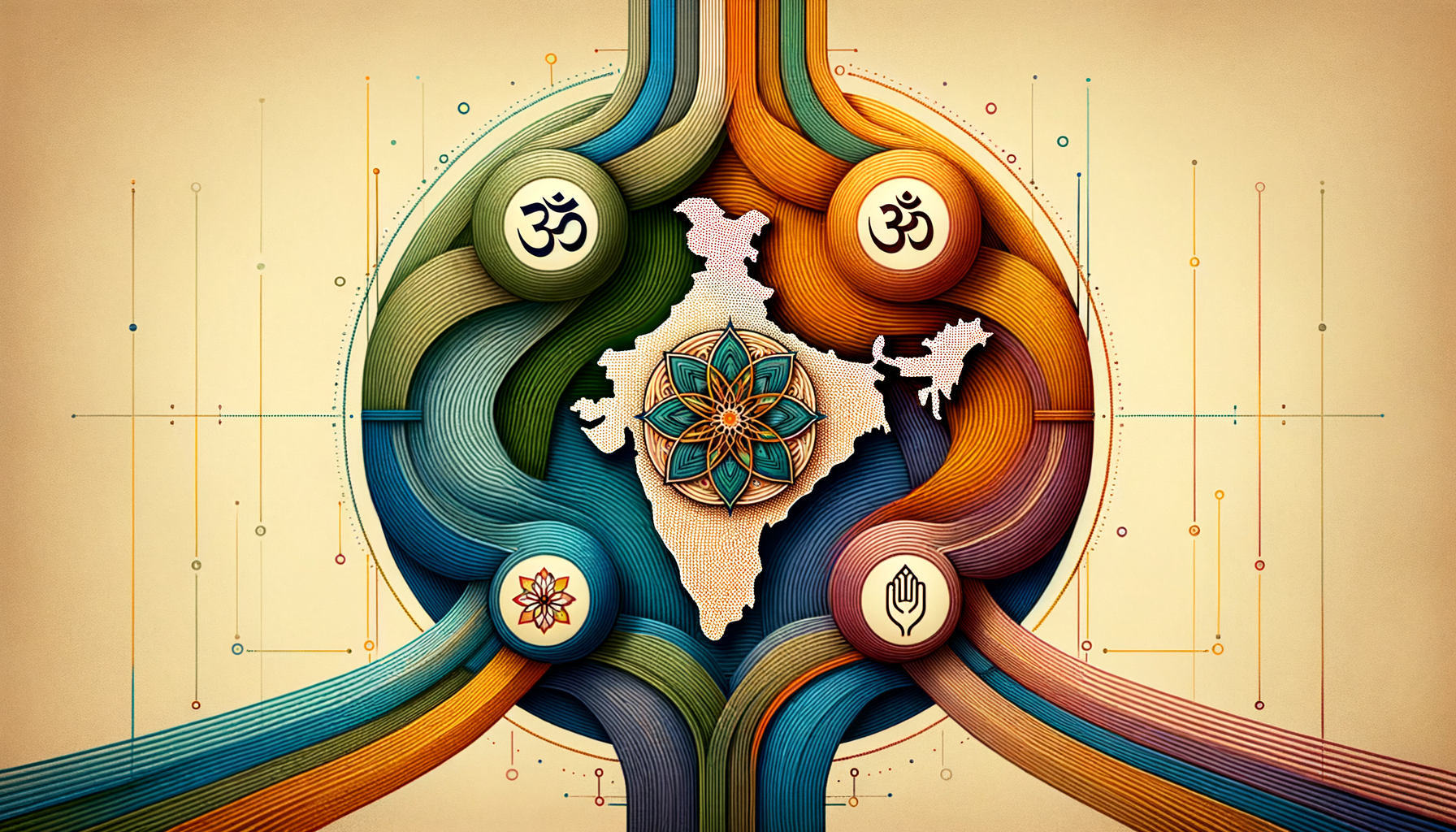
In this context, an integrative approach highlights the shared ethical and philosophical threads connecting Hinduism, Buddhism, Jainism, and Sikhism the dharmic traditions. Concepts such as dharma (moral order), ahimsa (non-harm), karuna (compassion), and seva (selfless service) form a common moral grammar. When unity is articulated through these values, it becomes expansive rather than exclusionary, welcoming citizens of every background into a shared civilizational conversation grounded in respect and mutual flourishing.
Public reactions to the statement illustrate how media narratives and social platforms can amplify polarization. A constructive discourse benefits from distinguishing empirical claims (e.g., genetics) from civilizational metaphors (e.g., cultural kinship). This analytical clarity helps prevent category errors and supports dialogue that strengthens social cohesion while safeguarding individual identities and freedoms.
Analysts propose three evidence-aligned pathways for advancing dharmic harmony. First, prioritize ethical common ground: elevate shared virtues across Hinduism, Buddhism, Jainism, and Sikhism as the core of unity. Second, uphold historical accuracy without erasure: acknowledge India’s intricate demographic and cultural synthesis, avoiding overgeneralized biological assertions. Third, use inclusive vocabulary in public rhetoric: terms like “Bharatiya” and “dharmic traditions” can signal unity-in-diversity while honoring the equal dignity of all communities.
In summary, the controversy around a ‘Unified Hindu Identity’ and the ‘same DNA’ metaphor underscores a perennial challenge: how to harmonize a civilizational consciousness with constitutional pluralism. The most sustainable path forward lies in centering shared ethical values, embracing rigorous historical and scientific understanding, and practicing language that invites rather than excludes. Framed this way, the discussion becomes not a flashpoint, but a breakthrough opportunity to strengthen unity in diversity across all dharmic traditions.