The peacock holds an eminent place in Hindu symbolism as the radiant vahana (vehicle) of Subrahmanya Swamyalso revered as Lord Muruga, Skanda, and Kartikeya. Referenced across the Vedas, Puranas, and regional bhakti literature, the bird’s presence conveys beauty, valor, purity, and protection. Its iridescent plumage and dignified bearing have long inspired devotion, cultural performance, and ethical reflection in communities that encounter peacocks in forests, bird sanctuaries, and even zoos.
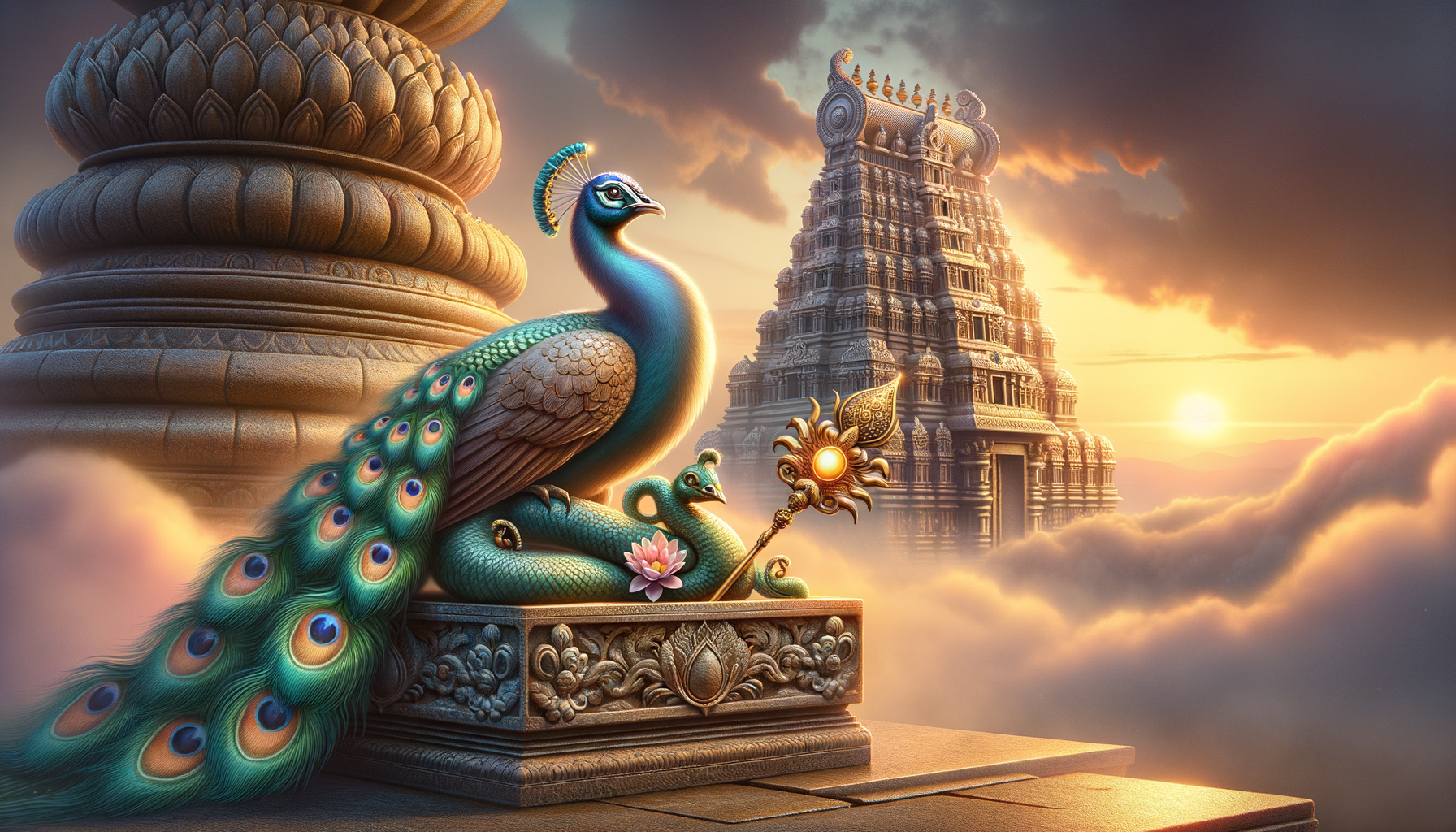
Iconographically, the peacock that bears Subrahmanya Swamy often subdues a serpent, a motif widely interpreted as triumph over ego, toxicity, and ignorance. This visual theology integrates aesthetics with ethics: the bird’s brilliance symbolizes the illumination of dharma, while its vigilant stance signifies spiritual discipline and courage. Within this framework, the peacock’s dance and call are embraced as auspicious omens that invite clarity of mind and good fortune.
Devotional practice reflects these meanings in everyday life. Families across South India adorn home altars with peacock feathers, and temples dedicated to Lord Muruga celebrate the bird as an emblem of divine guardianship. During Skanda Shashti and Karthigai festivities, devotees narrate the peacock’s role in Muruga’s victories, while classical and folk arts such as Mayil Attam evoke its grace and rhythm. Many devotees describe hearing a peacock’s voice at dawn or witnessing a monsoon dance as moments of reassurance, aligning natural signs with inner serenity and auspiciousness.
Textual traditions reinforce this reverence. The Skanda Purana and Tamil bhakti works, notably the Tiruppugazh, praise Subrahmanya Swamy’s peacock for its protective energy and spiritual potency. Across these sources, the bird emerges as both companion and teacherprojecting beauty that delights the senses and wisdom that steadies the intellect.
Resonances appear across dharmic traditions, underscoring unity rather than separation. In Buddhist lore, the bodhisattva Mahāmāyūrī (Peacock Queen) symbolizes healing and protection; in Jain practice, the pichhi (peacock-feather whisk) represents ahimsa and carefulness; in Sikh history, the kalgi worn by Guru Gobind Singh evokes bravery and noble bearing. These shared motifs highlight a civilizational ethic: reverence for life, truth-seeking, and harmony with nature.
Ecologically, the peacock’s significance invites responsibility. Protecting habitats in dense forests and bird sanctuaries not only safeguards a national bird but also honors a living symbol of dharma. Observing peacocks in sanctuaries or zoos often becomes a formative experience for children, cultivating empathy for all beings and appreciation for India’s cultural heritage.
For many households, the peacock’s presencewhether through a feather on a shrine, a temple mural, or a dance witnessed during the rainsbecomes a reminder that grace and strength can coexist. The vahana of Subrahmanya Swamy thus functions as a bridge between scripture and lived experience, guiding communities toward auspicious conduct, courage in adversity, and unity across Hindu, Buddhist, Jain, and Sikh pathways.
In sum, the peacock in Hinduism is more than a beautiful creature; it is a luminous guide. As the majestic bearer of Lord Muruga, it invites contemplation, celebrates victory over inner darkness, and fosters inter-traditional harmonyan enduring emblem of auspiciousness for those who listen to its call and behold its dance.
Inspired by this post on Hindu Pad.