
-
Sixteen Sacred Names of Subrahmanya in the Kumara Tantra: Meanings, Mantra, and Worship
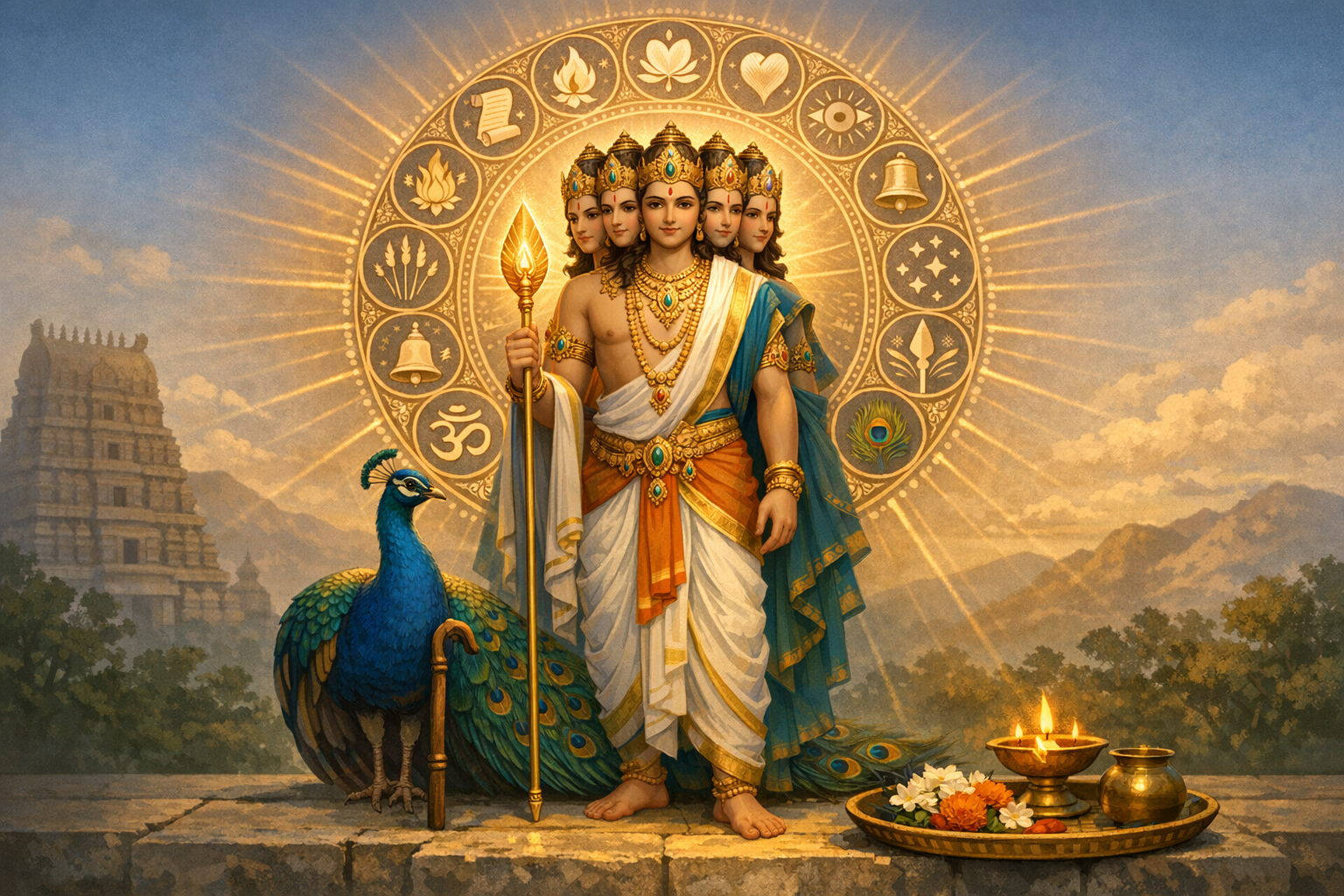
The Shaiva Agamas, including the Kumara Tantra, preserve a profound Shodasha-nama (sixteen-name) sequence for Lord Subrahmanya that unites theology, meditation, and ritual into an accessible daily sadhana. This long-form study explains each nameSubrahmanya, Skanda, Kumara, Guha, Shanmukha, Shadanana, Saravanabhava, Swaminatha, Devasenapati, Kartikeya, Vishakha, Velayudha, Tarakari, Mayuravahana, Dandayudhapani, and Guruguhashowing how they encode wisdom, courage, and…
-
Aadi Krithigai 2026: Sacred Date, Skanda Purana Legend, Muruga Rituals & Aarupadai Veedu Guide
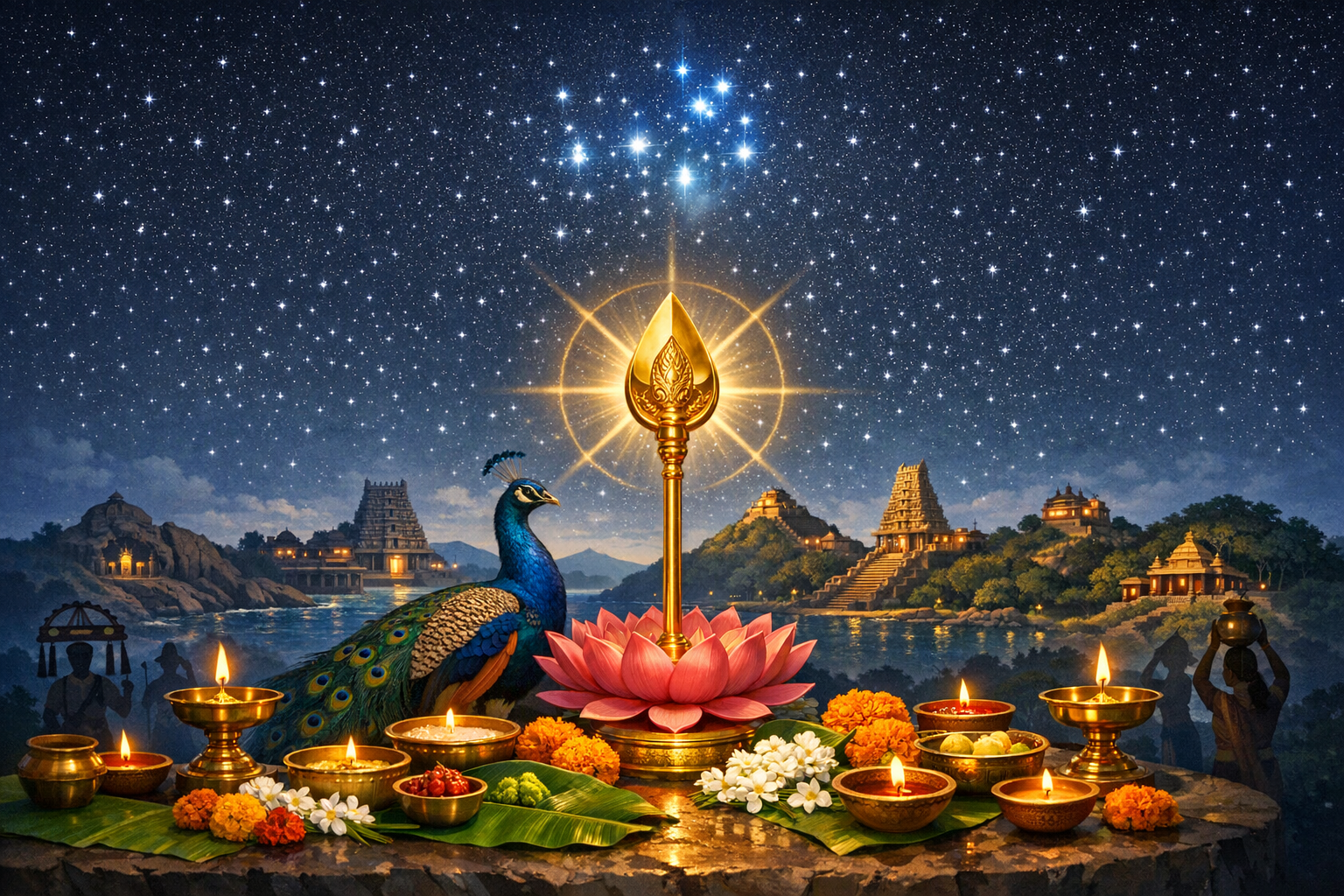
Aadi Krithigai 2026 falls on August 7 and honors Lord Muruga when the Krithigai (Krittika) nakshatra occurs in the Tamil month of Aadi. Rooted in Skanda Purana, the festival commemorates Muruga’s sixfold birth nurtured by the Krittikas and invites devotees to align with the star’s auspicious current. Observances range from temple abhishekam, alankaram with the…
-
Tiruchengode Murugan Temple: Arunagirinathar’s SengottuvelanHistory, Iconography, Pilgrimage
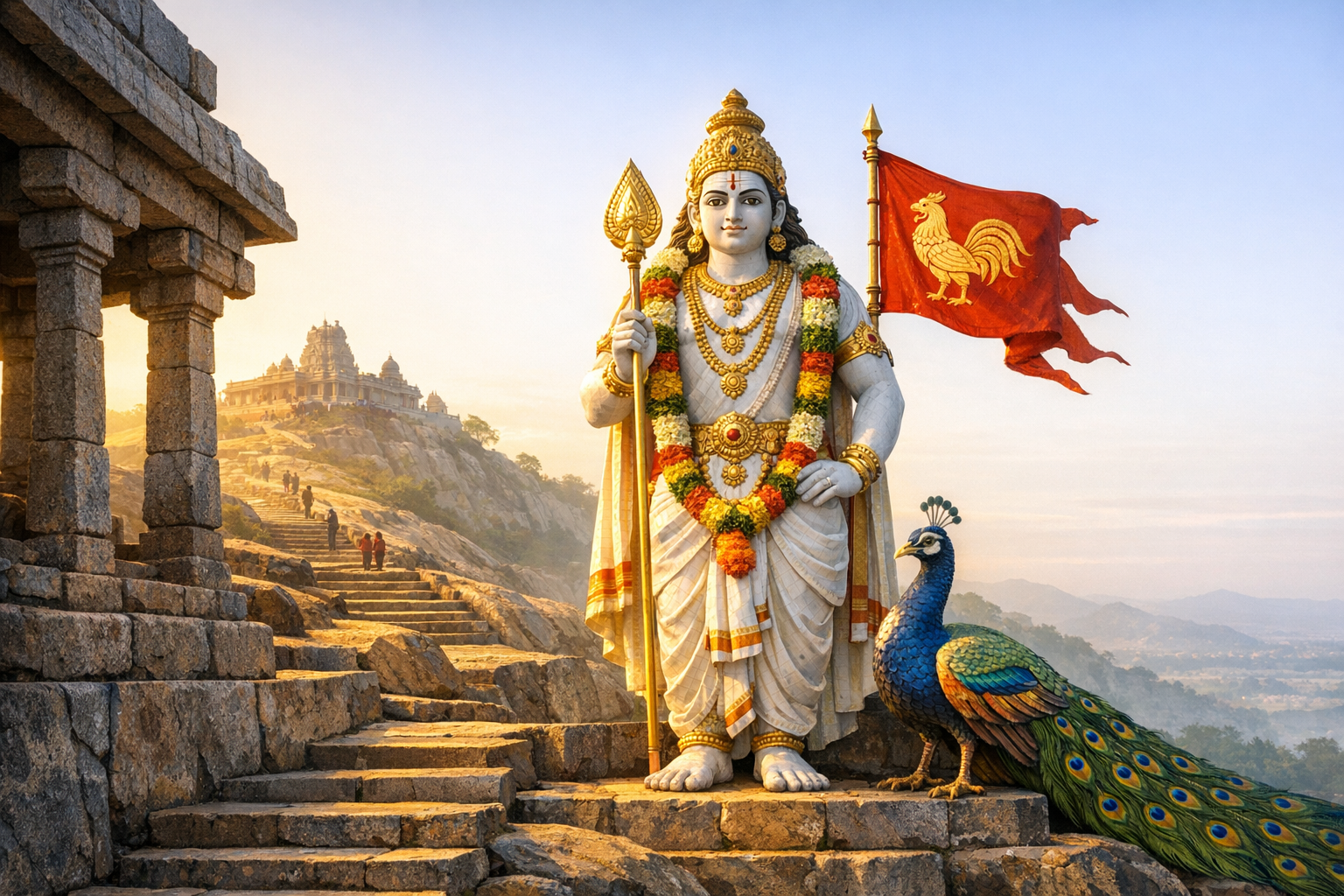
The Tiruchengode Murugan Temple in Tamil Nadu’s Kongu region enshrines a rare, east-facing, white icon of Subrahmanya known as Sengottuvelan. The icon’s Vel and rooster emblem (seval kodi) anchor a powerful visual theology rooted in Skanda Purana and the Tamil Kanda Puranam. Arunagirinathar’s Tiruppugazh situates the hill within a pan‑Tamil Murugan landscape, where poetry, raga,…
-
Vaikasi Visakam 2026: Date, Rituals, Temple Highlights, and Deep Significance
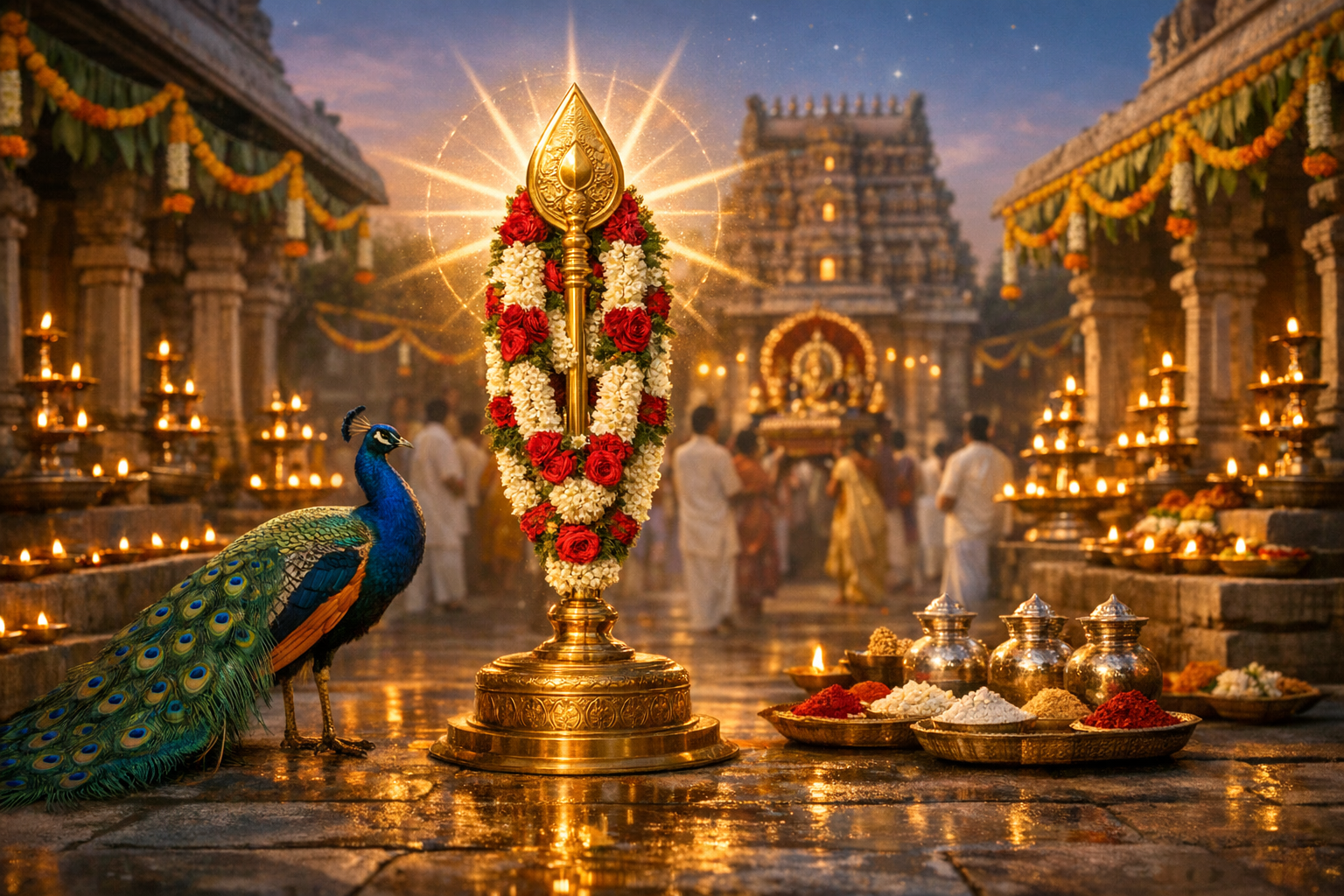
Vaikasi Visakam 2026, the birth-star festival of Lord Muruga (Subramanya, Shanmuga), will be observed on 30 May, when Visakam Nakshatra aligns with the Tamil solar month of Vaikasi. The festival is star-based, not tithi-based, and temples set muhurta locally, often guided by the sunrise rule or the dominant duration of Visakam. This comprehensive guide explains…
-
Why Hindu Gods Ride Animals: Transformative Psychology, Ecology, and Dharma of Vahanas
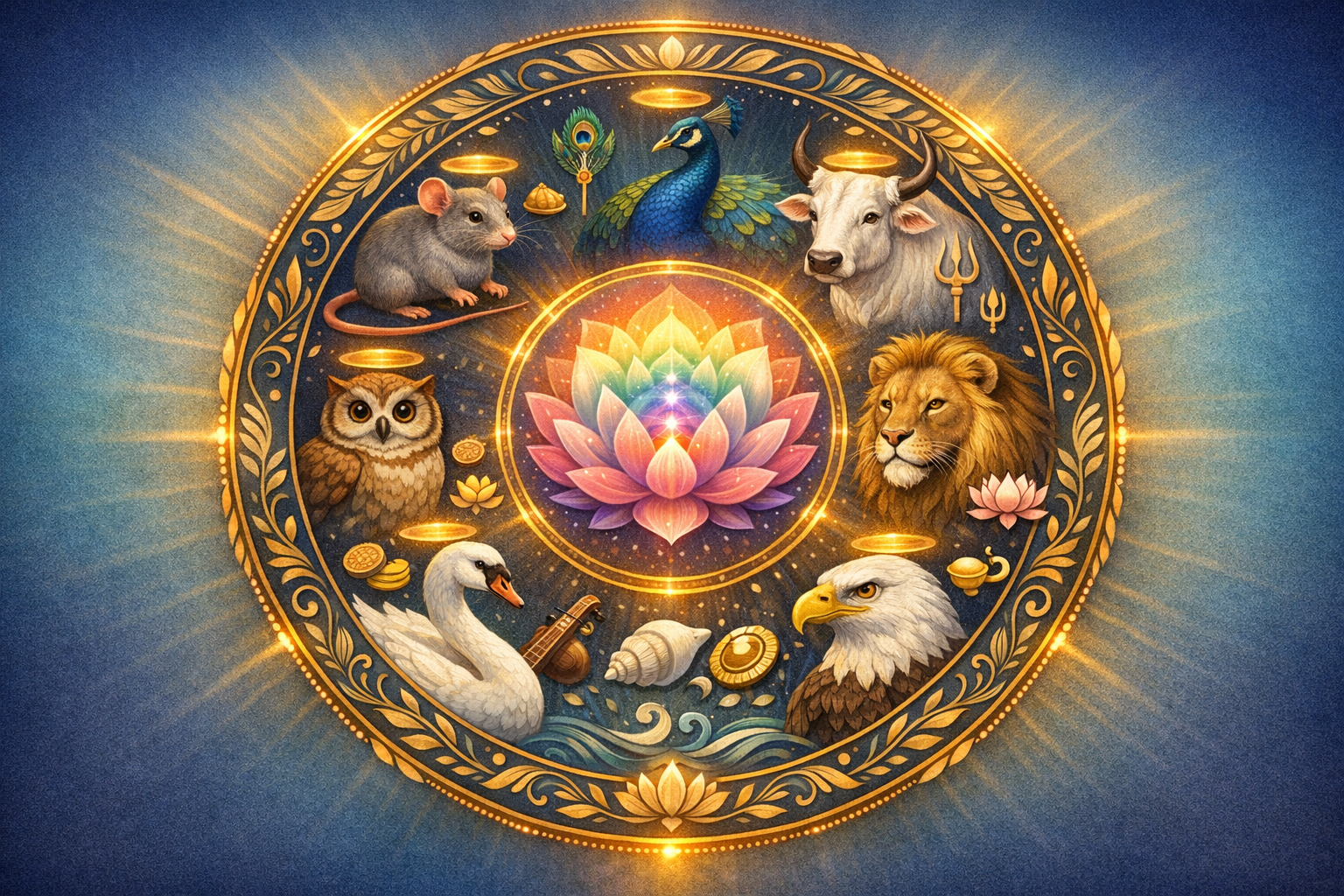
Hindu vahanas are not decorative curiosities but a precise language of symbols that translate spiritual psychology into memorable forms. By placing the deity (awareness) above the animal (energy), each icon teaches mastery of instinct and alignment with dharma. Ganesha’s mouse encodes control over small, easily overlooked habits; Subrahmanya’s peacock signals the sublimation of charisma and…
-
Why Hindu Gods Ride Animals: The Profound Symbolism Behind Ganesha’s Mouse and Skanda’s Peacock

Why do Hindu gods ride animals such as Ganesha’s mouse and Skanda’s peacock? In Hindu iconography, vāhanas are a precise symbolic language codified in Purāṇas, Āgamas, and śilpa-śāstra that maps each deity’s ethical and cosmological function. Animals personify instincts and forces that the deity harmonizes, teaching that spiritual mastery begins with taming subtle habits. Case…
-
Shanmukha’s Six Heads: Mythic Origins, Deep Symbolism, and Dharmic Philosophical Unity

Why does Shanmukha (Kartikeya) have six heads? This in-depth exploration traces the six-faced form across Purana narratives, Agamic iconography, and philosophical interpretations. It explains how the motif honors the six Krittikas, maps the six directions, and invites a mature reading through the Shad Darshanas. Psychological and yogic lenses show how the image addresses the six…
-
Why Karthikeya Has Six Heads: Puranic Origins, Iconographic Meaning, and Dharmic Unity
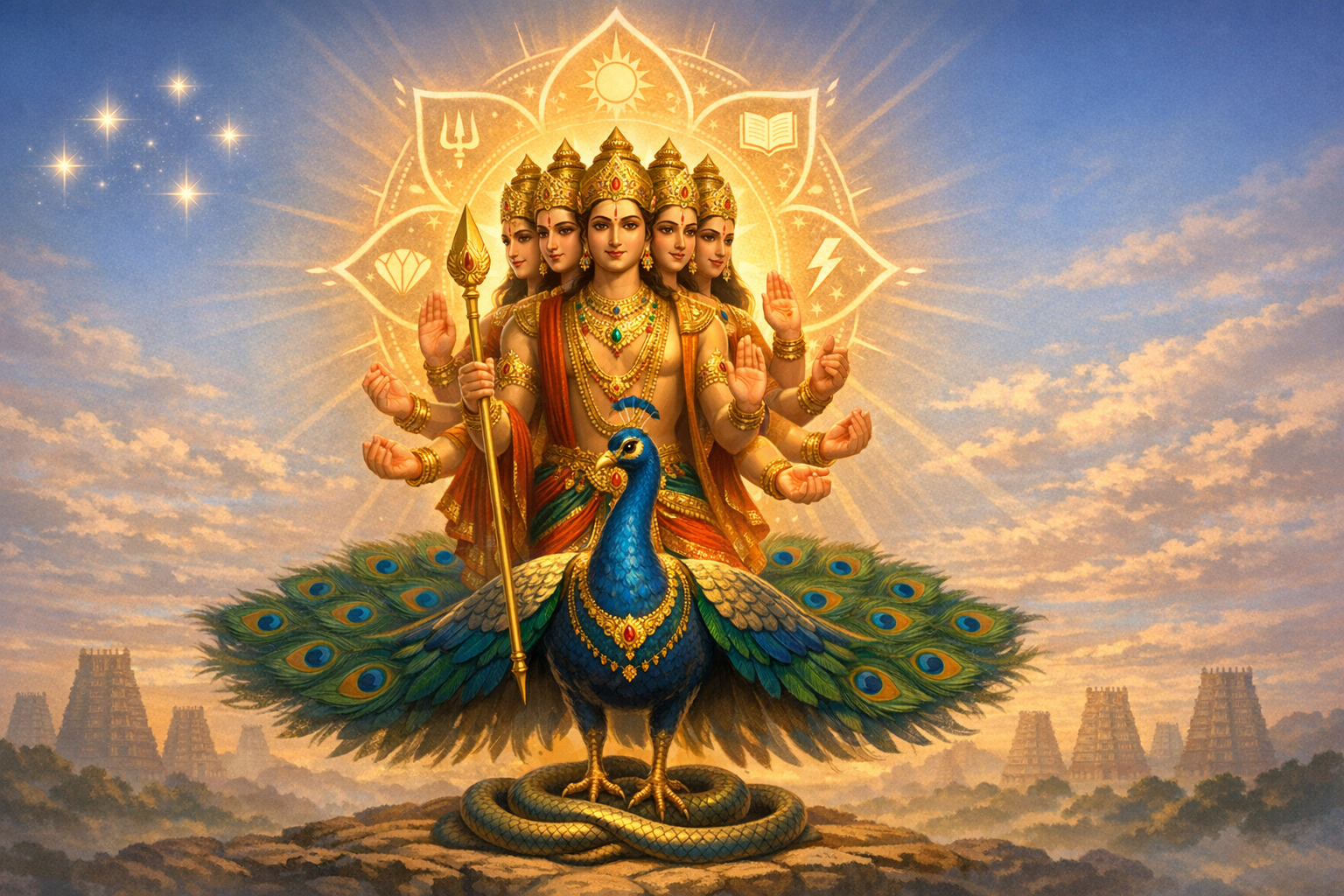
Karthikeya’s six headsShanmukhaare not an artistic flourish but a layered pedagogy rooted in scripture, philosophy, yoga, and living festival practice. Puranic narratives explain the six-faced form through the Krittikas and Parvati’s embrace, while martial symbolism emphasizes omnidirectional awareness for a divine commander. Liturgical traditions map the six faces to the Saravana-bhava mantra; philosophers read them…
-
Divine Dwarapalakas of Lord Murugan: Sumukha & SudehaVeerabahu’s Fearless Gatekeepers of Dharma

This in-depth exploration examines Sumukha and Sudehathe revered sons of Lord Veerabahuwho serve as the Dwarapalakas (divine gatekeepers) of Lord Murugan. It situates their roles within the wider narrative arcs of the Skanda Purana and Tamil traditions, linking their valor in the Surapadman campaign to their enduring presence at the temple threshold. Readers gain a…
-
Shanmukha Unveiled: The Sacred Six Faces of MuruganNames, Symbolism, and Practice
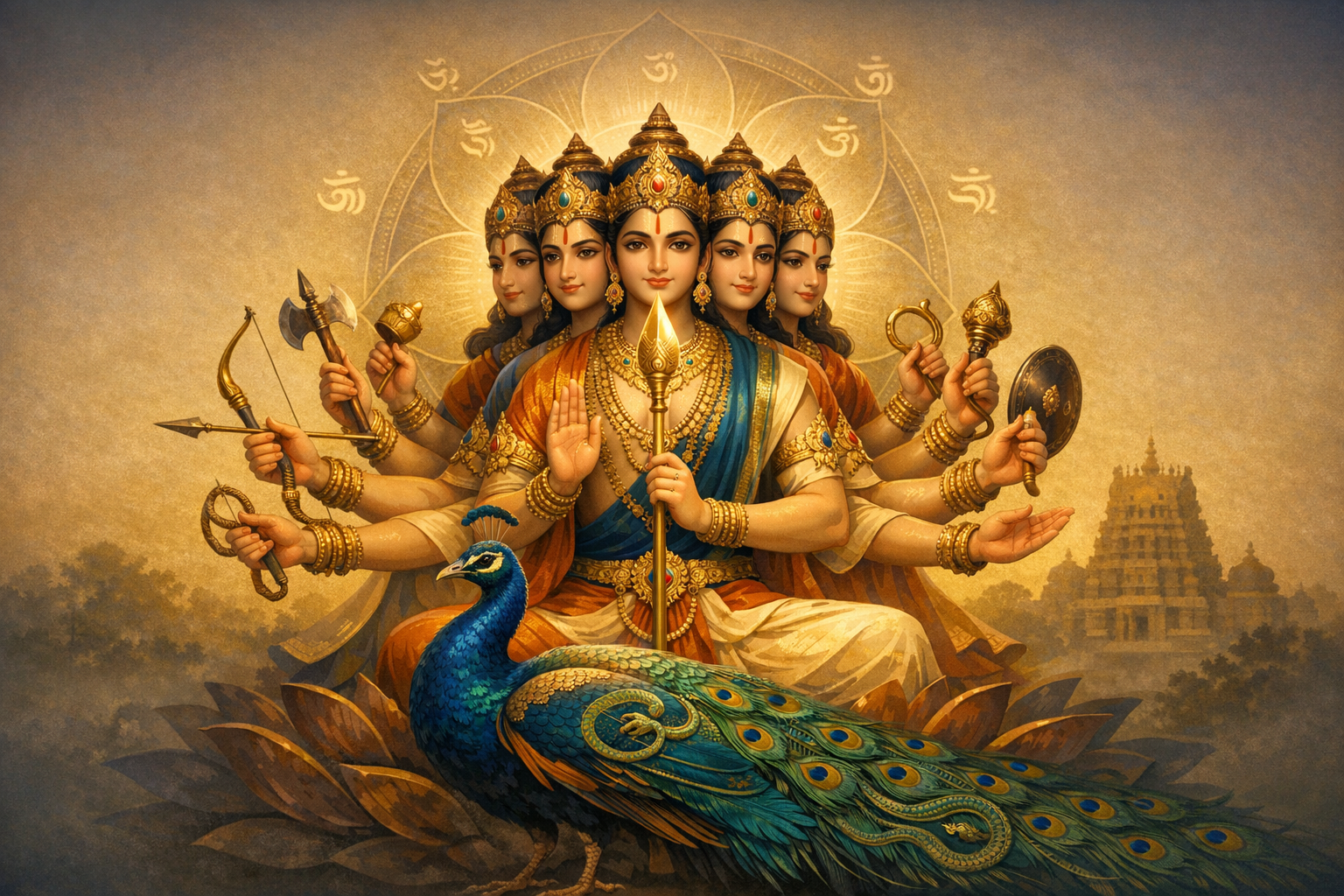
This comprehensive exploration of Shanmukha (Shanmugam) clarifies how traditions name and understand the six sacred faces of Lord Murugan. It presents the most common devotional mappingSkanda, Subrahmanya, Kārtikeya, Kumāra, Guha, and Saravanawhile explaining why no single, universal list prevails across all lineages. Readers learn how the six syllables Sa-Ra-Va-Na-Bha-Va and frameworks like the six directions,…
-
Viralimalai Murugan Temple & Arunagirinathar: Hunter-Lord Legend, Art, Rituals, and Peacocks
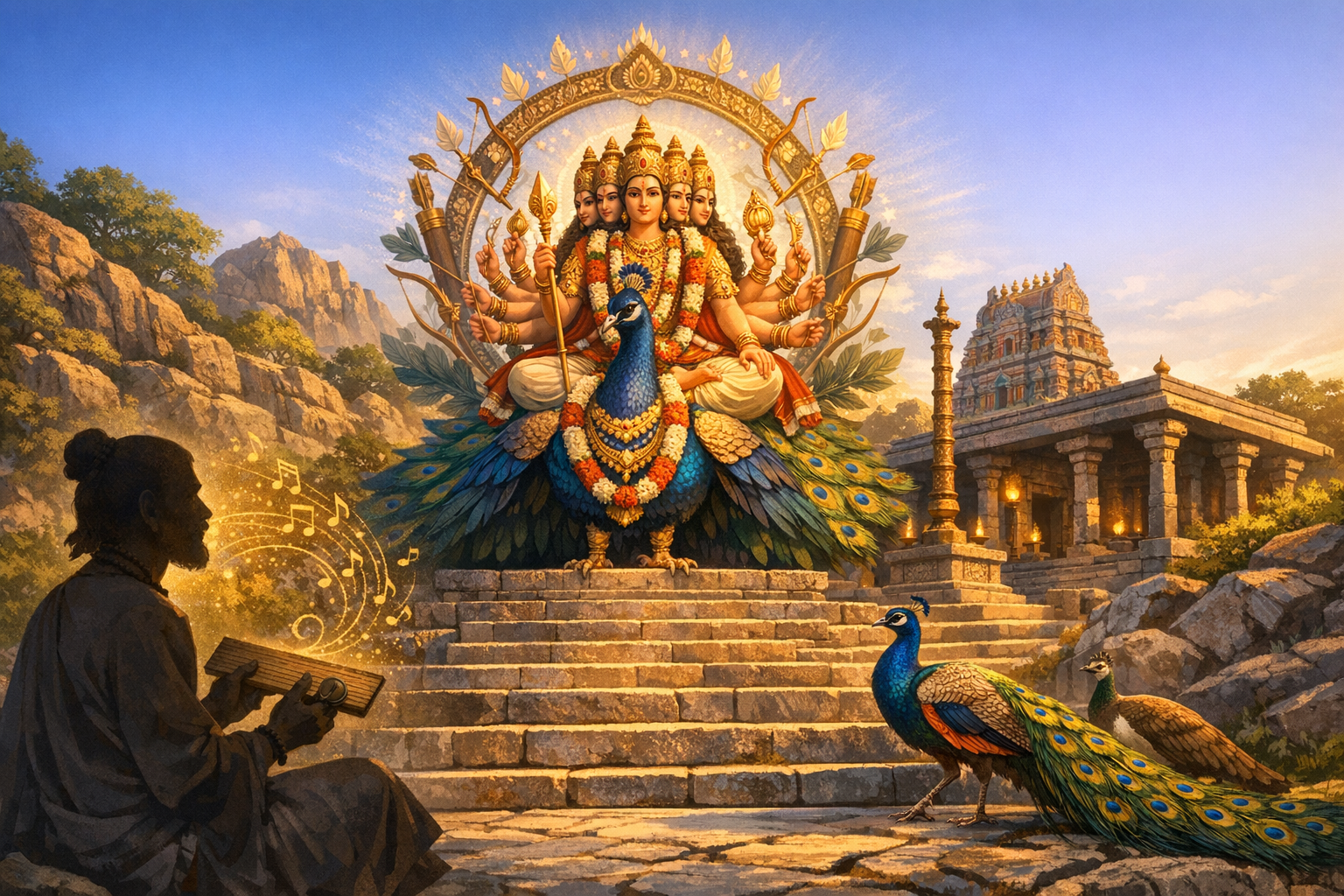
Viralimalai’s Shanmuganathar Temple presents a rare seated-on-peacock icon of Lord Murugan, uniting legend, music, and sacred ecology in a single hilltop experience. The site’s historical layers and South Indian hill-temple architecture encode a living Kaumāra tradition guided by Śaiva āgamas and Śilpa-Śāstra canons. Local memory of “When the Lord became the Hunter” situates Viralimalai within…
-
Kukke Subramanya Sthala Purana: Timeless Serpent-Lord Legends, Ritual Science, and Sacred Landscape

Anchored at the foot of Kumara Parvatha and on the banks of the sacred Kumara Dhara, the Kukke Subramanya Swamy Temple preserves a powerful sthala purana that unites myth, ritual, and landscape. The narrative recounts Subrahmanya’s victory over Tarakasura, his marriage to Devasena, and a lasting covenant of protection extended to Vasuki and the Nagas.…
-
Timeless Sthala Purana of Kukke Subramanya: Legends, Rituals, and Sacred Ecology of Western Ghats

Situated at the foothills of Kumara Parvatha and along the Kumara Dhara, Kukke Subramanya Swamy Temple fuses mythic memory with living ritual. The sthala purana recounts Kumara Swamy’s arrival with Lord Ganapathi to defeat Tarakasura and sanctify the valley through the marriage to Devasena. Core symbolism centers on Subramanya’s guardianship of Vasuki and Shesha, with…
-
Nava Veeras of Muruga: Origins, Iconography, and Living Traditions of Nine Divine Guardians
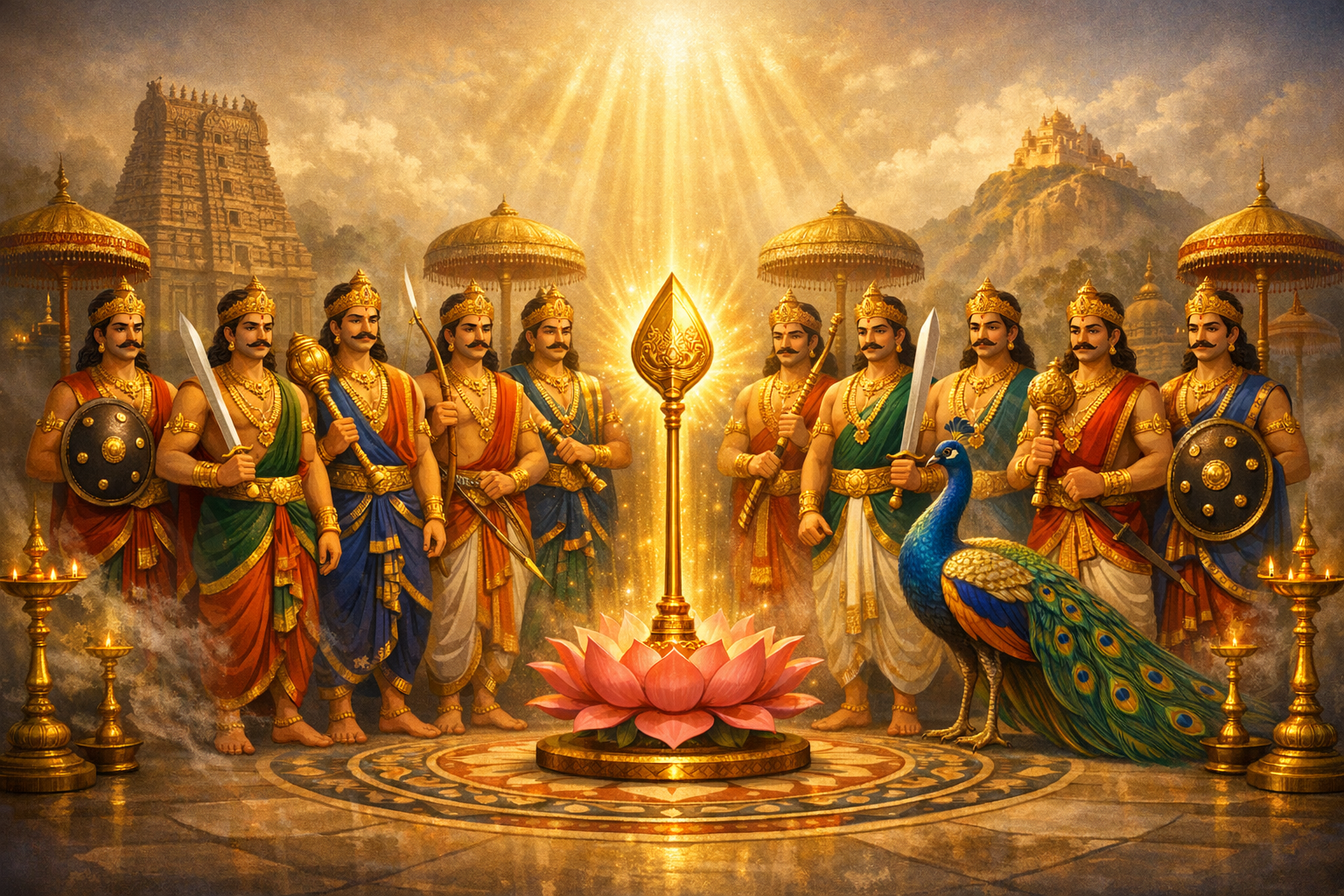
This article explores the Nava Veerasthe nine divine guardians of Lord Murugaas living embodiments of Parvati’s Shakti and exemplars of disciplined courage in service of dharma. It situates their origins within the Skanda Purana/Kanda Puranam tradition, explains their roles in the Soorasamharam cycle, and examines how regional temple practices shape their iconography and worship. Readers…
-
Adi, Madhya & Anthya Subramanya: A Scholarly Pilgrimage Across Karnataka’s Sacred Triad
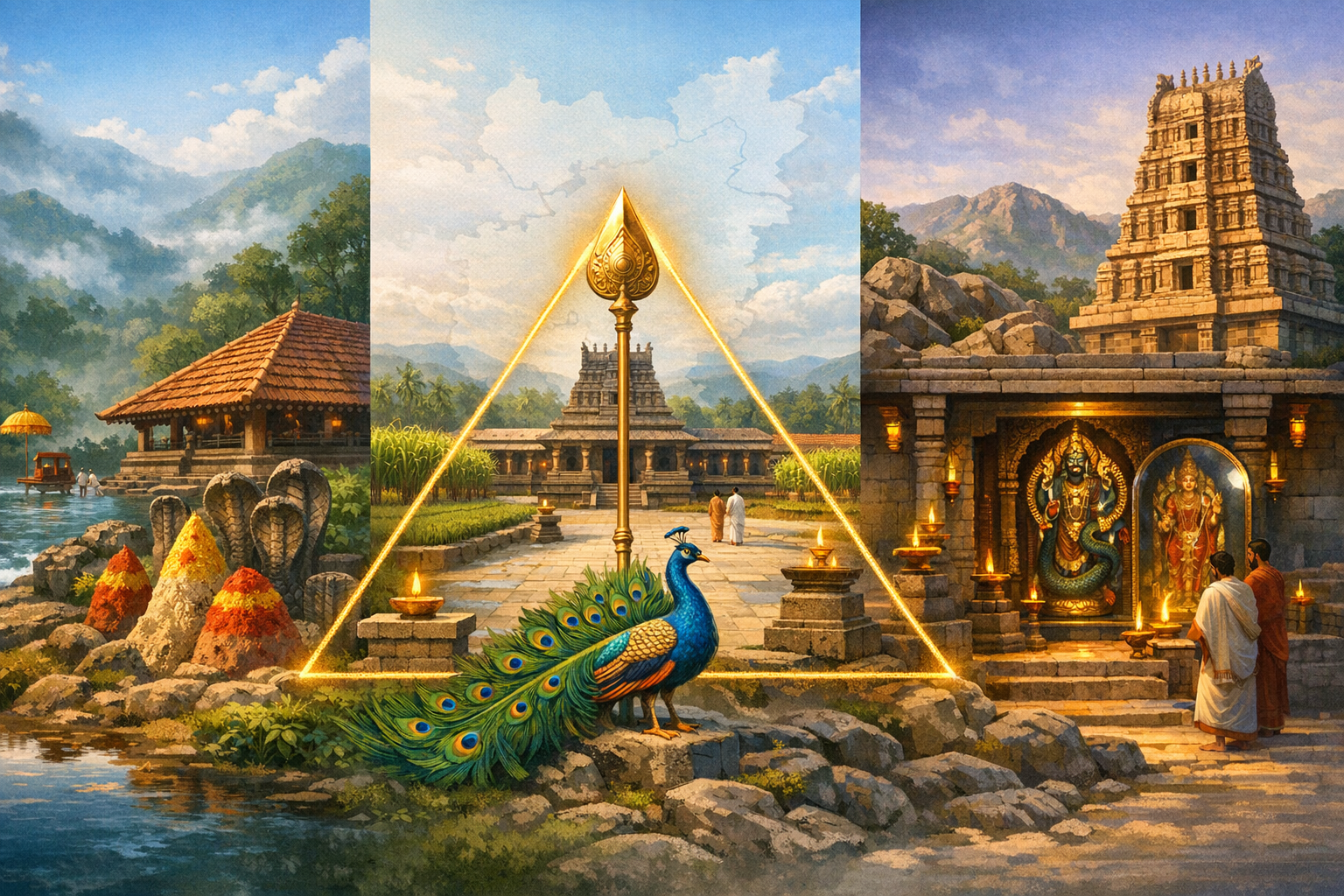
Karnataka’s revered Subramanya triadAdi (Kukke), Madhya (Nagamangala), and Anthya (Ghati)offers a unified pilgrimage that blends sacred geography, living ritual, and regional heritage. This guide maps the three kshetras across Dakshina Kannada, Mandya, and Bengaluru Rural, explaining their theological significance, signature sevas, and festival highlights. It details naga-centric observances at Kukke, the contemplative balance of Nagamangala,…
-
Sacred Splendor at Siddalingapura: Subramanya Shashti Jathra 2026 on the Mysuru–Bengaluru Highway
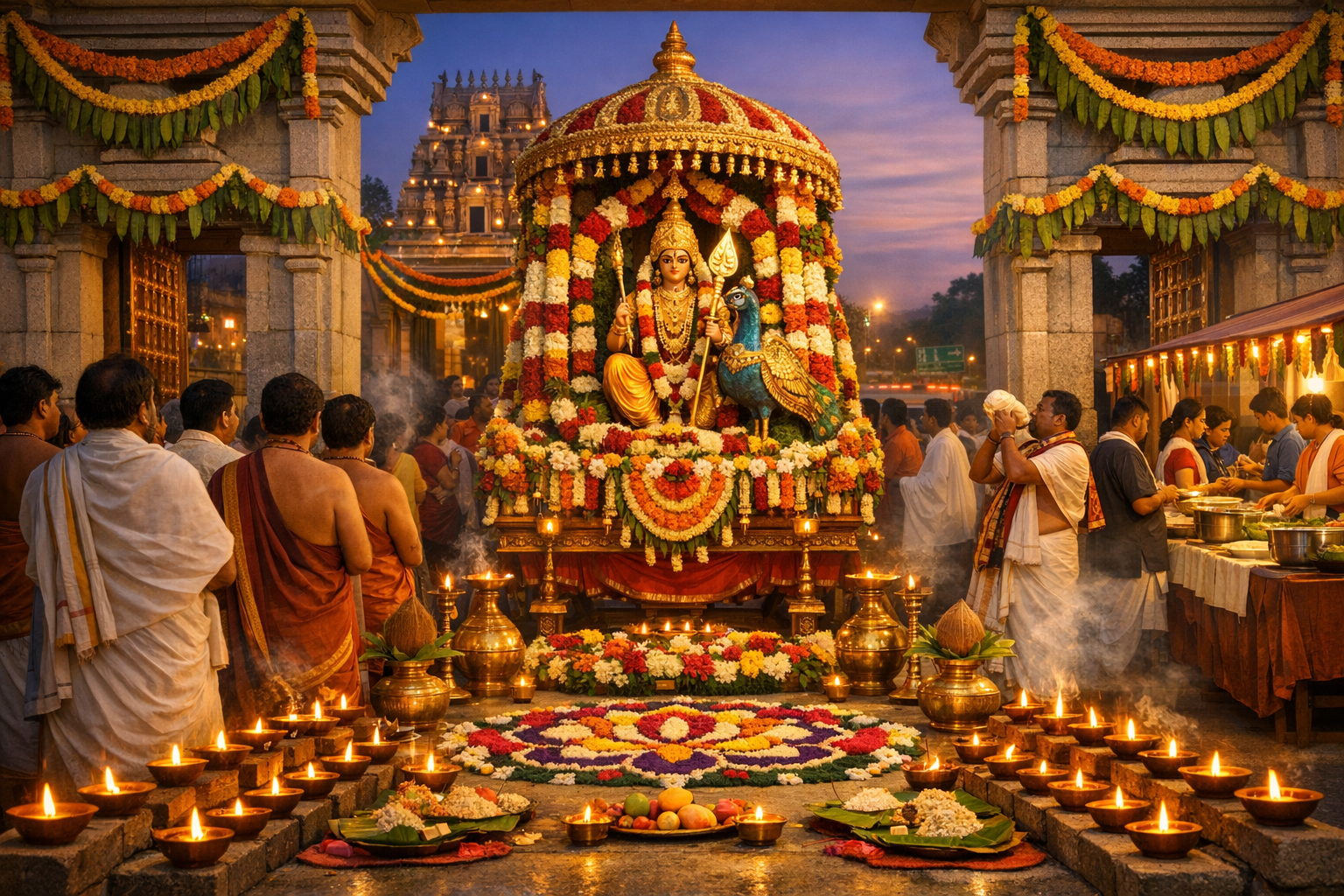
The Subramanya Shashti Jathra 2026 at Sri Subramanyeswara Swamy Temple, Siddalingapura, brought together devotees from Mysuru, Mandya, and Chamarajanagar in a disciplined, high-footfall celebration along the Mysuru–Bengaluru Highway. Held on Margashirsha Shukla Paksha Sashti, the event balanced liturgical rigorabhishekam, alankara, and stotra recitationwith inclusive darshan and efficient prasada distribution. The article explains the calendrical logic…
-
Beyond the Furrow: Peahen’s Egg Legends and Sita’s Birth Symbolism in Folk Ramayanas

Hindu folk Ramayanas preserve Sita’s sanctity through imaginative origin stories that complement the canonical Valmiki account. A striking variant presents Sita as arising from a peahen’s egg, recasting her as andaja while affirming her core identity as ayonija. The peahen symbolizes guardianship, beauty, and monsoon renewal, while the egg evokes the cosmic Hiranyagarbhaboth intensifying the…
-
Indra, Ravana, and the Divine Peacock: A Ramayana Tale of Protection, Boons, and Dharmic Unity

This long-form exploration traces the Ramayana episode in which a peacock aids Indra during his confrontation with Ravana and receives enduring boons that sacralize its radiant, eye-studded plumage. Drawing on the Uttara Kanda and later Purāṇic and regional retellings, it explains how the bird becomes a cross-cultural emblem of guardianship, gratitude, and auspiciousness. The analysis…
-
Beyond the Battle: Lord Muruga’s Compassion, Marriages, and Living Legacy after Surapadman
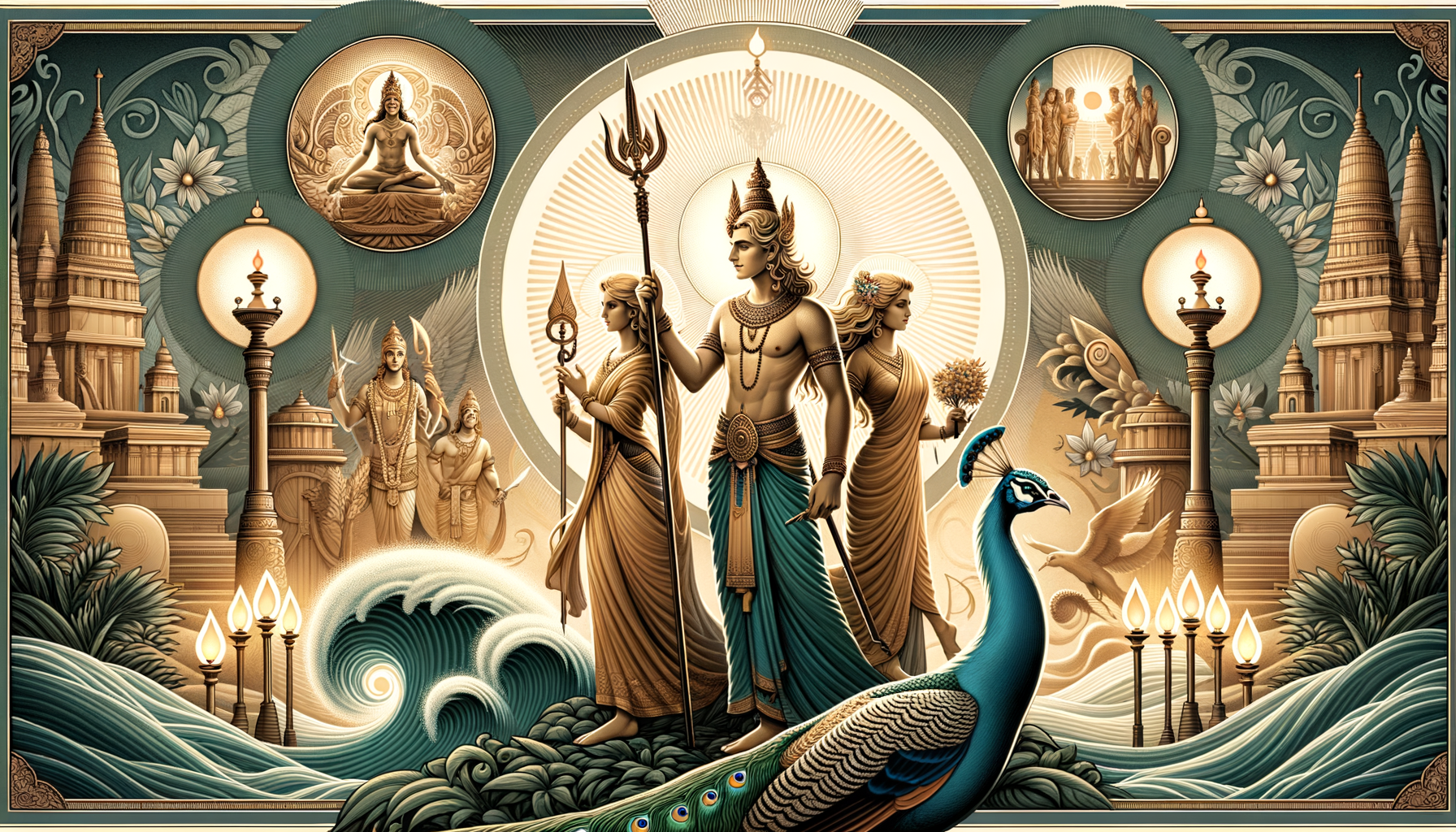
Many accounts of Lord Muruga end with the defeat of Surapadman, but the tradition continues with a profound vision of compassion and unity. The asura’s transformation into the peacock vahana and rooster emblem reframes victory as ethical conversion rather than annihilation. The dual marriages to Ma Valli and Ma Devasena embody harmony between earth-rooted devotion…
-
Thaipusam 2026 at Batu Caves, Malaysia: A Powerful Journey of Devotion and Unity

Thaipusam 2026 will be observed on February 1 at Batu Caves, Kuala Lumpur, aligning with Pournami and the Poosam star in the Tamil month of Thai. The festival honours Lord Muruga through vows, Kavadi, and milk offerings as devotees ascend 272 steps to the cave temple. Visitors witness one of the world’s largest Thai Pusam…