-
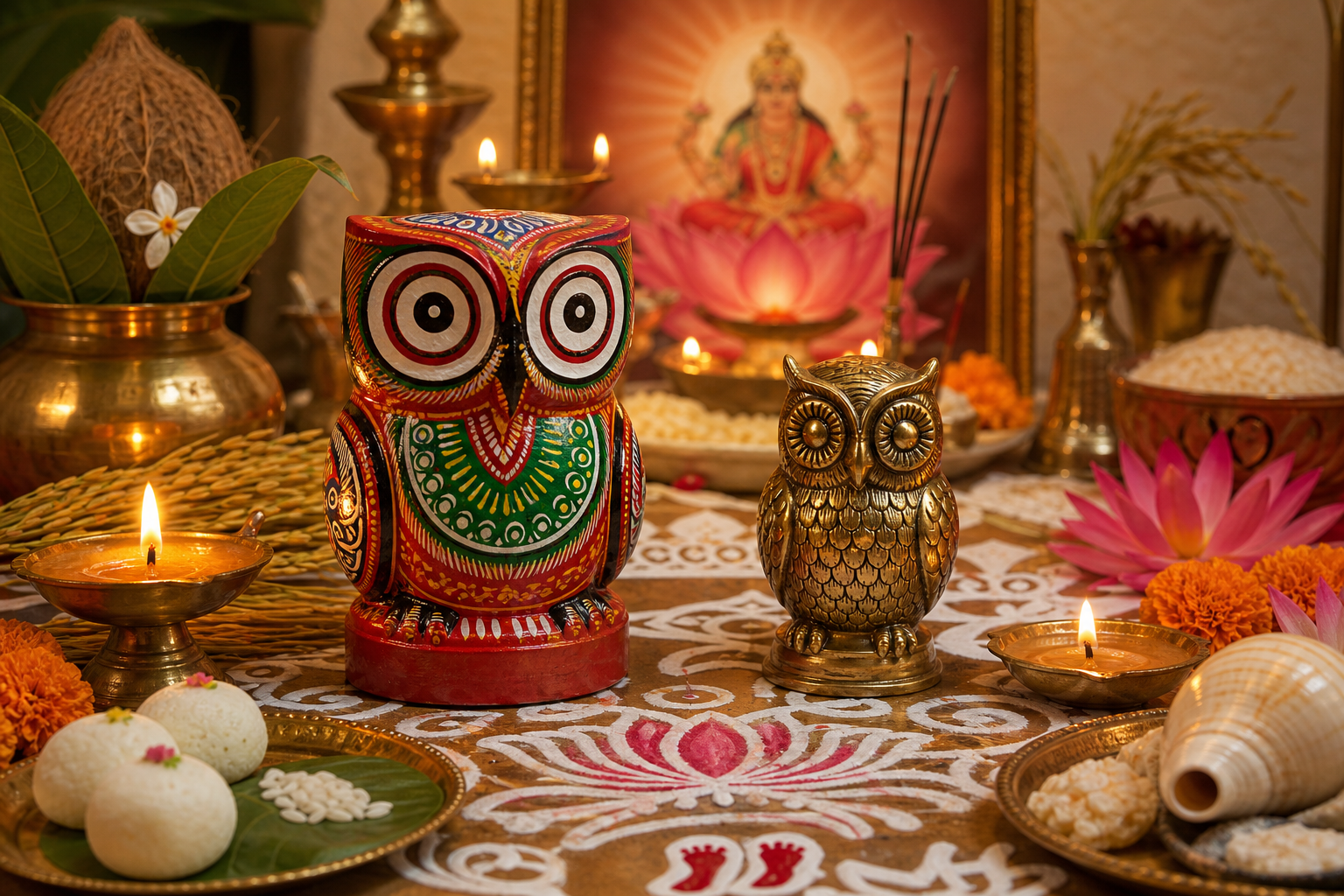
Vermilion Box (Sindoor Dabi): Goddess Lakshmi’s Grace, Prosperity Rituals, and Living Heritage

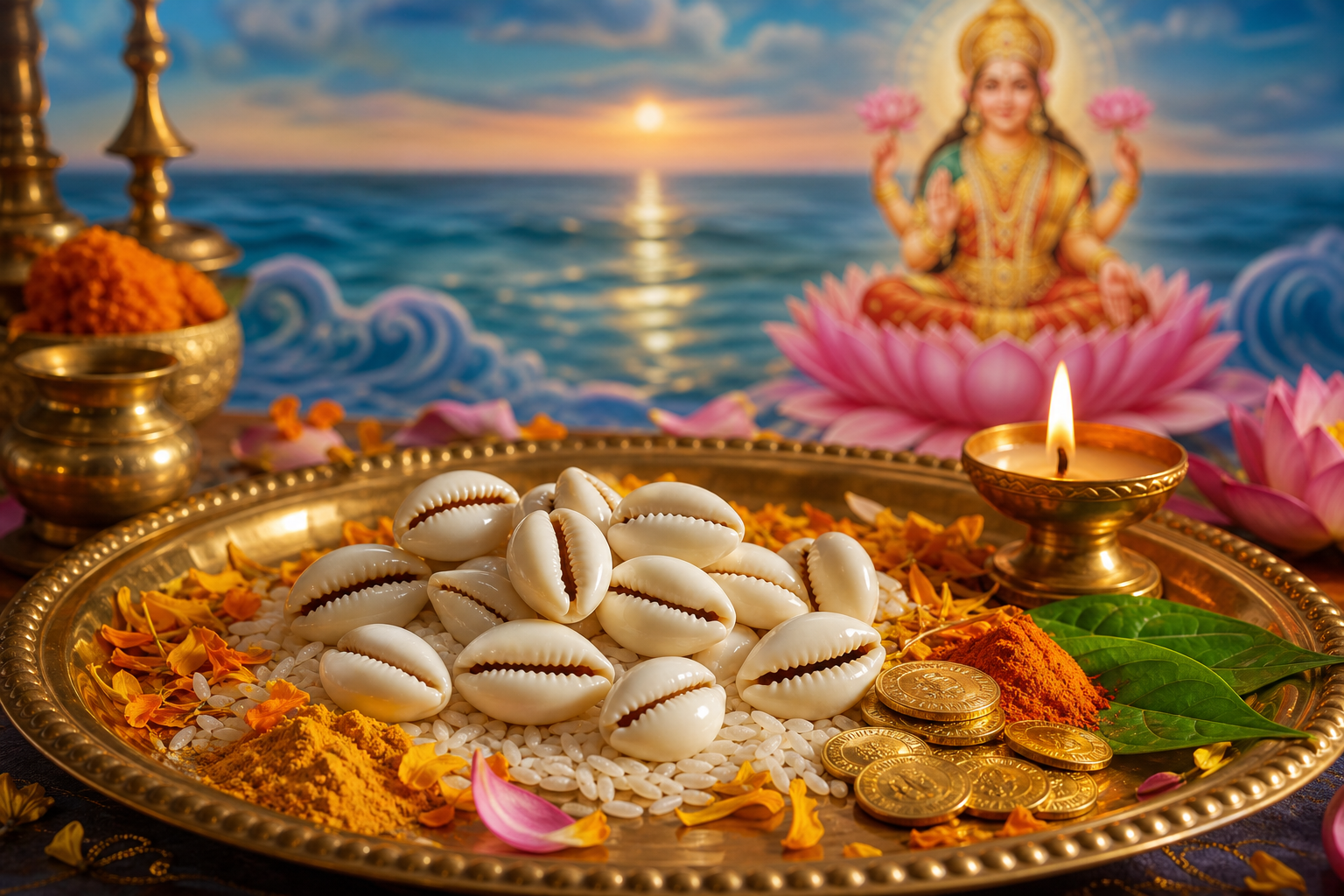
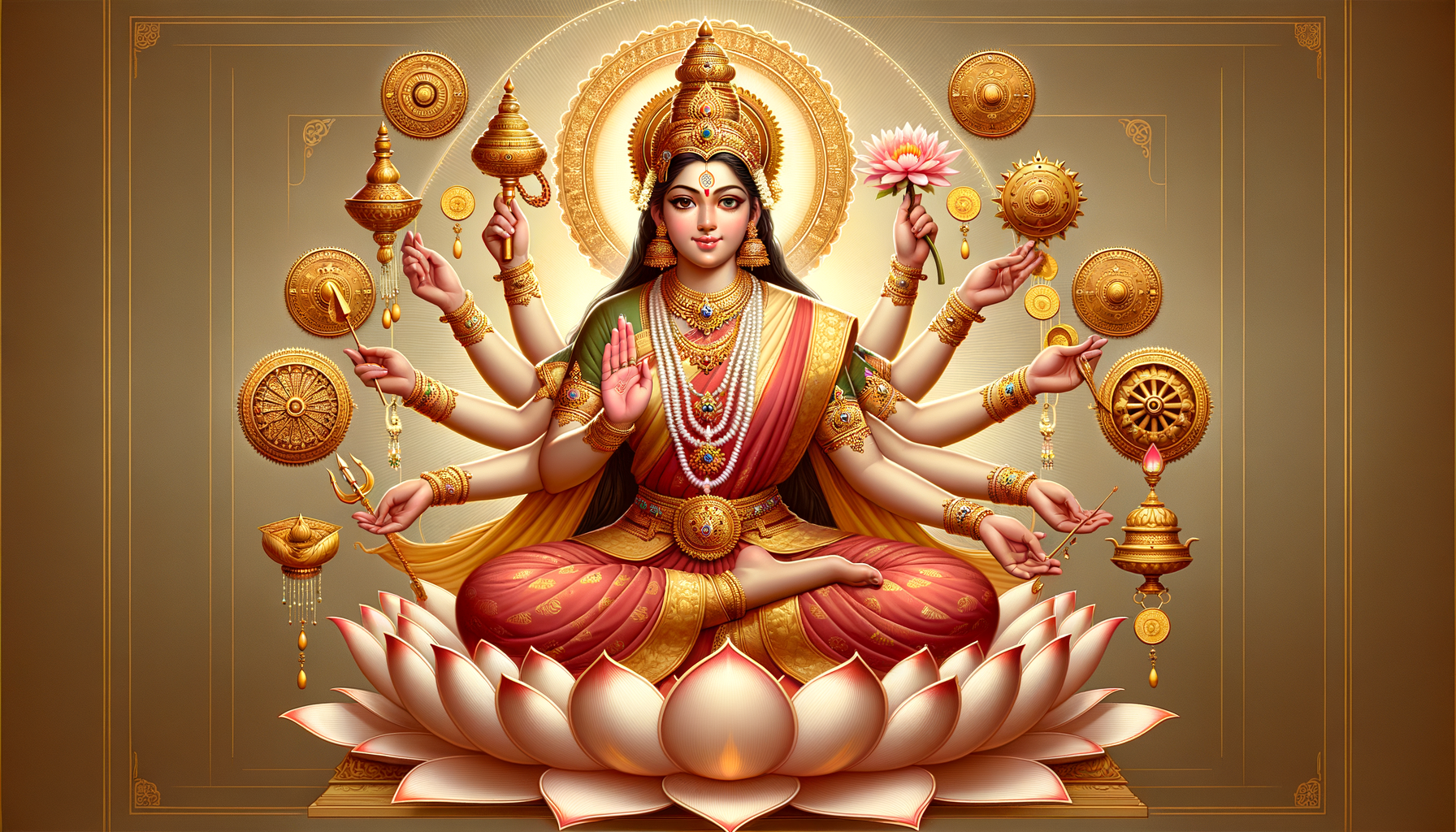
The Vermilion Box (Sindoor Dabi) is a living symbol of Goddess Lakshmi’s grace in Hindu homes, especially in Bengal and eastern India. This long-form exploration traces its ritual role in Panchopachara and Shodashopachara, its association with the sacred feminine, and its regional craft vocabularies. Readers learn how red—through kumkum or sindoor—visualizes ethical prosperity, and how…
-
Why Balarama Wears Blue: Profound Symbolism of Strength, Serenity, and Seva Revealed

Balarama’s fair form and blue garment, described in the Bhagavata tradition, operate as a visual theology encoding strength, serenity, and selfless service. The Sanskrit color terms nīla, śyāma, and pīta clarify the chromatic contrast with Krishna and convey deeper cosmological moods. Vaishnava exegesis links Balarama’s blue attire to his identities as ādi-guru, Ananta Śeṣa, and…
-
The Parashu in Hindu Iconography: A Definitive Guide to Form, Theology, and Dharmic Unity

The parashu (paraśu), or sacred battle axe, condenses Hindu theology of force, restraint, and renewal into a single powerful ayudha. This long-form guide explains how to recognize the parashu in Hindu Sculptures, details its associations with Shiva, Ganesha, Durga, and Parashurama, and situates it within the ethics of Kshatra and dharma-yuddha. It connects scriptural narratives…
-
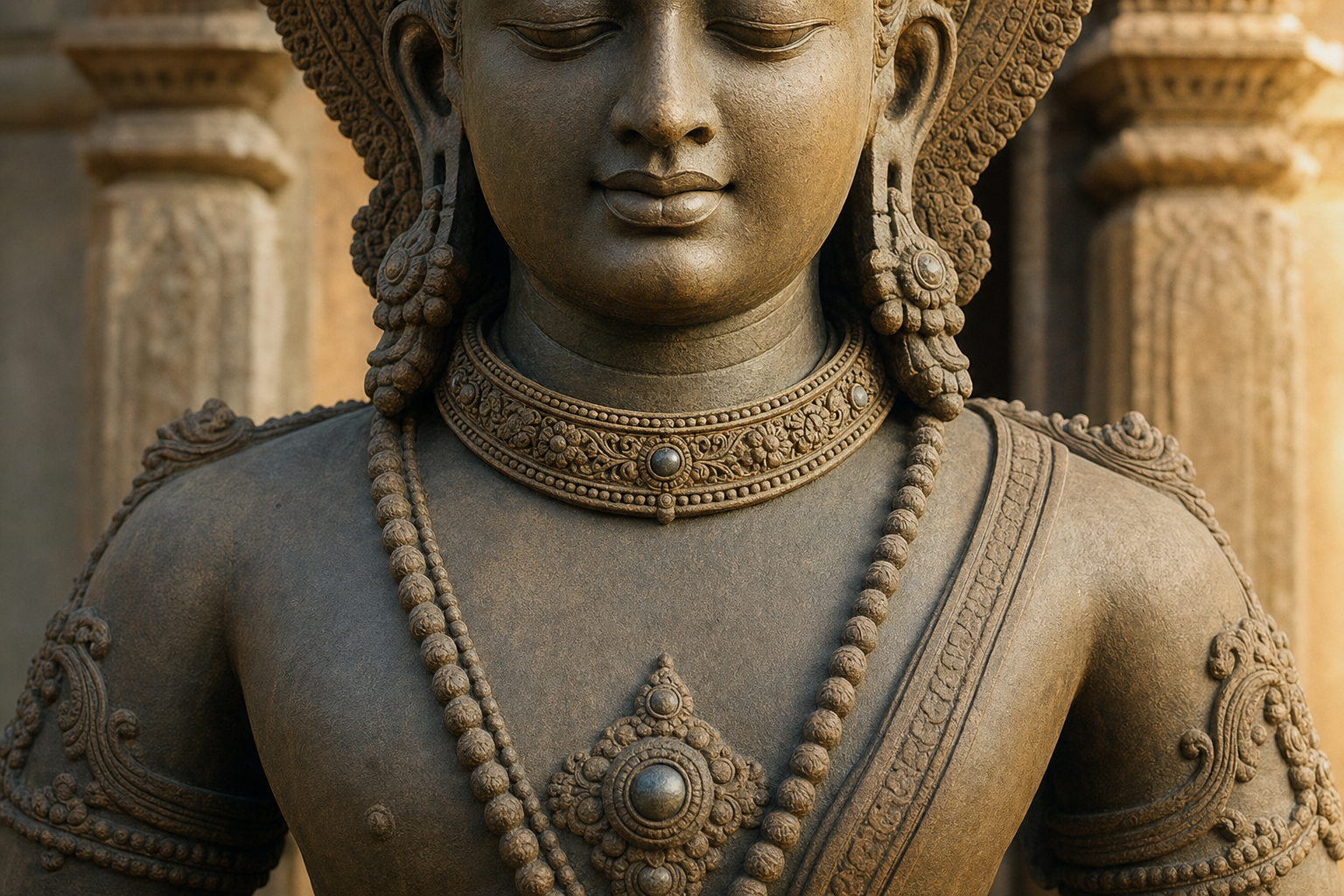
Dama in Hindu Iconography: Unveiling the Sacred Neck Chain of Restraint, Grace, and Power

This article decodes the dama—the sacred neck chain—in Hindu iconography as a short, structured collar that balances longer necklaces while signaling restraint, protection, and grace. It clearly distinguishes dama/graiveyaka from kanthika (choker), muktavali (pearl strings), and hara (long necklace) using the taxonomy preserved in Shilpa Shastras. Readers learn how major treatises (Vishnudharmottara Purana, Shilparatna, Manasara,…
-
Unveiling the Musala of Balarama: Agrarian Power, Sacred Iconography, and Divine Strength

The musala—Balarama’s sacred pestle—embodies agrarian power transformed into protective, ethical strength. This long-form analysis clarifies how its cylindrical form differs from the gadā, why Vaishnava texts hail Balarama as Hala-muṣala-dhara, and how the Mausala Parva frames the musala as a moral instrument entwined with dharma and time. Readers learn practical iconographic cues for identifying the…
-
Shiva’s Damaru: Decoding the Cosmic Rhythm of Creation, Balance, and Transformation

This long-form exploration decodes Shiva’s Damaru as a compact, technical map of creation, balance, and transformation in Hindu philosophy. It explains Nāda-Brahma, the A-U-M schema, and the panchakritya while situating the drum’s meaning within linguistic tradition via the Maheshvara Sutras and Panini’s grammar. Readers gain an acoustical and yogic understanding of the instrument, including how…
-
Chudamani: Radiant Crest Jewel of Hindu Deities and the Apex of Sacred Iconography

This article explores the chudamani — the crest jewel at the summit of a deity’s crown — as the apex of Hindu iconography and meaning. Readers learn the term’s etymology and literary memory in the Ramayana, its precise placement on mukuta types, and its codification in Shilpa Shastra and Agamic texts. The discussion unpacks symbolism…
-
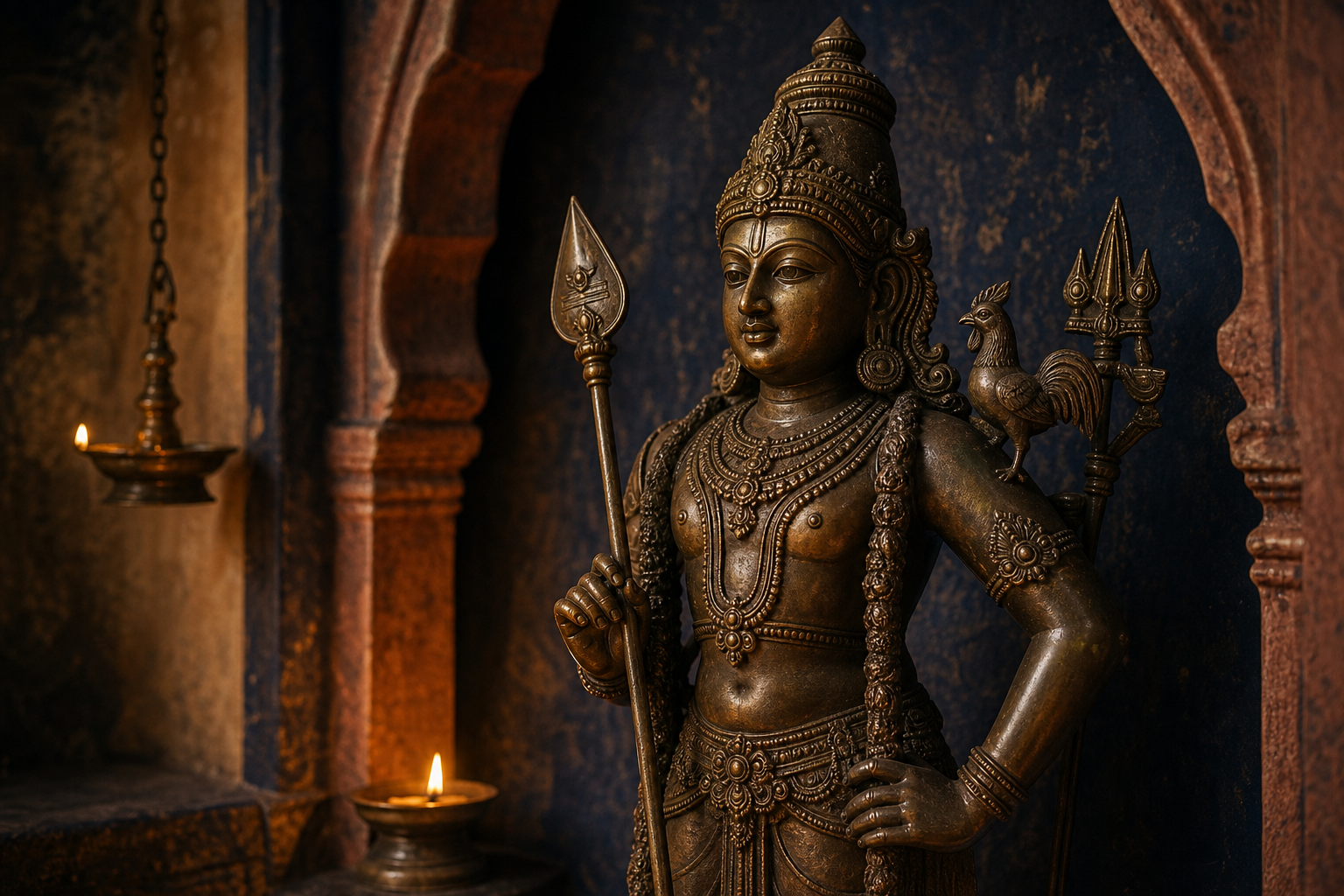
Why Hindu Gods Ride Animals: The Profound Symbolism Behind Ganesha’s Mouse and Skanda’s Peacock

Why do Hindu gods ride animals such as Ganesha’s mouse and Skanda’s peacock? In Hindu iconography, vāhanas are a precise symbolic language codified in Purāṇas, Āgamas, and śilpa-śāstra that maps each deity’s ethical and cosmological function. Animals personify instincts and forces that the deity harmonizes, teaching that spiritual mastery begins with taming subtle habits. Case…
-
At the Goddess’s Gate: Manidwipa’s Iron Enclosure and the Discipline of Sacred Choice

The Devi Bhagavatam describes Manidwipa’s Chintamani Griha encircled by progressively subtler enclosures. This essay examines the outermost Iron Enclosure (loha-prakara) as a Hindu symbol of sacred choice and disciplined detachment. It shows how the first threshold functions ethically (yamas–niyamas), psychologically (pratyahara and boundary hygiene), and ritually (temple prakara as didactic space). Readers learn to map…
-
Kasha (Pratoda) in Hindu Iconography: Unveiling the Sacred Whip of Discipline and Divine Order

This study explores Kasha/Pratoda—the sacred whip—in Hindu iconography as a secondary ayudha that signifies authority, discipline, and dharmic order. It clarifies how Pratoda differs from aṅkuśa, pāśa, and daṇḍa while sharing their ethical vocabulary of guidance and restraint. Drawing on shilpa-śāstra principles, it explains why the whip appears with charioteers (notably at Konark), guardians, and…
-
Bahuka Armlets in Hindu Iconography: Decoding a Powerful Symbol of Divine Martial Strength

Bahuka is the cylindrical upper arm cuff seen in Hindu temple sculpture, distinct from the circular bahuvalaya and the tied bahubandha. Its compact mass and unbroken profile convey divine strength, martial virtue, and disciplined grace across Shaiva, Shakta, and Vaishnava imagery. Recognizing bahuka in the field refines visual literacy, helping viewers read gestures, moods, and…
-
Shoola vs Trishul: Decoding Sacred Weapons, Iconography, and the Timeless Power of Dharma

Shoola (single-pointed spear) and Trishul (three-pronged trident) are often confused, yet they carry distinct forms and meanings in Hindu iconography. This article clarifies how a spear encodes one-pointed discernment while a trident integrates triadic powers—iccha, jnana, kriya; the gunas; and the three dimensions of time. Readers learn to identify each implement swiftly at temples and…
-
Sacred Shields of Dharma: 7 Hindu Protection Symbols to Conquer Bhaya and Adversity

Anxiety, understood in Hindu thought as bhaya, can be transformed through symbols that encode ethics, cosmology, and contemplative method. This long-form guide examines seven Hindu protection symbols—Abhaya Mudra, Trishula, Sudarshana Chakra, Narasimha, Hanuman’s Gada, the Svastika, and Tilaka/Tripundra/Urdhvapundra—tracing their scriptural grounding, iconographic form, and practical application. Each symbol functions as a performative technology of calm,…
-
Nilotpala, the Blue Lotus: Sacred Symbolism and Iconographic Keys Across Dharmic Traditions

This long-form guide decodes the nīlotpala (blue lotus/blue waterlily) as a distinct iconographic attribute across Hindu, Buddhist, and Jain art. It explains how the half-open, slender-petaled bud differs from the full-bloom padma and why that distinction matters in sculpture, painting, ritual, and poetry. Readers learn the botanical correlates (Nymphaea nouchali versus Nelumbo nucifera) and the…
-
Lenskart revises style guide: Bindi, Sindoor, Tilak, Kalwa affirmed for inclusive workplaces

Lenskart has reportedly revised its style guide to explicitly permit Bindi, Sindoor, Tilak, and Kalwa, offering a practical blueprint for how consumer brands in India can respect religious expression without compromising safety or professionalism. The episode highlights the importance of clarity in corporate dress code and grooming policies to avoid discretionary enforcement at store level.…
-
Bahubandha Unveiled: How the Sacred Tied Armlet Embodies Power in Hindu Temple Sculpture

This comprehensive exploration of the bahubandha—the sacred tied armlet—clarifies how it differs from rigid armlets like the bahuvalaya and keyura in Hindu temple sculpture. Readers gain a clear typology of forms, construction details, and visual cues for identifying tied armlets in stone and bronze across Gupta, Chola, Hoysala, Odisha, and Central Indian traditions. The piece…
-
At the Doorstep of Light: Hindu Lamp Symbolism for Inner Wisdom and Social Harmony

A lamp at the doorstep in Hindu tradition is more than décor; it encodes a philosophy in which inner clarity must become outer care. Light symbolizes knowledge in the Upanishads, while the threshold—being a liminal space—bridges private devotion and social responsibility. Diwali, Yam Deep Daan, Karthika masam, and Karthigai Deepam place lamps at entrances to…
-
Decoding Hanuman’s Saffron and Scarlet: The Timeless Color Science of Devotion and Power

Color in Hindu traditions carries philosophical intent, and Hanuman’s saffron and scarlet encode a complete ethic of devotion and power. Saffron (bhagwa/kesari) signals tapas, renunciation, and sattva illumined by disciplined rajas; scarlet expresses vira-bhava, purposeful courage, and dharmic action. The beloved sindoor narrative explains why many Hanuman murtis are orange-red, while regional iconography shows valid…
-
Serpents, Secrets, and Shakti: Decoding the Hidden Power of Goddess Guhya Kali

This in-depth exploration decodes the symbolism of serpents alongside the esoteric presence of Goddess Guhya Kali in Shakta Tantra. It clarifies the meaning of guhya (secret) as ethical, paced revelation and shows how Kali, as Shakti, cuts through inner knots that obscure clarity. Readers gain a technical overview of kundalini, the nadis (ida, pingala, sushumna),…