In Hindu scriptures, the Rakshasas (rākṣasas) constitute a distinct yet internally diverse class of beings integral to the cosmic order. Far from being a monolithic embodiment of cruelty, they are portrayed with layered personalities, complex genealogies, and roles that range from temple-resisting night-wanderers to steadfast exemplars of dharma. A careful reading of the Puranas, the Ramayana, and the Mahabharata reveals Rakshasas as agents through whom questions of ethics, power, transformation, and spiritual responsibility are dramatized for the reader.
Popular retellings often cast Rakshasas as irredeemably malevolent. However, textual witnesses speak more precisely. The Vedas mention categories such as yātudhāna and rakṣas as ritual adversaries of yajña; the Puranas trace lineages and functions; and the epics show Rakshasas who counsel righteousness, wage just and unjust wars, and even ally with dharmic heroes. Together these sources present a spectrum of dispositions rather than a single moral type.
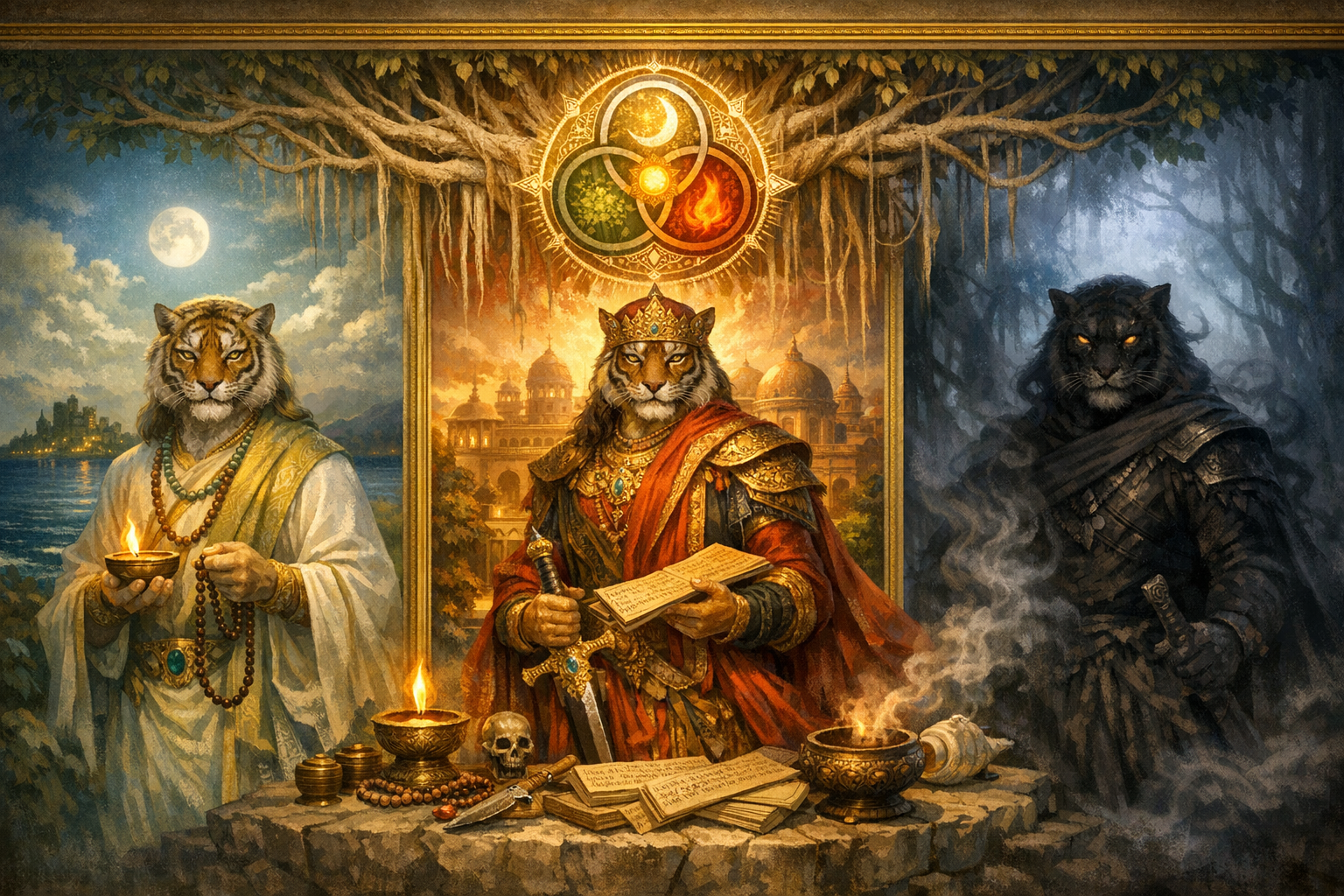
To organize this diversity for clarity and study, a threefold interpretive model aligns Rakshasas with the guṇas recognized in Hindu philosophy and the wider dharmic traditions: (1) sattva-aligned Rakshasas who incline toward truth, restraint, and protection; (2) rajas-aligned Rakshasas who are driven by power, ambition, and worldly accomplishment; and (3) tamas-aligned Rakshasas who exemplify chaos, cruelty, and nihilistic destruction. This is not a single canonical list from any one text; it is a rigorous synthesis that maps consistent patterns across the Ramayana, Mahabharata, and Puranic narratives.
Sattva-aligned Rakshasas are striking precisely because they complicate assumptions. In the Ramayana, Vibhīṣaṇa repeatedly counsels Rāvaṇa to uphold dharma, urging restitution to Sītā and peace with Rāma. His eventual allegiance to Rāma exemplifies scriptural teaching that clarity, humility, and ethical intelligencemarks of sattvacan arise in any jātī of beings. Elsewhere, figures such as Trijatā, who consoles Sītā in Laṅkā, demonstrate compassion, moral discernment, and spiritual courage within a Rakshasa milieu.
Rajas-aligned Rakshasas are defined by kinetic will and grandeur. Rāvaṇa, a learned devotee of Śiva and a master of statecraft, is a paradigmatic case: erudition and tapas co-exist with imperial ambition and unchecked desire. Kumbhakarṇa’s complexityvast strength, deep devotion to kin, and catastrophic misjudgmentfurther illustrates rajas: brilliance and loyalty diverted by pride and intoxication with prowess.
Tamas-aligned Rakshasas manifest violent predation and blindness to consequence. In the Mahābhārata, Baka and Kirmira terrorize local populations, while in the Ramayana, Khara and Dūṣaṇa turn Dandakāraṇya into a theater of wanton aggression. Their narratives teach that cruelty and delusion consume themselves, undermining social order and personal destiny alike.
This tripartite lens resonates with the wider Hindu understanding of character and conduct through sattva, rajas, and tamas. Individuals, communities, and even polities cycle among these qualities; Rakshasa stories externalize that inner moral physics and render it ethically legible. The result is a psychologically exacting literature that instructs readers to discern one’s own guṇic drift and redirect it toward dharma.
Puranic genealogies deepen this picture. Several texts describe Rakshasas as descendants of Kaśyapa and Khasā, alongside the Yakṣas, highlighting an ancestral kinship with other semi-divine beings. The Viṣṇu Purāṇa also tracks the Pulastya–Viśrava line, within which Kaikeyī (Kaikeśī) bears Rāvaṇa, Kumbhakarṇa, Vibhīṣaṇa, and Śūrpaṇakhā. These threads integrate Rakshasas into the same cosmological web as Devas, Asuras, Yakṣas, and Nāgas, emphasizing continuum rather than absolute separation.
Etymology and usage are likewise instructive. While the verbal root rakṣ can denote protection, early Vedic usage also registers rakṣas as a harmful being to be restrained or warded off, a polarity still visible in later ritual and narrative contexts. That ambivalenceprotection and perilframed the ritual need for rakṣoghna (protective) mantras and reinforced the didactic usefulness of Rakshasas as figures who test the steadiness of sacrifice and society.
Attributes commonly ascribed to Rakshasas include shape-shifting (kāmarūpin), mastery of māyā, night-wandering (niśācara) habits, and variable diet ranging from ascetic restraint to cannibal predation. Some episodes stress their susceptibility to mantra and tapas, underscoring that knowledge and disciplined practice can transform even formidable adversaries. The epics leverage these motifs to examine power, perception, and the ethics of force.
Spatially, Rakshasa narratives map moral topographies. Laṅkā under Rāvaṇa becomes a study in rājasic statecraft, prosperity, and decline. Dandakāraṇya and Janasthāna host tamasic predations that provoke Rāma’s intervention. Meanwhile, alliances like that of Bhīma and Hiḍimbā in the Mahābhārata reveal that contact with Rakshasas is not uniformly antagonistic; rather, it can be ethically productive when guided by dharma.
The term “rakṣasa” also appears in social-legal contexts, most notably in the classical categorization of marriage forms where “rākṣasa vivāha” denotes a condemned mode of violent abduction. Here, philology matters: narrative and legal usages share a lexeme but serve different functions. The caution is methodologicallexical overlap should not prompt simplistic moral generalizations across contexts.
Ritual literature preserves the memory of Rakshasas as impediments to sacrifice and order. Brāhmaṇa passages and later Śrauta traditions prescribe rakṣoghna rites and protective recitations to guard yajña from disruptive forces. The persistence of these ritual technologies underscores a wider theological claim central to Hinduism: creation and sacrifice invite resistance, and right knowledge (vidyā) with steadfast practice (abhyāsa) sustains cosmic and social harmony.
Cross-textual comparison further supports the threefold ordering. Sattva in Vibhīṣaṇa manifests as truth-aligned counsel and loyalty to dharma over blood ties. Rajas in Rāvaṇa appears as brilliance yoked to conquest. Tamas in Kirmira and Khara surfaces as joyless appetite and annihilation. Each mode illustrates a distinct ethical failure or attainment and invites readersacross generations and regionsto audit their own impulses with comparable rigor.
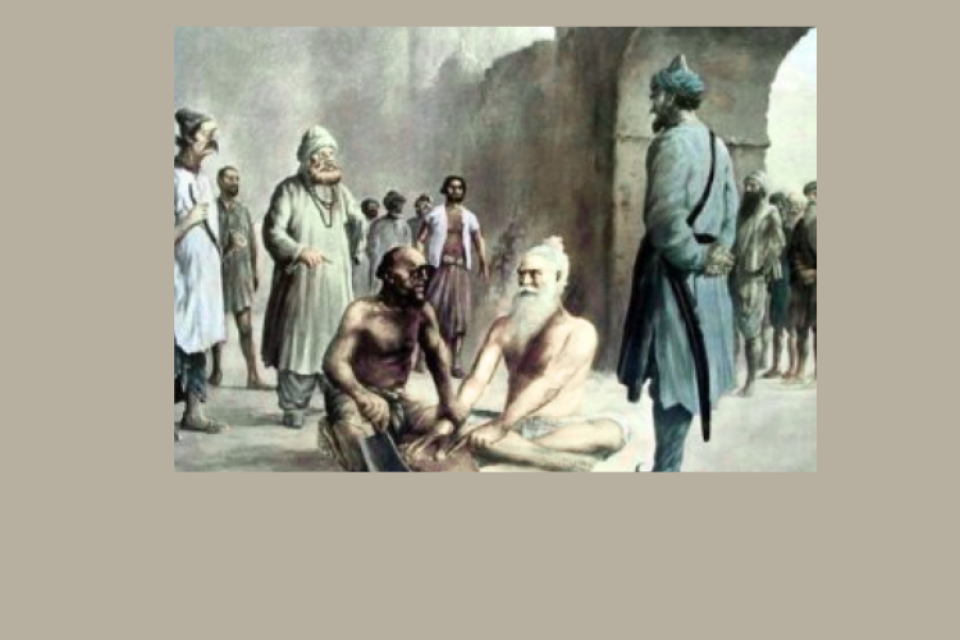
These Rakshasa typologies also resonate across dharmic traditions, strengthening a shared moral vocabulary. In Buddhism, Rakshasas and related beings appear in narrative arcs where wrath and protection are paradoxically joined, culminating in vows to safeguard the Dharma in Mahāyāna sources. In Jain cosmology, Rakshasas are listed among the Vyantara classes, subordinated to spiritual law and subject to karmic reconfiguration. Sikh teachings emphasize overcoming inner enemieslust, anger, greed, attachment, prideoffering a pragmatic discipline for transmuting tamas and rajas into clarity and service. Across Hinduism, Buddhism, Jainism, and Sikhism, the ethical task converges: transform turbulent energies, protect the conditions for truth, and honor the interdependence of all beings.
The Mahābhārata’s Rakshasa episodes are especially rich for dharmic reflection. Bhīma’s marriage to Hiḍimbā produces Ghaṭotkaca, whose valor and sacrificial death decisively alter the war’s trajectory. Here, inter-species kinship becomes a vehicle for dharma, suggesting that moral worth is action-tested rather than birth-fixeda lesson that coheres with the epics’ repeated preference for character over category.
Viewed psychologically, Rakshasas dramatize the kleshas that yoga and allied philosophies diagnoseanger (krodha), greed (lobha), and delusion (moha). The three orders allow readers to see when ambition hardens into domination (rajas), when courage matures into lucid compassion (sattva), and when fear curdles into violence (tamas). Such readings are neither allegory alone nor literalism alone; they are disciplined hermeneutics aligned with the epics’ ethical pedagogy.
For many practitioners, these narratives become personally relatable during festivals and communal recitations. Rāma Navamī kīrtanas elicit admiration for Vibhīṣaṇa’s moral clarity; Rāvaṇa’s tragic arc evokes recognition of ambition’s double edge; the fall of tamasic marauders in forests echoes the everyday challenge of mastering impulse. This intuitive engagement is part of Hinduism’s pedagogical design: memory and emotion integrate with study and contemplation to guide conduct.
Methodologically, pluralism is the rule. Terminologies vary by region and era; the epics and Puranas are multi-stratal texts; and classical commentators emphasize different ethical emphases. Responsible study triangulates episodes, genealogies, and ritual prescriptions to avoid flattening a tradition that revels in nuance. The three orders, used judiciously, serve as a map for exploration rather than a cage for interpretation.
In sum, the Rakshasas of Hindu scriptures are best understood as a spectrum: from sattva-aligned protectors and truth-seekers, through rajas-driven empire builders, to tamas-steeped destroyers. Their stories examine how power can be consecrated or corrupted, how kinship can bind or blind, and how spiritual insight can arise in the most unlikely places. Read alongside parallel insights in Buddhism, Jainism, and Sikhism, these narratives encourage a shared dharmic commitment to conscience, restraint, and compassionate strengthan ethos that speaks to unity without erasing the profound diversity of India’s spiritual heritage.
Inspired by this post on Hindu Blog.