
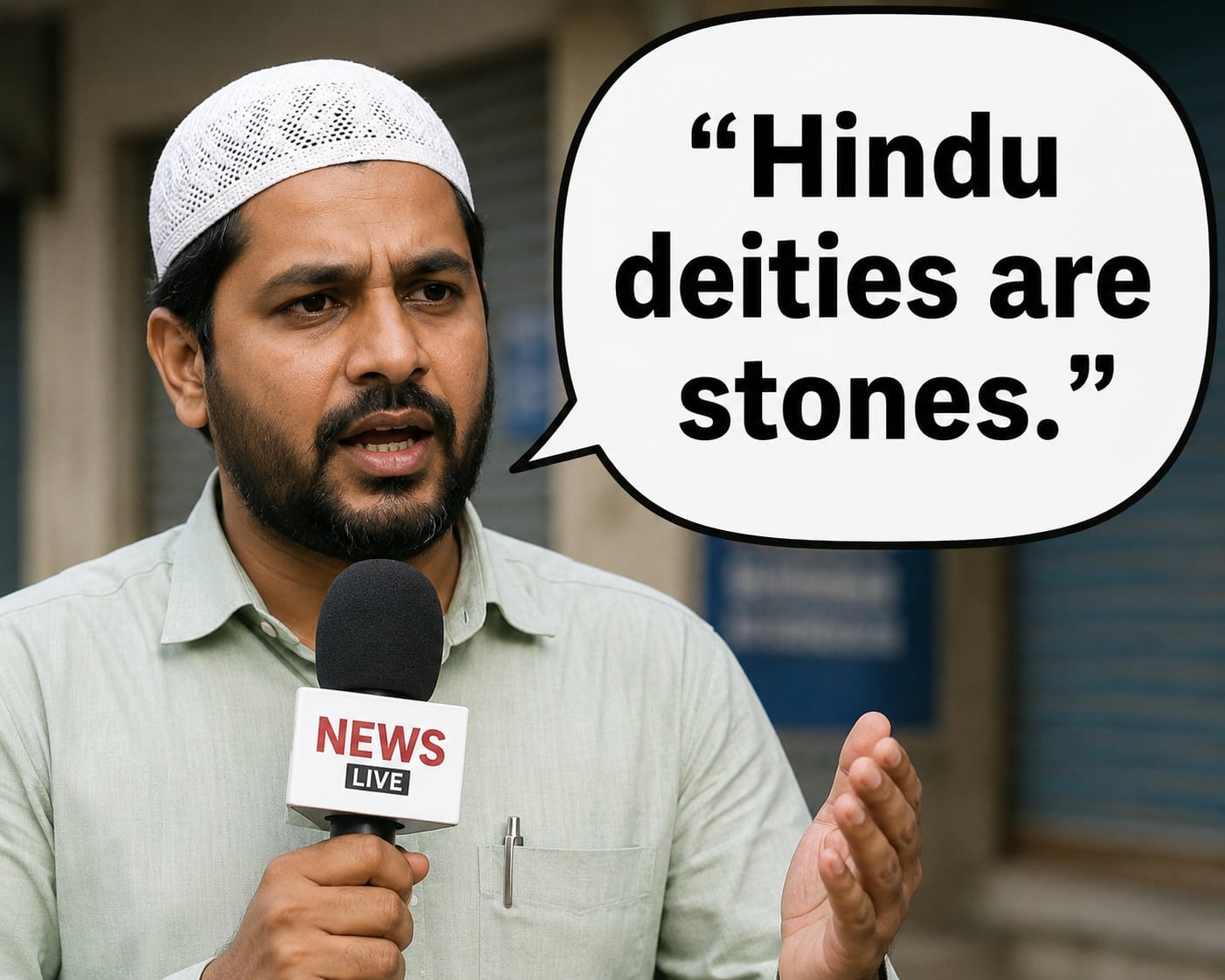
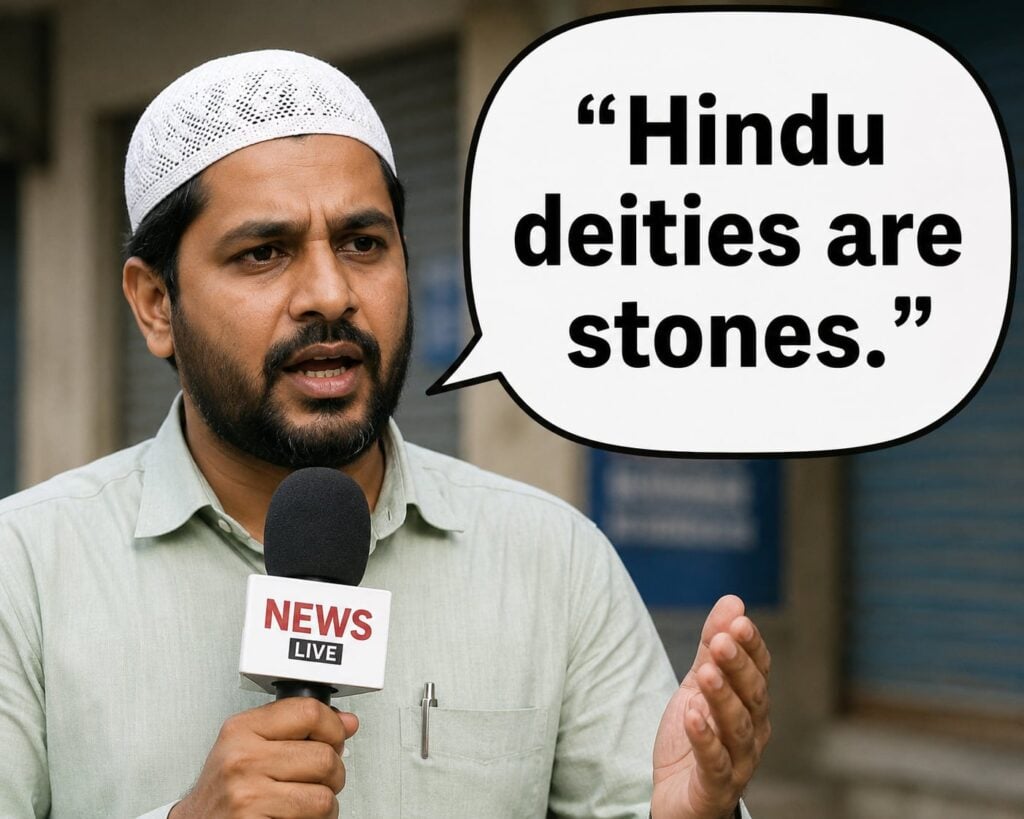
In Jaysingpur, Maharashtra, journalist Hussain Sheikh reportedly issued an apology after members of the Sakal Hindu Samaj objected to remarks described as derogatory toward Hindu Deities. The matter drew public protest and led to a memorandum being submitted to the police, reflecting how quickly questions of religious sentiment, media ethics, and civic accountability can become matters of local public concern.
The available source material is brief, but its implications are significant. At the centre of the episode is not merely one individual apology, but a wider debate about the responsibilities of journalists, commentators, and public communicators when speaking about sacred traditions. Hindu Deities are not abstract cultural symbols for millions of devotees; they are living centres of worship, memory, discipline, and community identity. Remarks perceived as contemptuous toward them can therefore be experienced not as ordinary criticism, but as an injury to shared religious dignity.
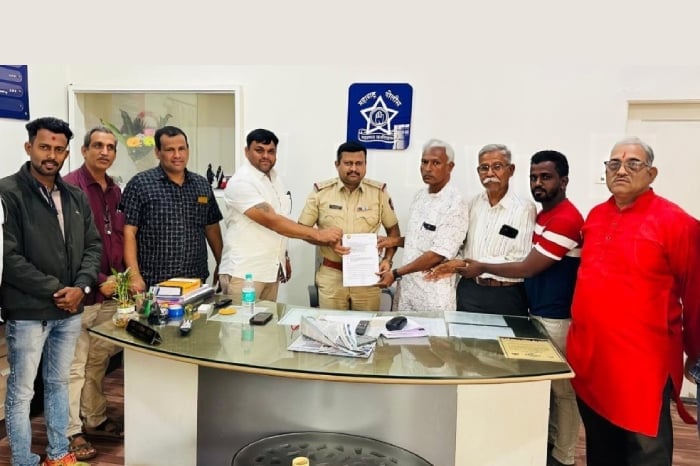
At the same time, a factual and academic reading of the incident requires careful language. The report states that Sheikh apologised after protests and a police memorandum by the Sakal Hindu Samaj. It does not, on the basis of the provided material, establish the full text of the remarks, the precise legal provisions invoked, or the police response after receiving the memorandum. Any responsible account must therefore distinguish between reported public allegations, community reactions, and legally proven findings.
This distinction matters because public discourse in India often takes place at the intersection of constitutional freedoms and social responsibilities. Freedom of expression is a foundational democratic principle, yet it does not operate in a vacuum. In a civil society shaped by deep religious diversity, speech about Hinduism, Buddhism, Jainism, Sikhism, Islam, Christianity, and other traditions carries social consequences. The question is not whether difficult discussions should be avoided; rather, it is whether disagreement can be expressed without contempt for communities and their sacred frameworks.
For many Hindus, the issue of derogatory comments on Hindu Deities is linked to a broader concern about selective irreverence in public culture. Devotees often feel that Hindu symbols, rituals, and sacred narratives are treated casually in media spaces where other religious identities may receive more cautious handling. Whether or not every such perception is accepted by all observers, it is a real sentiment within sections of Hindu society and should be examined seriously rather than dismissed reflexively.
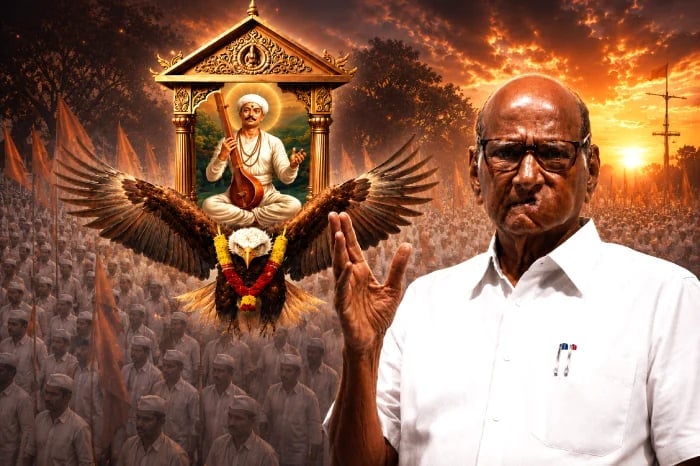
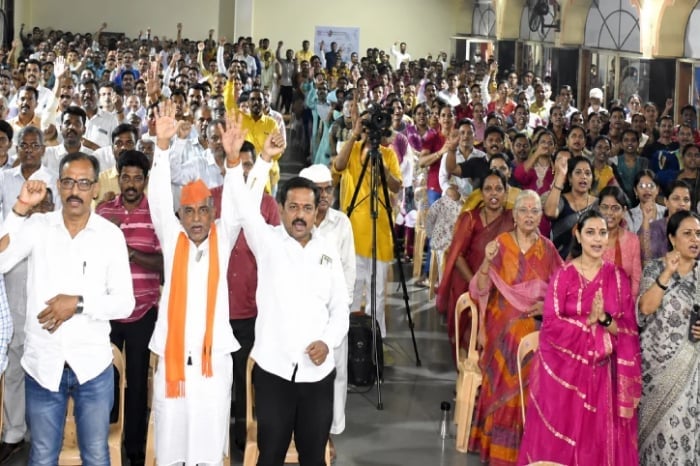
The Sakal Hindu Samaj response appears to have followed a conventional civic route: protest, mobilisation, and a memorandum to the police. Such actions are part of democratic participation when conducted lawfully and peacefully. They allow communities to register hurt, demand accountability, and seek official attention without abandoning institutional processes. In this sense, the incident also illustrates the role of community organisations in translating religious sentiment into formal civic representation.

The apology attributed to Hussain Sheikh is therefore important. An apology in such circumstances can serve several purposes: it may acknowledge hurt, reduce escalation, restore a measure of trust, and signal that public speech has ethical boundaries. However, an apology is most meaningful when it is accompanied by reflection. The deeper lesson is not simply that one should apologise after backlash, but that public communicators should develop cultural literacy before commenting on sacred subjects.
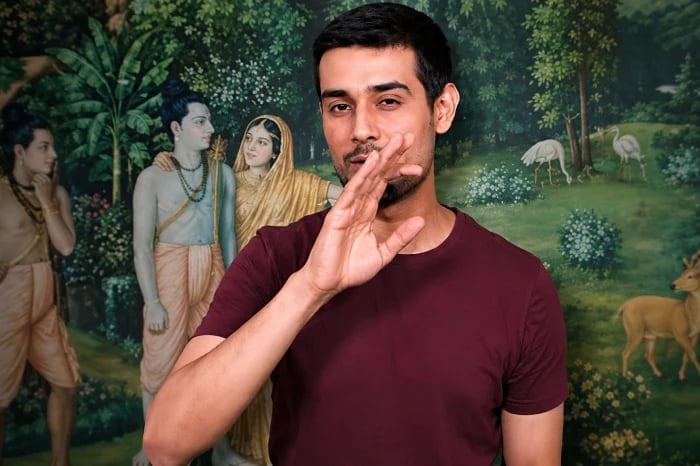
Journalism ethics becomes central here. A journalist has the responsibility to question, investigate, criticise, and inform. Yet ethical journalism also requires accuracy, proportionality, context, and respect for the dignity of persons and communities. Criticism of social practice, political conduct, or institutional failure can be legitimate and necessary. Mockery of sacred figures or dismissive treatment of religious devotion, however, often weakens public trust and shifts attention away from substantive debate.
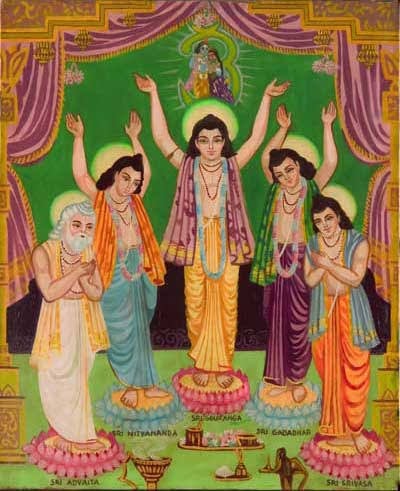
In the Indian context, Hindu Deities are embedded not only in theology but also in art, music, festivals, pilgrimage, family traditions, philosophical reflection, and regional culture. A remark about a Deity may therefore touch multiple layers of identity at once. For example, devotion to Lord Rama, Lord Shiva, Goddess Durga, Lord Krishna, Lord Ganesha, or other forms of the Divine is often linked to household practice, local temple life, language, and inherited memory. Public commentary that ignores this density can easily become socially harmful.
The incident also invites reflection on religious harmony. A society committed to pluralism cannot be sustained only through legal enforcement; it also requires restraint, empathy, and a willingness to understand why others hold certain symbols sacred. Dharmic traditions have long contained internal debate, philosophical diversity, and multiple paths of worship. That intellectual openness should not be confused with permission to demean what communities revere. Respectful disagreement and religious insult are not the same thing.
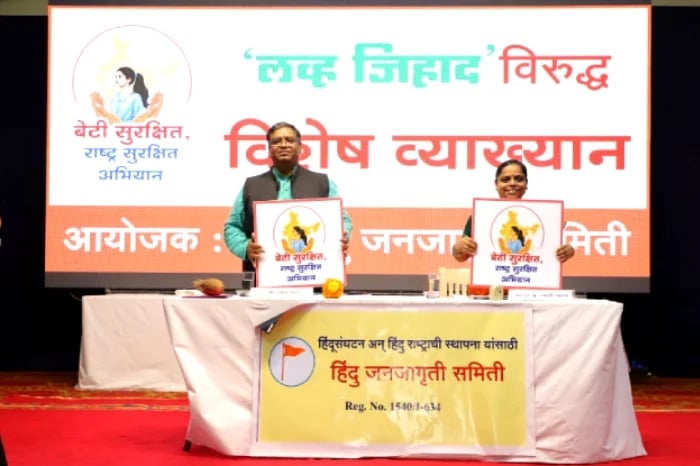
For Hindu society, the challenge is to defend religious dignity while remaining anchored in Dharma. Anger at perceived insult is understandable, but the method of response matters. Peaceful protest, lawful complaint, public clarification, and dialogue are stronger instruments than disorder or intimidation. When a community acts through disciplined civic channels, it reinforces both its moral position and its commitment to constitutional order.
For journalists and digital commentators, the lesson is equally clear. India’s public sphere is no longer limited to newspapers, television studios, and formal press conferences. Social media clips, local remarks, and informal commentary can reach audiences rapidly and provoke immediate reaction. This makes cultural sensitivity a professional necessity rather than an optional courtesy. A public communicator must understand that words spoken casually may be received as institutional disrespect when the speaker carries social influence.
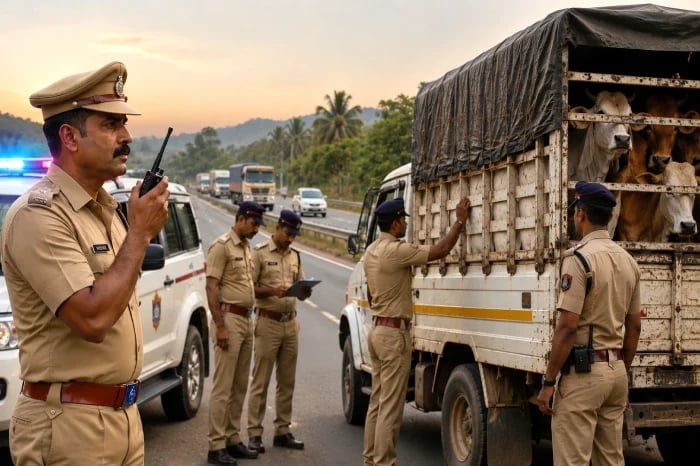
The police memorandum mentioned in the source also points to the institutional dimension of such disputes. Police authorities are often asked to balance public order, legal standards, and community sentiment. Their role should be neither to suppress lawful expression automatically nor to ignore credible complaints of deliberate insult. The most constructive approach is a fact-based assessment: what was said, in what context, with what intent, and with what public impact.
This episode should not be viewed only as a local controversy in Jaysingpur. It belongs to a wider national conversation about media bias, religious sentiment, Hindu identity, and the ethics of public criticism. India’s plural society requires a higher standard of discourse, especially from those whose profession depends on public trust. When sacred traditions are discussed, precision and humility are not weaknesses; they are safeguards against unnecessary social conflict.
A mature democratic culture must allow scrutiny of all religious and social practices. It must also reject casual contempt toward any faith community. The aim should be neither censorship nor provocation, but responsible speech that can examine difficult questions without degrading believers. This is particularly important for Dharmic traditions, where philosophical plurality, ritual diversity, and regional variation coexist within a broad civilisational framework.
The reported apology by Hussain Sheikh may help close the immediate dispute, but the broader responsibility remains with journalists, activists, religious organisations, and citizens. Public life becomes healthier when criticism is informed, protest is peaceful, institutions are respected, and sacred identities are handled with care. In that sense, the Jaysingpur incident offers a practical reminder: words can wound, but accountability, restraint, and sincere dialogue can prevent wounds from becoming lasting divisions.
Inspired by this post on Hindu Jagruti Samiti.




Leave a Reply
You must be logged in to post a comment.