-
Ahura vs Deva: The dramatic Indo‑Iranian reversal—and what it reveals about Dharma

Why do Zoroastrian sources revere Ahura while condemning daevas, even as Hindu texts honor devas and oppose asuras? This long-form analysis traces the shared Indo-Iranian roots of these terms and explains how later reforms, rituals, and ethical priorities reversed their valuations. It clarifies early Vedic usage where asura could be a noble epithet, outlines Zarathustra’s…
-
Beyond 330 Million Gods: How Hinduism Unites Many Deities into One Supreme Reality

The familiar claim that Hinduism has 33 crores (330 million) gods is a popular misreading; classical sources enumerate thirty-three devas—eight Vasus, eleven Rudras, twelve Adityas, plus Indra and Prajapati. By clarifying the Sanskrit term koṭi (class/category vs. crore), the article shows how Vedic and Upanishadic texts integrate divine plurality within a single metaphysical reality. It…
-
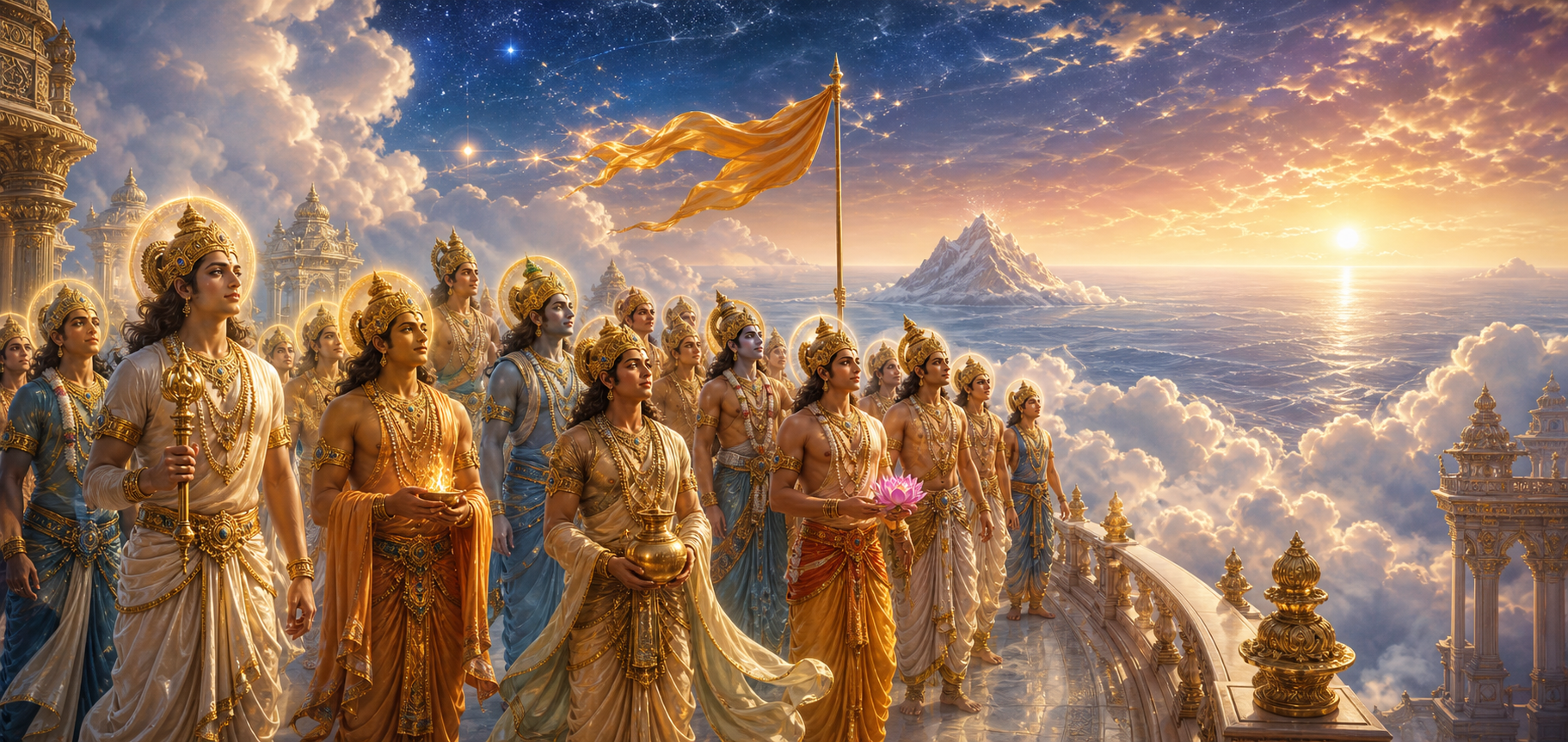
Divine Birth of the Vanaras: Devas Forge Rama’s Celestial Warriors for Dharma-Yuddha

This in-depth exploration of the Ramayana’s Vanara creation explains why Brahma commanded the devas to generate heroic allies for Sri Rama and how this act upheld dharma within cosmic law. Readers learn the widely attested genealogies of key Vanaras—Hanuman (Vayu), Vali (Indra), Sugriva (Surya), Nala (Vishwakarma), Nila (Agni), Mainda and Dvivida (Ashvins), and Jambavan (Brahma)—and…
-
Dhata the Aditya of Well‑Being: Origins, Mantra, Rituals, Iconography—A Comprehensive Guide

Dhata, one of the Dwadasha Adityas and son of Aditi and Kashyapa, is revered as an establisher of cosmic order and a benefactor of health, wealth, and peace. This comprehensive guide explains Dhata’s Vedic etymology, his place among the Adityas, and why traditions often worship him with Mata Lakshmi Devi for holistic well-being. It outlines…
-
Timeless Wisdom of Dhata: The Aditya of Well-Being, Health, and Peaceful Prosperity

Dhata, one of the Adityas and the son of Aditi and Kashyapa, is venerated in Hindu scriptures as a stabilizing force who bestows health, ethical prosperity, and peace. The name Dhata signifies the establisher, linking the deity to creation, order, and benevolent protection across Vedic and Puranic traditions. Devotees commonly invoke OM SRI DHATA DEVAYA…
-
Unveiling the Abhūtarājasas: Inside the Fifth Manvantara’s Forgotten Deva Gana

The Abhūtarājasas—also known as Abhutarayas or Abhutarajasas—are a fourteen-member deva-gana assigned to the fifth Manvantara under Raivata Manu, as preserved in Purāṇic sources such as the Viṣṇu Purāṇa and the Bhāgavata Purāṇa. This article clarifies their place in Hindu cosmology, explains the Manvantara framework, and unpacks the philology of their name as a guna-inflected descriptor.…
-
Varuna in the Vedas: Majestic Sovereign of rta, Waters, and Nature’s Vital Powers

Varuna, among the oldest deities in the Rigveda, stands as sovereign of rta (cosmic order), guardian of the waters, and witness to truth. The Vedic hymns credit him with distributing nature’s vital powers—strength in horses, milk in cows, vitality in the heart, and even fire concealed within the waters—expressing a grand ecology of interdependence. His…
-
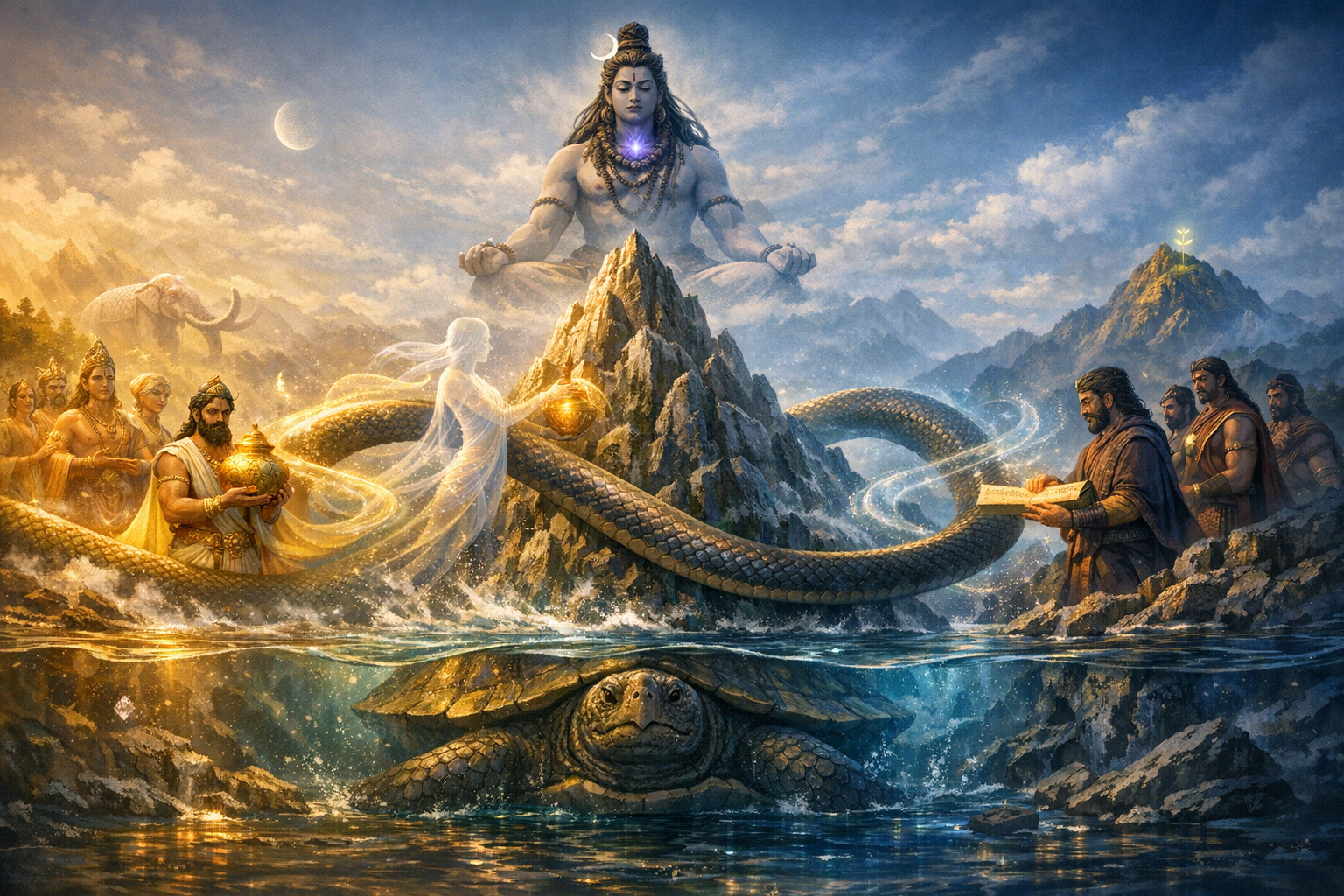
Daksha’s Lineage Unveiled: How the Devas and Asuras Were Born—and Why Narada Intervened

This retelling from the Brahma Purana traces how Daksha Prajapati’s lineage explains the birth of the Devas and Asuras through the marriages of his sixty daughters, especially those wed to Rishi Kashyapa. It recounts Narada’s provocative counsel to the Haryashvas and Shabalashvas, who chose knowledge-seeking over rulership, underscoring the primacy of inquiry before power. Readers…
-
Discover the Sacred Map of the Body: How Each Limb Aligns with Devas in Vedic Practice

This article explains how Vedic practice maps specific Devas to the body’s limbs through mantras like ‘Prajanane Brahma tishtatu’, ‘Padayo Vishnu tishtatu’, and ‘Hastayo Hara tishtatu’. It clarifies the symbolism—creation, preservation, and transformation—and shows how this enhances the body-mind connection in Hindu spirituality. Readers learn how simple, daily contemplations support ethical action, emotional balance, and…
-
The Origin of Onam

The popular narrative of Onam revolves around the story of King Mahabali and Lord Vamana, portraying Mahabali as a martyr and Vishnu as a villain. This version doesn’t align with the true essence of the scriptures. In reality, the story is more nuanced. Vishnu’s avatar, Vamana, came to address the balance between the devas and…