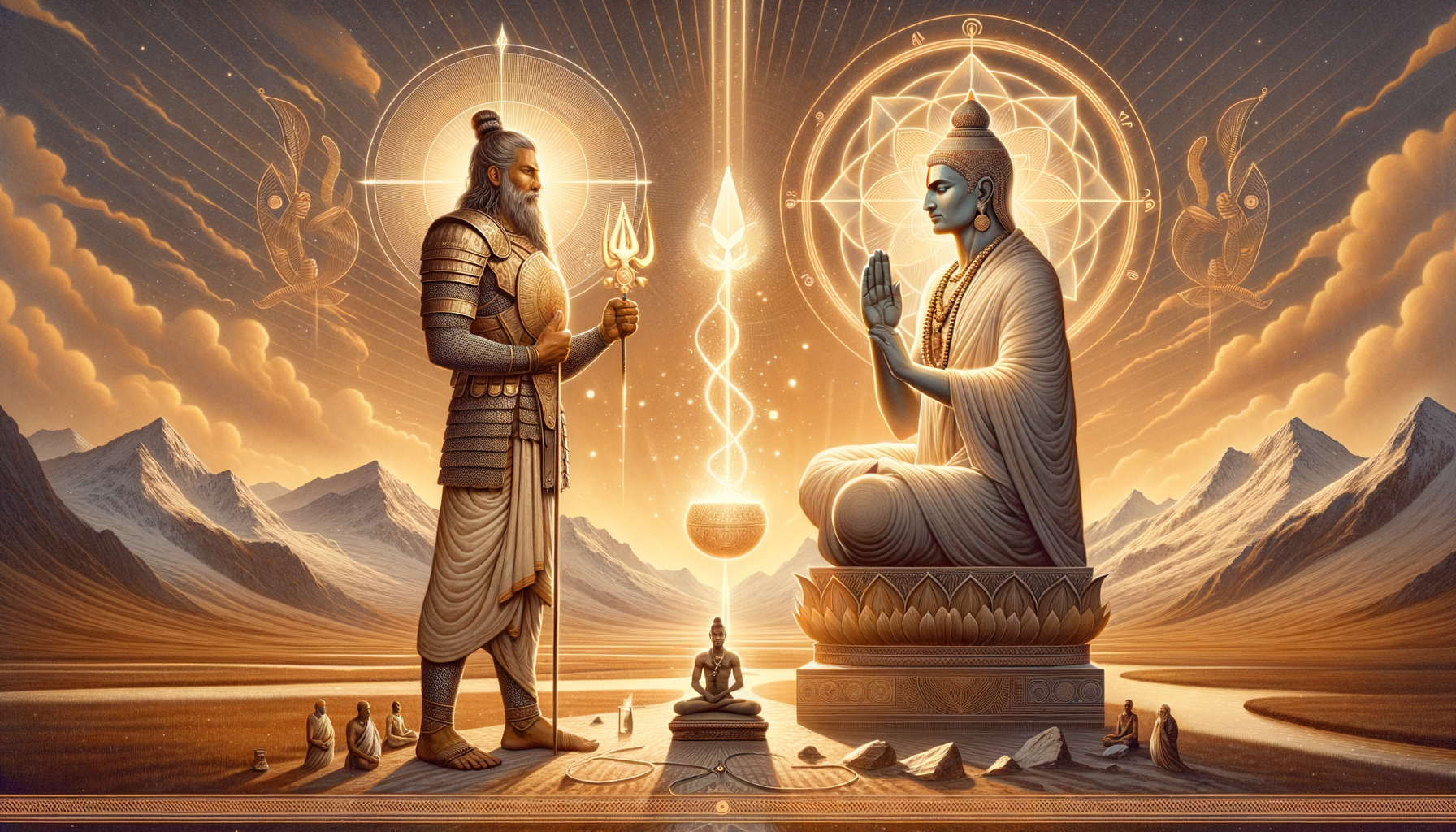
Vritrasura Katha occupies a pivotal place in Hindu scriptures, appearing in early Vedic hymns and elaborated with profound theological nuance in the Srimad Bhagavatam. Beyond the surface tale of a formidable asura and the devas, the narrative explores dharma, devotion (bhakti), ethical power, and the ultimate destiny of the soul. Read through an integrative lens, it also resonates with the broader dharmic traditions of Hinduism, Buddhism, Jainism, and Sikhism, emphasizing inner transformation, restraint, and courage in the pursuit of truth.
According to Srimad Bhagavatam, the story begins with the Prajapati Tvashta (Tvastr), whose son Vishwarupa, blessed with three heads and immense spiritual merit, served as priest to the devas. Political anxiety and suspicion led Indra to slay Vishwarupa, an act bearing grave karmic weight. In response, Tvashta performed a powerful yajna to create a being who could vanquish Indra; from the sacrificial fire emerged Vritrasura, born of austerity and intent. The account underscores that ritual sound and intention carry consequences, a recurring theme in Vedic literature and later Purana narratives.
The Bhagavatam introduces a crucial philosophical layer by identifying Vritrasura as the rebirth of King Chitraketu. In a famed episode, Chitraketu once addressed Shiva with frankness upon seeing him seated with Pārvatī, an encounter culminating in a curse from Pārvatī that sent Chitraketu into his next life as an asura. This link explains Vritrasura’s paradoxan external form aligned with the asuras and an inner orientation toward bhakti. The narrative thus establishes a meaningful association with Lord Shiva while foregrounding a central insight: spiritual identity ultimately transcends outward form and circumstance.
As Vritrasura grew in power, the devas suffered defeat and sought counsel. Vishnu advised the devas to approach the sage Dadhichi, whose unparalleled self-sacrifice would empower dharma. Dadhichi willingly offered his very body so that his bones could be fashioned into Indra’s thunderbolt (vajra). This sacrificial act stands in the dharmic canon as an exemplar of renunciation for the common good, echoing shared values across dharmic paths: self-mastery, service, and responsibility.
The ensuing battle between Indra and Vritrasura is remembered not only for its scale but for its spiritual discourse. In the Bhagavatam’s most moving moments, Vritrasura speaks words of unwavering devotion, expressing longing for the Divine over all worldly attainments. The katha thereby reframes the antagonist as a profound devotee, reminding readers that inner orientation, rather than outer label, governs spiritual ascent. Many readers find that Vritrasura’s clarity under adversity mirrors the resolve required in everyday ethical dilemmas, encouraging steadiness, humility, and faith.
Ultimately, Indra’s vajra fulfills its purpose and Vritrasura falls. Yet, in theological outcome, Vritrasura attains liberation, while Indra bears the burden of having slain a brahmana’s kin and must undergo penance. The text highlights that even justified force invites moral scrutiny, and that power, to remain righteous, must be bounded by dharma. As such, the story operates as a mirror for leadership and society: means matter, intention matters, and accountability matters.
Interpreted symbolically, the devas and asuras can be read as forces within: clarity and chaos, discipline and impulse, wisdom and pride. The katha invites practitioners across dharmic traditions to contemplate how resolute devotion, right conduct, and compassionate courage transform conflict into insight. Readers often relate this to contemporary lifewhether navigating professional pressure or family responsibilitiesrecognizing that the deeper struggle is often an inner one.
The Vritrasura Katha also offers a cross-textual lesson. In the Rigvedic framing, the slaying of Vritra by Indra with the vajra forged from Tvashta’s craft emphasizes cosmic order and the return of life-giving waters. The Bhagavatam, by contrast, places ethical and devotional reflection at the narrative center. Together, these layers present a unifying message: strength without righteousness falters, and the heart grounded in devotion transcends identity and fate.
For those seeking guidance today, the narrative’s takeaways are practical and profound. Suspecting the virtuous invites unintended suffering; speech and ritual must be precise and sincere; and true victory lies not only in overcoming an external foe but in realizing the Self beyond ego. By honoring such insights, communities can nurture unity in spiritual diversity, deepening mutual respect among Hindu, Buddhist, Jain, and Sikh practitioners while celebrating a shared quest for liberation and ethical living.
Inspired by this post on Hindu Pad.