Tag: Hindu scriptures

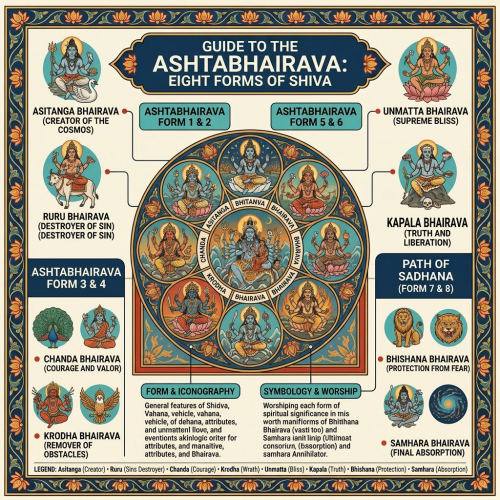
  • Ashtamurti Revealed: How Shiva’s Eight Forms Illuminate Creation and Consciousness

    Ashtamurti Revealed: How Shiva’s Eight Forms Illuminate Creation and Consciousness

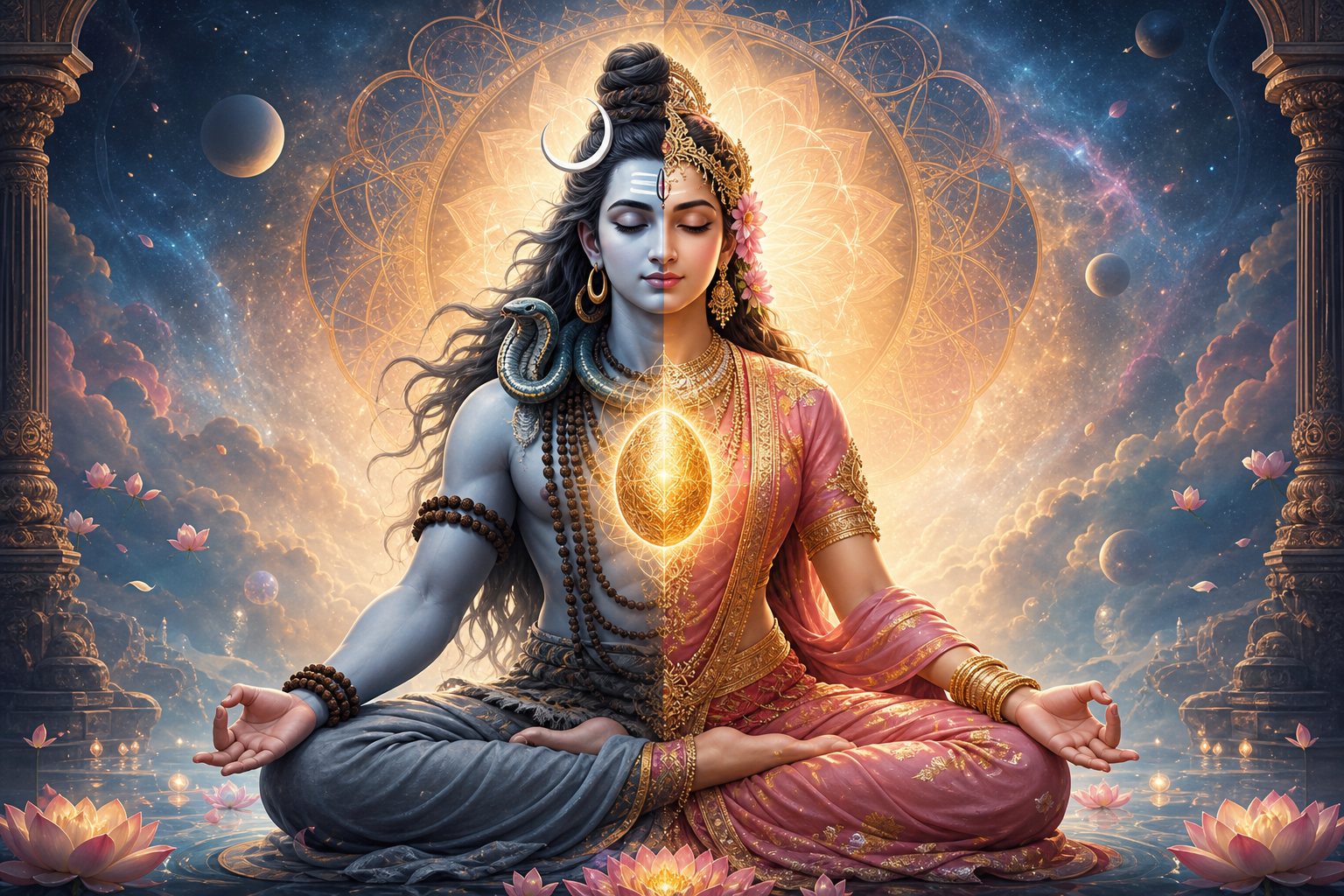
    Ashtamurti presents Shiva not merely as a deity beyond the cosmos, but as the living reality disclosed through earth, water, fire, air, space, the sun, the moon, and the conscious participant. This comprehensive study traces the doctrine from Vedic Rudra traditions through the Śatapatha Brāhmaṇa, Śvetāśvatara Upaniṣad, Purāṇas, Kālidāsa, and the Śivamahimna Stotra. It explains…

  • Yogini Hridaya Tantra Explained: An Essential Guide to Sri Vidya Sadhana

    Yogini Hridaya Tantra Explained: An Essential Guide to Sri Vidya Sadhana

    The Yogini Hridaya Tantra, or Yoginīhṛdaya, is a foundational Sri Vidya scripture centered on Tripurasundarī, the Śrīcakra, sacred mantra, and transformative worship. This comprehensive guide explains its debated textual relationship with the Vāmakeshvara Tantra and its likely development around the eleventh or twelfth century. It examines the text’s 375 stanzas through the three chapters of…

  • How to Read Darśana with Rigor: Vedic Hermeneutics Beyond Comparative Bias

    How to Read Darśana with Rigor: Vedic Hermeneutics Beyond Comparative Bias

    Darśana is more than a synonym for philosophy: it is a disciplined way of seeing that connects knowledge, practice, and liberation. This analysis explains why Vedic and Hindu texts must first be reconstructed through their own language, genre, epistemology, and commentarial history. It provides a technical introduction to Mīmāṃsā, Uttara Mīmāṃsā, pramāṇa theory, sentence meaning,…

  • Beyond the Fish-Eye: How Bhagavan Krishna Surpassed Arjuna in a Harder Archery Trial

    Beyond the Fish-Eye: How Bhagavan Krishna Surpassed Arjuna in a Harder Archery Trial

    The Bhagavata Purana describes a remarkable swayamvara in which Lakshmana’s fish target was concealed on every side and visible only as a reflection in water. Famous kings could not complete the challenge, while Arjuna located the hidden target but merely grazed it. Bhagavan Krishna then strung the bow effortlessly, glanced once at the reflection, and…

  • The Unconquered Heart: Powerful Lessons from Śrīmad-Bhāgavatam 10.8.18

    The Unconquered Heart: Powerful Lessons from Śrīmad-Bhāgavatam 10.8.18

    Śrīmad-Bhāgavatam 10.8.18 presents loving attachment to Kṛṣṇa as a source of extraordinary spiritual resilience. Set within Garga Muni’s confidential naming ceremony for Kṛṣṇa and Balarāma, the verse connects divine protection with affection, ethical alignment and disciplined remembrance. This study explains why being unconquered does not mean avoiding every hardship or achieving worldly dominance. It examines…

  • Rudra’s Astonishing Birth in the Vishnu Purana: Tears, Eight Names, Cosmic Fire

    Rudra’s Astonishing Birth in the Vishnu Purana: Tears, Eight Names, Cosmic Fire

    The Vishnu Purana presents Rudra’s birth as both a fiery cosmic event and an intimate story about a crying child seeking a name. This study distinguishes the elevenfold manifestation described in Book One, Chapter 7 from the eight named forms of Chapter 8. It explains the meanings of Rudra, Bhava, Śarva, Īśāna, Paśupati, Bhīma, Ugra,…

  • Inside the Nine-Gated City: Powerful Lessons from Śrīmad-Bhāgavatam 4.25.3–24

    Inside the Nine-Gated City: Powerful Lessons from Śrīmad-Bhāgavatam 4.25.3–24

    Śrīmad-Bhāgavatam 4.25.3–24 introduces Nārada Muni’s powerful allegory of King Purañjana and the city of nine gates. The passage explains why fruitive action cannot provide permanent happiness when it is driven by attachment and performed without spiritual discernment. It examines karmic responsibility, compassion toward living beings, the limitations of material ambition, and the difference between household…

  • The Varna Debate Reconsidered: What the Vedas and Bhagavad Gita Actually Teach

    The Varna Debate Reconsidered: What the Vedas and Bhagavad Gita Actually Teach

    This article distinguishes the scriptural concept of Varna from jāti and the broader historical institution commonly called caste. It closely examines Yajurveda 31.11 and explains why its cosmic-body imagery should be separated from later functional interpretations. It shows that Bhagavad Gita 4.13 and 18.41–44 explicitly connect social responsibility with guṇa, karma, svabhāva, qualities, and conduct.…

  • Śrīmad Bhāgavatam 4.24.44: Lord Śiva’s Powerful Vision of Bhakti and Sacred Beauty

    Śrīmad Bhāgavatam 4.24.44: Lord Śiva’s Powerful Vision of Bhakti and Sacred Beauty

    Śrīmad Bhāgavatam 4.24.44 records Lord Śiva’s profound request to behold the divine form most cherished by devotees. This study places the verse within the Rudra-gīta and the story of Śiva’s compassionate instruction to the Pracetās. It analyzes important Sanskrit terms such as darśana, bhāgavata-arcitam, priyatamam, and sarvendriya-guṇāñjanam. The discussion explains how bhakti redirects the senses…

  • The Lost Nandi Purana Revealed: Its Contents, History, and Enduring Importance

    The Lost Nandi Purana Revealed: Its Contents, History, and Enduring Importance

    This study reconstructs the lost Nandi Purana, also known as the Nanda Purana, from verses preserved in medieval Sanskrit compilations. It explains why the text’s classification as an Upapurana does not make it historically or spiritually insignificant. The discussion examines its possible Shakta origins, strong Shaiva material, and surviving Vaishnava elements without forcing them into…

  • Shatanika in the Mahabharata: Powerful Legacy of Nakula and Draupadi’s Son

    Shatanika in the Mahabharata: Powerful Legacy of Nakula and Draupadi’s Son

    Shatanika, the son of Nakula and Draupadi, is one of the Upapandavas whose brief but meaningful presence deepens the emotional force of the Mahabharata. His identity connects the Kuru and Panchala lineages, the warrior discipline of Nakula, and the maternal strength of Draupadi. Though the epic does not give him a long independent biography, his…

  • Pancha Maha Mantras of Shiva: A Powerful Upanishadic Path to Inner Transformation

    Pancha Maha Mantras of Shiva: A Powerful Upanishadic Path to Inner Transformation

    The Pancha Maha Mantras of Shiva are five sacred invocations from the Mahanarayana Upanishad that reveal Lord Shiva through distinct but unified aspects. They are associated with Sadyojata, Vamadeva, Aghora, Mahadeva, and Ishana, each representing a profound dimension of creation, preservation, transformation, illumination, and supreme knowledge. These mantras are important in Shaiva traditions because they…

  • Srimad Bhagavatam 3.27.5: Powerful Discipline for Mastering the Mind

    Srimad Bhagavatam 3.27.5: Powerful Discipline for Mastering the Mind

    Śrīmad Bhāgavatam 3.27.5 offers a precise teaching on mastering the mind through serious bhakti-yoga and detachment. The verse explains that consciousness attached to temporary enjoyment must be gradually redirected toward Kṛṣṇa through disciplined devotional practice. Its key terms, including cittaṁ, asatām pathi, bhakti-yogena tīvreṇa, and viraktyā, reveal a sophisticated psychology of habit, attention, and liberation.…

  • Sri Krishna’s Stories: Powerful Wisdom for Healing the Heat of Samsara

    Sri Krishna’s Stories: Powerful Wisdom for Healing the Heat of Samsara

    The stories of Bhagavan Sri Krishna offer spiritual renewal to those burdened by the heat of samsara. Through the Mahabharata, Bhagavad Gita, and Krishna’s childhood and royal narratives, they present a complete vision of dharma, devotion, selfless action, and inner clarity. Krishna’s guidance to Arjuna shows how moral confusion can become a path to wisdom.…

  • Nagaraja in Hinduism: Powerful Meaning, Sacred Worship, and Serpent Wisdom

    Nagaraja in Hinduism: Powerful Meaning, Sacred Worship, and Serpent Wisdom

    Nagaraja, the “King of Serpents,” is one of the most profound serpent figures in Hindu tradition, especially in South Indian worship. This article explains Nagaraja not merely as a serpent deity, but as a symbol of cosmic power, fertility, protection, ecological balance, and hidden spiritual energy. It explores scriptural figures such as Ananta, Vasuki, and…

  • Sākṣi-Gopāla’s Powerful Lesson: Truth, Devotion, and Sacred Witness in CC Madhya

    Sākṣi-Gopāla’s Powerful Lesson: Truth, Devotion, and Sacred Witness in CC Madhya

    Śrī Caitanya-caritāmṛta Madhya-līlā 5.114-133 concludes the Sākṣi-gopāla narration by showing how truthfulness, devotion, and public accountability become inseparable in dharmic life. The passage explains how Gopāla remains with the devotees, receives temple worship, becomes renowned as the divine witness, and later accepts service in Kaṭaka through the devotion of King Puruṣottama-deva and his queen. Its…

  • Drona’s Kamandalu Flag in the Mahabharata: Powerful Symbol of the Warrior-Sage

    Drona’s Kamandalu Flag in the Mahabharata: Powerful Symbol of the Warrior-Sage

    Drona’s kamandalu flag in the Mahabharata is a powerful symbol of the warrior-sage caught between sacred knowledge and battlefield duty. The emblem reflects his Brahmin lineage, his role as Dronacharya, and the deeper tension between Brahma-tejas and Kshatra-tejas. This interpretation explains how the ascetic water vessel becomes meaningful when raised above a war-chariot in the…

  • Ashtavakra Gita Explained: Powerful Wisdom on Soul, Bondage and Liberation

    Ashtavakra Gita Explained: Powerful Wisdom on Soul, Bondage and Liberation

    The Ashtavakra Gita is a profound Advaita Vedānta dialogue between Rishi Ashtavakra and King Janaka of Mithila on the nature of the Self, bondage, reality, and liberation. It teaches that the true Self is pure consciousness, distinct from the body, mind, ego, and changing experiences of life. The text explains bondage as misidentification with desire,…

  • Rudra-Formed Ganas in Daksha Yajna: Fierce Justice and Sacred Humility

    Rudra-Formed Ganas in Daksha Yajna: Fierce Justice and Sacred Humility

    The Daksha Yajna episode is one of the most powerful Shaiva narratives, showing how pride can corrupt even a grand sacred ritual. Daksha’s insult to Lord Shiva and Sati leads to the manifestation of Virabhadra and thousands of Rudra-formed ganas who destroy the sacrifice. This article explains the theological meaning of the ganas, the symbolism…

  • Kunti’s Astonishing Prayer: A Powerful Guide to Devotion, Duty, and Grace

    Kunti’s Astonishing Prayer: A Powerful Guide to Devotion, Duty, and Grace

    Srimad Bhagavatam 1.8.18-28 records Queen Kunti’s profound prayer to Sri Krishna after the Kurukshetra war. These verses combine rigorous Vedantic theology with the emotional realism of a life shaped by danger, duty, and divine protection. The discussion explores Krishna as both transcendent and immanent, hidden by maya yet accessible through bhakti-yoga. Kunti’s famous prayer for…