-
Dashabhujeshwara Decoded: Five-Faced, Ten-Armed Shiva—Iconography, Mantras, Ritual Power

Shiva’s Dashabhujeshwara form—five-faced and ten-armed—embodies the Pañcabrahma theology in which one Absolute performs five cosmic acts: creation, sustenance, dissolution, concealment, and grace. Drawing on the Śiva Purāṇa, Āgamas, and Śilpa-Śāstras, this explainer clarifies how each face (Tatpuruṣa, Aghora, Vāmadeva, Sadyojāta, Īśāna) aligns with directions, mantras, and meditative practice. It decodes the ten arms as sovereignty…
-
Decoding the Pitha of the Shivling: Divine Architecture, Agamic Science, and Living Ritual

The pitha or yoni-pitha of the Shivling is not merely a base but a sacred support that grounds, stabilizes, and channels divine energy. Rooted in Agamic prescriptions and Shilpa Shastra canons, it integrates precise geometry, structural stability, and a hydraulically sound soma-sutra or gomukha outlet for abhishekam. The linga’s three-part articulation fits into the pitha…
-
Gajasurasamhara: Shiva’s awe-inspiring conquest of ego – history, symbolism, style

Gajasurasamhara presents Shiva in a fierce, transformative dance that subdues the elephant demon—an enduring visual lesson on conquering ego. This long-form, research-driven overview traces the form’s Purāṇic and Āgamic foundations and explains its technical iconography, from multi-armed attributes and the distinctive elephant-hide canopy to posture, ornaments, and attendant figures. It maps stylistic evolutions across Pallava,…
-
Shirovaratna of the Shivalinga: The Crowning Jewel of Shaiva Ritual—Forms, Geometry, Agamas

This in-depth guide clarifies why the Shirovaratna—the crown of the Shivalinga—is the most sanctified architectural and ritual member of the linga–nala system. It explains Agamic sources, precise proportions, and crown geometries that ensure both theological fidelity and optimal abhishekam flow. Readers learn how materials from granite to sphaṭika shape a radiant apex, and how variants…
-
Unlocking the Mātuluṅga Mystique: Why a Giant Citron Graces Lakulisha and Kolhapur Mahalakshmi

The large citrus fruit called mātuluṅga (mahalunga) appears prominently in Hindu iconography, most notably in the lower right hand of Kolhapur Mahalakshmi and the upper left hand of Lakulisha of Pāśupata Shaivism. Identified primarily as Citrus medica (citron), the fruit symbolizes abundance, purity, and the ripened results (phala) of righteous action and disciplined practice. In…
-
Jwarahareshwara Shiva: Rare Three-Headed Healer Guarding Humanity from Disease and Fear

Jwarahareshwara Shiva is a rare and powerful healing manifestation of Lord Shiva, envisioned with three heads, three legs, and six arms to symbolize balance, fearlessness, and compassionate protection. The form integrates Vedic portrayals of Rudra as the supreme healer with Puranic narratives that dramatize the pacification of disease and dread. Its triadic symbolism aligns closely…
-
Shiva’s Damaru: Decoding the Cosmic Rhythm of Creation, Balance, and Transformation

This long-form exploration decodes Shiva’s Damaru as a compact, technical map of creation, balance, and transformation in Hindu philosophy. It explains Nāda-Brahma, the A-U-M schema, and the panchakritya while situating the drum’s meaning within linguistic tradition via the Maheshvara Sutras and Panini’s grammar. Readers gain an acoustical and yogic understanding of the instrument, including how…
-
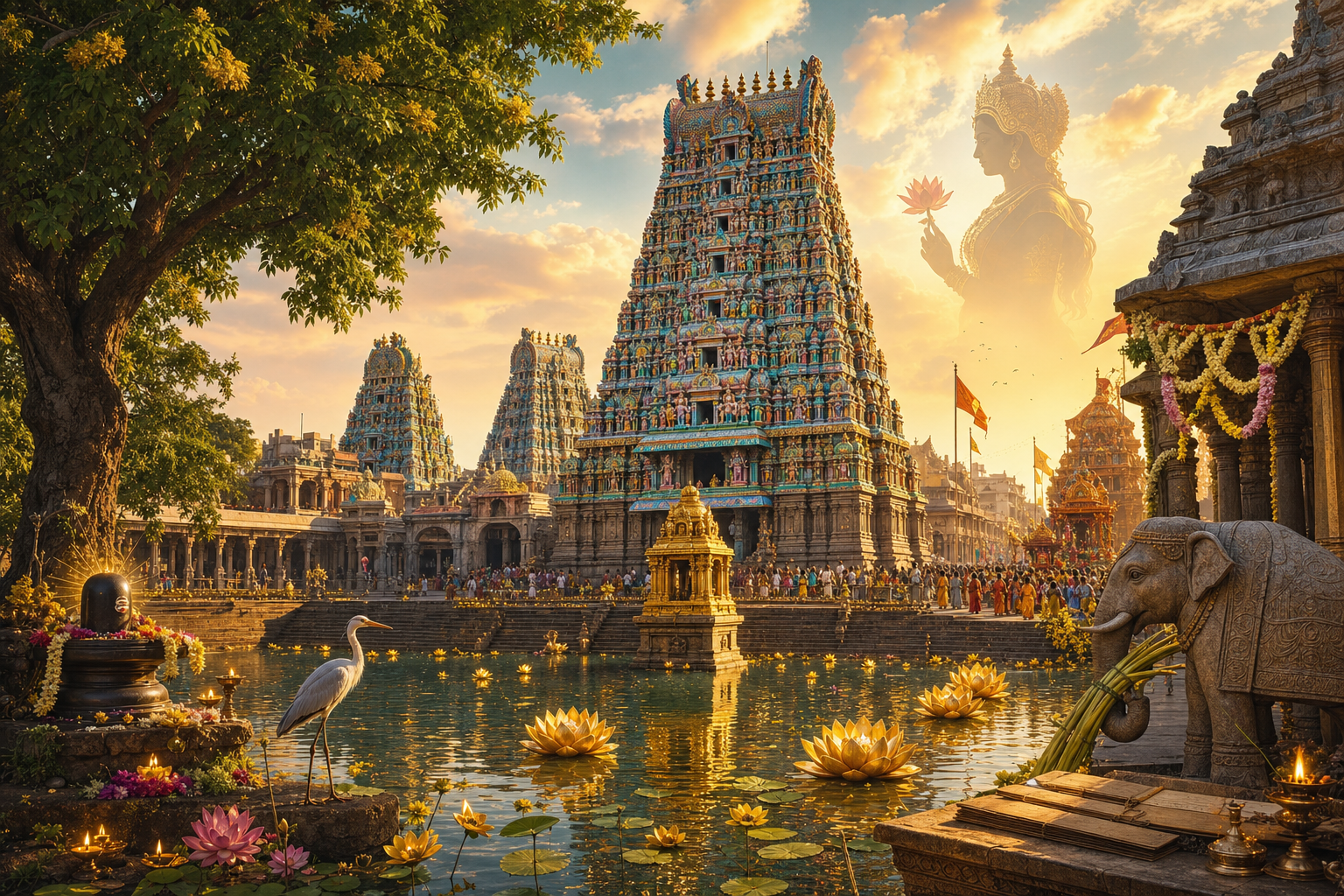
Eraiyur Thagam Theerthapureeswarar Temple: Shaiva Heritage, Travel Guide & Architecture

Arulmigu Eraiyur Thagam Theerthapureeswarar Temple in Iraiyur (Erayur), near Vridhachalam, is a living Shaiva kshetra where Shiva as Dhagam Theerthapureeswarar and Goddess Annapurni are venerated. The name evokes a theological image of thirst being quenched at a sacred theertha, aligning with Shaiva Siddhanta’s compassionate vision. Practical access is simple: buses are available, roads are direct,…
-
Shiva at the Margins: Why Mahadeva Reigns Over Ghosts, Outcasts, and Sacred Transgression

Shiva’s dwelling in cremation grounds and sovereignty over bhuta-ganas present a theology of fearless inclusion that dignifies what societies often cast aside. By tracing the arc from Vedic Rudra to Puranic Shiva, the discussion shows how ashes, serpents, and the smashana encode teachings on impermanence and compassion. Bhairava’s guardianship of thresholds clarifies why time, change,…
-
Sitalsasthi 2026: Sambalpur’s grand Shiva–Parvati wedding and Odisha’s living heritage

Sitalsasthi 2026, the ceremonial wedding of Lord Shiva and Goddess Pārvatī, will be celebrated on June 20 in Odisha, with Sambalpur hosting the most expansive and community-driven observances. Rooted in over four centuries of practice, the festival blends śāstra-guided rituals with a city-wide cultural carnival featuring processions, folk arts, and water-splashing motifs that welcome the…
-
Awe-Inspiring Rameswaram Pilgrimage: Sri Ramanathaswamy Temple, Rama Setu, Sacred Shores

Rameswaram on the Gulf of Mannar is a conch-shaped island central to the Char Dham yatra and home to the Jyotirlinga of Sri Ramanathaswamy. Scriptural accounts in Srimad-Bhagavatam and Caitanya Caritamrta attest to its enduring sanctity, while Ramayana memory links the shrine to Rama Setu. The temple’s nearly 4,000-foot pillared corridor exemplifies South Indian temple…
-
When Shiva Halted Time for King Shveta—and Why the Wise King Chose Order Over Immortality

Skanda Purana’s Kedara Khanda narrates how Shiva conquered Time to protect King Shveta, only for the king to ask that Time be restored for the sake of cosmic order. The episode explores the interplay of divine grace with rta, showing why lawful process remains sacred even when miracles are possible. It models rajadharma by placing…
-
Uma Shivagni Damana Puja 2026: Unlock Auspicious Shiva–Parvati Grace on Chaitra Tritiya

Uma Shivagni Damana Pooja is a sacred vrata honoring Shiva and Pārvatī on Chaitra Shukla Tritiya; in 2026 it falls on 21 March. The observance symbolically pacifies Śiva’s purifying fire through Uma’s compassionate grace, fostering marital harmony, household peace, and inner balance. A clear, step-by-step pūjā vidhi—kalasha sthāpana, abhiṣeka with cooling offerings, mantra japa, and…
-
Jagath Samhara Moorthy: How Shiva’s Cosmic Dissolution Fuels Renewal and Liberation

Jagath Samhara Moorthy—Shiva as the cosmic dissolver—expresses a lawlike rhythm in Hindu cosmology where endings prepare the ground for renewal. Drawing on the Puranas, Upanishads, and Shaiva philosophy, the article clarifies how samhara operates within the five divine acts: creation, maintenance, dissolution, concealment, and grace. It explains the four types of pralaya and situates them…
-
Gangaur 2026: Sacred Gauri–Shiva Vrat, Dates, Vidhi, and Rajasthan’s Grand Processions

Gangaur 2026, Rajasthan’s iconic celebration of Gauri and Shiva, culminates on Chaitra Shukla Tritiya—21 March 2026 in most Indian Panchangs—after a sequence of springtime observances that often begins on Pratipada. This guide explains the festival’s meaning, the Ganagauri Vrat, and why Isar–Gaur worship symbolizes a balanced and auspicious household. Readers learn how Sinjara, khetri sprouting,…
-
Madhukrishna Trayodashi 2026: Auspicious Date, Calendar Mapping, and Complete Pradosh Puja Guide

Madhukrishna Trayodashi (Madhu Krishna Trayodasi) in 2026 falls on March 17, aligning as Falgun Krishna Trayodashi in the Amanta system (Marathi, Gujarati) and Chaitra Krishna Trayodashi in the Purnimanta system (North India). The observance highlights Trayodashi’s traditional sanctity for Lord Shiva, with Pradosh Vrat performed if Trayodashi prevails during the evening Pradosh Kaal. The article…
-
Anang Trayodashi 2026: Auspicious Date, Lord Shiva Puja Vidhi, and Year‑Long Vrat Guide

Anang Trayodashi 2026 falls on March 30, aligning with Chaitra Shukla Trayodashi and honoring Lord Shiva with complementary reverence to Rati and Kamadeva. The observance is especially noted in Maharashtra, Gujarat, and several South Indian regions, with puja often centered in Pradosha Kala. This guide explains the tithi logic, fasting options, and an adaptable puja…