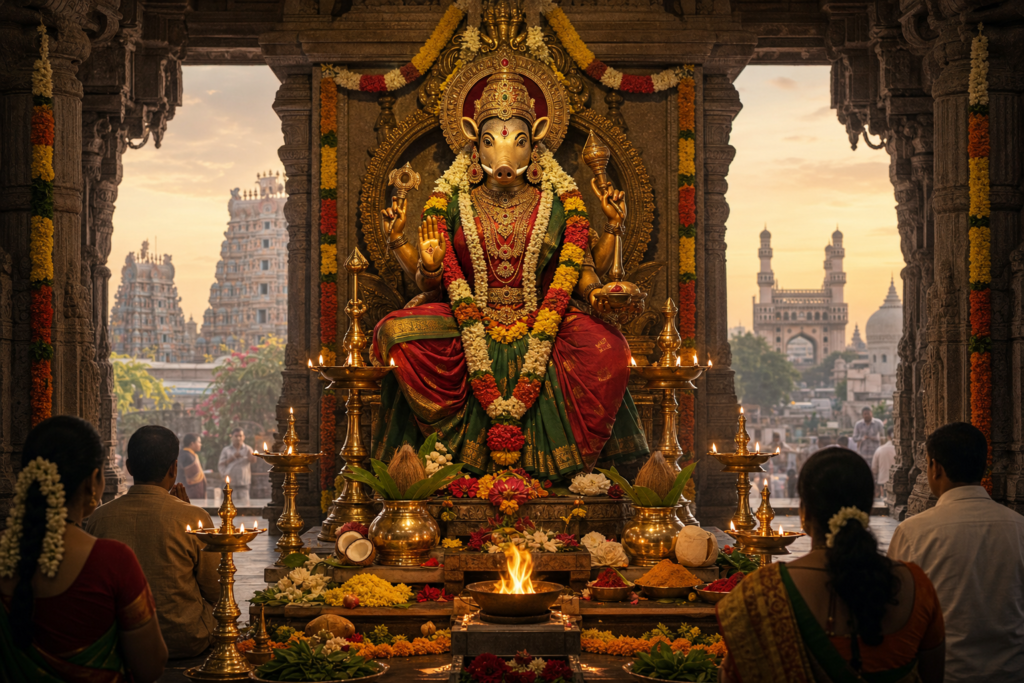
Mushikasura Samhara Moorthy is an honorific that presents Lord Vinayaka (Ganapati) as the subduer of the asura Mushika. In many ritual contexts across Hindu traditions, Ganesha is invoked first as Vighneshwarathe remover of obstaclesmaking this epithet both theologically resonant and spiritually practical. The narrative associated with “Ganesha as Slayer of Mooshikasura” frames a timeless teaching on transforming unruly forces into instruments of dharma.
Puranic narratives recount that a troublesome being named Mushika (Mooshikasura), assuming the form of a rat, unleashed chaos across realms. Appeals from sages and devas reached Vinayaka, whose intervention was sought to restore order. The story emphasizes not only divine protection but also the ethical governance of powercentral themes in Hindu scriptures and temple traditions.
Sources vary in the denouement: in some accounts, Ganesha slays the asura; in others, he subdues Mushika and consecrates him as his vahana, the mouse. The latter readingwidely reflected in iconography with the mouse at Ganesha’s feethighlights transformation over annihilation, aligning with the dharmic ideal of guiding discordant energies toward constructive purpose. Both versions affirm the same core insight: obstacles yield before discernment, steadiness, and compassion.
Symbolically, the mouse evokes qualities that gnaw at inner stabilityrestlessness, excess desire, and unexamined habit. In this light, Mushikasura Samhara Moorthy becomes a contemplative template: Ganesha’s mastery over Mooshika models the disciplined mind bringing sub-sensory impulses under ethical control. This hermeneutic, familiar to readers of the Puranas, blends metaphysics with moral psychology in a way that continues to inform lived devotion and daily choices.
The message resonates across the broader dharmic family. In Buddhism, mindfulness counters kleshas that obscure clarity; in Jainism, vows and ahimsa channel energy toward harmless conduct; in Sikh tradition, inner discipline and seva refine character. Read together, these perspectives underscore a shared civilizational insight: true strength lies in transforming impedimentswithin and withoutso that plural paths can flourish in harmony.
Ritually and culturally, this is why many begin undertakings with Sri Ganeshaya Namah, observe Sankashti fasts, or place a Ganesha idol at thresholds. Such practices are not mere custom; they serve as mnemonic anchors. By recalling Mushikasura Samhara Moorthy, devotees are invited to meet complexities with steadiness, to convert agitation into focus, and to remember that wisdom softens what force alone cannot resolve.
For seekers navigating contemporary pressures, the legend offers a relatable mirror. Problems often multiply quietly, much like a mouse’s hidden tunnels; when acknowledged, named, and guided, they can be reorganized into supportive structures. Many practitioners report that contemplating Ganesha’s calm poise fosters emotional resilience, ethical clarity, and a renewed sense of auspiciousness in work, study, and community life.
Ultimately, whether read as victory through subjugation or victory through transformation, Ganesha as Mushikasura Samhara Moorthy articulates a unifying principle: obstacles are not finalities but invitations to inner refinement. The story encourages a civilizational ethic of responsibility and mutual respectvital to sustaining unity in spiritual diversity across Hinduism, Buddhism, Jainism, and Sikhismso that the many voices of dharma continue to speak in concord.
Inspired by this post on Hindu Pad.