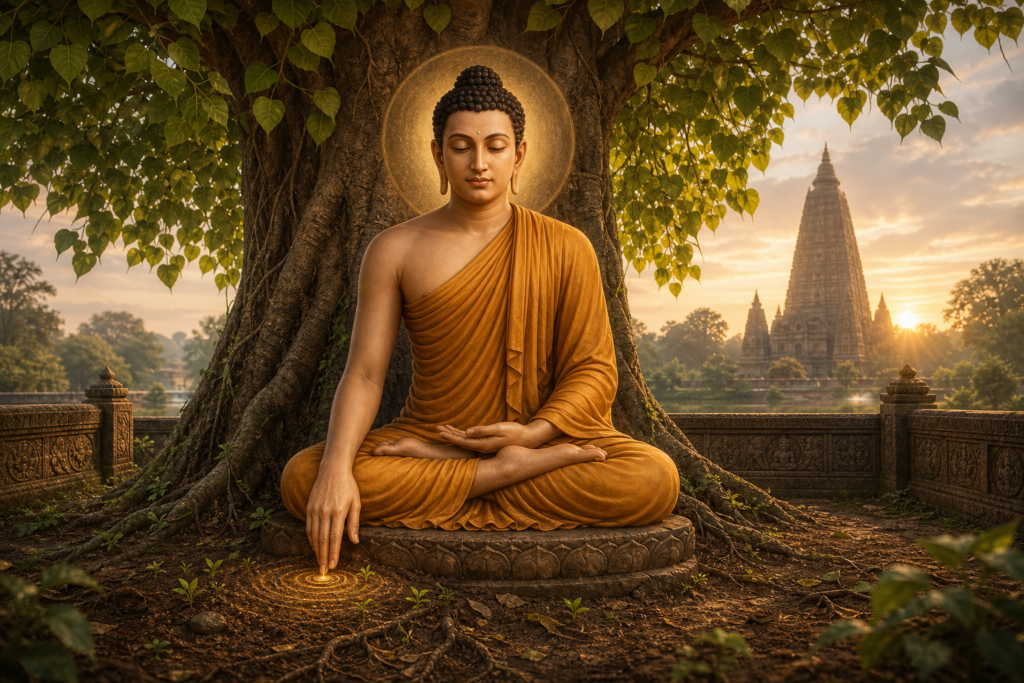
Within Hinduism, particularly in Shaivism, Lord Shiva is revered as a supreme and guiding presence whose example motivates ethical living and inner transformation. Common depictions often emphasize Rudra’s fierce aspect, leading to the misconception that Shiva is primarily an angry deity. Yet scriptural narratives consistently reveal a different center: profound calmness, enduring patience, and boundless compassionqualities that inspire devotees to cultivate equanimity in thought and action.
Shiva’s epithet Ashutosh“easily pleased”encapsulates this benevolent disposition. In Purāṇic accounts, grace flows impartially, extending even to those who oppose dharma. Narratives of blessings granted to figures such as Rāvaṇa and Bhasmasura illustrate a deeper principle: Shiva’s compassion is not transactional but transformative, inviting every being, including the errant, toward self-correction and higher understanding.
This compassionate patience offers a practical ethic for contemporary life. Many devotees find that contemplating Shiva’s meditative stillness during moments of turmoil helps reframe anger into tapas, impulsiveness into thoughtful restraint, and despair into inner strength. Practices such as japa, dhyāna, and mindful breath awareness draw on this model of serenity, enabling seekers to anchor themselves in dharma while navigating complex personal and social challenges.
Equally instructive is Shiva’s readiness to bless beyond perceived worthiness. Such impartial karuṇā encourages a culture of forgiveness and responsibility: to confront one’s own shortcomings, to act without resentment, and to extend goodwill even when disappointed by others. In this way, Shiva becomes a motivating force not only for spiritual ascent but also for everyday ethical clarity, humility, and service (lokasaṅgraha).
The values embodied by Shivacalmness, patience, and compassionresonate across the dharmic traditions of Hinduism, Buddhism, Jainism, and Sikhism. Each honors inner peace (śānti), non-harm (ahiṁsā), and disciplined self-mastery as shared civilizational virtues. Recognizing this common ground strengthens inter-traditional harmony and reinforces a unifying message: inner transformation is the foundation of outer harmony.
Seen through this lens, the image of Shiva in deep meditation is more than religious iconography; it is a practical template for cultivating resilience, emotional balance, and compassionate action. By emulating Shiva’s patience and measured strength, seekers across communities can transform conflict into understanding, agitation into steadiness, and fear into courageadvancing both personal well-being and collective harmony.
Inspired by this post on Hindu Pad.