In the Ramayana, the episode of Darbha Sayana Murthy captures a pivotal moment of disciplined stillness before decisive action. After learning that Sita had been taken to Lanka by Ravana, Sri Rama advanced with the Vanara army to the seashore. Honoring dharma and the cosmic order, he offered prayers to Lord Varuna, the deity of the ocean, seeking a righteous path for the ocean crossing.
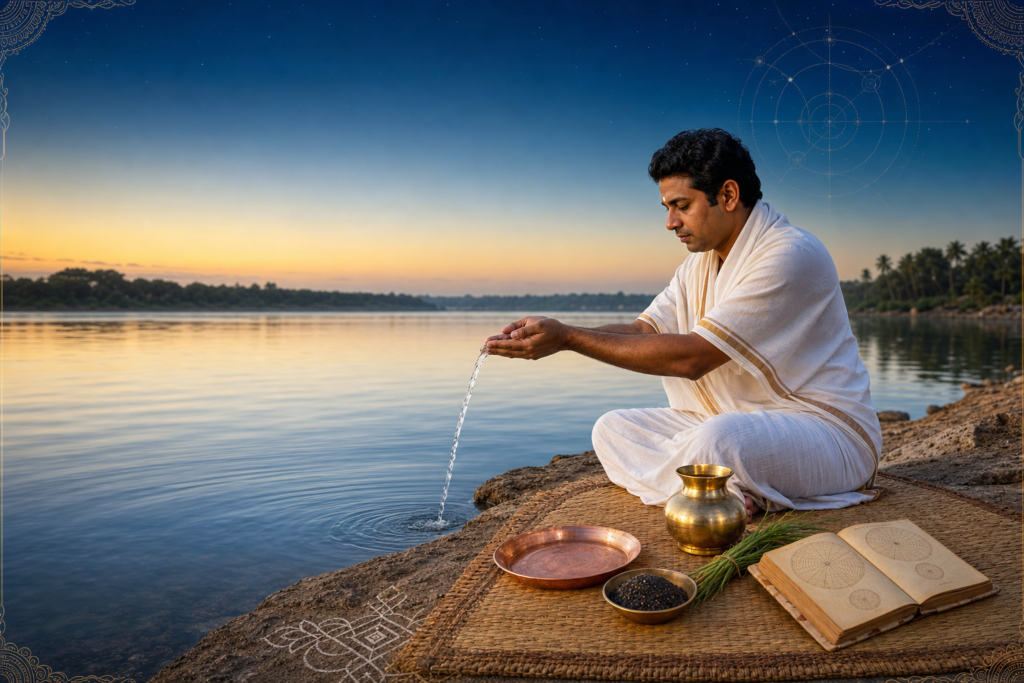
During this period, Lord Rama observed vrata while reclining upon a bed of darbha grass (kusa), entering the state of Yoga Nidraan alert repose often described as restful awareness. In Vedic rites, darbha signifies purity, protection, and austerity; its use as a grass bed underscores restraint, clarity, and consecration of intent. The image of Darbha Sayana conveys vigilance without agitation, serenity without inaction.
Read as spiritual instruction, the scene models strategic patience. Instead of forcing the ocean, Rama first aligned with natural law and moral order, strengthening the ethical foundation of his mission. For devotees, the iconography of Darbha Sayana MurthySri Rama at rest upon darbha grassencourages contemplative steadiness preceding purposeful action.
According to the Ramayana, after days of such disciplined waiting, Rama’s resolve intensified, and Varuna appeared with guidance. Nala, the son of Viśvakarma, would lead the Vanara army in constructing the setu across the ocean, known as Rama Setu. This solution preserved cosmic balance while enabling the dharmic imperative to reach Lanka and confront Ravana. The episode thus weaves devotion, patience, and engineering ingenuity into a unified narrative of duty.
The contemplative composure exemplified here resonates across dharmic traditions. Hindu dhyana and Yoga Nidra, Buddhist mindfulness, Jain samayik, and Sikh simran all value stillness, clarity, and self-mastery. Emphasizing this shared ethos fosters mutual respect and unity among Hinduism, Buddhism, Jainism, and Sikhism.
For contemporary readers, the symbolism offers practical guidance. Brief intervals of mindful rest can reduce stress, sharpen focus, and align choices with ethical principles. As the narrative teaches: first pause and attune to higher order; then act decisively with courage and compassion.
Contemplating Darbha Sayana Murthy today invites reflection on patience, devotion, and moral strength. It portrays Lord Rama not only as a warrior-king but also as a teacher of inner mastery, whose Yoga Nidra on darbha grass reveals how calm conviction can precedeand empowerrighteous action.
Inspired by this post on Hindu Pad.