-
तुलसीपुर में घायल गौवंश का जीवनरक्षक अभियान: सेवा, समन्वय और करुणा की मिसाल

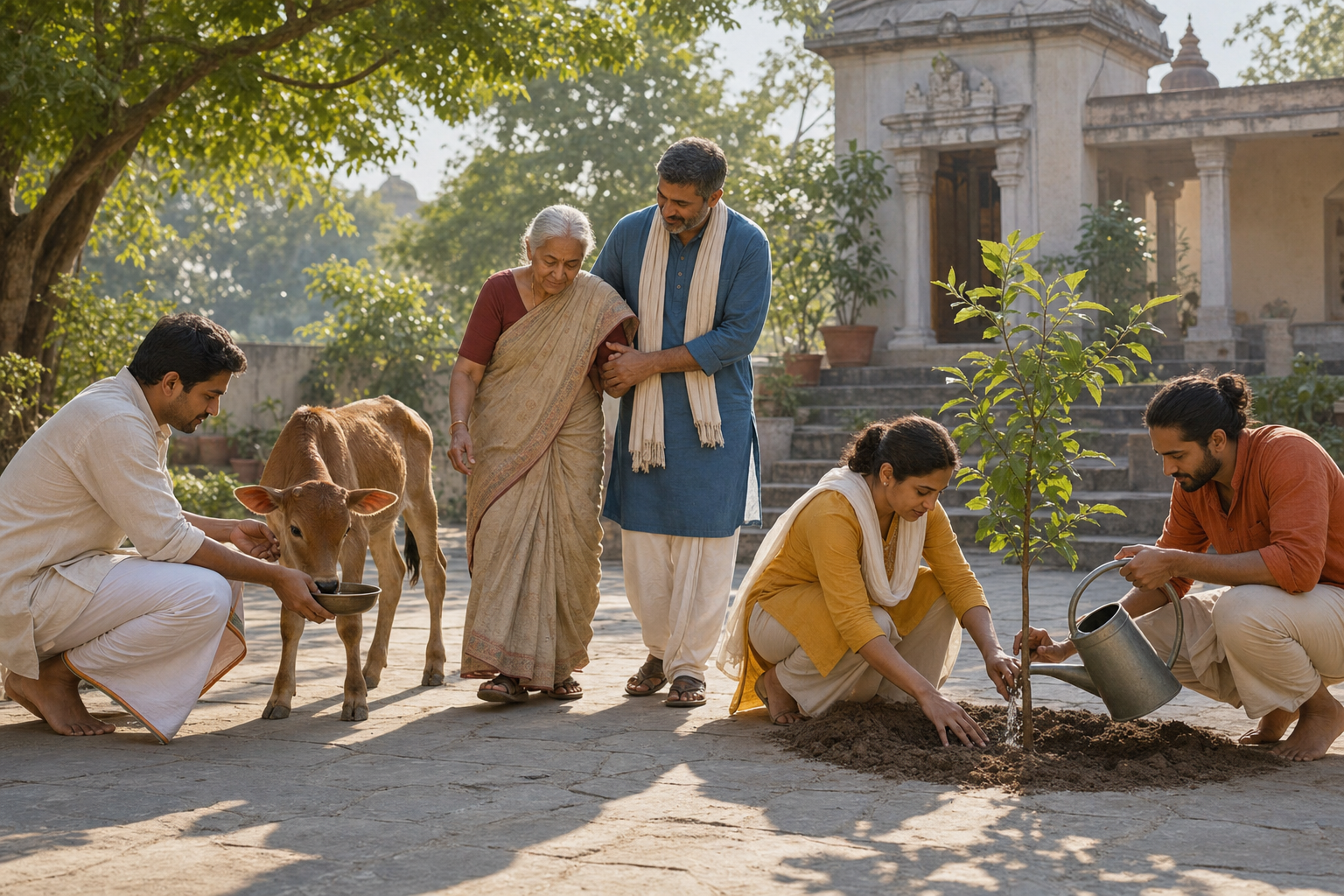
तुलसीपुर विकास खंड के रमवापुर में लगभग दो दिनों से सड़क किनारे पड़े घायल गौवंश को सामाजिक कार्यकर्ताओं, पशु चिकित्सक और ग्राम पंचायत से जुड़े लोगों के समन्वित प्रयास से सहायता मिली। विश्व हिंदू महासंघ के कार्यकर्ताओं ने सूचना मिलने के बाद मौके पर पहुंचकर प्राथमिक उपचार की व्यवस्था कराई। अपेक्षित सुधार न होने पर…
-
The Timeless Moral Compass: Why Helping Others Is Merit and Causing Harm Is Sin

This comprehensive exploration examines the ancient teaching that helping others generates merit while causing harm produces moral and karmic demerit. It explains the Sanskrit concepts of paropakāra, parapīḍana, puṇya, pāpa, dharma, ahimsa, seva, and lokasaṅgraha without reducing them to simplistic ideas of reward and punishment. The discussion connects the saying with the Bhagavad Gītā, the…
-
Dorothy’s Airport Transformation: How Bhakti Turns Grief and Fear Into Inner Peace

An exhausting airport delay becomes the setting for Dorothy’s movement from rage and fear toward spiritual calm. Her encounter with Radhanath Swami explores grief, terminal illness, the fear of death, and the Bhakti understanding of the eternal soul. The discussion examines free will and karma while firmly rejecting guilt, fatalism, and victim-blaming. It explains how…
-
From Parental Regret to Spiritual Wisdom: ŚB 4.8.66 with Bhrgupati Prabhu

Bhrgupati Prabhu’s class on Śrīmad-Bhāgavatam 4.8.66 provides the setting for a close study of King Uttānapāda’s regret over abandoning Dhruva Mahārāja. The verse reveals how favoritism, silence, and attachment can undermine parental duty and responsible leadership. Its Sanskrit imagery transforms the memory of Dhruva’s lotuslike face into a powerful examination of conscience. The wider narrative…
-
Purifying Timuk: A Powerful Dharma Path from Mental Fog to Inner Freedom

Timuk, the Tibetan term for deep mental fog, explains how ignorance gives rise to anger, jealousy, attachment, pride, and other afflictive emotions. This rewritten study presents timuk as a root poison that consumes the mind, thickens obscuration, reinforces negative habits, and creates karma that binds beings to samsara. It also explains why Dharma must move…
-
Four Powerful Dharma Reflections That Transform Suffering Into Spiritual Courage

The four thoughts that turn the mind toward Dharma offer a disciplined foundation for spiritual practice, ethical clarity, and inner transformation. They teach that human birth becomes truly precious only when it is used to reduce suffering and awaken wisdom. Contemplation of impermanence and death gives urgency to practice without falling into despair. Reflection on…
-
Equanimity as Inner Strength: A Buddhist Path to Peace and Emotional Balance

Equanimity in the Four Immeasurables is presented as a disciplined, warm, and practical foundation for Buddhist spiritual life. Rather than promoting indifference, it trains the mind to hold love and care without attachment, aversion, or emotional collapse. The teaching explains why mental discipline, shamatha, bodhicitta, and emotional awareness are essential for genuine transformation. It also…
-
Powerful Losar Wisdom: Four Buddhist Practices for a Fearless Good Heart

This rewritten Losar reflection presents the cultivation of a good heart as a disciplined path of Dharma, not merely a warm feeling. It explains four practical conditions for transforming habits: repetition, intensity, counteragents, and the creation of a supportive field. The article connects Tibetan Buddhist teachings on bodhicitta, dak nang, and universal compassion with the…
-
Joyful Diligence on the Buddhist Path: A Powerful Guide to Inner Freedom

Diligence in the Buddhist path is not grim effort but the joyful energy that arises when practice is understood as nourishment for the mind. This reflection explains how karma, meditation, compassion, and ethical discipline help shape both present experience and future conditions. It clarifies why conventional happiness often remains unstable when it depends only on…
-
Transformative Dharma Practice: Powerful Wisdom for Mind, Habits, and Compassion

This article explains the two essential dimensions of Dharma practice: learning from traditional teachings and applying them through self-awareness in daily life. It shows why Dharma is different from ordinary knowledge because it must transform habits, emotions, conduct, and perception. The discussion examines anger, resentment, attachment, fear, pride, and jealousy as practical fields for inner…
-
Venezuela’s Humanitarian Crisis: Compassion, Prayer, and Practical Solidarity

This article reframes a brief message of love and prayers for Venezuela into a factual, compassionate, and Dharmic reflection on the country’s humanitarian crisis. It explains the scale of Venezuelan displacement using UNHCR data and highlights the importance of food security, school meals, documentation, shelter, employment, and regional integration. The piece connects humanitarian analysis with…
-
Tulsi Gabbard Resignation Row: Dharma, Compassion, and Public Duty Under Fire

Tulsi Gabbard’s reported resignation as Director of National Intelligence, connected to her husband Abraham Williams’s rare bone cancer diagnosis, became a wider debate about compassion, political speech, and public duty. The controversy intensified after an X post attributed to Congressman Shri Thanedar appeared to dismiss her departure while criticizing intelligence failures linked to the Iran…
-
When a Meteor Splits the Night: Awe, Impermanence, and Emotional Resilience Under One Sky

A routine drive home turns extraordinary when a bright meteorlikely a fireballslashes the night, catalyzing an evening of shared awe, family reflection, and deeper meaning-making. The narrative situates the event in clear scientific terms (meteoroid ablation, fireball brightness, typical velocities) and in current psychology (awe’s prosocial effects, mindfulness, and acceptance). It then integrates convergent insights…
-
Self-Forgiveness in Hindu Dharma: Bhakti, Grace, and the Psychology of Letting Go

Self-forgiveness is framed in Hindu Dharma as a doctrinal necessity for progress in bhakti, not a sentimental luxury. Drawing on Bhagavad-gita (6.5–6; 9.30–31; 18.66), the analysis explains why refusing grace prolongs separation from Krishna and how mercy operates independently of merit. It integrates contemplative scienceespecially the role of the vagus nerve and shame regulationwith devotional…
-
Beyond the Battlefield: KarunamayiWhy the Mother Goddess Is the Ocean of Compassion

Hindu tradition venerates the Mother Goddess as Karunamayishe who is suffused with compassionrevealing that even fierce forms like Durga and Kali arise from a deeper commitment to heal, nourish, and restore dharma. This long-form exploration clarifies the name’s Sanskrit roots and traces its scriptural foundations across the Devi Sukta, the Devi Upanishad, and the Devi…
-
Reframing Letting Go: Evidence-Based, Compassionate Strategies to Heal Betrayal, Divorce, and Grief

True letting go does not condone harm or erase the past; it integrates grief with acceptance so life can move forward with clarity and compassion. This long-form, research-informed account describes how betrayal and divorce can be reframed through evidence-based trauma recovery, nervous-system regulation, and values-guided action. Grounded in dharmic principlesahimsa, aparigraha, simran, and karuṇāit aligns…