-
Mahabharata Wisdom on the True Gift: Markandeya’s Guide to Nishkama Dāna and Seva

This long-form exploration distills Sage Markandeya’s Mahabharata teaching on the nature of the true gift (dāna) and explains why intention, not magnitude, confers ethical value. It maps dāna to the Bhagavad-Gita’s guṇa framework, clarifying the difference between sāttvika, rājasa, and tāmasa giving. Through the exemplar of King Śibi, it highlights abhayadāna (the gift of fearlessness)…
-
Backbiting and Dharma: Psychological, Social, and Karmic Costs—Plus Practical Remedies

Backbiting may appear trivial, yet dharmic ethics and modern psychology converge on its real costs: eroded trust, increased anxiety, fragmented communities, and deepened karmic imprints. Hinduism (Bhagavad Gita 17.15), Buddhism (Right Speech), Jainism (ahimsa and satya), and Sikhism (rejection of ninda) all prescribe compassionate, truthful, and beneficial speech. Research likewise shows that malicious gossip undermines…
-
Unveiling the Soul’s Journey: Life After Death in Hinduism—Karma, Yama, Moksha

Hinduism presents life after death as a just, compassionate, and educative journey governed by karma and oriented toward moksha. Foundational texts—the Upanishads, Bhagavad Gita, and Puranas—affirm that the immortal ātman continues through realms (lokas) or returns via reincarnation according to ethical causality. Lord Yama Dharma embodies impartial moral order, while rites such as antyeṣṭi, śrāddha,…
-
Empathy as the Mark of Divinity: Dharmic Teachings on Karuṇa, Dayā, and Universal Compassion

Empathy is presented as the defining mark of divinity across Hinduism and the broader dharmic family, where compassion (karuṇa/dayā) is both spiritual practice and social ethic. Grounded in scriptural foundations such as Bhagavad Gita 6.32 and 12.13, the article links inner realization with the welfare of all beings. It highlights convergences with Buddhism’s Brahmavihāras, Jainism’s…
-
Ultimate Reality Cannot Be Taught: Profound, Experiential Wisdom in Hinduism and Dharmic Paths

This long-form exploration clarifies why Ultimate Reality in Hindu philosophy cannot be taught as a mere concept and must be realized through direct experience. It maps the classical triad of śravaṇa–manana–nididhyāsana and the role of Guru–Shishya Tradition, highlighting how scripture and guidance remove ignorance rather than transfer realization. Readers gain a technically sound overview of…
-
Suchimukham Unveiled: The Chilling Karmic Price of Hoarded Wealth in Hindu Dharma

Suchimukham, the needle-mouthed hell in Hinduism, powerfully encodes the karmic consequences of hoarding wealth and neglecting compassion. Drawing on the Vishnu Purana, Devi Bhagavata Purana, and Garuda Purana, this analysis situates Suchimukham within a reformative, not eternal, Puranic model of Naraka. It clarifies the difference between prudent stewardship and miserliness, showing how dharma guides artha…
-
Break the Grip of Envy: Dharmic Wisdom on Desire, Aparigraha, and True Wealth

A timeless dharmic principle—“Do not covet what is not yours”—is examined through Hindu, Buddhist, Jain, and Sikh frameworks to show how freedom from envy safeguards inner clarity and social trust. The analysis grounds the ethic in the Isha Upanishad, the Bhagavad Gita’s psychology of desire, and Patanjali’s yamas of Asteya and Aparigraha. It then aligns…
-
A Little-Known 1977 Moment with Srila Prabhupada: Consolation, Realism, and Generous Service

A quietly powerful 1977 exchange with Srila Prabhupada captures three enduring pillars of ISKCON’s ethos: compassionate consolation grounded in the Bhagavad-gita’s teaching of the soul’s immortality, pastoral realism that dignifies the grihastha path, and purposeful philanthropy directed to printing Srimad-Bhagavatam. In a few sentences—“Oh Srila Prabhupada, whatever Krishna desires.” and “Every girl wants to get…
-
Why Ganesha Rides a Mouse: Mastering the Restless Mind Through Ancient Sacred Symbolism

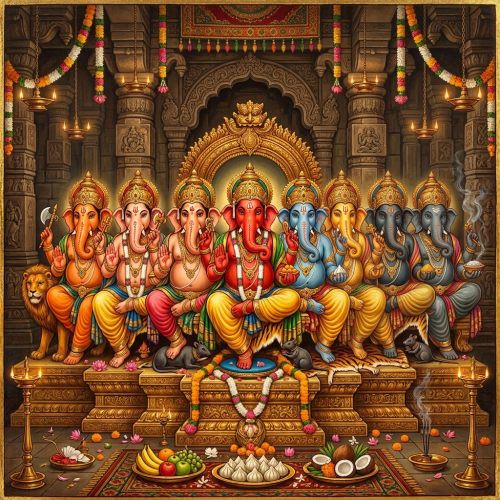
The celebrated image of Śrī Gaṇeśa seated on a mouse encodes a complete psychology of spiritual practice: wisdom seated above impulse, directing and calming the restless mind. Philological analysis of mūṣika (“the thief”) aligns with traditional models of manas, buddhi, and ahaṃkāra, while Purāṇic sources frame the vāhana as a pedagogical tool. Read alongside Yoga,…
-
Impermanence and Human Bonds: Hindu Wisdom on Loving, Letting Go, and Lasting Peace

Hinduism teaches—most explicitly in the Yoga Vasishta—that all human associations are impermanent, a truth that clarifies how to love without clinging. Recognizing anitya (impermanence) reframes loss, softens attachment, and supports ethical, compassionate action in relationships. This perspective aligns with the dharmic insights of Buddhism (anicca), Jainism (anitya), and Sikh wisdom on hukam and seva, highlighting…
-
Fearlessness and Detachment in Hinduism: Powerful Practices for Inner Freedom and Growth

Fearlessness (abhaya) and detachment (vairagya) are central to Hindu philosophy, shaping a confident, ethical, and compassionate way of life. Fearlessness stabilizes decision-making under uncertainty, while detachment clarifies judgment by releasing attachment to outcomes. Practical disciplines—Yoga, meditation, pranayama, japa, svadhyaya, and seva—help integrate these virtues into daily interactions at home, work, and online. The approach strengthens…
-
Heaven on Earth Is Contentment: A Dharmic Path to Lasting Joy Beyond Wealth and Status

This article examines why contentment—santosha in Hindu thought—functions as a greater treasure than material abundance and how it manifests as “heaven on earth.” It contrasts the emptiness that can persist despite wealth with the quiet joy possible in simplicity. Drawing on shared insights from Hinduism, Buddhism, Jainism, and Sikhism, it shows how santosha, aparigraha, upekkhā,…
-
Defusing Sanctimony: Dharmic Wisdom for Humility, Compassion, and Inner Strength

Sanctimonious behavior thrives on ego-driven judgment and performative virtue, yet dharmic traditions offer precise tools to disarm it with grace. Hindu scriptures emphasize humility (amanitvam) and freedom from hypocrisy (adambhitvam), while Yoga philosophy identifies egoism (asmita) as a root disturbance. Complementary insights from Buddhism, Jainism, and Sikhism—Right Speech, ahiṃsā, anekāntavāda, seva, and simran—provide a unified,…
-
Awaken the Silent Witness: Master the Mind with Dharmic Wisdom for Calm and Clarity

Sakshi-bhava—the unaffected witness—offers a practical, dharmic way to master the mind without suppressing emotions or withdrawing from life. Rooted in the Upanishads, the Bhagavad Gita, and Yoga philosophy, it cultivates equanimity (samatva), ethical clarity (viveka), and compassionate action through Karma Yoga. Breath-centered pranayama, daily dhyana, steady japa, and informal mindfulness build this capacity in realistic,…
-
Dharma in a Distracted Age: Powerful Ways to Live Authentically with Dharmic Wisdom

This article explores how the timeless wisdom of dharma enables authentic living in a distraction-saturated age. It explains dharma across Hinduism, Buddhism, Jainism, and Sikhism, highlighting shared values of truth, non-harm, discipline, compassion, and service. Readers gain practical tools—viveka, svadharma, Aparigraha, mindfulness, prāṇāyāma, seva, and community support—to stabilize attention and purpose. It offers a four-part…
-
Beyond Labels: Unlocking the Timeless, Infinite Self in Hindu, Buddhist, Jain, Sikh Wisdom

Identity statements such as “I am a teacher” or “I am successful” are valuable for daily orientation yet remain provisional within dharmic wisdom. Hindu scriptures point beyond labels to the Self (Atman), while Buddhism’s anatta, Jainism’s Anekantavada, and Sikhism’s Ik Onkar reinforce a shared insight into the limits of fixed identity. Recognizing this layered view…
-
Why the Mind Never Feels Enough: Ancient Dharmic Wisdom to End the Endless Pursuit

External success often brings brief joy before restlessness returns; ancient Hinduism teachings explain this as the mind’s habit of seeking satisfaction in impermanent objects. Dharmic traditions agree on the diagnosis and the remedy: reduce craving, cultivate clarity, and align action with values. Practices such as aparigraha, santosha, pratyahara, dhyana, and seva transform the pursuit of…