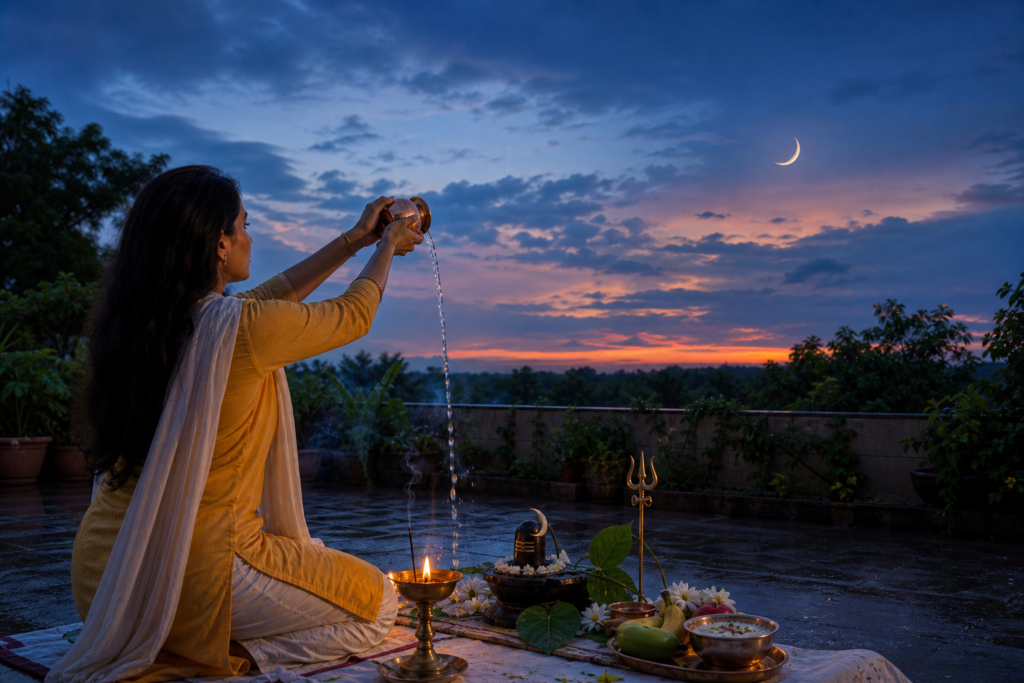
When public life begins to resemble a masqueradecrowds moving in practiced rhythms behind shifting masksstepping away from the dance is not withdrawal but discernment. In the horizon of Kali Yuga, described in Hindu scriptures as an era of confusion and moral fatigue, the turn toward sacred solitude emerges as a rational, time-tested path to clarity and inner steadiness.
The paradox of modern loneliness is that endless connectivity often amplifies isolation. Hindu philosophy distinguishes this restlessness from sacred solitude. The former is a deficit of connection; the latter is a conscious cultivation of inner connection. This distinction, articulated across Sanatana Dharma, reframes quietude as an ethical and psychological discipline rather than a social deficit.
Foundational guidance in the Bhagavad Gita presents solitude as a deliberate practice. Gita 6.10 encourages the yogin to meditate in a secluded place, steady and self-governed, while Gita 13.10 praises vivikta-deśa-sevitvam (love of solitude) and aratir jana-saṁsadi (disinclination toward crowds). These are not prescriptions for isolation but instructions for mental ecology: measured retreat to renew clarity, then return to duty with composure and compassion.
Yoga and Vedanta refine this into method. Abhyāsa and vairāgya (Yoga Sūtra 1.12) cultivate stability amidst fluctuation, while dhyāna and pratyāhāra organize attention inward. Upanishadic counsel prioritizes reflective inquiry and disciplined living, framing solitude as a laboratory for truth-testing everyday assumptions. Across traditions, the goal is not escape but alignment with dharma.
Consonant insights appear throughout the wider dharmic family. In Buddhism, samatha and vipassanā develop calm and insight through noble silence and mindful observation. Jainism prizes aparigraha and kāyotsarga, training body and mind to loosen compulsive grasping. Sikh practice emphasizes simran and the remembrance of Naam, quieting the heart while remaining active in seva. Each stream honors solitude as a means to deepen awareness and serve society with greater integrity.
Practically, sacred solitude addresses contemporary overload. Many seekers report that time away from social media, news cycles, and performative urgency reduces reactivity and restores discernment. In this sense, solitude becomes an ecological practice of the mind: decreasing noise, preserving attention, and renewing the capacity for wise action.
Emotionally, sacred solitude transforms the texture of experience. Rather than amplifying alienation, structured quiet normalizes stillness, nurtures inner strength, and clarifies personal values. This shift enables compassionate presence in relationships, replacing approval-seeking with steadiness rooted in insight.
Ethically, solitude supports responsibility. By tempering impulse with reflection, it strengthens the will to choose speech, conduct, and consumption aligned with dharma. The fruit is lokasaṅgrahacontributing to social cohesionnot through volume, but through clarity and example.
A simple framework translates these insights into daily life: designate a consistent time for silence; establish a clean, uncluttered sacred space; practice conscious breathing and gentle prāṇāyāma; engage in japa or silent mantra; sit for dhyāna; keep brief reflective notes; and conclude with a small act of seva. Short but consistent practice is more stabilizing than occasional intensity.
Community remains essential. Satsang can be reimagined as fellowship that honors periodic quiet: study circles, group meditation, or shared service where depth rather than distraction guides interaction. In this model, solitude and community become complementary: inward renewal followed by outward love.
Across Kali Yuga’s challenges, sacred solitude functions as a stabilizing architecture. It tempers the senses, strengthens attention, and refurbishes compassion. In the combined wisdom of Hinduism, Buddhism, Jainism, and Sikhism, such solitude is not an endpoint but a gatewayreturning individuals to the world clearer, kinder, and more capable of sustaining harmony.
Ultimately, sacred solitude converts the noise of the age into an instrument of learning. By stepping briefly away from the masquerade, seekers re-enter the shared dance with authentic presencealone, but not lonely; quiet, but not indifferent; inwardly strong, and outwardly of service.
Inspired by this post on Hindu Blog.