-
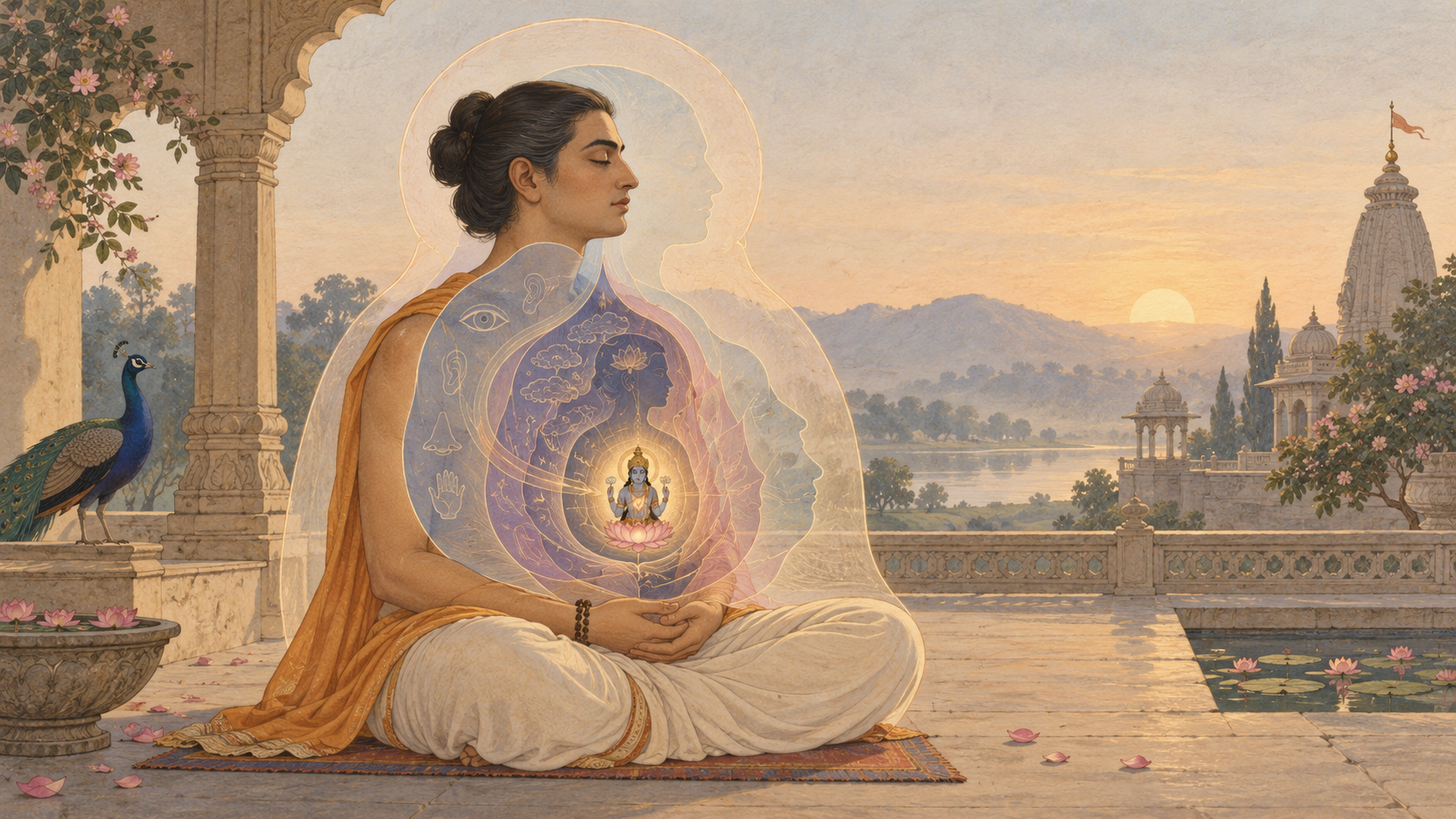
Work Without Motive: Sri Sri Ravi Shankar on Intuition, Nishkama Karma, and Flow States

This article unpacks the axiom “the best work comes out when you work without any motive” through Sri Sri Ravi Shankar’s description of intuition as a “sudden sprout of thought,” the Bhagavad Gita’s Nishkama Karma, and insights from modern psychology. It distinguishes non-attachment from aimlessness, showing how purpose can remain strong while egoic craving for…
-
Overcoming Self‑Sabotage: How the Brain Mistakes Safety for Threat—and What Actually Works

A subtle form of self-sabotage often emerges not as dramatic collapse but as micro-avoidances that appear rational in the moment. This long-form analysis explains why the brain can misread calm and success as threats, drawing on predictive processing, allostatic load, attachment patterns, and approach–avoidance conflict. It translates evidence-based methods—graded exposure, implementation intentions, WOOP, and self-compassion—into…
-
Prakamya Siddhi Explained: How Focused Intention Turns Inner Vision into Tangible Reality

Prakamya Siddhi in Hinduism is the disciplined capacity by which a clear, dharma-aligned inner intention becomes an outward result. Distinguished from mere desire or casual “manifestation,” it integrates ethical foundations, focused attention (samyama), embodied action, and surrender. Classical yoga, Vedanta, tantra, and bhakti converge to present prakamya as a lawful and ethical maturation of will,…
-
Unlocking the Power of Prayer: Vandanam in Daily Sadhana and Dharmic Unity Practices

Prayer in the bhakti tradition, known as vandanam, is a core best practice of daily sadhana rather than an optional sentiment. Classical sources present it as one of the nine limbs of bhakti, with the capacity—when practiced deeply—to orient the whole of spiritual life. Pranama-mantras address Bhagavan, the Deity, the Ācārya, and the Guru, cultivating…
-
“I Feel No Fear”: How the Hare Krishna Maha-mantra Builds Abhaya Across Dharmic Paths

A memorable exchange crystallizes a core promise of mantra meditation: asked what chanting the Hare Krishna maha-mantra feels like, Srila Prabhupada replied, “I feel no fear.” This article unpacks that claim in an academic yet accessible way, explaining how abhaya (fearlessness) emerges at the intersection of Bhakti theology, rhythmic sound, and breath regulation. It clarifies…
-
Spirituality of Nature: Dharmic wisdom and science for resilient, unshakable inner strength

This long‑form exploration presents a rigorous, Dharmic view of nature as a living revelation of consciousness, uniting Hinduism, Buddhism, Jainism, and Sikhism around interdependence, non‑harm, disciplined awareness, and service. It clarifies how Upanishadic, Buddhist, Jain, and Sikh insights translate into ecological ethics and everyday practices. Evidence from psychology and physiology shows why slow breathing, awe,…
-
Sharpening the Inner Compass: Trusting Intuition on the Dharmic Path with Clarity and Courage

Trustworthy intuition in Hinduism is not impulse but disciplined, dharma-aligned insight that integrates perception, reason, and sacred testimony. This article clarifies how the inner compass relates to Atman, the Upanishads, and the Bhagavad Gita, while showing convergences with prajñā in Buddhism, anekāntavāda in Jainism, and hukam in Sikhism. Readers learn practical tests for discernment—ahiṃsā, satya,…
-
To Know Sanatana Dharma, Become It: Transform Study into Embodied, Breath-by-Breath Wisdom

Studying Sanatana Dharma offers orientation; living it confers transformation. This essay explains how knowledge becomes embodied through śravaṇa–manana–nididhyāsana, prāṇāyāma, meditation, and ethical discipline, aligning ancient insights with contemporary understanding of attention, stress, and habit-formation. It shows how Hinduism, Buddhism, Jainism, and Sikhism converge on shared methods—breath, mindfulness, vows, and seva—while honoring pluralism via Ishta and…
-
Aim Hrim Klim: Unlock the Sacred Triad of Shakti and the Three States of Consciousness

Aim Hrim Klim – the revered triad of bīja mantras – unites knowledge, compassionate power, and loving attraction into a single, practical discipline in Hindu spirituality. Drawing on classical mantra-śāstra and living lineages, the article explains how Aim clarifies cognition, Hrīṁ integrates heart-intelligence, and Klīṁ refines desire into dharmic will. It maps the triad to…
-
Is Life Easy or Difficult? An Evidence-Backed Dharmic Guide to Joy, Suffering, and Mastery

Is life easy or difficult? A dharmic analysis shows the question spans two complementary levels: the conventional reality of dukkha (unsatisfactoriness) and the ultimate discovery of ananda (joy). Buddhism’s Four Noble Truths, the Yoga Sutra, Vedanta’s ananda doctrine, Jain anekantavada, and Sikh Chardi Kala together form a unified method for transforming difficulty into resilience while…
-
ISKCON Navi Mumbai Unveils IGST 2026: Transformative Gita Scholarship Test and Immersive Retreat

ISKCON Navi Mumbai’s International Gita Scholarship Test (IGST) 2026 pairs rigorous study of the Bhagavad Gita with an immersive retreat to address academic stress, digital distraction, and the need for ethical leadership among youth. The initiative emphasizes comprehension, application, and reflection rather than rote memorization, aligning learning outcomes with established pedagogical frameworks. Daily practice recommendations—spaced…
-
Revealing the Fifth Chapter: Sudarshana Chakra in Nrisimha Tapaniya Upanishad—Sacred Geometry and Dhyana

The Nrisimha Tapaniya Upanishad’s fifth chapter elevates Sudarshana Chakra from a divine symbol to a precise contemplative technology that unites mantra, yantra, and dhyana. By presenting the Chakra as a pivot of “auspicious seeing,” it refines attention, stabilizes ethical intent, and supports protective clarity in daily life. The analysis explains core mantras—including the Nṛsiṁha and…
-
SB 3.28.29 Unveiled: Transformative dhyana on the Lord’s lotus face with HH Devamrita Swami

This in-depth exploration of Srimad Bhagavatam 3.28.29, as presented by HH Devamrita Swami at ISKCON New Govardhana, situates Kapila Muni’s dhyana instruction within the broader arc of bhakti-yoga and theistic Sāṅkhya. The verse’s focus on the Lord’s lotus-like face and benevolent smile is shown to be a practical, stabilizing attention practice that mellows the heart…
-
Beyond Chant and Dance: The Transformative Science of Nama, Naam Simran, and Scriptural Hearing

Chanting the Holy Name stands supreme in Sri Caitanya Mahaprabhu’s teaching, yet it flourishes when supported by hearing, reflection, and ethical alignment. Drawing on Srimad-Bhagavatam’s ninefold path of devotion, this article explains why sravana (hearing) provides the sambandha-jnana that turns sound into a living relationship with Krishna (Krsna). It clarifies the difference between mere “shadow…
-
Tapasya in Kali Yuga: Powerful, Scripture-Sourced and Science-Backed Austerities for Modern Life

Tapasya in Kali Yuga is not self-mortification but an intelligent discipline that purifies body, speech, and mind for clarity and resilient living. Drawing on the Bhagavad Gita, Yoga Sutras, the Bhagavatam, and the Kali-Santarana Upanishad, it reframes penance as preparatory purification rather than an attempt to please the divine or force realization. Practical śarīra-, vāk-,…
-
No Destination, Only Awakening: Timeless Hindu Wisdom on the Transformative Spiritual Journey

Hindu wisdom reframes the spiritual path as unveiling rather than arrival: there is nowhere to go, nothing to acquire, and everything to recognize. Drawing on the Upanishads, the Bhagavad Gita, Advaita (advait), and the Yoga Sutra, this exploration clarifies the paradox of “no destination” as a disciplined return to presence. It outlines core methods—Jnana, Bhakti,…
-
The Eternal Joy Within: Dharmic Wisdom on True Happiness, Ananda, and Freedom from Suffering

Modern culture often ties happiness to external milestones, yet Hindu wisdom distinguishes this conditional pleasure from intrinsic ananda—the steady joy of awareness. Drawing on the Upanishads, the Bhagavad Gita, and Yoga philosophy, this essay maps how attention becomes entangled in craving and how disciplined living restores clarity. It outlines four complementary yogas—karma, bhakti, jñāna, and…
-
Beyond the Senses’ Trap: Dharmic Science of Lasting Joy across Hindu, Buddhist, Jain, Sikh

Modern restlessness around pleasure and possession is precisely mapped in the shared wisdom of Hinduism, Buddhism, Jainism, and Sikhism. Each tradition explains how untrained senses agitate the mind and how disciplined attention—through pratyahara, mindfulness, aparigraha, Seva, and devotion—transforms agitation into equanimity. The piece integrates Hindu models of the indriyas, Gita psychology of desire, Buddhist dependent…
-
Timeless Union: The Transformative Power of Jnana and Yoga for Moksha in Hindu Philosophy

This long-form exploration shows how Jnana and Yoga converge in Hindu philosophy to deliver both liberating knowledge and lived stability. It clarifies Vedantic epistemology alongside Patanjali’s practical method, demonstrating why insight requires disciplined cultivation. It maps ethical foundations shared across Hinduism, Buddhism, Jainism, and Sikhism, highlighting a profound unity among dharmic traditions. It offers a…
-
Unlocking Moksha with Mantra: The Transformative Science of Sound Across Dharmic Paths

This essay examines mantra within Hindu wisdom as a disciplined contemplative technology aimed at moksha, clarifying the classical sense of mananat trayate mantrah—“that which liberates through contemplation.” It situates mantra in the metaphysics of sound (vak, shabda-brahman), explains Vedic precision in phonetics and meter, and contrasts Vedic, Tantric, and devotional forms, including bija, nama-japa, and…