The Prashna Upanishad concludes with a profound teaching on the sixteen kalas (parts) of the Purusha, presenting a luminous synthesis of creation, consciousness, and return to the Absolute. In the sixth question, the text explores how the Supreme Being manifests as the cosmos through discrete yet interdependent aspects, and how understanding this structure reveals spiritual unity at the heart of all diversity.
Within Hindu philosophy and Vedanta, kala signifies a functional facet of the wholean expression through which the unconditioned Purusha becomes intelligible in the realm of experience. This framework bridges macrocosm and microcosm: what appears as the world outside reflects patterns that also operate within the human being. Readers often find in this teaching a quiet assurance that multiplicity does not compromise unity; rather, it articulates it.
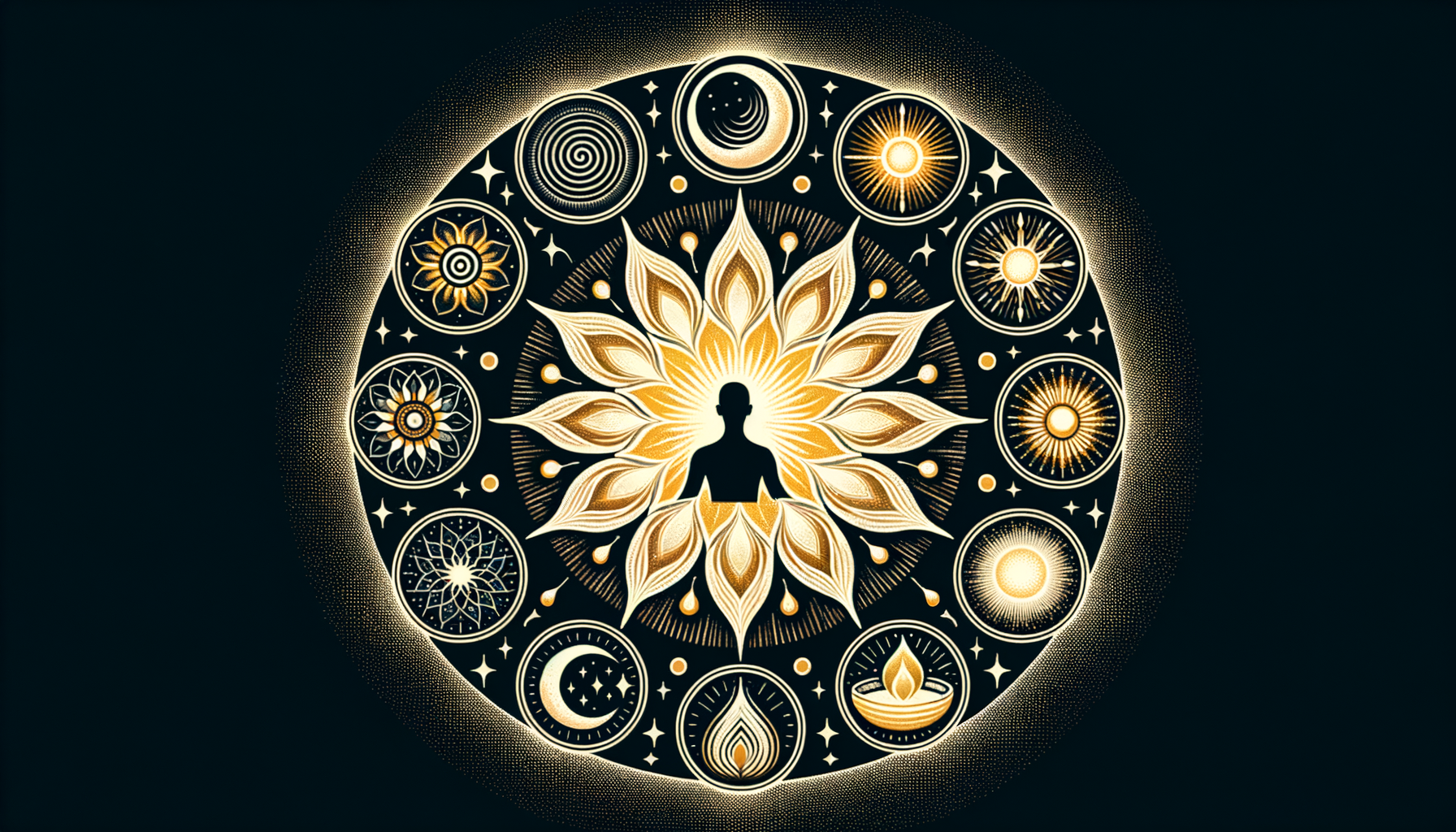
Classical commentators, following Prashna Upanishad’s sixth discourse, commonly enumerate the sixteen kalas as: prāṇa (vital energy), śraddhā (faith), ākāśa (space), vāyu (air), agni (fire), āpaḥ (water), pṛthivī (earth), indriyas (the senses), manas (mind), annam (food), vīrya (strength/potency), tapas (austerity/inner heat), mantra (sacred sound/knowledge), karma (action), lokāḥ (worlds), and nāma (name). While minor variations of sequence appear across recensions and commentaries, the underlying vision remains consistent: these facets are coordinated expressions of a single, all-pervading Purusha.
The Upanishadic narrative is not merely cosmological; it is soteriological. It shows how the kalas arise with creation and, at dissolution, resolve back into their sources, culminating in Purusha. By contemplating this emergence-and-return, seekers gain clarity into impermanence, interdependence, and the substratum that abides. The teaching invites detachment from transient identifications and steadies the mind in the intuition of unity.
Practically, this vision touches daily life. Prāṇa relates to breath and vitality, encouraging mindful living and steadiness. Śraddhā affirms an inner orientation of trust that animates study, contemplation, and ethical action. Tapas, mantra, and karma frame discipline, insight, and responsibility, ensuring that knowledge does not remain abstract but flowers into character and compassionate conduct.
Resonances with other dharmic traditions deepen the relevance of this insight. The emphasis on interdependence and ethical awareness converges with Buddhist reflections on conditioned phenomena, Jain attention to layered realities and non-violence, and Sikh affirmation of oneness (Ik Onkar) expressed through devoted action and remembrance. Such parallels highlight a shared civilizational quest: honoring diversity while recognizing a unifying ground of truth.
For readers today, the sixteen kalas offer an elegant lens to read both self and society. They encourage an ecologically sensitive view of the elements, a holistic appreciation of body and mind, and a thoughtful evaluation of the roles of knowledge, discipline, and action. Many find that contemplating these kalas cultivates calm, clarity, and a renewed sense of belonging within the wider web of life.
Ultimately, the Prashna Upanishad’s mapping of the sixteen kalas guides one from analysis to synthesisfrom parts to whole. By seeing each kala as a doorway rather than a destination, the teaching aligns philosophical inquiry with inner quietude and ethical responsibility. In this way, the Upanishadic insight becomes lived wisdom: unity realized through understanding, and understanding deepened by reverence for the manifold.
Inspired by this post on Hindu Blog.